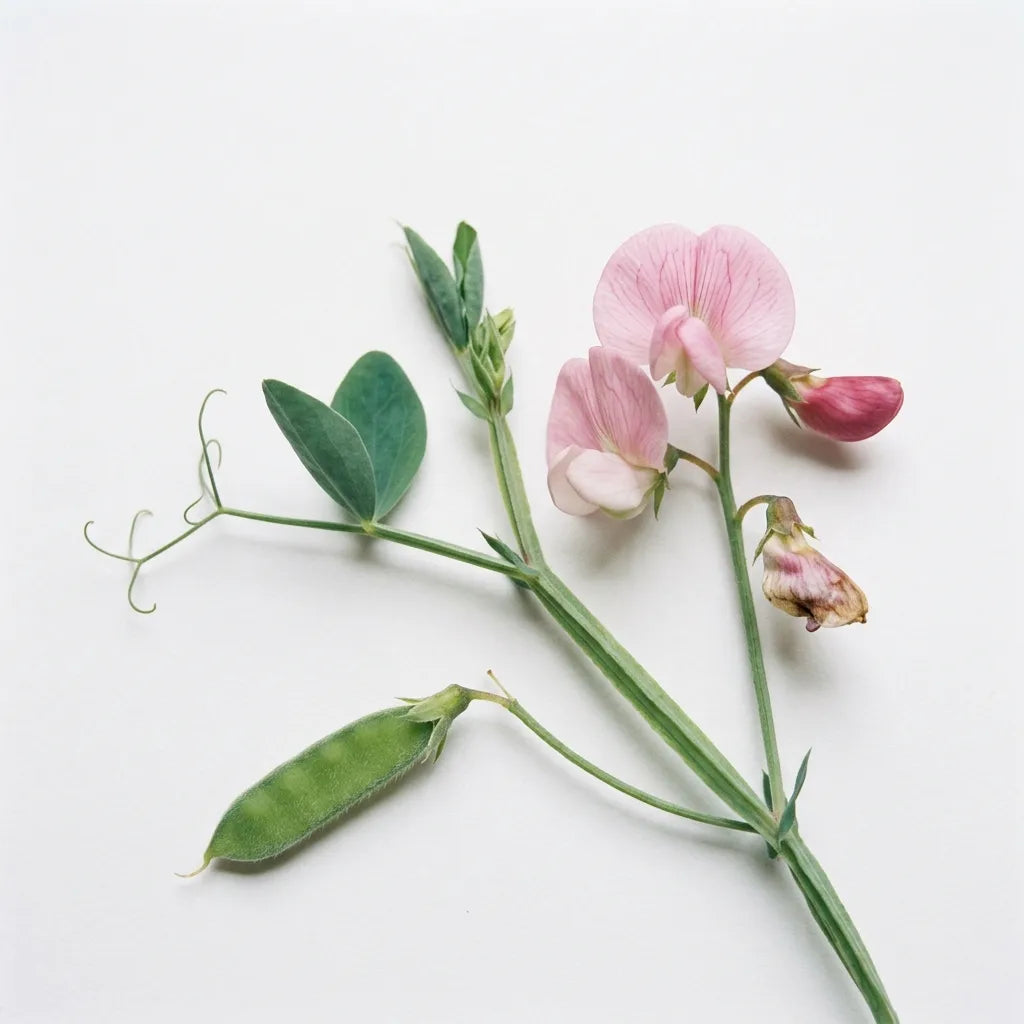
Lathyrus odoratus “Cupid Pink”
Sweet pea, sweet pea, musky pea: this flower owes its popularity to a 17th-century Sicilian monk, Francesco Cupani, who sent the first seeds across Europe. The “Cupid Pink” selection offers a dwarf, compact version with the same fragrance but no need for support—ideal for balconies.
Characteristics:
-
Delicate fragrance: soft pink flowers with a sweet, gentle fragrance, one of the most sought-after scents in the garden.
-
Dwarf variety: compact growth requiring no staking, perfect for pots, window boxes, or borders.
-
Excellent as a cut flower: the more you pick, the more it reblooms.
Precautions:
-
Sweet pea seeds are not edible: despite their striking resemblance to garden peas, they are toxic if ingested. Never confuse them with vegetable peas, clearly label your seed packets, and keep them out of reach of children.
Sowing advice:
-
Exposure: sunny, with cool conditions around the base—it enjoys sunshine but suffers in heatwaves.
-
Soil: light, deep, moist, and well-drained, preferably alkaline. As a legume, it does not need nitrogen, but it benefits from deeply worked soil for its taproot.
-
Method: soak the seeds in lukewarm water for 12 to 24 hours before sowing, as their seed coat is hard. Sow in deep pots from February to March, or directly in the ground after the last frosts. Pinch out young plants after 3 pairs of leaves to encourage branching. See how to sow your seeds.
Care advice:
- Water regularly, especially when grown in pots: sweet peas dislike drying out.
- Cut the flowers regularly and remove developing pods: as soon as the plant sets seed, it stops flowering.
Beneficial pairings:
- As a legume, it fixes nitrogen and enriches the soil in its window box or flower bed. It pairs well with sweet alyssum in a fragrant balcony arrangement.
Benefits for biodiversity:
- Its flowers are especially popular with bumblebees, which are powerful enough to open their closed, “boat-shaped” corolla.
- Like all legumes, it naturally enriches the soil through its root nodules.
Uses:
- Strictly ornamental: balconies, window boxes, borders, and especially bouquets, where its fragrance works wonders indoors.
Symbolism:
Sweet peas symbolize delicate pleasures and tender farewells. In the Victorian language of flowers, they were given to say, “Thank you for a pleasant time.”
Harvesting your own seeds:
Leave a few pods to form at the end of the season and turn completely brown on the plant, then harvest them before they burst open. Clearly label the packet: these seeds are not for consumption. See how to store your seeds.
Our Commitment to Quality: at SemiSauvage - Permaculture, we grow and select our seeds with respect for all living things as our guiding principle. Based near the Auvergne Volcanoes, we choose open-pollinated, non-hybrid varieties, tested for their germination rate, carefully sorted and packaged, with no chemical treatment. Our belief: to give gardeners back the ability to resow, year after year, seeds that truly belong to them.
Sales reserved for amateur gardeners seeking quality and authenticity.