Ficus benjamina
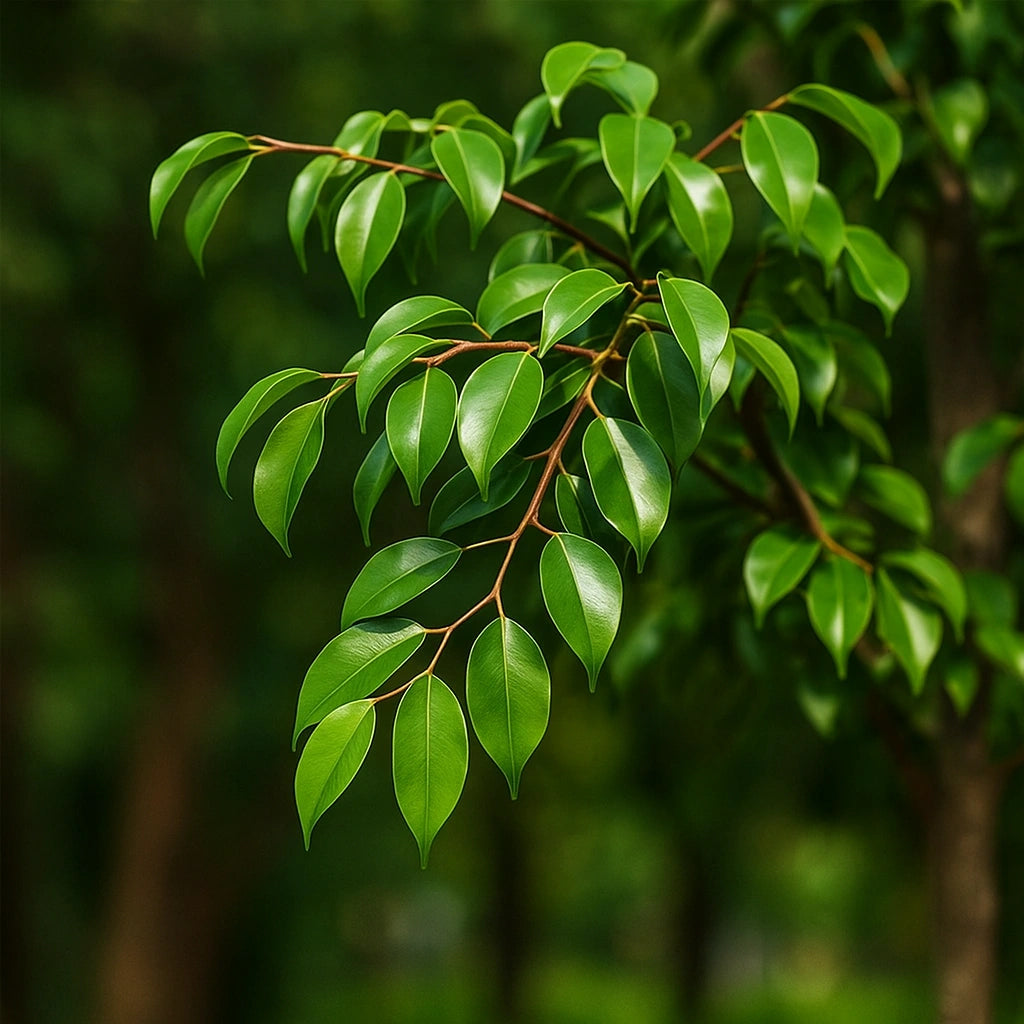
Weeping fig, Ficus benjamina, Benjamin fig, Buddha tree: in its native Asia, it develops aerial roots that descend from the branches to the ground and gradually form new trunks — a single tree can thus become a small forest. Grown in a pot here, it remains a well-behaved shrub with glossy, gracefully drooping foliage.
Characteristics:
-
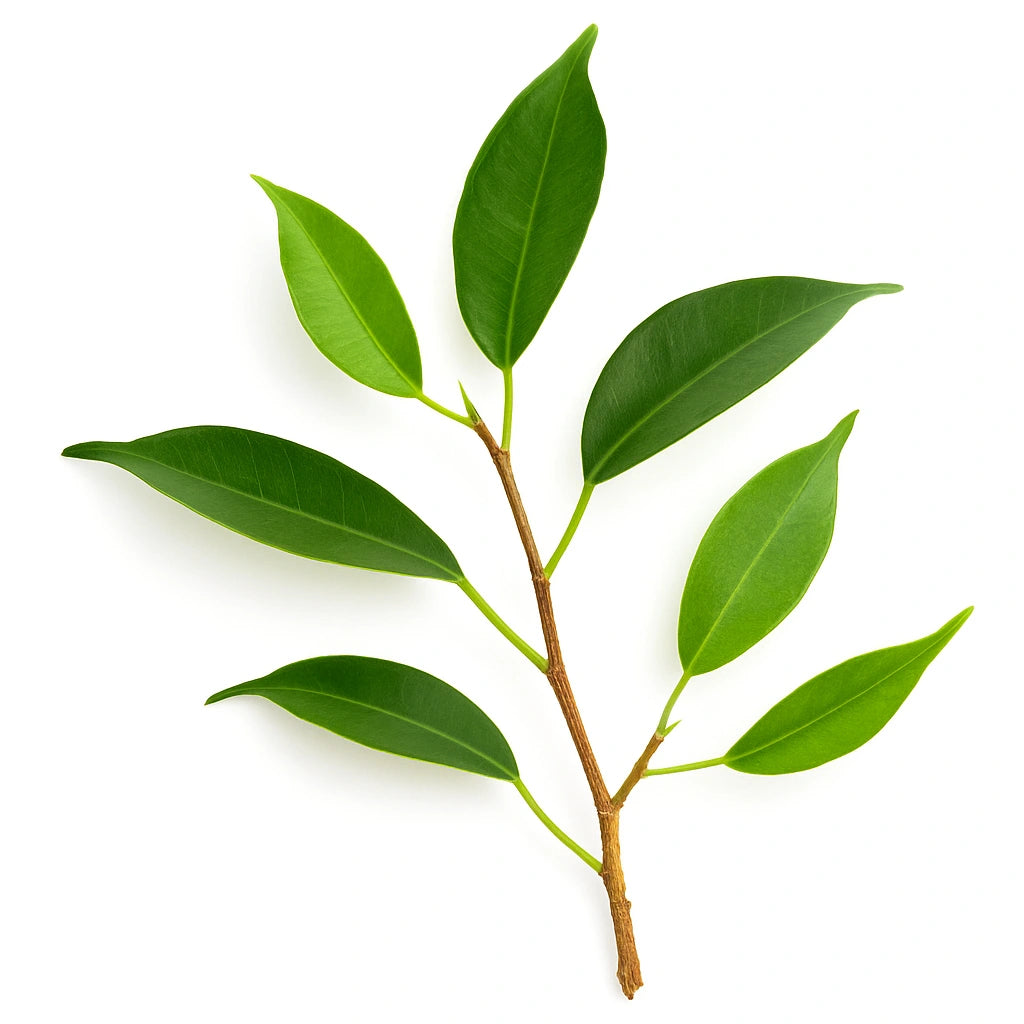
Glossy evergreen foliage: small, shiny, flexible, slightly drooping oval leaves.
-
Elegant growth: 2 to 3 metres indoors, and considerably taller when grown in the ground in a tropical climate.
-
Excellent bonsai: its trunk thickens quickly, and its small leaves respond well to pruning.
Precautions:
- Like all figs, it exudes a white latex when cut, which is irritating to the skin and eyes and may cause allergies in some people. Wear gloves when pruning and wash your hands afterwards.
- This latex makes it unsuitable for consumption, both the leaves and the fruits. Keep it out of reach of pets, as cats and dogs are sensitive to it.
- Strictly tropical plant: never expose it to temperatures below 15 °C.
Sowing advice:
-
Light: bright light but no direct sunlight, which burns its foliage.
-
Soil: a light, well-draining growing medium, made from a mixture of potting soil and sand or coconut fibre. It dislikes stagnant water around its roots, the leading cause of loss, just as much as complete drying out.
-
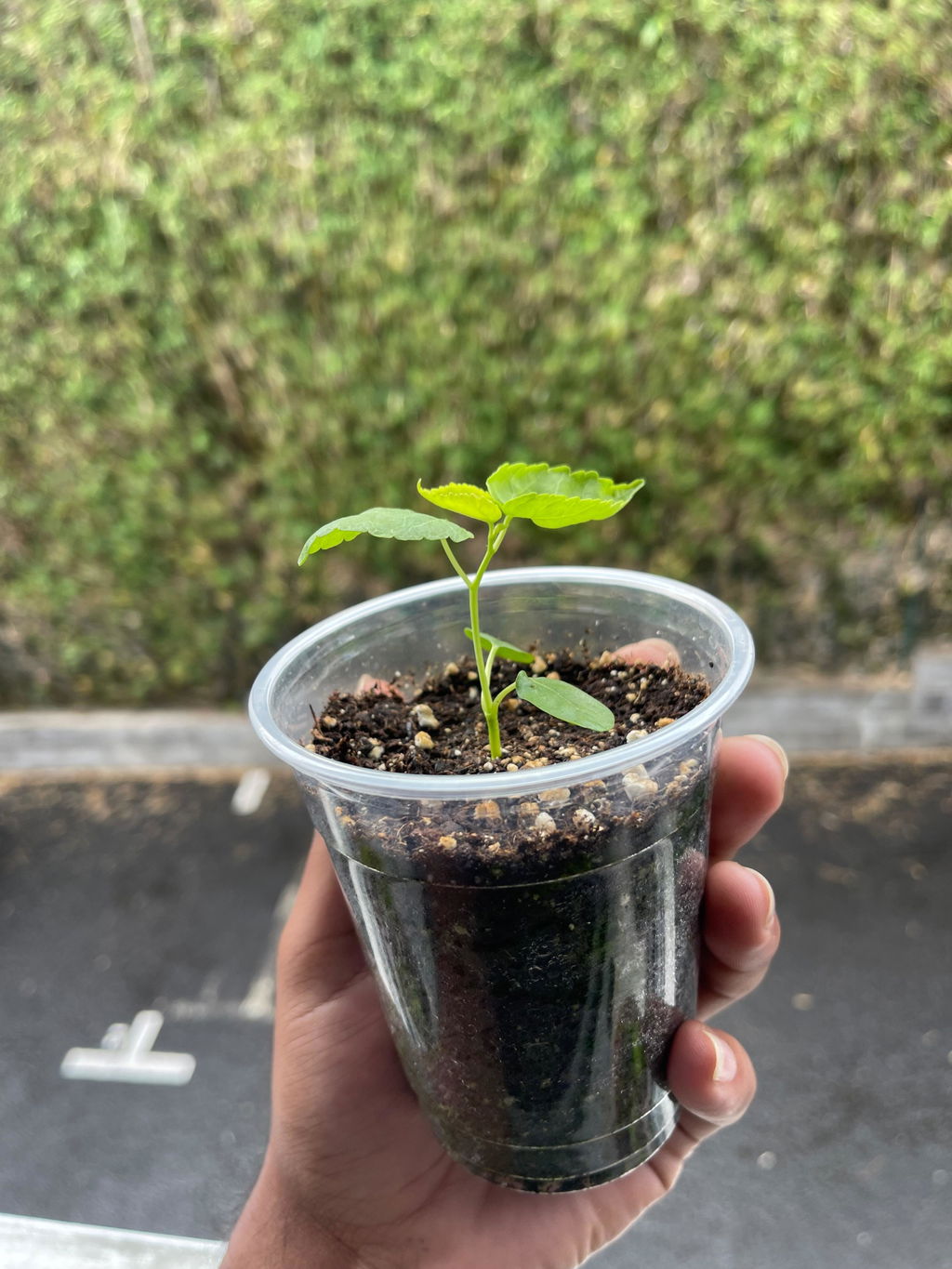
Method: no stratification — this is a tropical species that requires warmth and humidity. Soak the seeds for 24 hours in lukewarm water, then sow them on the surface without covering them. Maintain at 22–28 °C under indirect light, with high humidity (mini greenhouse or plastic film). Be patient: germination is unpredictable and takes 2 to 8 weeks. See how to sow your seeds.
Planting advice:
- Repot every 1 to 2 years when grown in a pot. For bonsai, its rapid growth produces visible results within a few years — see our guide creating a bonsai from a seed.
Care advice:
- Water regularly but moderately: allow the surface to dry between waterings. Mist the foliage in dry air.
- Important tip: the ficus hates being moved. A change of location or light levels often causes massive leaf drop — alarming but reversible. Choose its spot and leave it there.
Uses:
- Ornamental houseplant, bonsai, or outdoor cultivation in tropical and very sheltered Mediterranean gardens. Combine it with other tropical houseplants.
Symbolism:
A sacred tree in several Asian cultures, it symbolises harmony, grounding and wisdom — through its aerial roots, which literally connect heaven and earth.
Harvesting your own seeds:
The ficus's figs only ripen if its specific pollinating wasp is present, which is not the case in our climates: harvesting viable seeds indoors is therefore impossible. Stem cuttings, however, are very easy. See how to store your seeds.
Commitment to Quality: at SemiSauvage - Permaculture, we grow and select our seeds with respect for living things as our guiding principle. Based near the Auvergne Volcanoes, we choose open-pollinated, non-hybrid varieties, test them for their germination rate, and carefully sort and package them without any chemical treatment. Our belief: to give gardeners back the ability to resow, year after year, seeds that truly belong to them.
Sales reserved for amateur gardeners seeking quality and authenticity.