Daucus carota
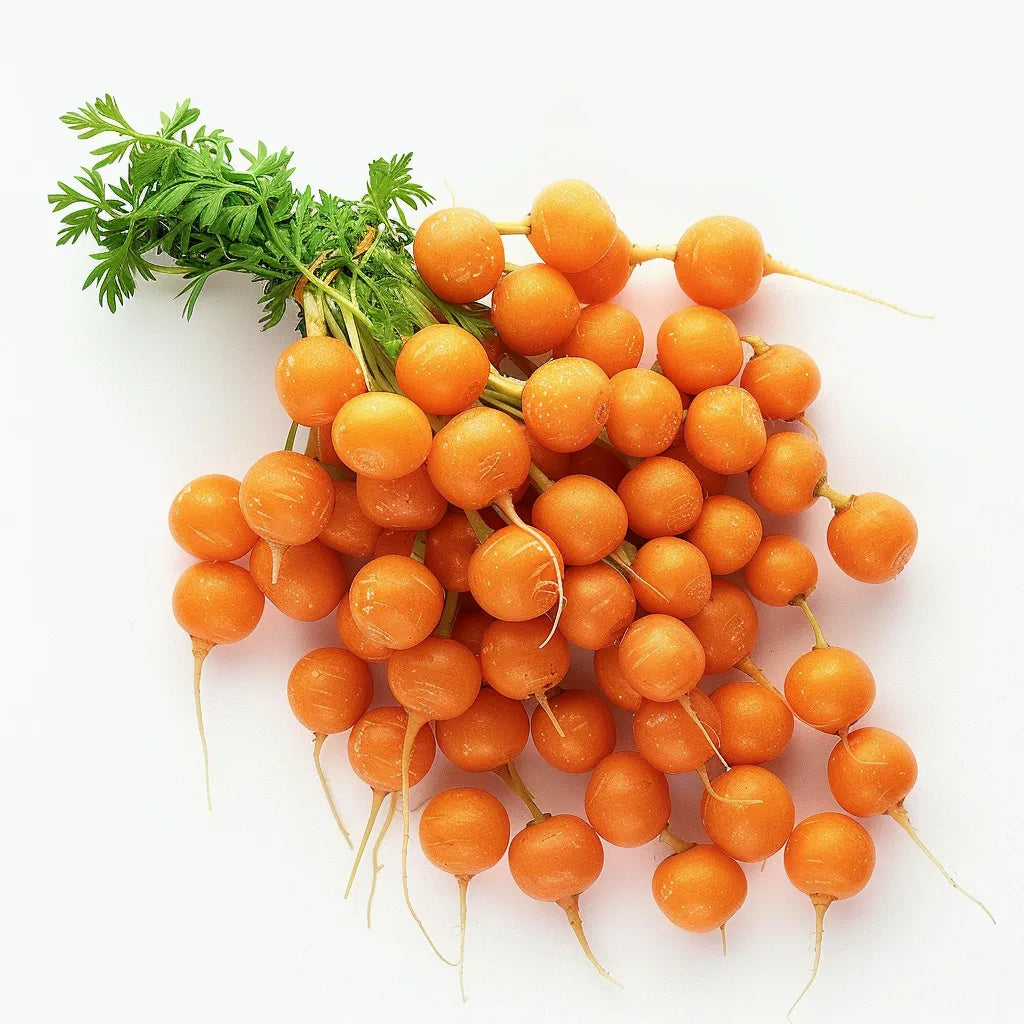
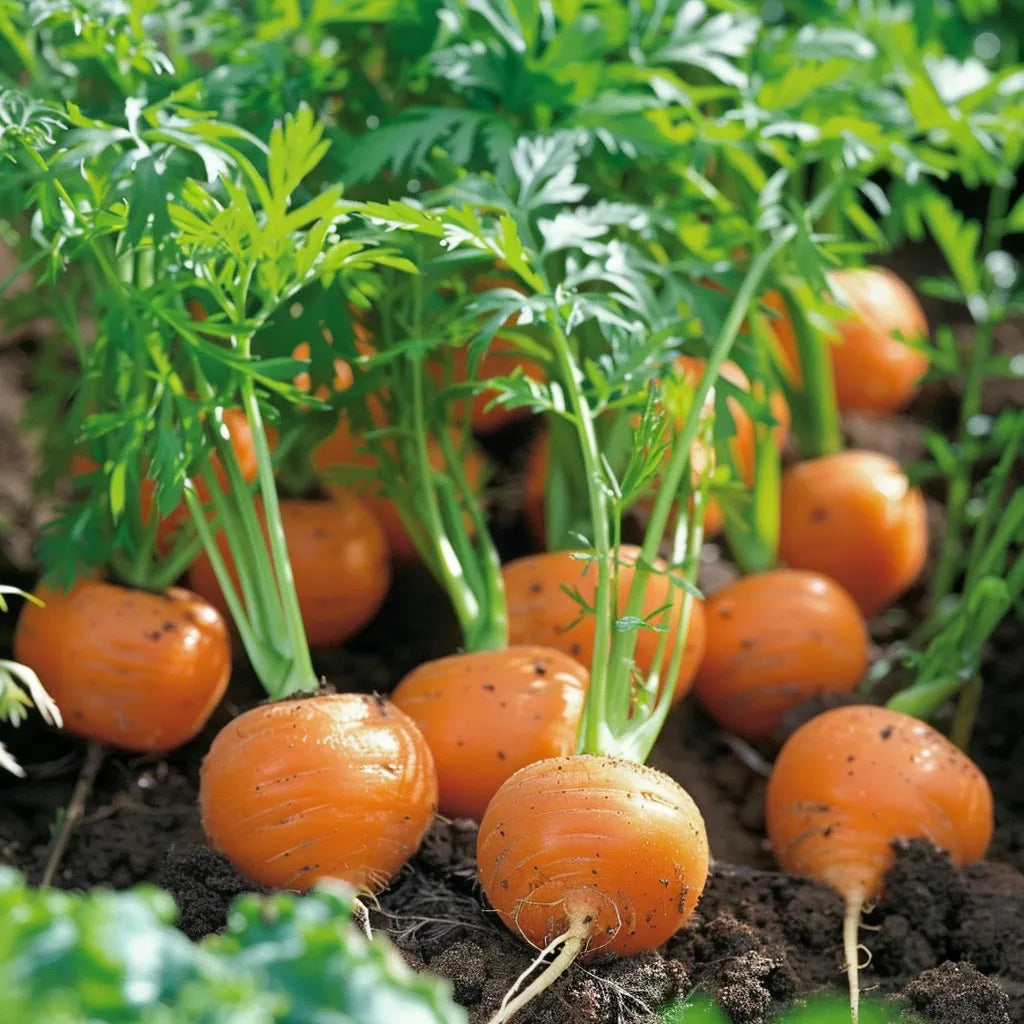
Parisian Carrot, ball carrot, round Paris carrot: this heirloom variety from Parisian market gardeners elegantly solves carrot number one problem—the need for deep, stone-free soil. Its golf-ball-shaped root needs only 10 cm of soil, making it suitable for growing in pots, window boxes, or heavy soil.
Characteristics:
-
Round root: small and spherical, it requires very little depth.
-
Container growing: one of the few carrots truly suited to balconies and terraces.
-
Fast growth: can be harvested 70 to 80 days after sowing.
-
Reproducible heirloom variety, with tender, sweet flesh.
Sowing advice:
-
Exposure: sunny.
-
Soil: loose, even sandy, cool, and rich in humus. Its great strength: unlike the Nantes carrot, it tolerates shallow soil and even slightly stony soil. Always avoid fresh manure, which causes the roots to fork.
-
Method: sow from March to July, directly in the ground or in a large pot at least 20 cm deep, in 1 cm-deep furrows. Carrots should never be transplanted. See how to sow your seeds.
Care advice:
- Thin to 4 or 5 cm apart, preferably in the evening, and remove the discarded plants immediately, as their smell attracts the carrot fly.
- Water regularly but not excessively: permanently wet soil causes the roots to rot, while alternating drought and watering makes them split.
Harvesting advice:
- Harvest young, as soon as the root reaches 3 to 4 cm in diameter: this is when it is most tender. If it grows too large, it becomes fibrous. Stagger sowings every three weeks rather than letting the roots grow larger.
Beneficial companion plants:
Benefits for biodiversity:
- Leave one plant to go to seed in its second year: its white umbels attract large numbers of hoverflies, whose larvae devour aphids.
- Like all plants in the carrot family, it is a host plant for swallowtail caterpillars.
Uses:
- Its round shape makes it a highly decorative vegetable: glazed whole in butter, roasted without being cut, pickled, or eaten raw as a snack. A perfect size for children.
Harvesting your own seeds:
Leave a few roots in the ground over winter: they will produce seeds in their second year. Harvest the umbels when they turn brown and close up like a bird's nest. Beware of cross-pollination with wild carrot and other varieties. See saving your seeds.
Commitment to Quality: at SemiSauvage - Permaculture, we grow and select our seeds with respect for all living things as our guiding principle. Based near the Auvergne volcanoes, we choose reproducible, non-hybrid varieties, test them for germination rates, and carefully sort and package them without any chemical treatment. Our conviction: to give gardeners back the ability to resow, year after year, seeds that truly belong to them.
The carrot for balconies and poor soils.