
Tässä artikkelissa 8
Bonsai ei ole kääpiölaji. Se on tavallinen puu — sama, joka kasvaisi metsässä kaksikymmenmetriseksi — joka pidetään pienenä juurten ja oksien jatkuvalla hoidolla. Pienikokoisuuden saa aikaan rajoittaminen, ei perimä.
Siemenestä aloittaminen valmiiksi muotoillun taimen sijaan muuttaa kaiken: hallitset puun siluettia ensimmäisestä päivästä lähtien, kustannukset ovat mitättömät ja puu sopeutuu olosuhteisiisi heti itämisestä alkaen. Vastineeksi on hyväksyttävä aikataulu, joka mitataan vuosissa.
Lajin valinta
Ratkaisevaa ei ole täysikasvuisen puun ulkonäkö vaan sen lehtien koko: lehdet pienenevät hoidon myötä, mutta eivät koskaan siinä määrin, että luonnostaan suuret lehdet näyttäisivät mittasuhteiltaan sopivilta.
Varma valinta aloittelijalle
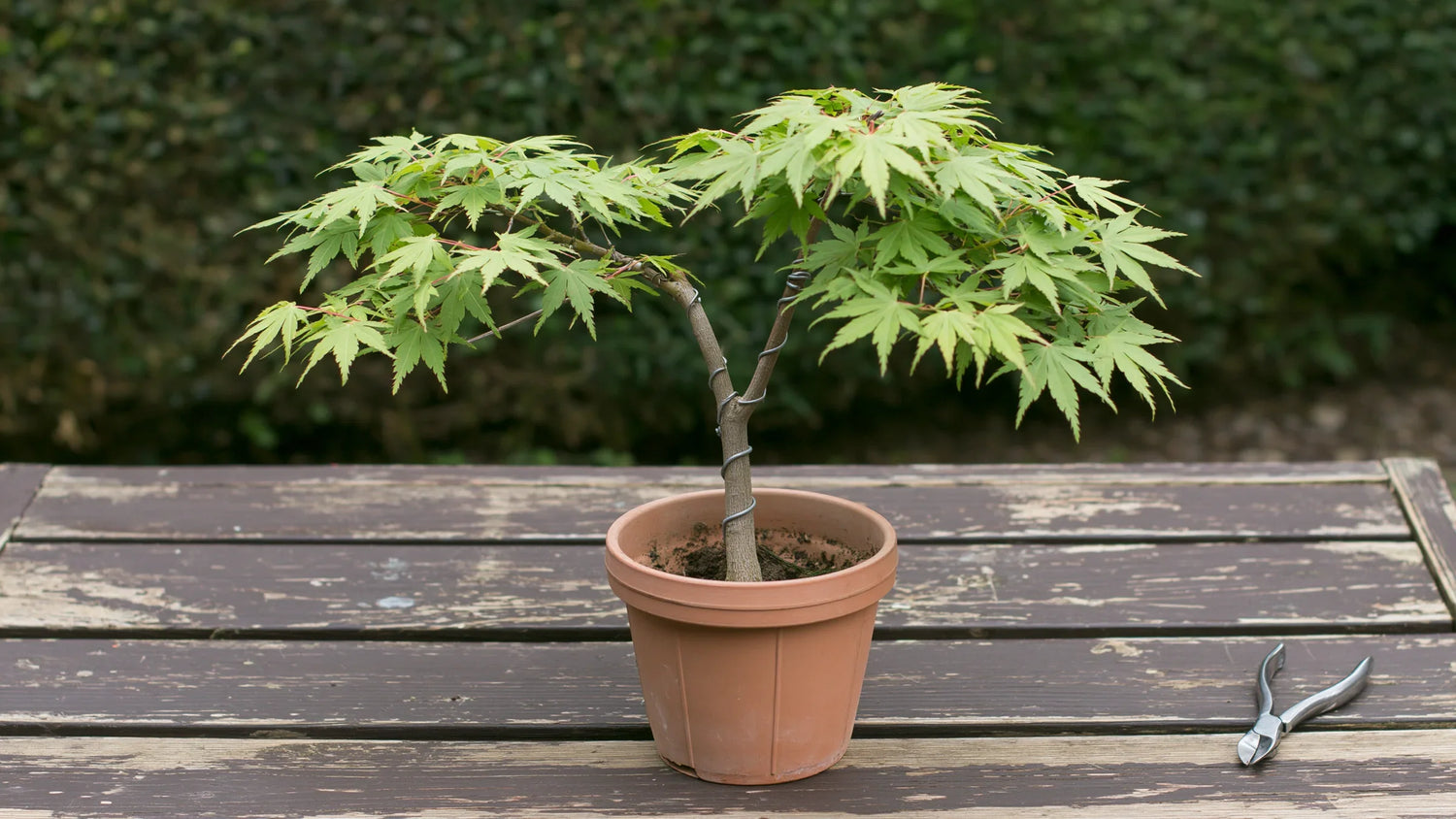
- Japaninvaahtera (Acer palmatum) — todellinen klassikko. Hieno lehvästö, näyttävät syysvärit ja runsas haaroittuminen. Vaatii 8–12 viikon kylmäkäsittelyn.
- Japaninligusteri (Ligustrum japonicum) — luultavasti kaikista kestävin. Kasvaa nopeasti ja sietää leikkaus- ja kasteluvirheitä. Paras valinta ensimmäiseen kokeiluun.
- Villioliivipuu (Olea europaea sylvestris) — pienet lehdet, nopeasti luonnetta kehittävä runko, kestää kuivuutta. Erinomainen leudossa ilmastossa.
- Euroopanmarjapensas (Berberis vulgaris) — kestävä, pienilehtinen, kiinnostavan kaarnan ansiosta.
Jos haluat perehtyä aiheeseen syvemmin
- Alepponmänty ja Atlas-seetri — havupuut vaativat erilaisen tekniikan (latvomisen leikkaamisen sijaan), mutta niillä saa aikaan ilmaisuvoimaisimmat siluetit.
- Italian sypressi ja louisianansypressi — jälkimmäinen kestää poikkeuksellisen hyvin vetisiä maaperiä, mikä on harvinaista.
- Neidonhiuspuu — ainutlaatuinen lehdistö, joka muuttuu syksyllä kullankeltaiseksi. Haaroittumista on vaikea tihentää: tätä bonsaita kasvatetaan yksinkertaisena pystytyylinä.
- Kiinanjuudaspensas — näyttävä vaaleanpunainen kukinta vanhalla puulla. Siemenet on rikottava ennen kylmästratifiointia.
- Granaattiomenapuu — pienet lehdet, kirkkaanpunainen kukinta ja pienikokoiset hedelmät. Yksi helpoimmin kasvatettavista hedelmäbonsaipuista.
- Albizia, jakaranda, kuninkaallinen liekkipuu — sisätiloissa kasvatettavia trooppisia lajeja, joilla on erittäin hienoliuskainen yhdistelmälehdistö.
Luonnostaan suuret lehdet — magnolia, persimoni, guava — pysyvät suhteettoman suurina jopa vuosien lehtienpoiston jälkeen, ja erittäin hitaasti itävät lajit lannistavat ennen kuin mitään ehtii tapahtua. Ne ovat edelleen kiinnostavia, mutta sopivat paremmin toiseksi puuksi.
Vaihe 1 — itäminen
Juuri tässä useimmat yritykset epäonnistuvat, ja lähes aina samasta syystä: lepotilaa ei ole murrettu.
- Kylmästratifiointi — välttämätön useimmille lauhkean vyöhykkeen lajeille: vaahtera, mänty, setri, ruusuorapihlaja, lännenjuudaspensas. Varaa 4–12 viikkoa 1–5 °C:ssa kosteassa kasvualustassa. Menetelmä kokonaisuudessaan on kuvattu sivulla Kylmästratifiointi.
- Siementen rikkominen — kovakuorisille siemenille: lännenjuudaspensas, albizia, liekkipuu. Viilaa kevyesti tai liota 24 tuntia haaleassa vedessä.
- Tasainen lämpö — trooppisille lajeille: jakaranda, liekkipuu, guava. Vähintään 25 °C.
Kylvä syviin kasvatusruukkuihin, älä matalaan astiaan: nämä lajit kehittävät paalujuuren jo ensimmäisten viikkojen aikana, ja matala astia saa sen kiertymään pysyvästi. Hyvin vettä läpäisevä kasvualusta — kylvömultaa, johon on lisätty kolmannes hiekkaa tai perliittiä.

Näiden lajien itäminen kestää useita viikkoja, ja osa erästä itää vasta vuotta myöhemmin toisen kylmäkäsittelyn jälkeen. Säilytä ruukut vielä yhden talven ajan varjossa ja huolehdi, etteivät ne koskaan kuivu kokonaan: kuukauden kuluttua pois heitetty ruukku on lähes aina heitetty pois liian aikaisin.
Vaihe 2 — anna kasvaa (vuodet 1–3)
Tämä on yleisin väärinkäsitys: halutaan pienentää puu heti. Mutta paksu runko syntyy vain antamalla puun kasvaa vapaasti. Ensimmäisestä vuodesta alkaen rajoitettu taimi jää koko eliniäkseen risuksi.
Näiden kolmen vuoden aikana:
- Kasvata reilunkokoisessa ruukussa, tai jopa avomaalla — juuri se tuottaa kaikkein komeimmat rungot.
- Anna versojen kasvaa vapaasti. Leikkaat ne myöhemmin; jokainen lehti edistää rungon paksuuntumista.
- Vain yksi hyödyllinen toimenpide: katkaise ensimmäisen vuoden lopussa pääjuuri ensimmäisen uudelleenistutuksen yhteydessä. Se pakottaa puun kasvattamaan hienoja sivujuuria, joista tuleva nebari muodostuu — pinnalla näkyvä juuriston levittäytyminen, joka saa puun vaikuttamaan juurtuneelta.
- Ulkona kaikille lauhkean vyöhykkeen lajeille, myös talvella. Asunnossa kasvava vaahtera kuihtuu — se tarvitsee lepokautensa.
Vuodet 1–3: vapaa kasvu, ei lainkaan muotoilua. Koko tänä aikana tehdään vain yksi leikkaus: pääjuuri katkaistaan ensimmäisen vuoden lopussa. Rakenteen leikkaus aloitetaan vasta kolmannen ja viidennen vuoden välillä, kun runko on vihdoin saavuttanut halutun paksuuden. Aikaisempi rajoittaminen ei hidasta puuta, vaan jäykistää sen lopullisesti.
Vaihe 3 — muotoilu (3. vuodesta alkaen)
Kun runko on saavuttanut halutun paksuuden, työ muuttuu: sitä aletaan pienentää ja muotoilla.
Rakenteen leikkaus
Lopputalvella, kun ei ole pakkasta, ennen silmujen puhkeamista. Poista kaikki, mikä rikkoo tavoiteltua siluettia: risteävät oksat, rungon suuntaiset oksat, sisäänpäin kasvavat versot sekä toinen kahdesta samasta kohdasta kasvavasta oksasta.
Ylläpitoleikkaus
Kasvukaudella: anna verson kasvattaa viisi tai kuusi lehteä ja typistä se sitten kahteen. Toistettuna tämä toimenpide tiivistää haaroittumista ja pienentää lehtien kokoa vähitellen. Juuri tämä tekee bonsain, enemmän kuin mikään muu.

Traadiga vormimine
45° nurga all lõdvalt spiraalina ümber keeratud alumiiniumtraat. See suunab oksi ja tüve puidu puitumise ajal ning eemaldatakse, kui kuju on saavutatud.

Tüvi jämeneb, traat ei liigu: lõpuks tungib see puidu sisse ja jätab sinna sügava spiraaljälje, mida miski ei kustuta. Kontrollige iga kuu ning eemaldage traat alati jupphaaval läbi lõigates — lahtikeeramine murrab oksad, mida traat hoidis.
Ümberistutamine
Noore puu puhul iga kahe või kolme aasta tagant, talve lõpus. Juurepall harutatakse lahti, lõigatakse kolmandik juurtest ning puu istutatakse tagasi hästi kuivendavasse kasvusubstraati. Just korduv juurte lõikamine hoiab puu väikesena ja sunnib seda kasvatama peeneid külgjuuri, millest ta elab.
Igapäevane hooldus
- Kastmine — see on kriitiline punkt. Bonsai pott on madal ja kuivab kiiresti: suvel sageli kord päevas. Kastke kuni vesi avadest välja voolab, seejärel laske pealmisel sentimeetril enne järgmist kastmist kuivada.
- Kasvusubstraat — väga hästi kuivendav, mitte ainult potimuld. Akadama, pimsi ja koore segu või selle puudumisel poole võrra jämeda liiva ja pimsi abil kergendatud potimuld.
- Väetamine — kasvuperioodil ainult vähe ja sageli. Hästi kuivendav kasvusubstraat hoiab vähe toitaineid: väikesed ja korrapärased väetisekogused on paremad kui üks suur annus.
Vaher, mänd, seeder, liguster: need liigid vajavad külmaperioodi puhkeperioodi ning soojas elutoas veedetud talv kurnab neid ühe või kahe hooajaga. See on kõige sagedasem viga, mis kingitud bonsaid hukutab. Need puud jäävad aastaringselt õue — tugeva pakase eest tuleb kaitsta potti, mitte puud: juured külmuvad mõnesentimeetrises kasvusubstraadikihis palju kiiremini kui maapinnas.
Tegelik ajakava
| Ajavahemik | Mis toimub |
|---|---|
| 0. aasta | Stratifitseerimine ja seejärel külv. Ebaühtlane tärkamine |
| 1. aasta | Vaba kasv. Esimene ümberistutamine aasta lõpus, peajuure lõikamine |
| 2.–3. aasta | Vaba kasv tüve jämedamaks muutmiseks. Kujundamist ei toimu |
| 3.–5. aasta | Esimene kujunduslõikus, traadiga vormimise algus |
| 5.–10. aasta | Okste harvendamine, lehestiku vähendamine, bonsai potti ümberistutamine |
| Edasi | Hooldus ning puu täiustub aastakümneid |
Sanotaan tämä suoraan: siemenestä kasvatettu bonsai vaatii viidestä kymmeneen vuotta ennen kuin se alkaa näyttää joltain. Jos haluat nopean tuloksen, osta valmiiksi muotoiltu puu. Jos taas haluat pitkäkestoisen projektin ja puun, joka on täysin omasi, kylvä siemenet.
Usein kysyttyä
Voiko mistä tahansa lajista kasvattaa bonsain?
Teknisesti lähes mistä tahansa, mutta kaikki lajit eivät tuota harmonista lopputulosta. Suurilehtiset lajit säilyvät epäsuhtaisina jopa vuosien lehtienpoiston jälkeen. Suosi heti alusta lähtien pienilehtistä lajia.
Tarvitaanko sisä- vai ulkobonsai?
Lähes kaikki lauhkean vyöhykkeen lajit ovat ulkona kasvatettavia puita: ne tarvitsevat talven kylmyyttä. Vain trooppisia lajeja — jakaranda, liekkipuu, guava ja neem — kasvatetaan sisätiloissa, ja ne tarvitsevat siellä runsaasti valoa.
Miksi siemeneni eivät idä?
Yhdeksän kertaa kymmenestä lepotilaa ei ole poistettu. Tarkista, vaatiiko laji kylmäkäsittelyä, siementen kuorimista vai molempia. Vasta sen jälkeen selvitä lämpötila ja siemenerän tuoreus.
Milloin siirtää bonsairuukkuun?
Ei ennen kuin runko on halutun paksuinen — yleensä viidentenä vuonna tai myöhemmin. Matala ruukku hidastaa paksuuntumista huomattavasti: se on lopputulos, ei lähtökohta.
Voiko puutarhan puusta kerätä siemeniä?
Kyllä, ja se on erinomainen tapa aloittaa: vaahtera, valkopyökki, jalava, koiranruusu. Kerää siemenet niiden kypsyttyä ja kylvä tai kylmäkäsittele ne nopeasti. Katso Kuinka säilyttää siemeniä.
Kuinka monta siementä kannattaa kylvää?
Useita, järjestelmällisesti. Näiden lajien itävyysprosentti on usein alhainen, ja ennen kaikkea: kymmenestä taimesta kahdella tai kolmella on kiinnostava kasvutapa tai rungon liike. Valinta on osa työtä.
Muista
Poista ensin lepotila: juuri siinä yhdeksän yritystä kymmenestä epäonnistuu. Anna puun sitten kasvaa vapaasti kolme vuotta — neuvo, joka sotii intuitiota vastaan mutta ratkaisee kaiken, sillä pienentäminen tehdään vasta sen jälkeen toistuvalla leikkauksella ja uudelleenistutuksella. Aloita japaninligusterista tai vaahterasta, kylvä useita siemeniä ja hyväksy aikataulu: kyseessä on kymmenen vuoden projekti, ja juuri se tekee siitä kiinnostavan.
Jos haluat perehtyä aiheeseen syvemmin
- Kylmäkäsittely: miksi ja miten siemenet idätetään?
- Kuinka kylvää siemeniä vanuun, ruukkuun tai avomaalle
- Harvinaisia ja erikoisia siemeniä kotona kasvatettaviksi
- Kuinka säilyttää siemeniä vuodesta toiseen
Tutustu puiden, pensaiden ja bonsaiden kokoelmaamme — kerrostamista tarvitsevat lajit on merkitty jokaisessa tuotekuvauksessa.

Jätä kommentti
Tämä sivu on suojattu hCaptcha-tunnistuksella, ja hCaptchan tietosuojakäytäntöjä ja käyttöehtoja sovelletaan.