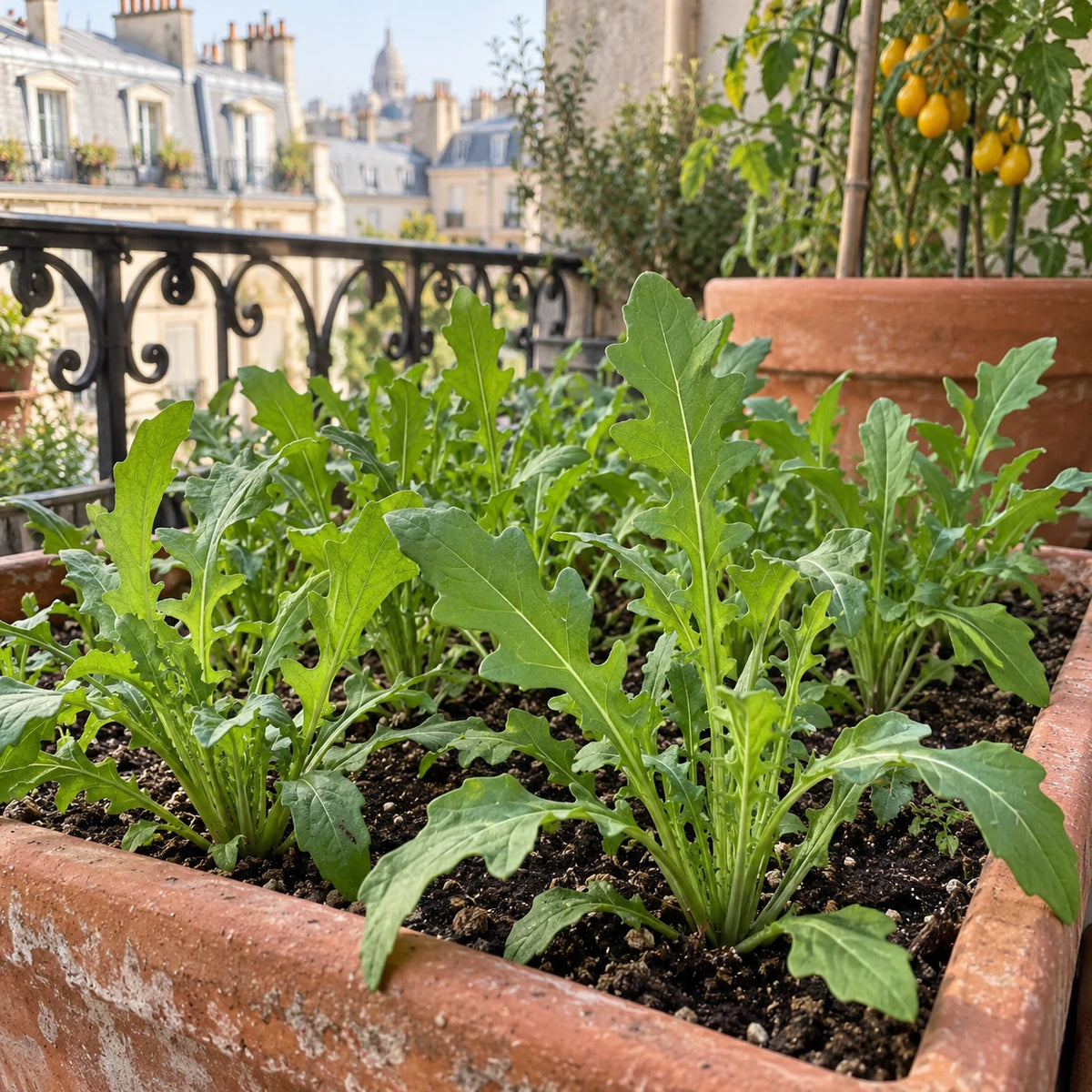
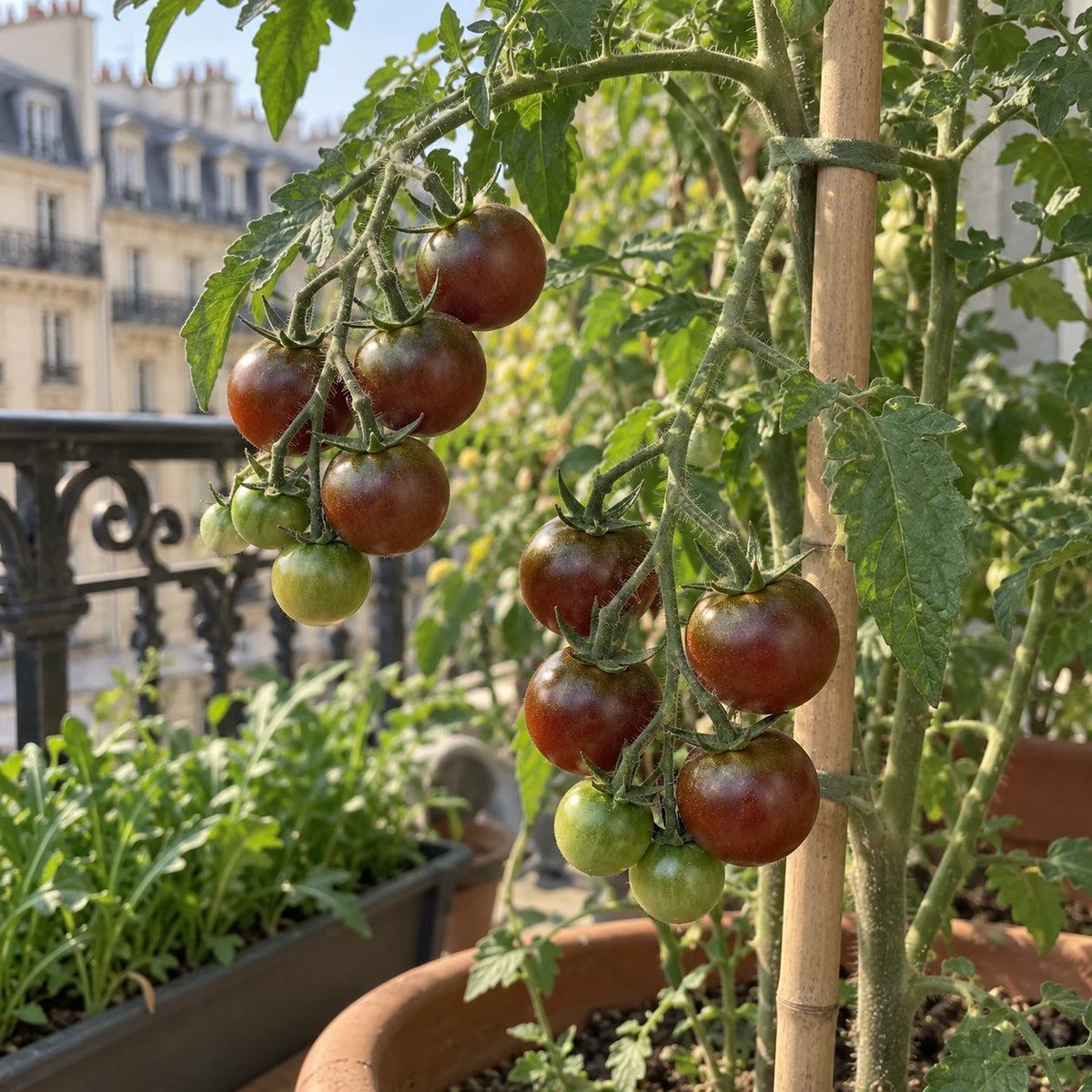
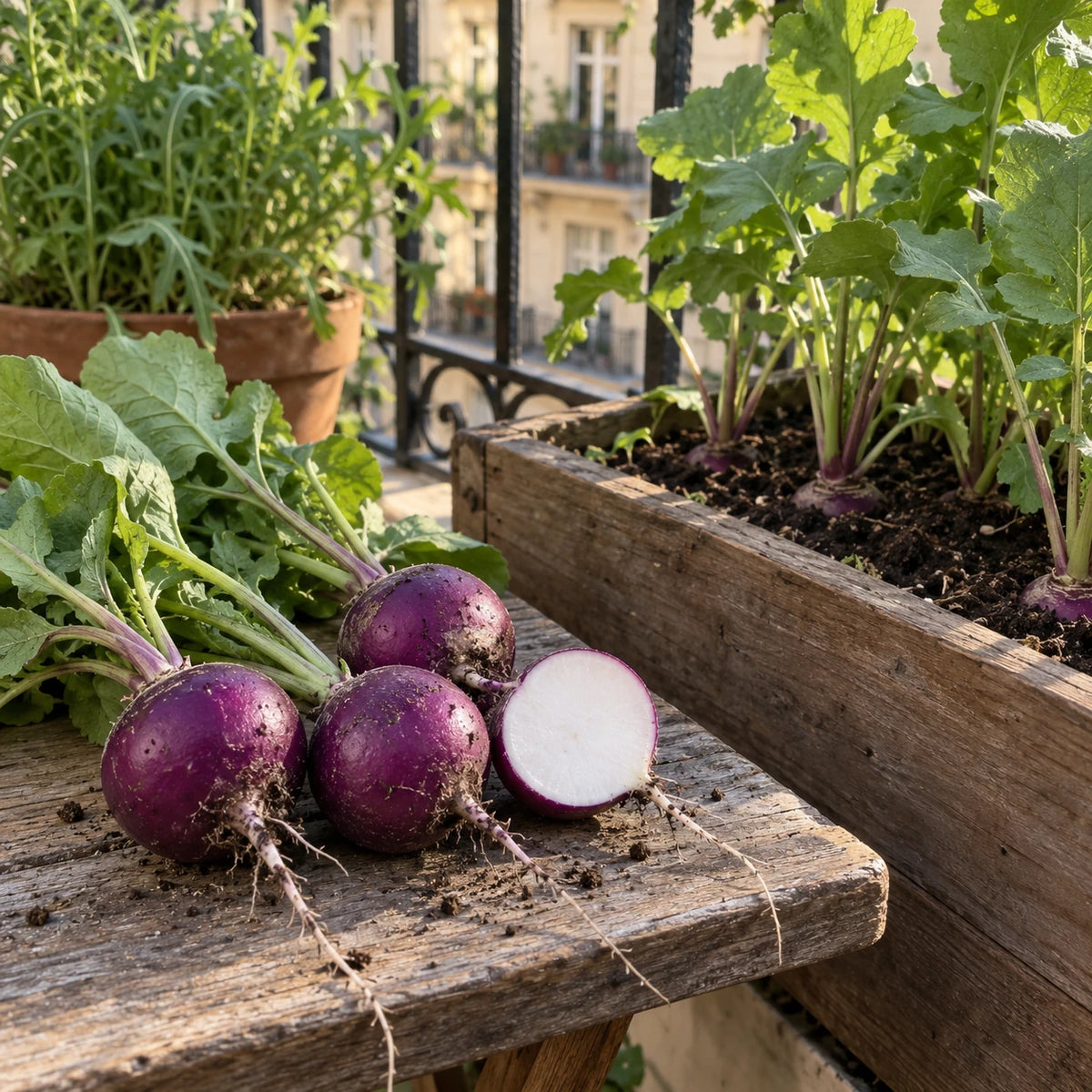
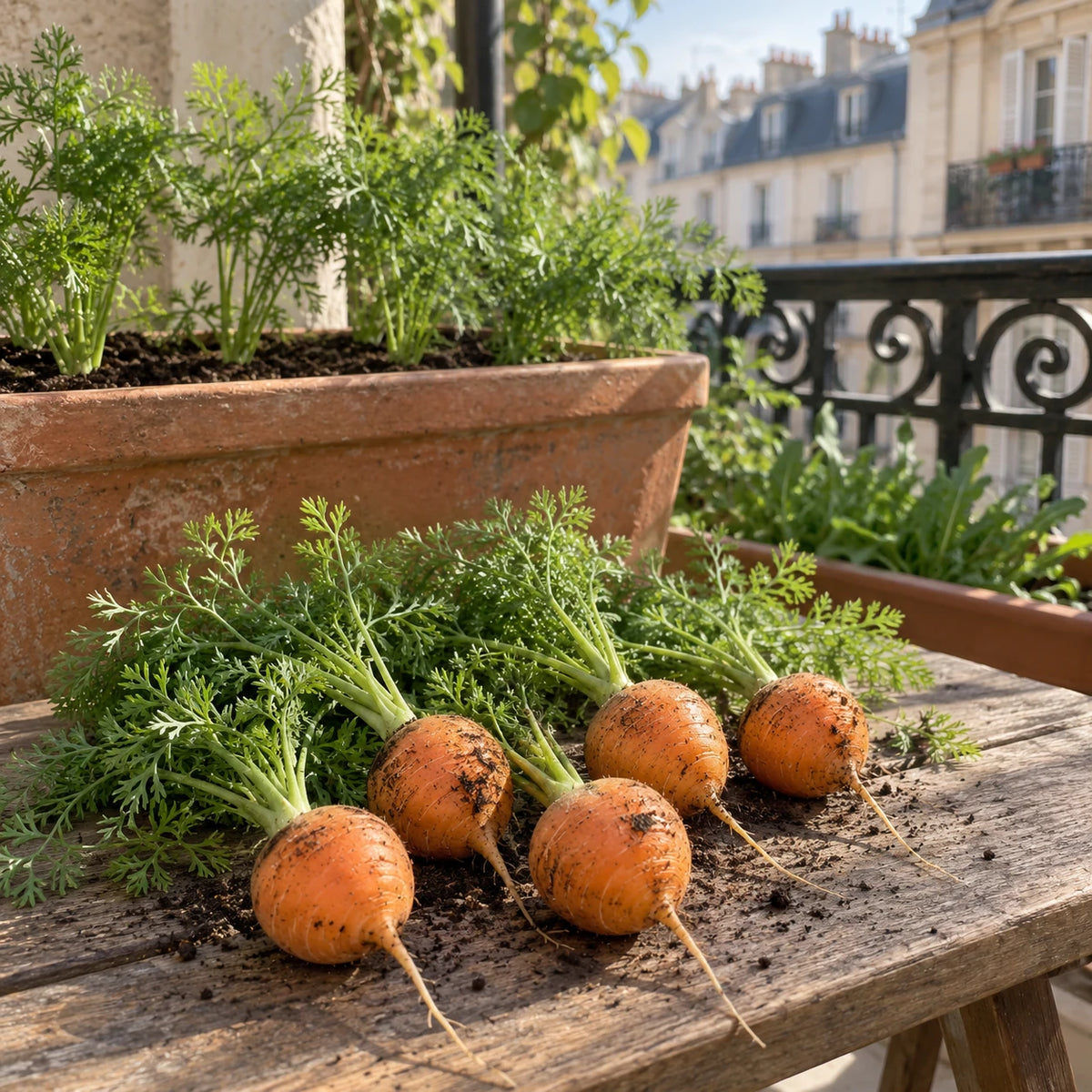
Open the balcony door, pick a few rocket leaves, watch the first tomatoes develop their colour… The vegetable garden can begin right by the kitchen. A planter, a few well-placed pots, and this small space becomes somewhere you enjoy spending time every day.
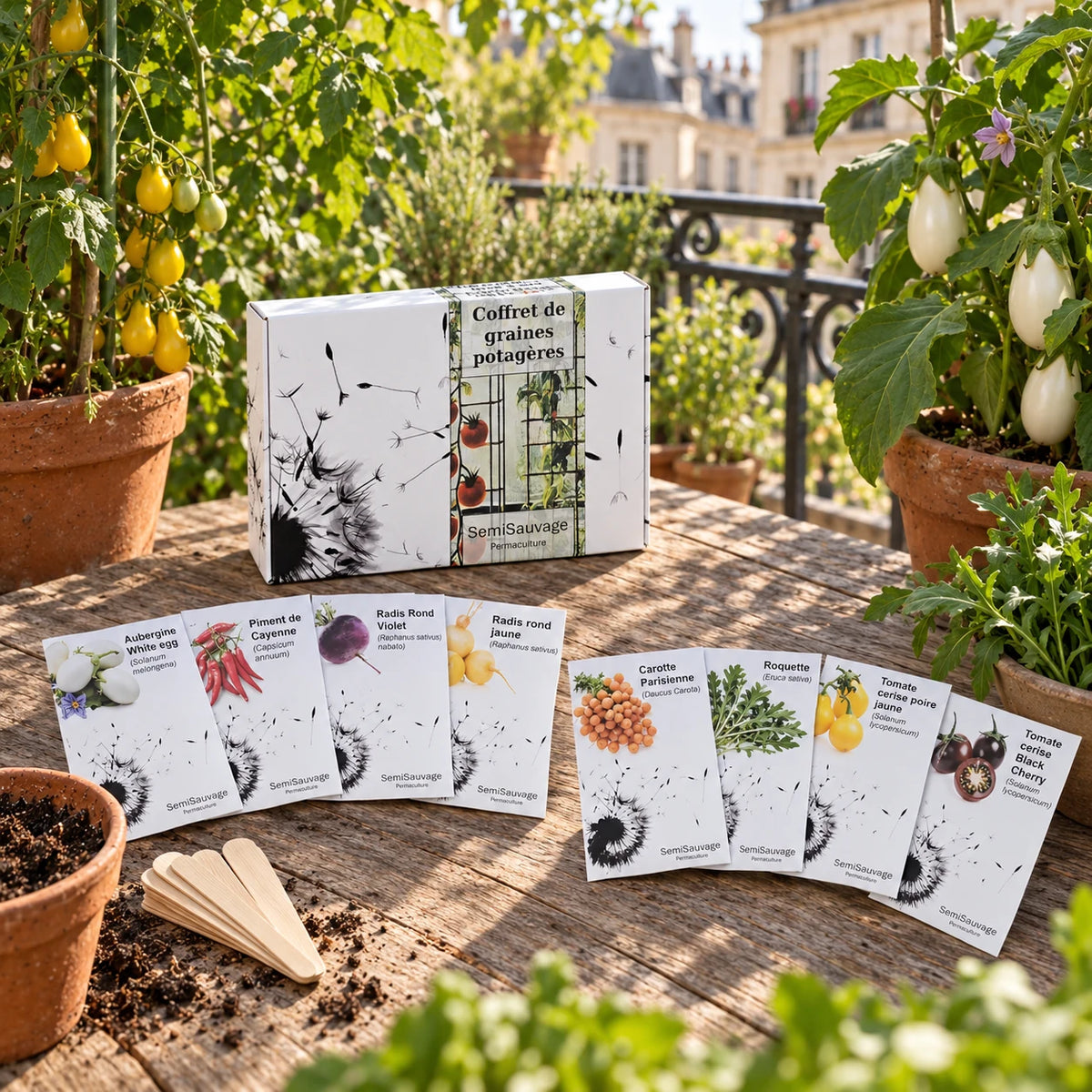
This vegetable seed collection for balconies and terraces brings together eight varieties to discover harvests with different shapes and flavours: dark cherry tomatoes or small yellow pear-shaped tomatoes, white aubergines, golden and purple radishes, round carrots, rocket and Cayenne pepper.
Whether given as a gift or bought for yourself, this is an invitation to choose your first seeds, observe the plants and rediscover the taste of what you grow yourself. Everyone can create their own vegetable garden according to the space, light and time available.
Getting started
Position: a sunny, sheltered balcony is suitable for tomatoes, aubergine and chilli pepper. Rocket and radishes prefer gentler light when the heat becomes intense.
Sowing: under cover in a warm place for fruiting vegetables; directly in the containers for rocket, radishes and carrots.
Moving outdoors: after the last frosts for the tomatoes, aubergine and chilli pepper, waiting until nights are mild enough for the latter two.
Growing medium: compost suitable for growing vegetables in pots, in containers with drainage holes to let water run out.
Space: the eight varieties are spread across several containers. Tomatoes need height and sturdy supports.
Harvests: staggered, depending on the species, sowing dates, your climate and balcony conditions.
Eight varieties, eight ways to enjoy them
Colour is part of the pleasure: the yellow of the small tomatoes echoes that of the radishes, the white aubergines stand out against the foliage, and the Parisian carrots hide their perfectly round roots underground.
The box contains 1,555 seeds divided into eight packets, accompanied by wooden labels. Sowing instructions are provided on the back of the packets. Everything is presented in a 15 × 10 × 3 cm box.
The pots, planters, potting soil, tools, plants, and vegetables used in the displays are not included.
Creating a vegetable garden to suit your balcony
Start by observing where the sun falls and reserving a path for moving around and watering. A planter that is easily accessible near the door is practical for arugula and radishes. A deeper container is suitable for Parisian carrots: their short roots make them easy to grow in pots; allow at least 20 cm of depth and loose potting soil.
For tomatoes, choose large, stable pots, ideally around 40 to 45 cm in diameter, with one plant per pot. Black Cherry and Yellow Pear are vigorous indeterminate tomatoes: their small fruits do not mean that the plants stay small. Install stakes at planting time and support the stems as they grow.
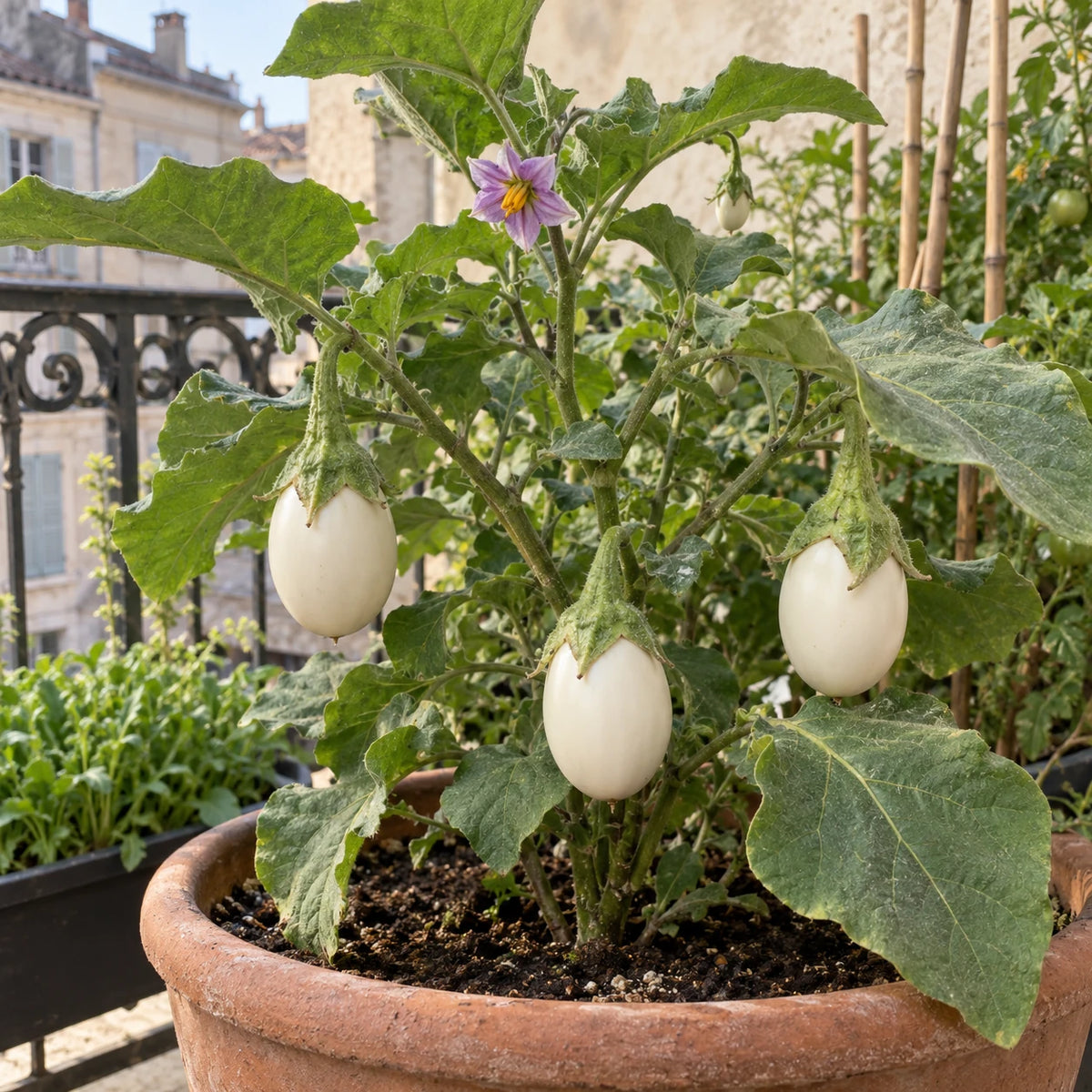
Give eggplants and peppers individual pots in the warmest, most sheltered spot. Position tall plants so they do not deprive all the others of light. You can start with just a few varieties, then expand your small vegetable garden once you have found your routine.
Sow at the right time, variety by variety
Tomatoes, eggplant, and chili pepper: start the seeds indoors in a warm place, then move them to a very bright location as soon as they emerge. As a general guide in temperate climates, tomatoes are usually sown from February to April; eggplant and chili pepper benefit from being started early, often in February or March. Adapt these dates to your region and your options for accommodating the young plants.
Keep the potting soil slightly moist, transplant the young plants into pots when they are sufficiently developed, then gradually acclimatize them to the outdoors. One mild day is not enough to signal the end of the cold: wait for the right time before planting them out permanently.
Rocket, radishes, and carrots: sow them directly in their growing container, without overcrowding. Thin them out afterward to give each plant room to develop. For radishes and rocket, small batches sown two to three weeks apart allow you to stagger the harvests when the season is suitable. Avoid high temperatures for radishes and protect rocket from the harshest sun.
The instructions specific to each packet help you refine your gardening practices. To prepare your first containers, see our guide How to sow seeds.
Supporting the plants every day
On a balcony, sun and wind can dry out the potting soil quickly. Check its moisture and water at the base as needed, without leaving the roots in stagnant water. A light mulch, once the plants are established, helps limit evaporation.
Fruit vegetables need regular feeding in pots: use sufficiently rich potting soil, then apply nutrients suited to their growth, following the instructions for the product you have chosen. Tie up the tomatoes without strangling the stems, check the supports, and allow air to circulate between the foliage.
A few minutes of observation are enough to spot a wilted leaf, a lack of water, or the first aphids. This daily time with the plants is also part of the pleasure.
Harvest, cook, start again
Harvest the young outer rocket leaves while leaving the heart intact. Harvest the radishes while they are still tender, then make use of the space freed up for a new sowing when conditions are suitable. Parisian carrots are best picked small, once their roots have taken on their round shape.
Let the tomatoes ripen on the plant and pick them gradually. For White Egg, harvest the fruits when they are well formed, still white and glossy, before they turn yellow; enjoy them cooked. Cayenne pepper can be dried to add heat to dishes later: handle the fruits with gloves and avoid contact with your eyes.
Harvests vary with exposure, care, and weather. The idea is to enjoy small, regular harvests and discover what your balcony can provide, at its own pace.
Making room for nature, even in the city
A bumblebee visits a tomato flower, an insect lands on arugula gone to flower: growing plants also opens a window onto the living world. If you have a little space, let a few plants flower and observe the visitors they attract.
Combining foliage, blooms, and different growth cycles keeps the balcony interesting well beyond harvest time. The vegetable garden becomes a little landscape that you can watch evolve.
Saving seeds for the future
Keep unsown seeds dry, cool, and protected from light. Their shelf life depends on the species and storage conditions; their ability to germinate may decrease over time.
Open-pollinated varieties also offer the chance to harvest your own seeds. Tomatoes are well suited to a first experience, using very ripe fruit. For radishes, let a few plants produce flowers and then seeds, bearing in mind the possibility of cross-pollination between varieties. Carrots require more patience: they generally flower in their second year.
Each species has its own characteristics. Our guide to storing your seeds helps you identify, dry, and store your harvests.
The SemiSauvage Permaculture spirit
At SemiSauvage, we choose open-pollinated, non-hybrid, untreated seeds to reconnect with the pleasure of sowing and growing. This kit brings that desire to balcony scale: discovering different varieties, caring for your little corner of nature, and savoring the journey from seed onward.
A few pots, your first seedlings, and the joy of picking fresh produce right near home.
Le mode d' emploi était clair mais j' ai peut-être laissé un peu de lumière passer vers les bouteilles de culture .
Pas beaucoup de filaments dedans.
Pour le reste , il faudras attendre 4 ans pour voir le résultat !
Très satisfaite de la livraison rapide, de l'emballage soigné et des sachets donnant des informations précises sur la graine...de plus une attentation avec un sachet de graines en cadeau est toujours très agréable !