
In this article 9
Do you dream of harvesting your own tasty and rare mushrooms, directly in your garden or even indoors? Thanks to the liquid mycelium tubes offered by SemiSauvage Permaculture, growing species such as morels, truffles, porcini, or shiitakes becomes accessible, even without prior experience.
What is liquid mycelium?
Each tube contains a live mushroom strain in the form of mycelium, suspended in a sterile liquid. Mycelium is the vegetative organism of the mushroom, comparable to a plant’s roots, capable of colonizing a substrate and then fruiting (producing mushrooms).
Before use, the mycelium must be diluted in a specific sugar solution, then incubated for a few days at room temperature.
How do you prepare the mixture?

- Water: Use mineral water (non-chlorinated).
- Sugar: Add a preservative-free syrup made with glucose/fructose (apple or peach).
-
Dosage:
- 15 ml tube → 1.5 L of water + 15 ml of syrup
- 50 ml tube → 5 L of water + 50 ml of syrup
- Incubation: Leave it in a dark place at a minimum temperature of 20 °C for 10 days. The liquid will become cloudy and filaments will appear.
Open the bottle regularly to release the gases. Avoid excessive pressure by slightly piercing the cap.
Which mushrooms can be cultivated?
Outdoors, in the garden, forest, or meadow
- Morels: plant in spring or autumn, in sandy soil or orchards. Fruits in spring, 2 to 3 years after inoculation.
- Porcini, chanterelles, black trumpets, hedgehog mushrooms: mycorrhizal species that should be paired with the roots of broadleaf trees. Fruiting occurs from late summer through autumn, depending on the species.
- Fairy ring mushroom: grows in meadows or lightly trafficked clearings. Very hardy, it fruits in spring and autumn.
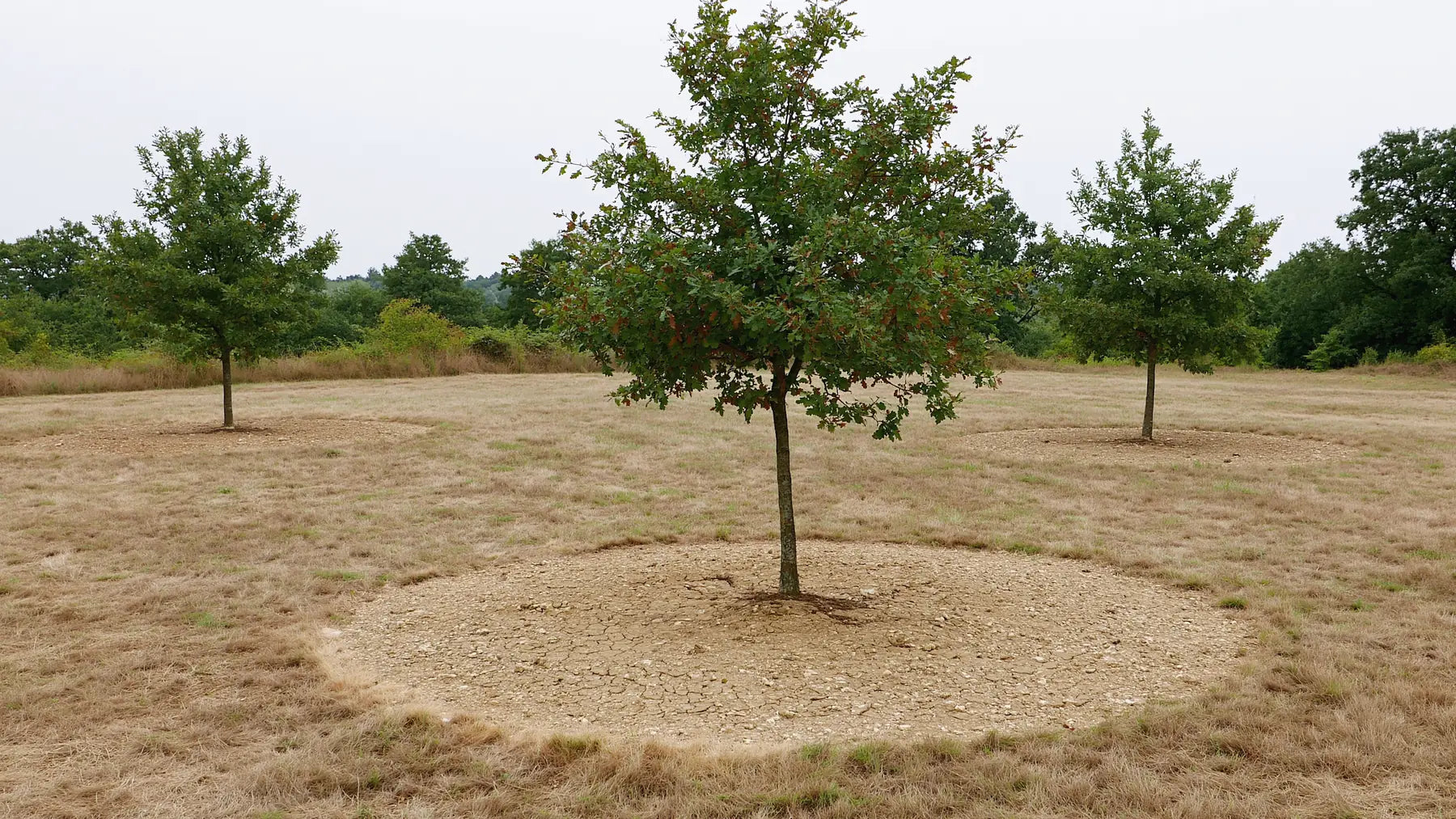
- Black or white truffles: inoculate the roots of young trees (oak, hazel, linden, etc.). Fruiting after 5 to 10 years, but long-lasting.
Indoors or in a controlled outdoor environment
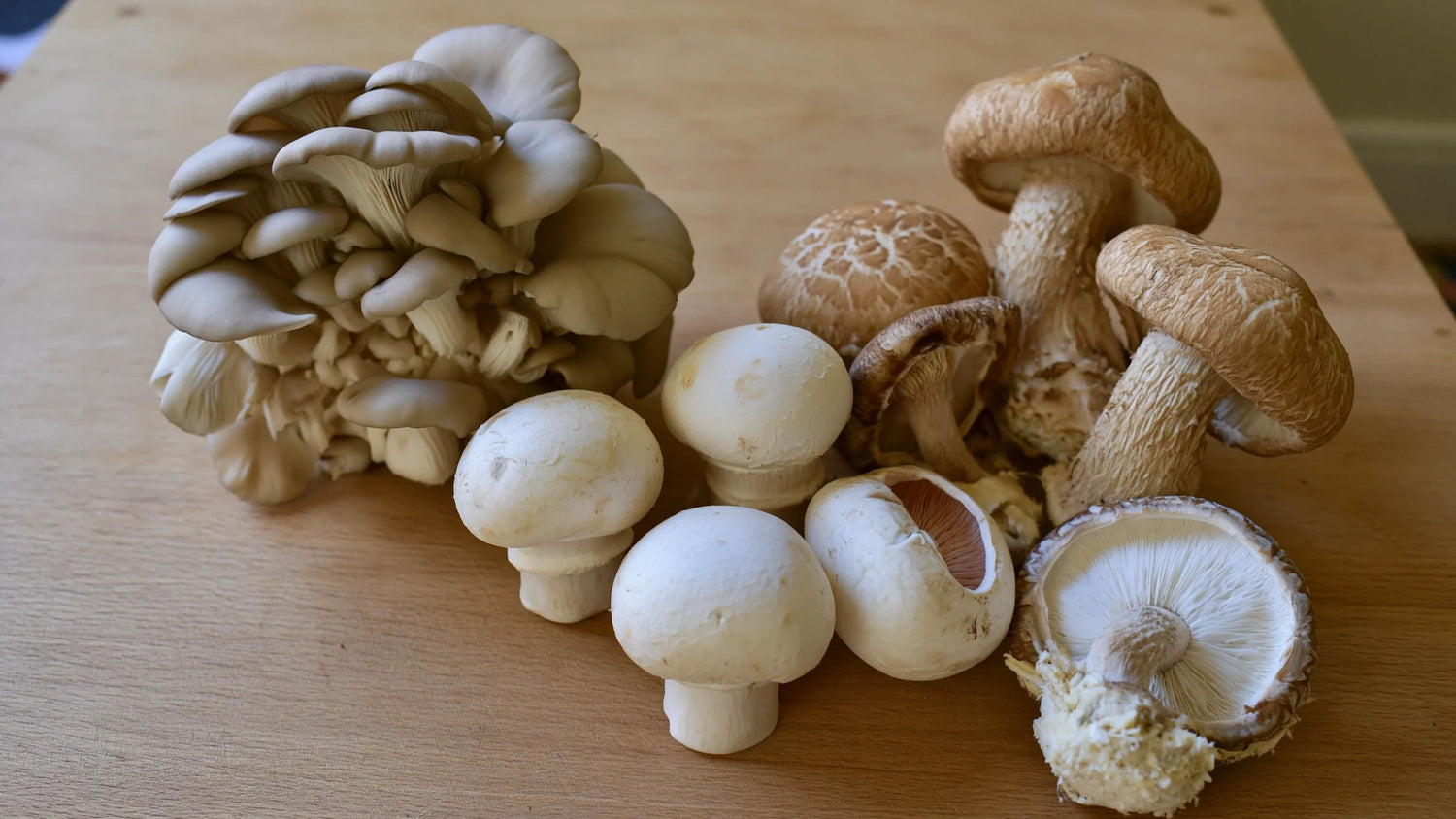
- Button mushrooms (white & brown): in trays or boxes, on pasteurized compost. Fast fruiting (2 to 3 months).
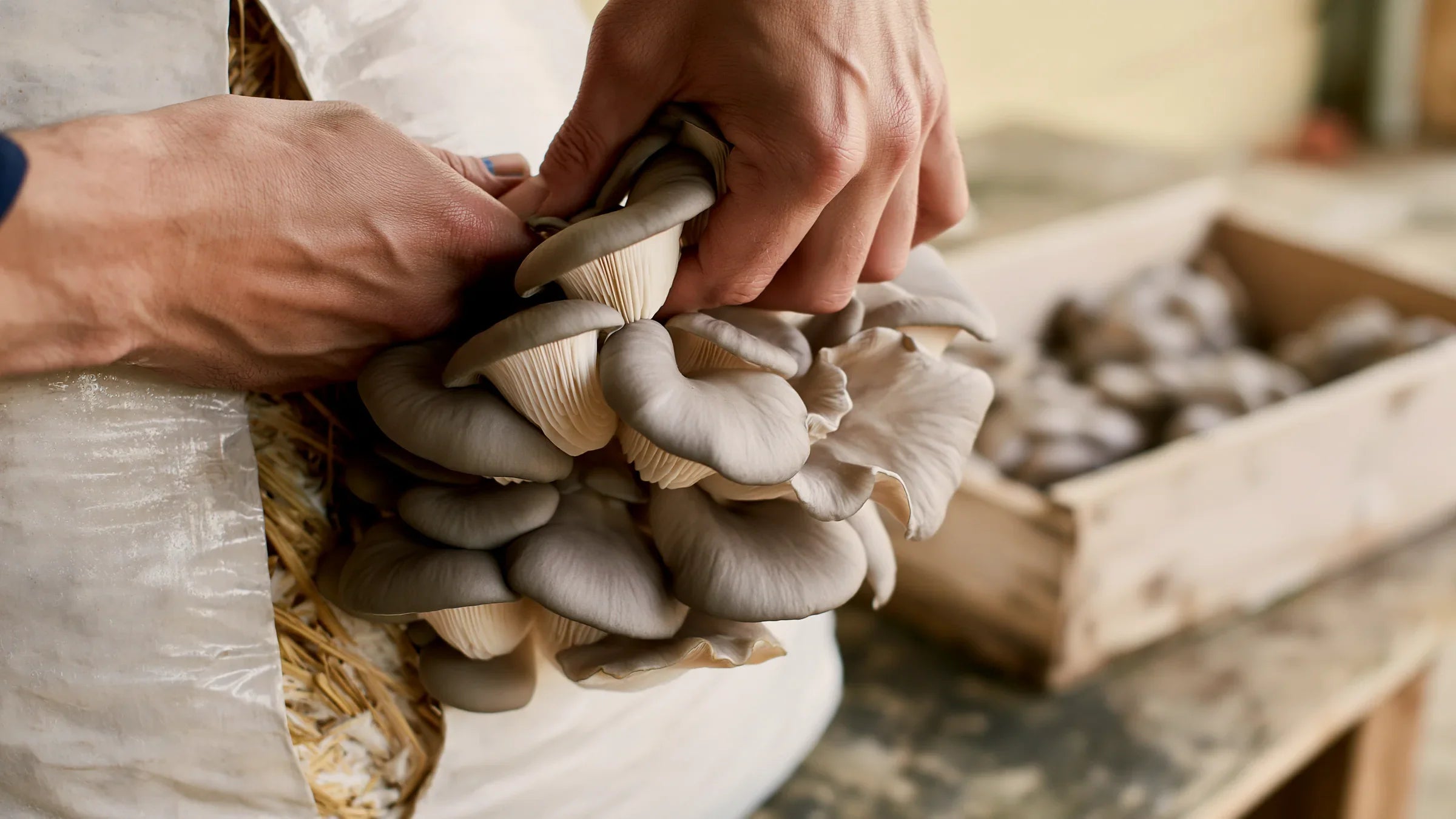
- Oyster mushrooms, shiitake mushrooms, black mushrooms: highly productive on wood, straw, or coffee grounds. Suitable for both indoor grow bags and outdoor logs.
How to inoculate?
- Choose a good substrate: forest humus, sawdust, compost, straw, or wood, depending on the species.
- Pour the diluted mycelium mixture directly onto the moistened substrate.
- Cover lightly with dead leaves or straw to retain moisture.
- Maintain regularly: monitor moisture, avoid chemical fertilizers, and ventilate if necessary.

When to inoculate?
- Morels, porcini, chanterelles, fairy ring mushrooms, truffles, etc.: spring or autumn
- Button mushrooms, oyster mushrooms, shiitake mushrooms: year-round indoors
How long before the first harvest?
Fruiting can be quick (a few weeks) for some species, while others, such as morels and truffles, may require several years. Once established, mycelium can live for many years and produce repeatedly.
Why choose liquid mycelium?
Unlike ready-made kits, which are often limited to a single harvest, liquid mycelium tubes enable lasting colonization in a natural ecosystem. It is an independent, eco-friendly, and rewarding approach.
Discover all our myceliums and embark on the adventure of artisanal mushroom cultivation, whether in your garden, a meadow, or even a cool, dark cellar.
Frequently asked questions
Can tap water be used?
No. Tap water is chlorinated, and chlorine is specifically used to destroy microorganisms—the mycelium is one of them. Use unchlorinated mineral water, or leave the water exposed to air long enough for the chlorine to evaporate.
Why must the syrup be preservative-free?
The sugar serves as food for the mycelium during the ten-day incubation period. Syrup containing preservatives would have the opposite effect: it would prevent growth. That is why glucose and fructose syrup, apple or peach flavored, is used.
How can you tell whether incubation was successful?
After about ten days at a minimum of 20 °C and in the dark, the liquid becomes cloudy and white filaments appear suspended in it. This is the only sign to look for: liquid that remains perfectly clear has not started.
The liquid has not become cloudy after ten days. What should I do?
Go through the three conditions in order. Did the temperature remain above 20 °C? Was the water unchlorinated? Was the syrup truly preservative-free? Just one of these three points is enough to prevent it from starting. Wait a few more days before drawing a conclusion: cold slows it down without killing it.
Can porcini or truffles be grown in a pot or indoors?
No. These species are mycorrhizal: they live in symbiosis with the roots of a living tree and never fruit without it. They are planted at the base of a young broadleaf tree, in the ground. For indoor cultivation, turn to saprophytes—oyster mushrooms, shiitake, and white button mushrooms—which only need a substrate.
Key points
Liquid mycelium is not a disposable kit: it establishes itself permanently and produces for years. Everything depends on preparation—unchlorinated water, preservative-free syrup, and ten days in the dark at a minimum of 20 °C. The timeframe depends on the species, not on how much care you provide: a few weeks on wood or straw, several years for a truffle.

Leave a comment
This site is protected by hCaptcha and the hCaptcha Privacy Policy and Terms of Service apply.