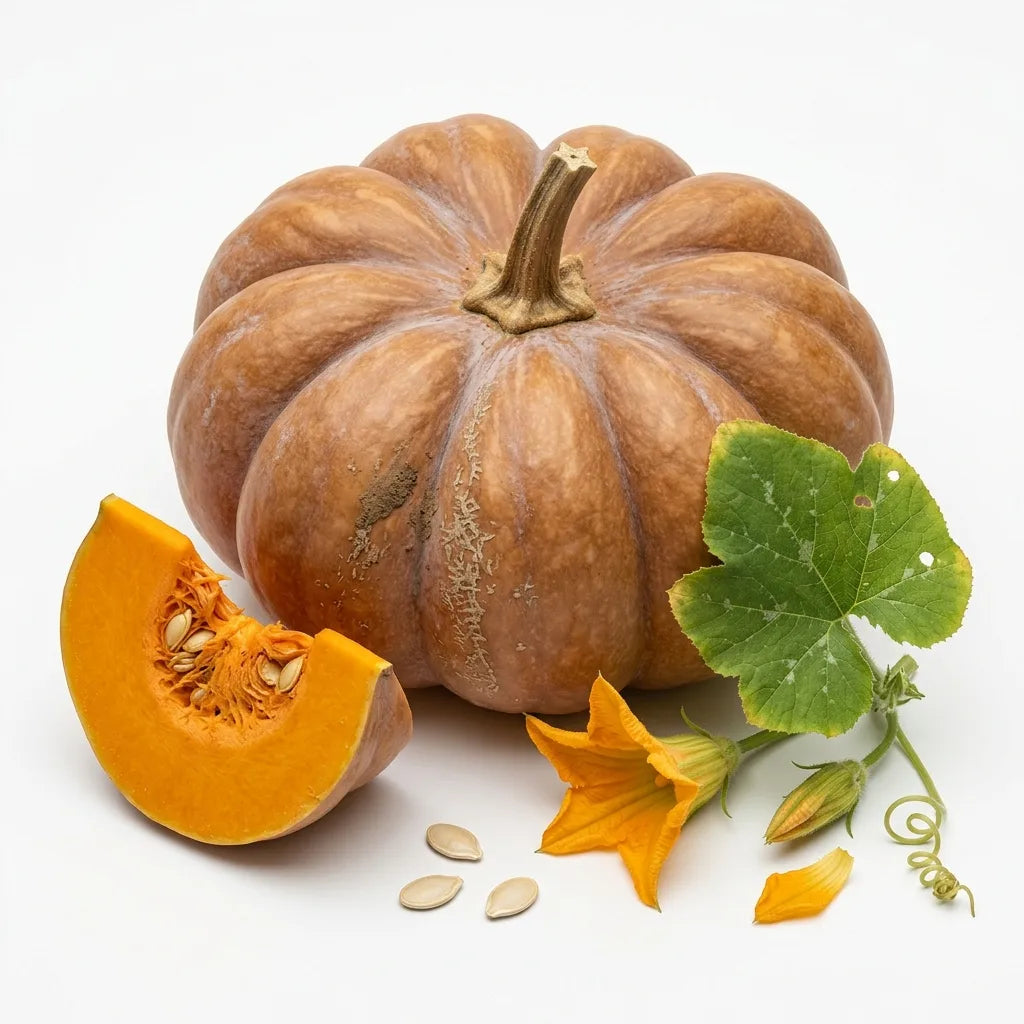
Cucurbita moschata “Musquée de Provence”
Musquée de Provence squash, nutmeg squash, winter musquée, Provence squash: it is impossible to confuse it with any other. Its flattened, deeply ribbed fruits, turning orange-bronze when ripe, resemble cartwheels and weigh 5 to 10 kg. This is the squash traditionally sold cut into slices at Provençal markets.
Characteristics:
-
Large ribbed fruits: 5 to 10 kg, orange-bronze, highly decorative.
-
Dense, aromatic flesh: dark orange, sweet and musky, with excellent cooking quality.
-
Long storage life: several months in a dry place, with its flavor improving over time.
-
Traditional variety from southern France, adapted to hot, dry summers.
Precautions:
- As with all cucurbits, a fruit with a very bitter taste may contain cucurbitacins, which can irritate the digestive system. Always taste a small piece: if the bitterness is pronounced, discard the entire fruit.
Sowing advice:
-
Exposure: full sun, warm — this is a southern variety, but it can succeed elsewhere with plenty of sunlight.
-
Soil: rich, deep, and well drained. Given the size of its fruits, it is extremely hungry: add plenty of compost across the entire bed. It dislikes stagnant water around the crown.
-
Method: no stratification required. Sow in pots under cover in April–May at 20–25 °C, or directly in the ground after the last frosts, 2–3 cm deep, with the seed placed on its edge. See how to sow your seeds.
Planting advice:
- Transplant after the frosts, spacing plants 1 to 1.5 meters apart: this is a very vigorous trailing variety that quickly occupies several square meters.
Care advice:
- Water regularly but not excessively, at the base and without wetting the foliage to help limit powdery mildew. Mulching is recommended to retain moisture and limit weeds.
- Limit each plant to 2 or 3 fruits and place a board beneath each one: they are heavy and will rot when touching damp soil.
Harvest advice:
- Harvest before the frosts, when the stem is dry and corky and the skin has changed from green to orange-bronze. Leave 5 cm of stem: fruits cut flush with the skin rot quickly.
- Allow them to dry for around ten days in the sun before storing them in a dry, well-ventilated place.
Beneficial companions:
Benefits for biodiversity:
- Its large yellow flowers provide an important source of pollen and nectar for bees and bumblebees.
- Its vast trailing foliage covers the soil throughout the summer, smothering weeds and protecting the earth from drying out.
Uses:
- In soups, mashes, gratins, tians, or autumn desserts — pies and preserves. Its flesh holds its shape perfectly when cooked. Once cut, wrap the exposed section: it will keep for a good week in the refrigerator.
Symbolism:
A symbol of abundance and generosity, Musquée squash evokes the warmth of summer and the culinary traditions of the Provençal region.
Harvesting your own seeds:
Take seeds from a fully ripe fruit, rinse them, and dry them flat for several days. Cucurbita moschata does not cross with zucchini (C. pepo) or pumpkins (C. maxima) — but it does cross with Butternut, its close relative. See saving your seeds.
Our Commitment to Quality: at SemiSauvage - Permaculture, we grow and select our seeds with respect for all living things as our guiding principle. Based near the Auvergne Volcanoes, we choose open-pollinated, non-hybrid varieties, tested for their germination rate, carefully sorted and packaged, with no chemical treatment. Our conviction: to give gardeners back the ability to resow, year after year, seeds that truly belong to them.
The great squash of southern France, spectacular in the garden and on the table.