Cucurbita moschata „Butternut”
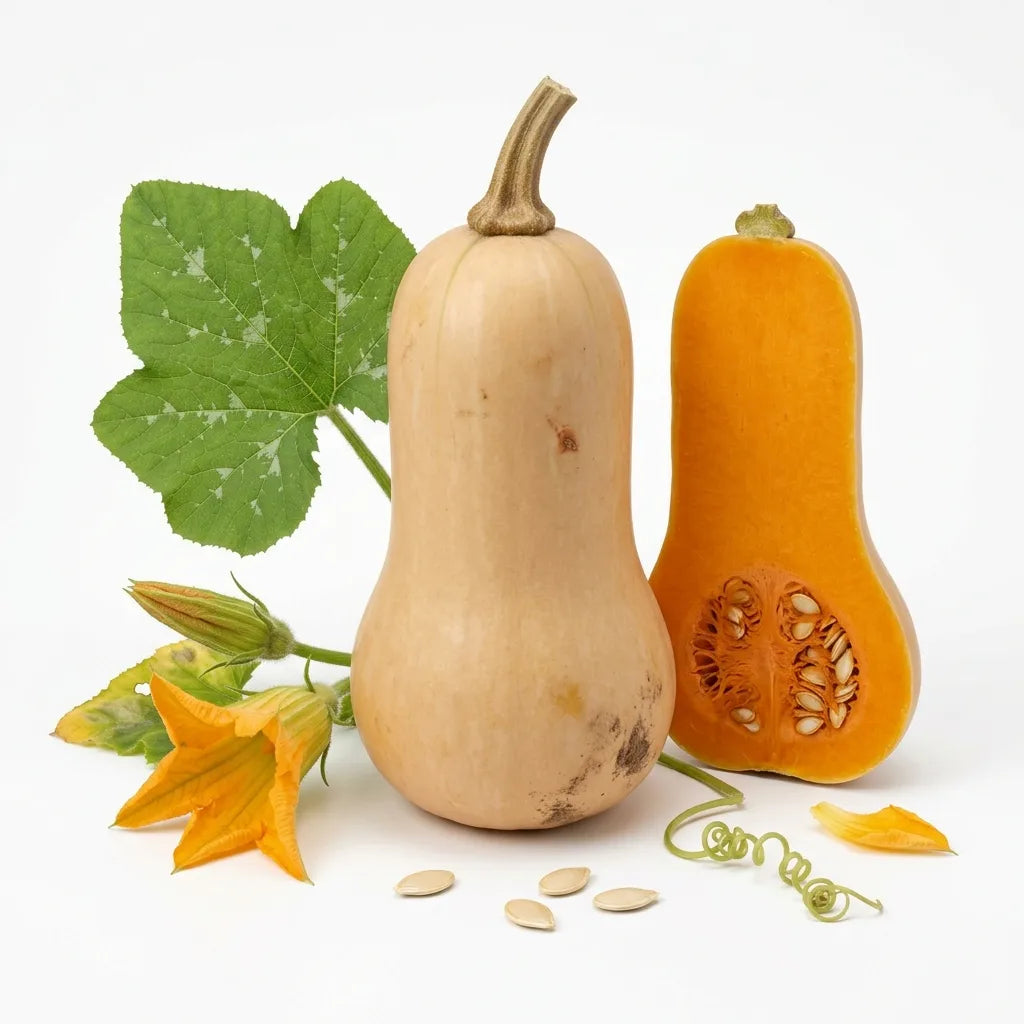
Dovleac Butternut, dovleac unt, dovleac cu gust de nucă și unt: numele său englezesc spune exact ce este — „nucă de unt”. Miezul său portocaliu intens, dens și fără fibre, cu mica lojă de semințe concentrată în partea bombată, îl face cel mai practic dovleac de gătit: puține resturi, mult miez.
Caracteristici:
-
Miez dens și fără fibre: portocaliu intens, ferm, cu gust subtil dulce și muscat.
-
Dovleac de păstrat: trece iarna fără probleme într-un spațiu aerisit, la aproximativ 15 °C.
-
Puține semințe: concentrate în partea de jos a fructului, restul este plin.
-
Adaptabil: se dezvoltă la fel de bine în nordul și în sudul Franței.
Precauții:
- Ca la toate cucurbitaceele, un fruct cu gust foarte amar poate conține cucurbitacine, iritante pentru sistemul digestiv. Gustați întotdeauna o bucățică: dacă amăreala este pronunțată, aruncați fructul întreg.
Sfaturi pentru semănat:
-
Expunere: soare deplin, pentru a capta maximum de căldură.
-
Sol: foarte bogat, profund și bine drenat. Este o plantă extrem de lacomă: adăugați generos compost pe toată parcela, nu doar în groapa de plantare. Nu suportă apa stagnantă la colet.
-
Metodă: semănați în pahare de răsaduri, la adăpost, la 20-25 °C, începând din aprilie, sau direct în sol după ultimele înghețuri, la 2-3 cm adâncime, cu sămânța așezată pe muchie. Consultați cum să semănați semințele.
Sfaturi pentru plantare:
- Transplantați după înghețuri, lăsând o distanță de cel puțin 1 metru: este o plantă viguroasă, târâtoare, care poate fi și palisată pe o structură solidă pentru a economisi spațiu.
Sfaturi pentru întreținere:
- Udați abundent la bază, fără să udați frunzișul. Aplicați un strat gros de mulci.
- În climatele răcoroase, limitați la 3 sau 4 fructe pe plantă și ciupiți vârfurile tulpinilor după ultimul fruct: veți obține dovleci cu adevărat copți, în locul unei serii de fructe nefinalizate.
Sfaturi pentru recoltare:
- Recoltați înainte de înghețuri, când pedunculul este uscat și lemnos, iar coaja nu mai poate fi zgâriată cu unghia. Păstrați întotdeauna 5 cm de peduncul: un dovleac tăiat până la bază putrezește rapid.
- Lăsați-i să se zvânte aproximativ zece zile la soare înainte de depozitare. Gustul lor se îmbunătățește după una sau două luni de păstrare.
Asocieri benefice:
Importanță pentru biodiversitate:
- Florile sale mari și galbene oferă polen și nectar din abundență albinelor și bondarilor, dis-de-dimineață.
- Frunzișul său târâtor și imens acoperă solul toată vara, înăbușă buruienile și protejează pământul de uscare — o cultură valoroasă pentru un sol viu.
Utilizare:
- În supă-cremă, copt la cuptor în felii, sub formă de piure, gratinat, în tartă dulce sau risotto. Coaja sa subțire devine fragedă la gătire: nu este nevoie să o curățați dacă îl coaceți. Semințele pot fi prăjite.
Recoltarea propriilor semințe:
Extrageți semințele dintr-un fruct bine copt, clătiți-le și uscați-le întinse, timp de mai multe zile. Veste bună: Cucurbita moschata nu se încrucișează cu dovleceii (C. pepo) și nici cu dovlecii (C. maxima) — doar între ele. Consultați cum să vă păstrați semințele.
Angajamentul față de calitate: la SemiSauvage - Permaculture, cultivăm și selectăm semințele având respectul pentru viață drept principiu călăuzitor. Așezați în apropierea Vulcanilor din Auvergne, alegem soiuri reproductibile și nehibridizate, testate pentru rata de germinare, sortate și ambalate cu grijă, fără niciun tratament chimic. Convingerea noastră: să le redăm grădinarilor capacitatea de a semăna din nou, an de an, semințe care le aparțin cu adevărat.
Cel mai practic dovleac din grădina de legume, care se păstrează toată iarna.