Artemisia absinthium
Absinthe, wormwood, holy herb, worm herb, green fairy: few plants have such a turbulent history. Banned in France from 1915 to 2011, it can now once again be grown freely in the garden. Its finely cut silvery foliage and legendary bitterness—the most intense in the plant kingdom—make it a distinctive perennial.
Characteristics:
-
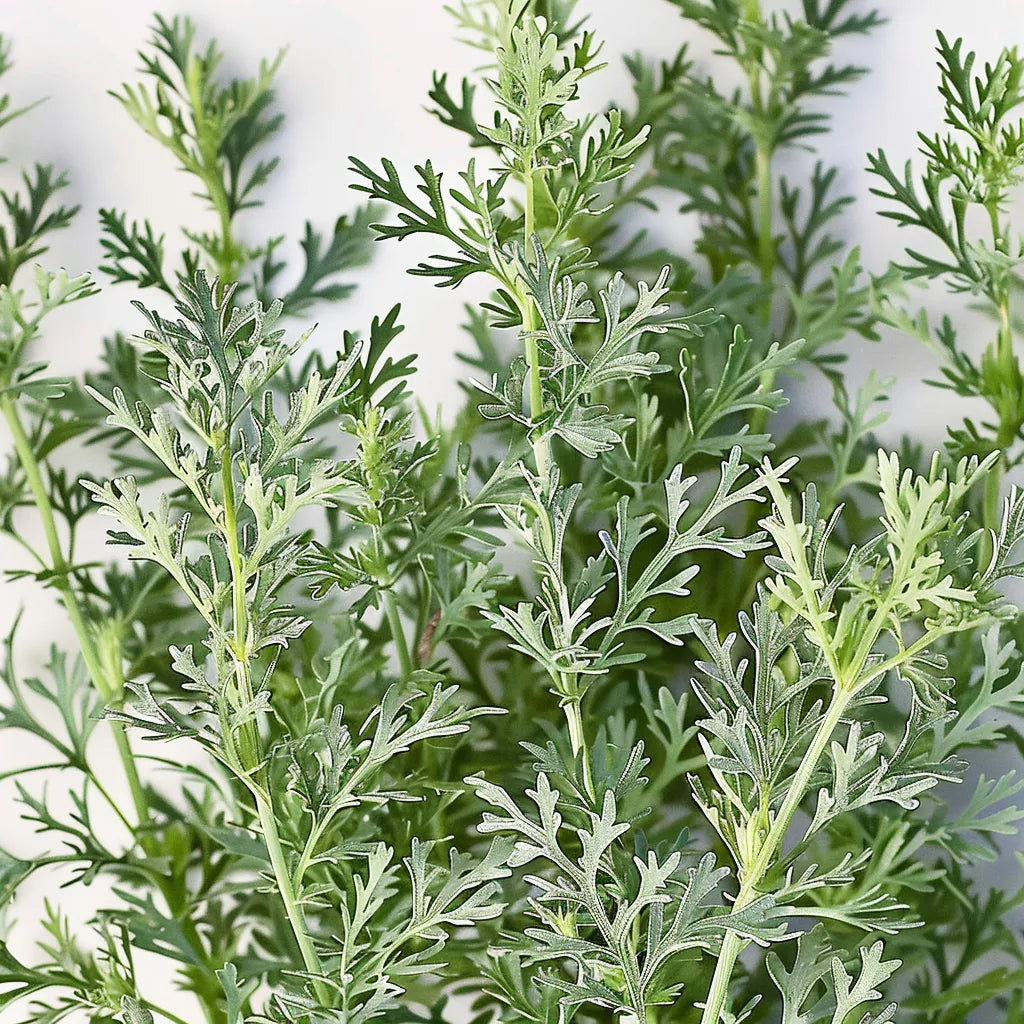
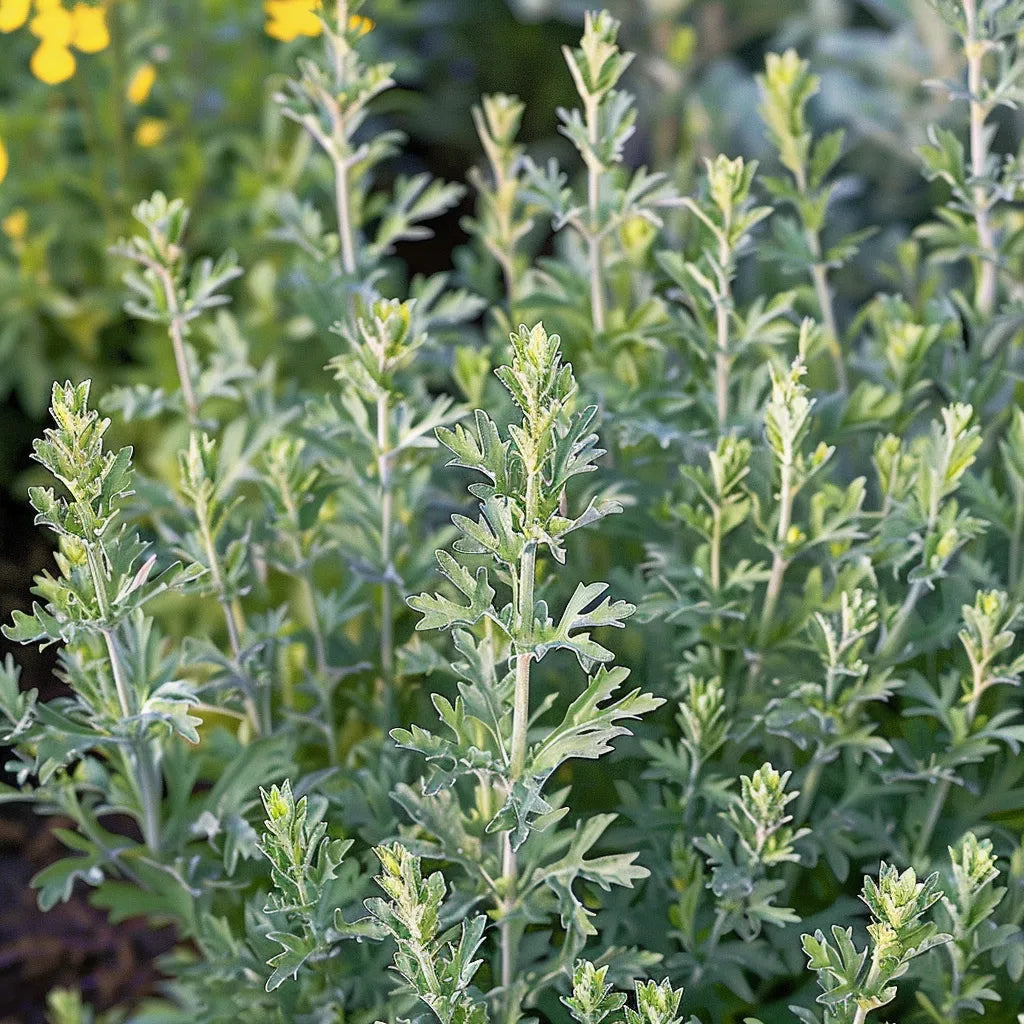
Silvery foliage: very finely cut and silky, remarkably ornamental throughout the season.
-
Hardy perennial: it forms a woody clump at the base and returns every year without care.
-
Legendary bitterness: its name has become synonymous with bitterness in everyday language.
-
Drought-resistant: once established, it requires almost no watering.
Precautions — read carefully:
- Absinthe contains thujone, an active compound that can be harmful in high doses. Its use should not be improvised: reserve it for use under the supervision of a professional, and do not prepare homemade infusions or macerations.
-
Not recommended for pregnant or breastfeeding women, or for children.
-
Allelopathic effect: its thujone content strongly inhibits the growth of nearby plants. Plant it at least one metre away from any other crop—this instruction should be taken seriously, as it literally sterilizes its immediate surroundings.
- Avoid composting its residues in large quantities, for the same reason.
Sowing advice:
-
Exposure: full sun to partial shade.
-
Soil: rich in humus but above all well drained. It tolerates poor, dry soils and is far more sensitive to stagnant winter moisture than to cold. In heavy soil, plant it on a mound.
-
Method: sow in March–April, after the last frosts, on the surface or barely covered—the seeds are tiny and need light to germinate. See how to sow your seeds.
Planting advice:
- Plant out in early autumn or the following spring, allowing each plant at least one metre of space in every direction. An isolated border or dedicated corner suits it better than a spot in the middle of the vegetable garden.
Care advice:
- No watering once established. No fertilizer.
- Cut back the clump at the end of winter to keep it compact, without cutting into the old wood.
Harvesting advice:
- Harvest the flowering tops at the beginning of flowering, in dry weather, and dry them upside down in the shade in a well-ventilated place.
Beneficial combinations:
- No direct combination is possible because of its allelopathic effect. However, its powerful scent makes it a traditional repellent plant: planted along the edge of a plot, at a distance, it disrupts several pests. See our repellent plants.
Benefits for biodiversity:
- Its small yellow flower heads in late summer are visited by many small pollinators, at a time when resources are becoming scarce.
- Its evergreen basal foliage provides winter shelter for beneficial insects.
- Its drought resistance makes it an excellent choice for water-wise gardens.
Uses:
- A striking ornamental plant valued for its silvery foliage, with dried flowering tops used in repellent sachets for wardrobes.
- A major traditional medicinal plant, listed in the French Pharmacopoeia and used in herbal medicine since Antiquity. See our medicinal plants to sow.
Symbolism:
The “green fairy” of nineteenth-century poets and painters—Verlaine, Rimbaud, Van Gogh—owes its nickname to the drink made from it. Its Greek name, apsinthion, is said to mean “without sweetness.”
Harvesting your own seeds:
Leave a few flower stalks to dry completely on the plant, then rub them over a container and winnow them: the seeds are extremely fine. See how to store your seeds.
Our Commitment to Quality: at SemiSauvage - Permaculture, we grow and select our seeds with respect for all living things as our guiding principle. Based near the Volcanoes of Auvergne, we choose open-pollinated, non-hybrid varieties, tested for their germination rate, sorted and carefully packaged, with no chemical treatments. Our conviction: to give gardeners back the ability to sow, year after year, seeds that truly belong to them.
Silvery foliage and a legendary history, in a dry corner of the garden.