Solanum lycopersicum
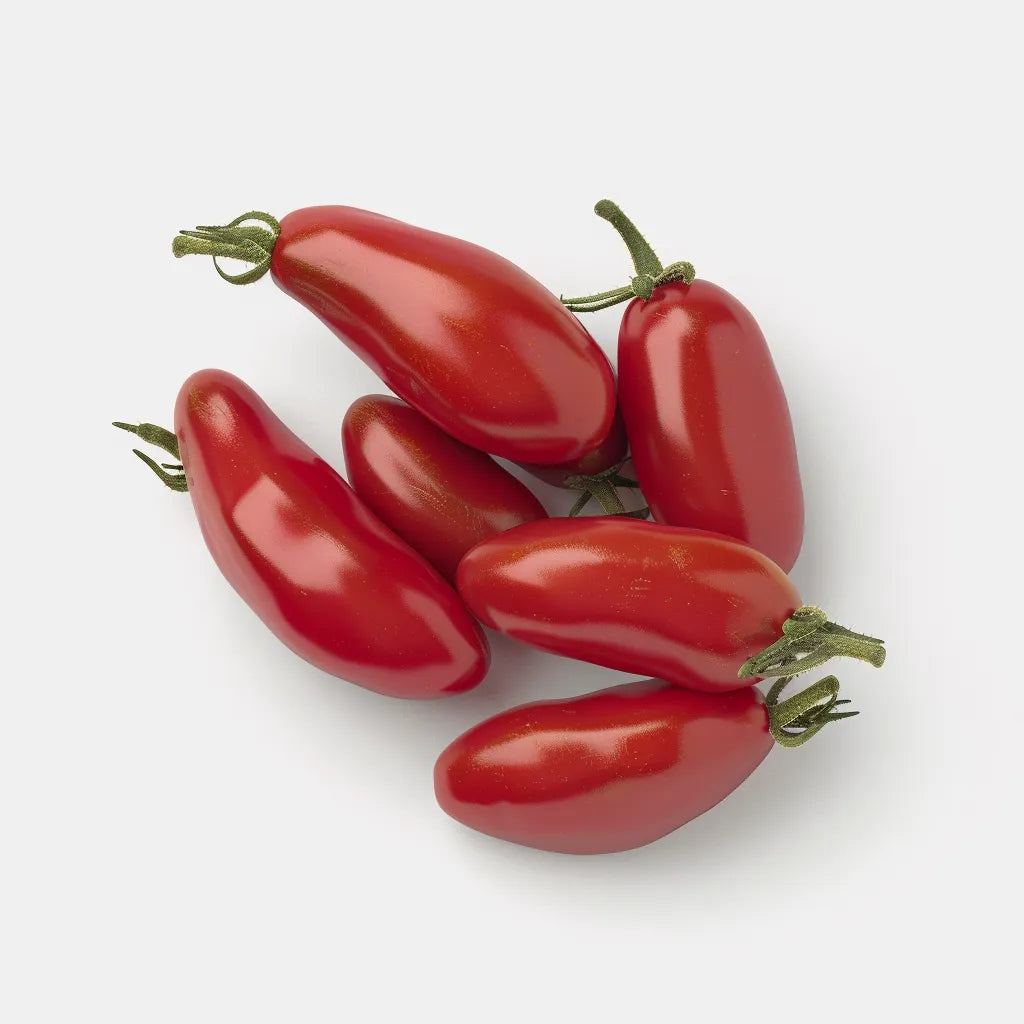
San Marzano tomato, San Marzano dell'Agro Sarnese-Nocerino: this is the tomato used in Italian sauces, cultivated since the 19th century in the volcanic soils of Mount Vesuvius. Its dense flesh, skin that slips off in one motion after blanching, and balance between sweetness and acidity have made it the worldwide benchmark for preserved tomatoes—and the only tomato allowed in a true Neapolitan pizza.
Characteristics:
-
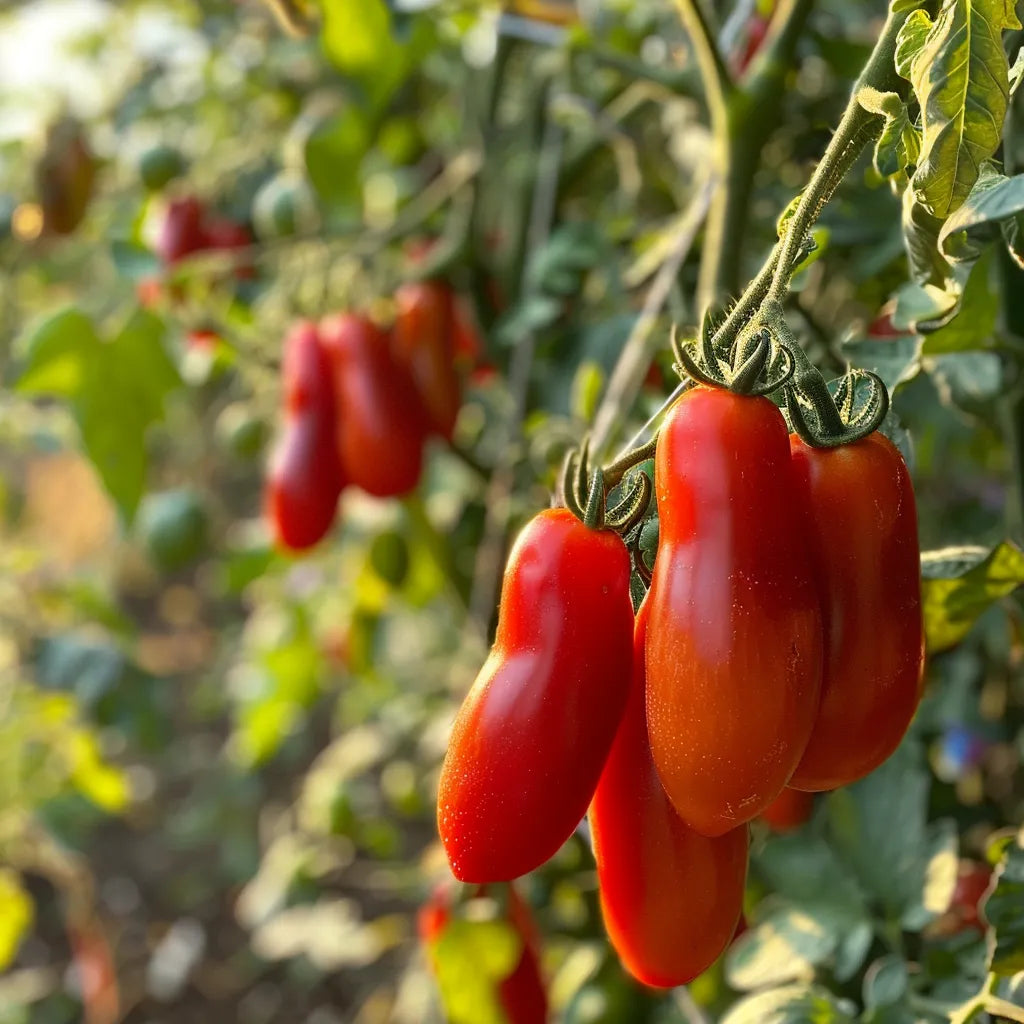
Elongated fruits: bright red, weighing 90 to 120 g, in generous clusters.
-
Dense flesh, few seeds: it reduces very little during cooking, which makes all the difference for a coulis.
-
Skin that peels away: a distinctive feature of the variety, especially appreciated when preserving.
-
Resistant to splitting: more tolerant than average of irregular watering.
Sowing advice:
-
Exposure: full sun and warmth, essential for developing its sugar concentration.
-
Soil: rich, loose and well drained, enriched with well-rotted compost.
-
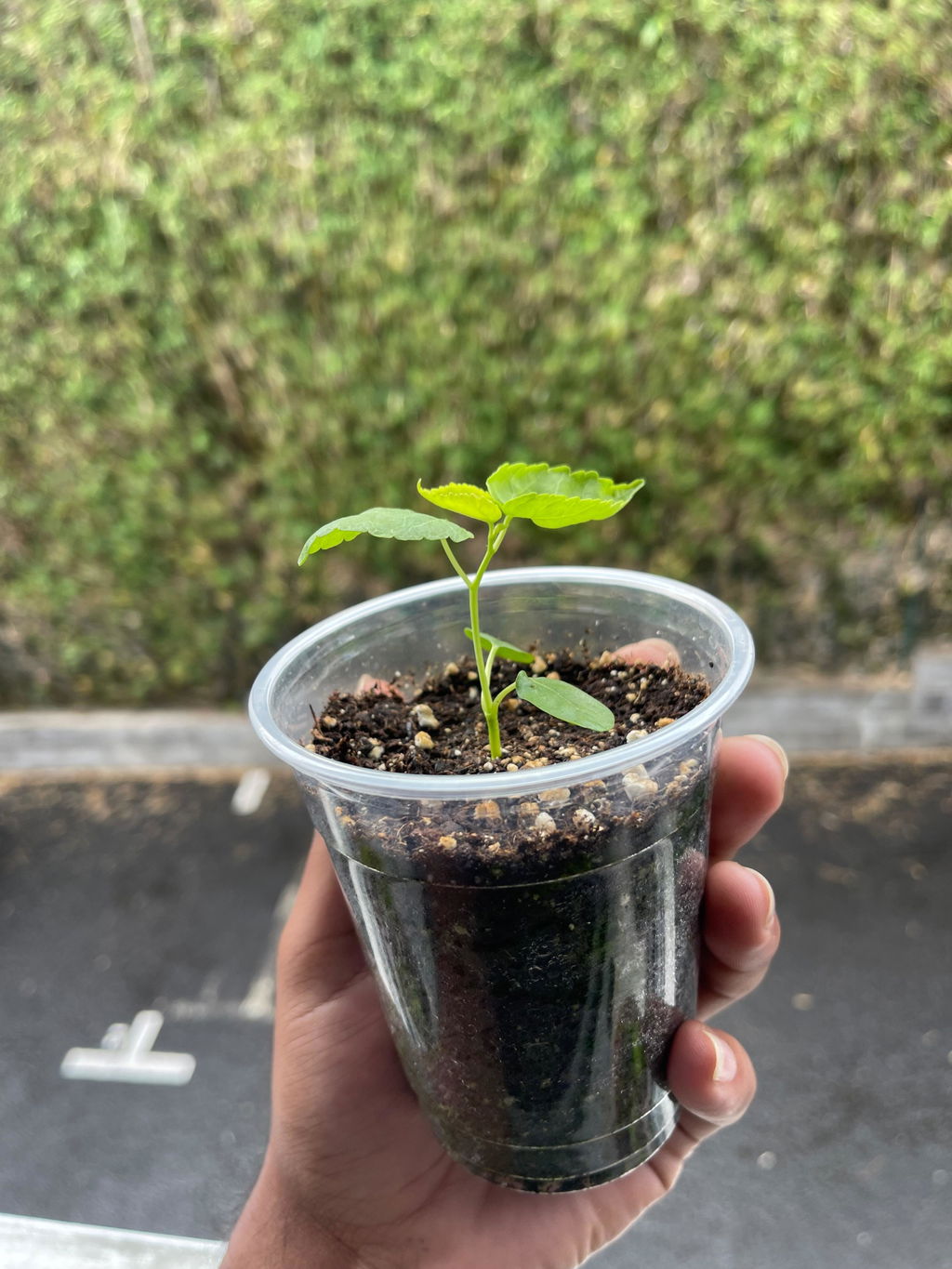
Method: sow from February to April under cover, at 20 °C minimum—below this temperature, the seeds will not germinate. Cover with 5 mm of soil. Transplant into pots at the two-true-leaf stage. See how to sow your seeds.
Planting advice:
- Transplant after the last frosts, spacing plants 60 cm apart. Bury the stem up to the first leaves: tomatoes produce roots along the entire buried section, resulting in a more vigorous plant.
- This is an indeterminate variety: provide a sturdy stake at planting time, as it grows beyond 1.80 m.
Care advice:
-
Always water at the base, never over the foliage, preferably in the morning: water on the leaves provides an entry point for blight. Apply a thick mulch.
- Water regularly and evenly. At the end of the season, slightly reducing watering concentrates the flavor of fruits intended for preserving.
- Remove suckers to concentrate the sap on the fruits.
- Rotate crops every three to four years.
Harvesting advice:
- Harvest when fully red and firm. For preserving, wait until you have a sufficient quantity—the fruits will keep for a few days at room temperature without losing their qualities.
- Never refrigerate them, as this destroys their aromas.
Beneficial companions:
Benefits for biodiversity:
- Its flowers are pollinated by vibration: only bumblebees make full use of them. Welcoming them directly improves your harvest.
- As an old, open-pollinated variety, growing it contributes to preserving cultivated diversity. See our heritage tomatoes to sow.
Uses:
- Coulis, concentrates, sauces, tomatoes preserved in their natural juices, and pizzas. Also excellent in soup, juice, or raw in salads, although it truly comes into its own when cooked.
Harvesting your own seeds:
Take the pulp from a beautiful, fully ripe fruit and let it ferment for two to three days in a little water—this step breaks down the gelatinous coating that inhibits germination—then rinse: the healthy seeds will sink to the bottom. Dry them flat. See how to store your seeds.
Our commitment to Quality: at SemiSauvage - Permaculture, we grow and select our seeds with respect for all living things as our guiding principle. Based near the Auvergne Volcanoes, we choose open-pollinated, non-hybrid varieties, tested for their germination rate, carefully sorted and packaged, with no chemical treatment. Our conviction: to give gardeners back the ability to resow, year after year, seeds that truly belong to them.
The tomato for Italian sauces, grown at home.