Ocimum basilicum var. thyrsiflora
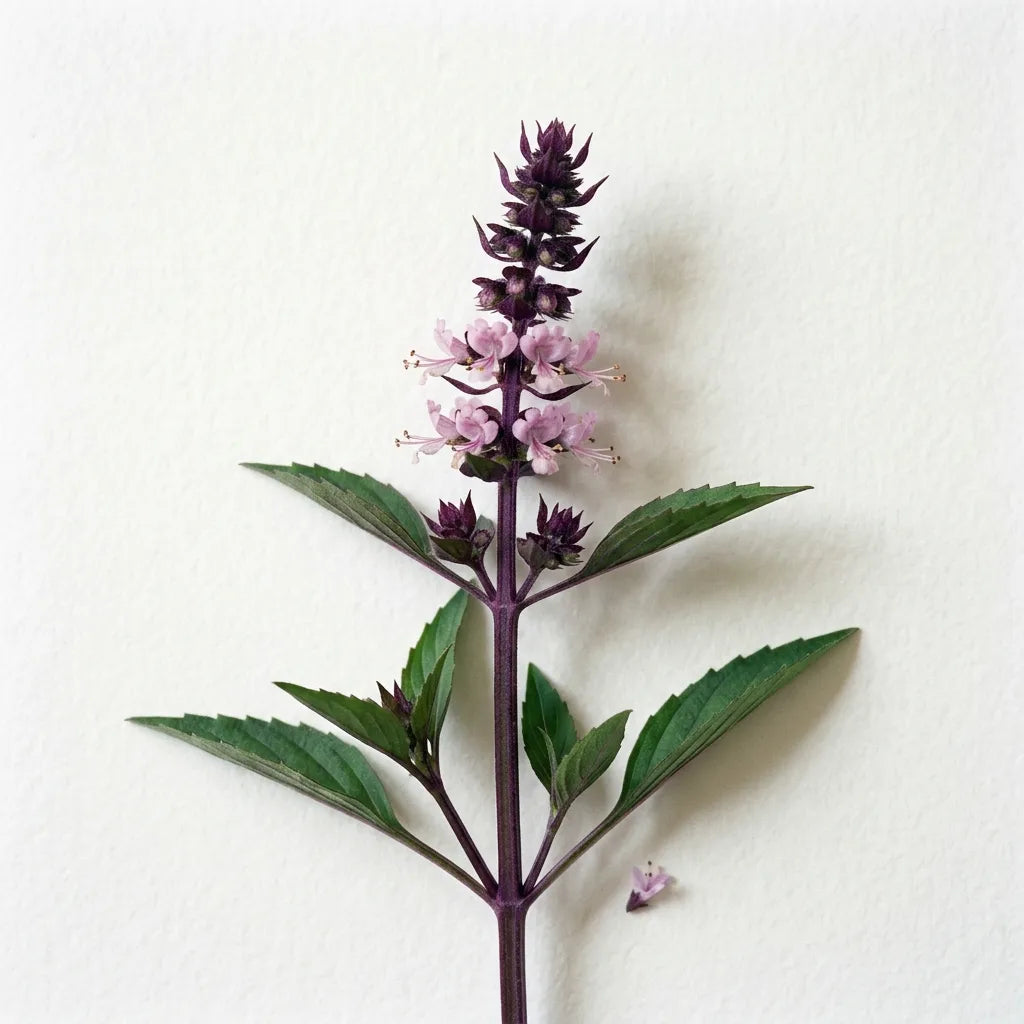
Thai basil, oriental basil, horapha: not to be confused with holy basil (Ocimum tenuiflorum), which is a different species. Thai basil is immediately recognizable by its purple stems and spicy, anise-like fragrance reminiscent of licorice—a distinctive aroma unlike that of sweet European basil.
Characteristics:
-
Anise aroma: powerful spicy fragrance, very different from classic basil, that holds up well during cooking.
-
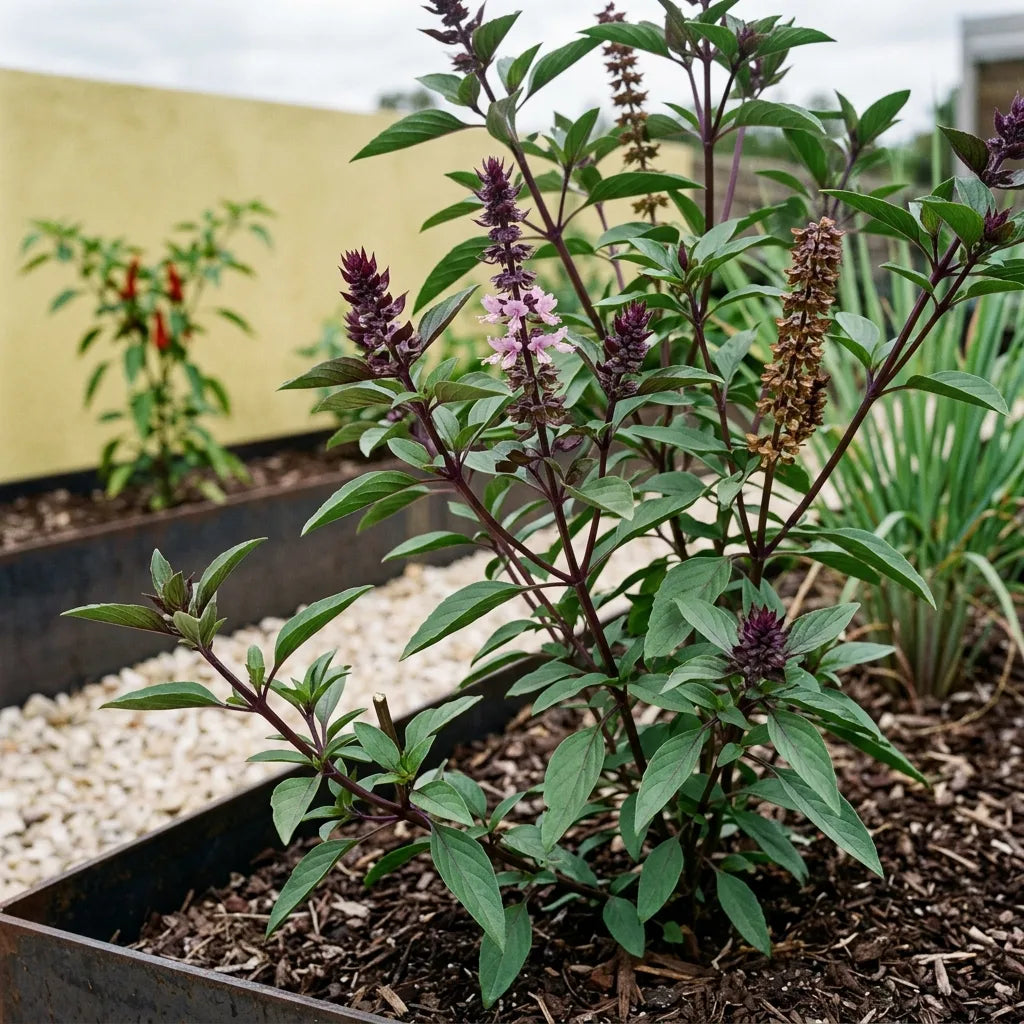
Decorative growth: 40 to 60 cm tall, with purple stems and slightly serrated leaves.
-
Purple-tinged flowering: highly decorative purple flower spikes in summer, appreciated by pollinators.
Sowing advice:
-
Exposure: full sun and warmth—this is a Southeast Asian plant that dislikes the cold.
-
Soil: light, rich in organic matter, and well drained. Unlike many Mediterranean herbs, basil appreciates fertile, moist soil, so adding compost is beneficial. However, it does not tolerate standing water.
-
Method: sow from March to June in pots under cover (20 °C), or directly in the ground after the last frosts. Cover the seeds lightly and keep them moist until germination, which takes 7 to 14 days. Do not waterlog them; no stratification is needed. See how to sow your seeds.
Care advice:
- Water regularly at the base, without excess or wetting the foliage.
- Pinch the stems regularly just above a pair of leaves: this encourages branching and delays flowering, extending the harvest.
Harvesting advice:
- Pick the leaves as needed, preferably in the morning. Fresh leaves are the most fragrant, but they freeze very well, preserving the aroma better than drying.
Beneficial companion planting:
- It fits perfectly in an Asian herb bed, alongside chili peppers, cilantro, or lemongrass. Like classic basil, it pairs well with tomatoes in the vegetable garden. See companion planting in the vegetable garden.
Benefits for biodiversity:
- If allowed to flower at the end of the season, its purple spikes are heavily visited by bees and bumblebees—a good reason to let a few plants flower.
Uses:
- Essential in soups, curries, stir-fries, salads, and spring rolls from Thai, Vietnamese, and Laotian cuisine. Its powerful aroma holds up during cooking, unlike sweet basil.
Symbolism:
In Thai culture, basil is associated with luck and hospitality, and is sometimes used in Buddhist ceremonies.
Harvesting your own seeds:
Leave a few flower spikes to dry completely on the plant until they turn brown, then rub them over a container: the small black seeds will fall out of the calyces. Be careful, as basils cross-pollinate easily: isolate your seed plants if you grow several varieties. See saving your seeds.
Commitment to Quality: at SemiSauvage - Permaculture, we grow and select our seeds with respect for living things as our guiding principle. Based near the Auvergne Volcanoes, we choose reproducible, non-hybrid varieties, test them for germination rates, and carefully sort and package them without any chemical treatment. Our belief is that gardeners should regain the ability to resow, year after year, seeds that truly belong to them.
Bring the flavors of Southeast Asia to your vegetable garden with these Thai basil seeds.