Lotus corniculatus
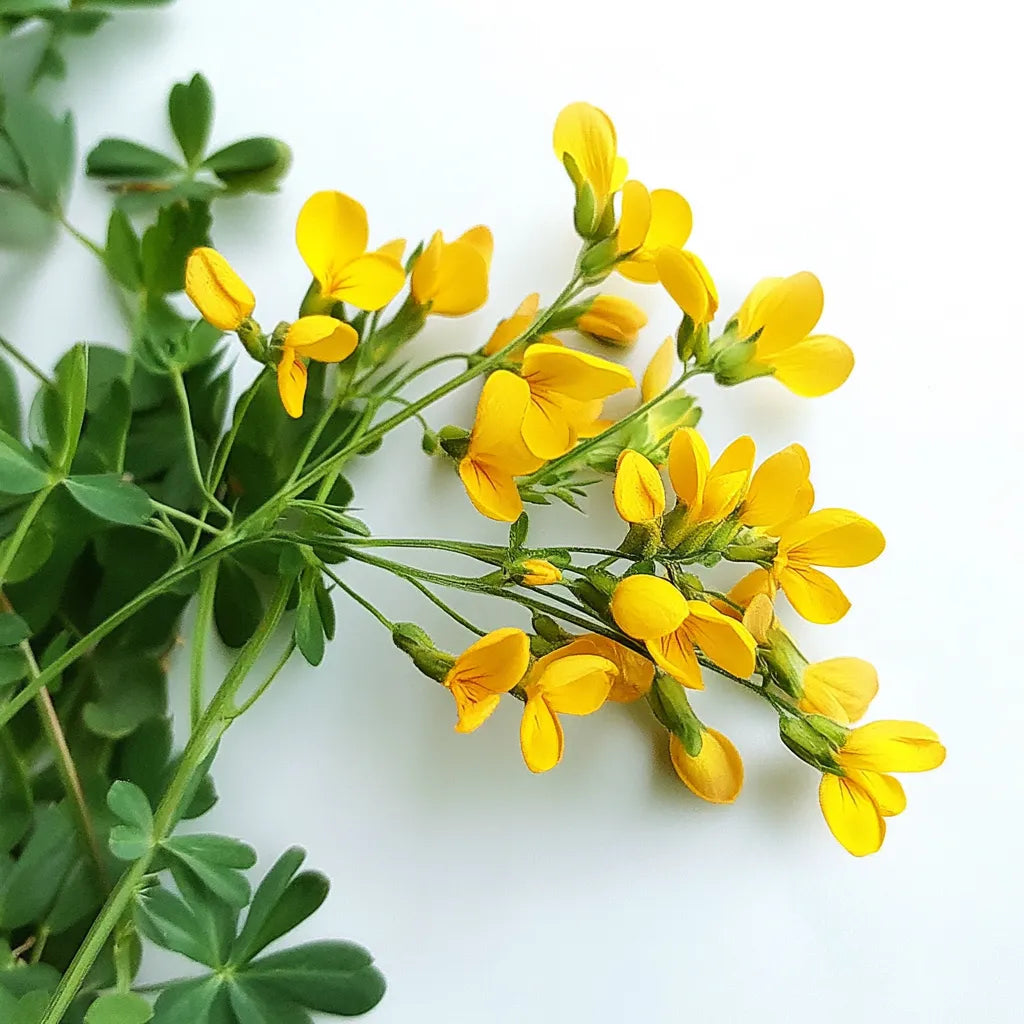
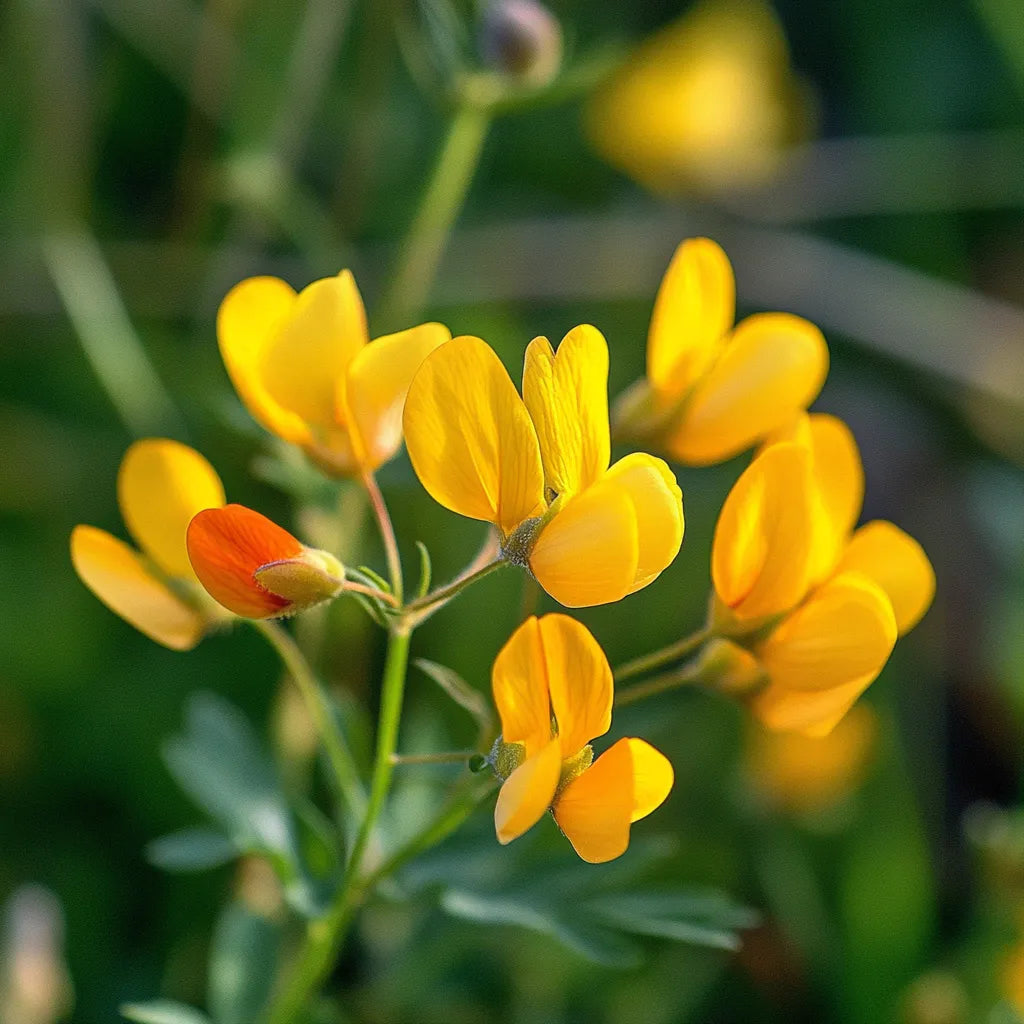
Bird's-foot trefoil, also known as eggs-and-bacon, Our Lady's slipper, or horned clover: its nickname “bird's foot” comes from its pods, grouped in threes or fours at the top of the stem and spread out like the toes of a bird's foot. A small native legume, discreet but vital to grassland biodiversity.
Characteristics:
-
Yellow flowering: small, bright yellow pea-like flowers, often tinged with orange, from May to September.
-
Spreading perennial: a spreading habit that forms dense, long-lasting ground cover.
-
Nitrogen-fixing: like all legumes, it naturally enriches the soil.
Sowing advice:
-
Exposure: full sun.
-
Soil: truly all types, including poor, dry, stony, or chalky soils — it is one of the most undemanding plants there is, capable of colonizing the most inhospitable embankments and roadsides. No fertilization needed: it produces its own nitrogen.
-
Method: sow directly in the ground in spring or autumn, broadcasting over raked soil, then firm it down. No soaking or stratification is necessary. See how to sow seeds.
Care advice:
- None. It tolerates trampling, mowing, and drought without flinching, and returns every year.
Beneficial combinations:
Benefits for biodiversity:
- It is one of the most important host plants in our meadows: the caterpillars of several dozen butterfly species feed on it, including the Common Blue and many other blues.
- Its flowers are highly attractive to pollinators and are particularly visited by bumblebees, which are strong enough to open its closed corolla.
- Its dense root system effectively stabilizes embankments and eroded soils — see our seeds for poor, dry soil.
Uses:
- Flower meadows, ground cover, green spaces, pathsides, and embankment stabilization. It is also an excellent forage plant, valued in extensive grazing.
Harvesting your own seeds:
Let a few pods turn brown and dry on the plant, but harvest them before they open: when ripe, they suddenly twist and propel the seeds some distance away. See how to store your seeds.
Our commitment to Quality: at SemiSauvage - Permaculture, we grow and select our seeds with respect for living things as our guiding principle. Based near the Auvergne Volcanoes, we choose reproducible, non-hybrid varieties, test them for germination rates, and carefully sort and package them without any chemical treatment. Our belief: to give gardeners back the ability to resow, year after year, seeds that truly belong to them.
Give your meadow a butterfly nursery with these bird's-foot trefoil seeds.