

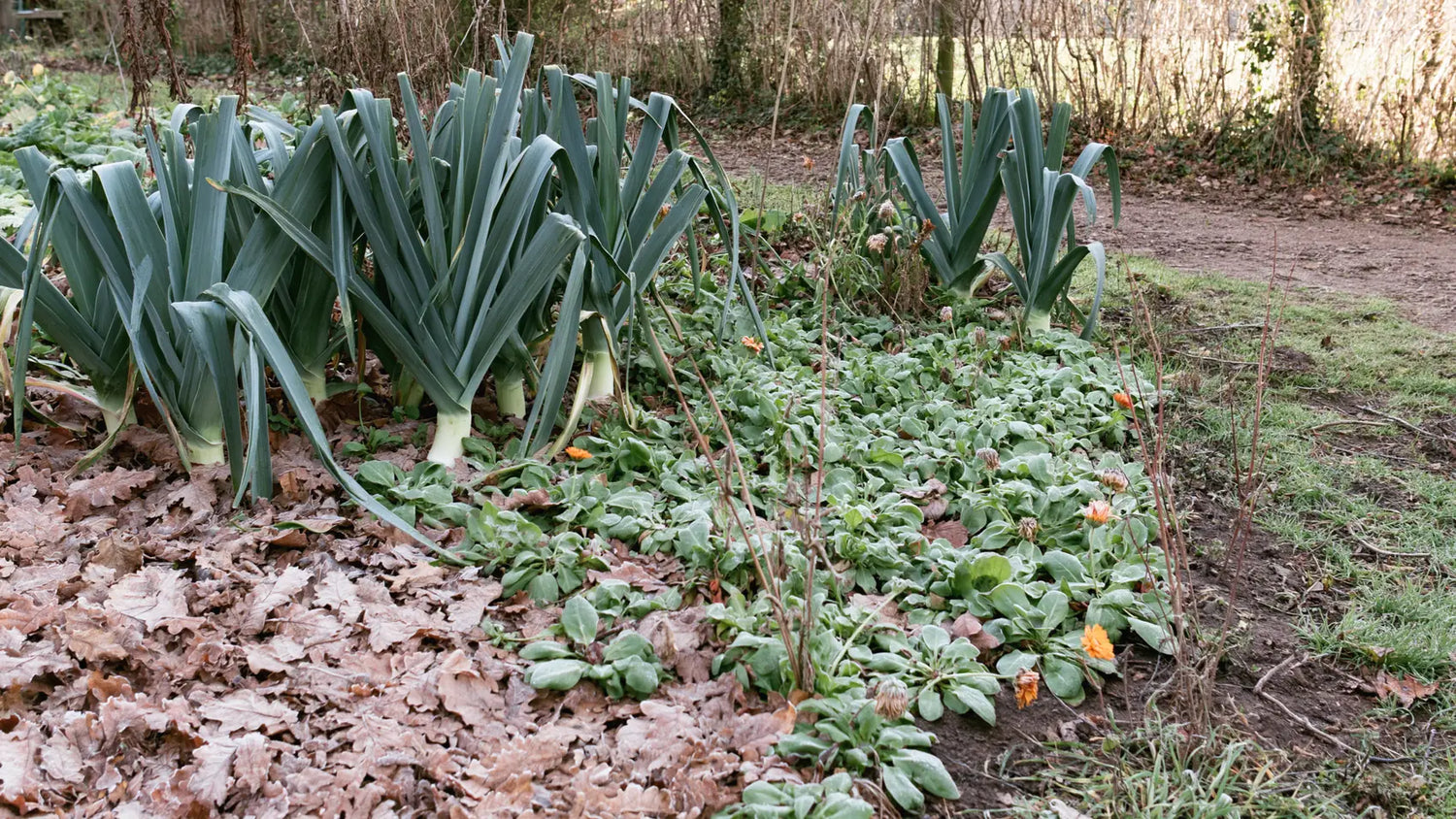
Autumn is the most underused season in the vegetable garden. We harvest the last tomatoes, pull everything up, and close up until March — even though this is when the winter harvests and the very first spring harvests are prepared.
The determining factor is not the cold, contrary to popular belief: it is the length of the day. Below approximately ten hours of light, growth practically stops, regardless of the temperature. The entire autumn calendar follows from this.
The rule that governs everything
A plant sown in September must have reached most of its size by the end of November. After that point, it will hardly grow at all: it will wait, alive but dormant, and start growing again in February.
Two practical consequences:
- Sow earlier than you think. A two-week delay that goes unnoticed in May costs an entire harvest in September.
- Add time to the stated growing period. A lettuce that takes six weeks in June takes ten in October. Packet timings are calculated for the growing season.
A simple guideline: count the species' normal growing time, adding one-third to one-half, and count backward from mid-November. That gives you your sowing deadline.
The calendar, month by month
August — the decisive month
It's the month we forget, and it's the most important month of the entire autumn. The difficulty is the opposite of spring's: it's too hot for many seeds, and the soil dries out within a few hours.
- To sow — lamb's lettuce, spinach, winter lettuce, Chinese cabbage, autumn turnip, winter radish, arugula, chervil, Swiss chard.
- To plant — winter leeks and winter cabbages started in June–July.
- The difficulty — lettuce and spinach have thermal dormancy: above 25 °C at soil level, they simply will not germinate. Two solutions: sow in the evening and water generously, or pre-germinate the seeds in the refrigerator for 48 hours between two damp cotton pads.
- Shade the seedlings with a board, fleece, or piece of cardboard for the first three days.
September — the comfortable window
Temperatures have dropped, the soil is still warm, and the rain is returning: this is the easiest month of the year for sowing.
- To sow — lamb's lettuce, spinach, arugula, garden cress, winter lettuce, white onion, turnip, radish, mustard.
- Green manures — this is the ideal time. Phacelia, mustard, clover, and rye on every cleared bed. See Sowing green manures.
- To plant — strawberries, perennial herbs, and anything that benefits from taking root before winter.
October — the seedlings that wait for spring
- To sow — lamb’s lettuce (last window), spinach, broad beans, peas with round seeds, garlic, shallots.
- Autumn broad beans and peas overwinter as young plants and produce three to four weeks earlier than spring-sown crops. It is one of the best tricks in the vegetable garden, yet it is rarely practiced.
- Flowers — poppy, cornflower, California poppy, columbine: sown now, they will emerge in spring with a clear head start.
- To plant — trees, shrubs, small fruits, perennials. Autumn is by far the best planting season: the plant has winter and spring to establish its roots before its first dry spell.
November — protect and cover
- To sow — still possible under a cold frame: lamb’s lettuce, watercress, arugula.
- To plant — garlic (until December in well-drained soil), trees, and shrubs as long as the ground is not frozen.
- Above all — cover all empty beds. Mulch, dead leaves, or green manure already in place. Bare soil all winter loses nitrogen, becomes compacted by rain, and erodes.
The case of lamb’s lettuce
This is the example that best illustrates the logic of autumn, and a question that comes up constantly.
- Sown in late August — it develops while the days are still long, forms a beautiful rosette, and is harvested from November to January.
- Sown in late October — it emerges, remains tiny all winter, and is harvested in February–March. This is not a failure: it is another, later harvest.
Sow both, two months apart, and you will cover the entire lean period. Lamb’s lettuce is also remarkably hardy and will self-seed if a few plants are left to flower and set seed.
Protecting to extend the season
A few degrees gained can shift a harvest by several weeks.
- Winter fleece — the best value for money. It raises the temperature by 2 to 4 °C while letting water and light through. Put it in place before the first frosts, not afterward.
- The cold frame — even an improvised one made with an old window. It allows you to harvest lettuce and radishes all winter in much of France.
- Thick mulch — 15 to 20 cm of leaves over leeks, carrots, and parsnips left in the ground. They keep perfectly well in place and can be harvested as needed.
- Orientation — winter crops benefit from a south-facing position, at the foot of a wall that radiates heat at night.
Beware of going too far in the other direction: under a fleece or in a closed cold frame, stagnant humidity encourages gray mold. Ventilate as soon as the temperature allows, and never place fleece over wet foliage.
What to harvest, and when
| Cultivation | Sowing | Harvest |
|---|---|---|
| Lamb’s lettuce | August or October | November to March depending on the date |
| Spinach | August–September | October to December, then again in March |
| Winter lettuce | August–September | November to February under protection |
| Rocket, watercress | August to October | Six weeks after sowing, continuously |
| Winter radish | August | October–November, stores in the cellar |
| Winter leek | Planted in August | December to March, in the ground |
| Broad beans, peas | October–November | May, three to four weeks ahead of schedule |
| Garlic | October to December | Following June–July |
The five autumn mistakes
- Sow too late. This is the number-one mistake, and it cannot be made up for. August and September are the months that matter.
- Forget about thermal dormancy. Lettuce and spinach do not germinate when soil temperatures exceed 25°C. Sow in the evening, water, and provide shade.
- Leave beds bare. Every cleared bed should receive green manure or mulch, without exception.
- Pull up the plants at the end of the growing season. Cut them off at ground level and leave the roots in place: they nourish soil life and leave channels behind. See The basics of living soil.
- Clean everything up. Hollow stems and dry flower heads shelter beneficial insects during the winter. Leave some of them standing until spring.
Frequently asked questions
Can you still sow in November?
Yes, but only very hardy species, and you must accept a late harvest: lamb's lettuce, watercress, broad beans, peas, and garlic. Under a cold frame, the window widens slightly.
Do you need a cold frame or a greenhouse?
No, but it makes a big difference. A simple winter fleece is enough to extend most crops by several weeks. A cold frame, even a makeshift one, lets you harvest all winter.
What should you do with beds that remain empty?
Green manure if it's September, then a thick mulch. Never nothing: bare soil all winter means a complete loss of fertility.
Do autumn vegetables have less flavor?
For many of them, it's actually the opposite. Cold triggers the conversion of starch into sugars — this is what makes carrots, parsnips, cabbages, and leeks noticeably better after the first frosts.
Should you water in autumn?
In August, yes, and abundantly — this is the main constraint when sowing during this period. From late September onward, rainfall is generally sufficient.
Key takeaway
Everything happens in August and September: after that, day length stops growth, and your seedlings will have to wait until spring. Sow earlier than your instincts suggest, allow for growing times that are one-third longer, cover every cleared bed — and don't forget October broad beans and peas, which will give you a month's head start in May.
To go further
- The month-by-month sowing calendar
- Sowing green manures
- Sowing in April: what to plant in the vegetable garden this month?
- How to store your seeds from one year to the next
Discover our collection of fall seeds and our green manures — sow as soon as the summer beds are cleared.

Jätä kommentti
Tämä sivu on suojattu hCaptcha-tunnistuksella, ja hCaptchan tietosuojakäytäntöjä ja käyttöehtoja sovelletaan.