
Tässä artikkelissa 8
Sienten kasvattaminen kotona ei ole monimutkaista, mutta se ei muistuta lainkaan tuttua puutarhanhoitoa. Ei siemeniä, ei fotosynteesiä, ei aurinkoa: organismi asetetaan materiaaliin, jonka se hajottaa, ja sille annetaan sitten signaali hedelmäkappaleiden muodostamiseen.
Tämä opas käsittelee helppojen lajien kasvatusta sisätiloissa — niiden, jotka tuottavat satoa muutamassa viikossa tai kuukaudessa ilman puutarhaa tai puuta. Tästä kannattaa aloittaa, vaikka perimmäinen tavoitteesi olisi tryffelitarha: opit koko kasvukierron yhden kauden aikana.
Kaksivaiheinen periaate
Kaikki sienenkasvatus jakautuu kahteen vaiheeseen, ja se on kaiken avain.
- Kasvualustan valtaaminen — sienirihmasto leviää kasvualustaan. Se tarvitsee pimeyttä, lämpöä, vähäistä ilmanvaihtoa ja vakaata kosteutta.
- Hedelmäkappaleiden muodostuminen — olosuhteita muutetaan niin, että sienirihmasto saa signaalin tuottaa sieniä. Se tarvitsee silloin epäsuoraa valoa, raitista ilmaa, korkean ilmankosteuden ja hieman matalamman lämpötilan.
Nämä kaksi olosuhdekokonaisuutta ovat vastakkaisia. Se selittää kaksi yleisintä epäonnistumista: kasvualustan avaaminen ja kostuttaminen liian aikaisin, mikä hidastaa kasvualustan valtaamista ja kutsuu saastuttajat paikalle; tai olosuhteiden muuttamatta jättäminen, jolloin kasvualusta muuttuu täydellisen valkoiseksi mutta ei koskaan tuota mitään.
Ymmärtääksesi, mitä sienirihmasto on ja miten sitä säilytetään, tutustu artikkeliin Kaikki sienirihmastosta.
Lajin ja kasvualustan valinta
Jokaisella lajilla on omat suosikkimateriaalinsa. Väärä lajin ja kasvualustan yhdistelmä tarkoittaa epäonnistumista jo ennalta.
| Laji | Kasvualusta | Olosuhteet | Ensimmäinen sato |
|---|---|---|---|
| Osterivinokas | Olki, kahvinporot, pahvi, pölkky | 15–20 °C, hyvin sietävä | 3–6 viikkoa |
| Herkkusieni | Pastöroitu komposti tai lanta | Täysi pimeys, kellari tai pimeä huone | 2–3 kuukautta |
| Mustatorvisieni | Lehtipuupölkky, sahanpuru | Korkea kosteus | 2–4 kuukautta |
| Siitake | Tammi- tai pyökkipölkky, ravinteikastettu sahanpuru | Varjoisa ulkotila tai kellari | 6–12 kuukautta |
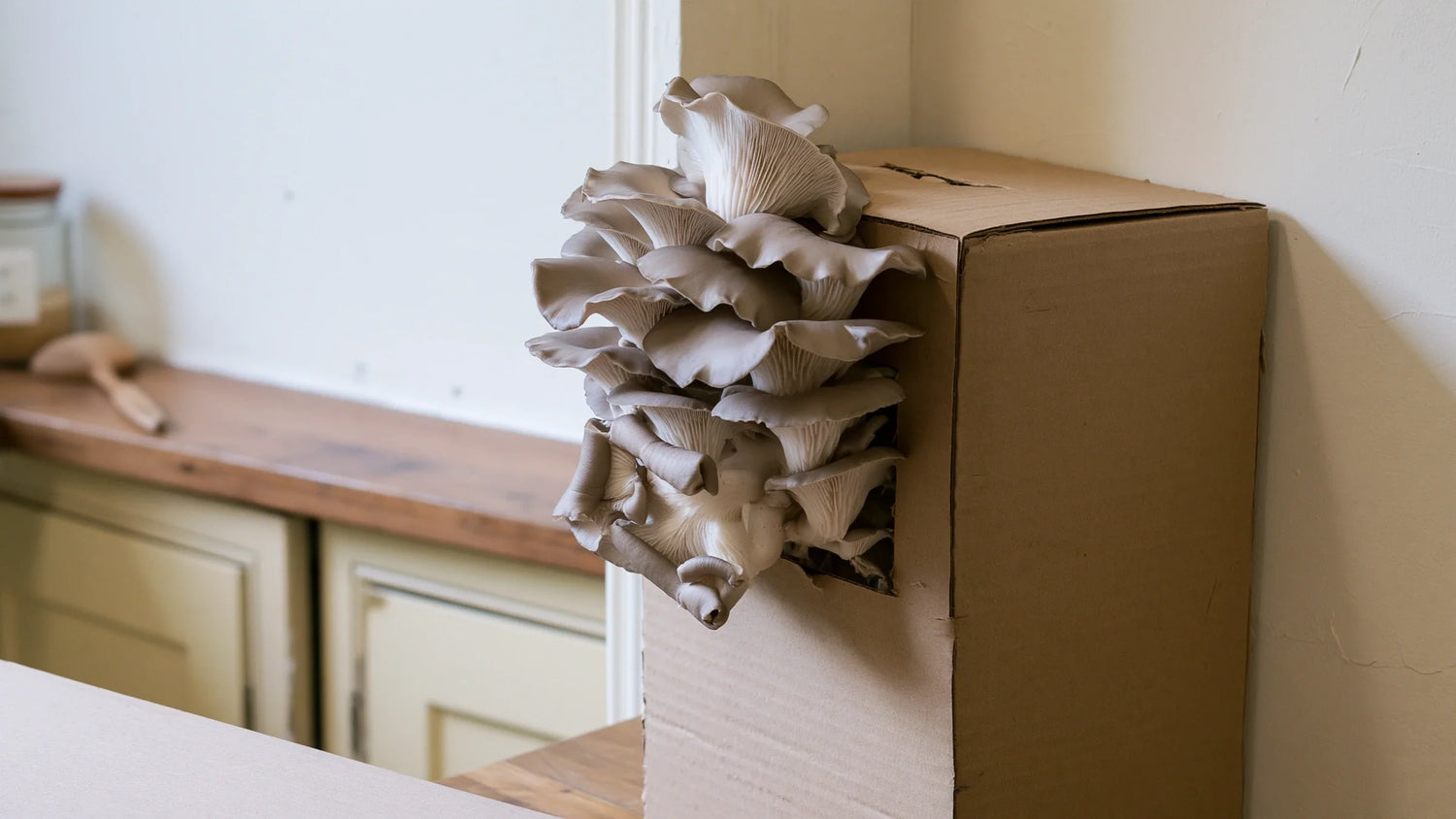
Aloita osterivinokkaasta. Se antaa virheitä anteeksi, valtaa kasvualustan nopeasti, ja kahvinporot tekevät siitä helpoimman vaihtoehdon asunnossa.
Kasvualustojen valmistelu
- Olki — leikkaa se 5–10 cm:n pätkiksi ja pastöroi: liota tunti 70–80 °C:n vedessä ja valuta sitten huolellisesti. Tarkoitus ei ole steriloida vaan poistaa kilpailijat.
- Kahvinporot — uuttaminen on jo pastöroinut ne. Kaksi ehdotonta ehtoa: käytä ne tuoreina, alle 24 tunnin ikäisinä ja sijoita ne rei'itettyyn, valoa läpäisemättömään astiaan. Muutoin ne saastuvat hyvin nopeasti.
- Ruskea pahvi — painamaton, liota ja purista kuivaksi, kerroksittain rihmaston kanssa. Nollahävikkiratkaisu, joka soveltuu vain osterivinokkaalle.
- Lehtipuupölkky — juuri kaadettua tammea tai pyökkiä, ei koskaan kuivaa puuta tai muiden sienten jo valtaamaa puuta. Poraa reiät, ympää ja sulje vahalla.
- Pastöroitu komposti — herkkusienelle, pimeässä pidettävissä astioissa.
Vaihe 1 — kolonisaatio
- Ymppää käytettävissäsi olevan rihmaston muodon mukaan — nestemäisen rihmaston menetelmä esitellään yksityiskohtaisesti artikkelissa Näin onnistut sieniviljelyssä nestemäisen rihmaston avulla.
- Sekoita huolellisesti, jotta kanta leviää koko massaan: mitä enemmän aloituspisteitä on, sitä nopeammin kolonisaatio etenee ja sitä vähemmän aikaa epäpuhtauksilla on asettua.
- Tiivistä kohtuullisesti — riittävästi suurten ilmataskujen poistamiseksi, mutta ei niin paljon, että kasvualusta tukehtuu.
- Sijoita pimeään, useimmille saprofyyteille sopivaan 20–24 °C:n lämpötilaan.
- Älä avaa. Jokainen käsittely tarjoaa mahdollisuuden kontaminaatiolle. Vastusta halua tarkistaa tilanne joka päivä.
Mitä sinun pitäisi nähdä: valkoista kasvustoa, joka etenee ympärostuskohdista pumpulimaisina säikeinä. Varaa säkille tai astialle 10–21 päivää ja pölkylle useita kuukausia. Vaihe on päättynyt, kun kasvualusta on kokonaan valkoinen.

Vaihe 2 — itiöemien muodostumisen käynnistäminen
Kun kasvualusta on valkoinen, kaikki käännetään päinvastaiseksi.
- Avaa tai viillä kasvualustaa sisältävä astia, jotta muodostuu alueita, joista sienet pääsevät kasvamaan ulos.
- Epäsuora valo — valaistu huone riittää, ei koskaan suoraa auringonvaloa. Sieni ei yhteytä: valo on vain signaali, joka ohjaa kasvua.
- Korkea ilmankosteus — sumuta kerran tai kaksi päivässä. Suihkuta ilmaa ympäriltä äläkä suoraan nuorille primordioille, jotka homehtuvat helposti.
- Raikas ilma — ilmanvaihto muuttuu välttämättömäksi. Tämä on seikka, jonka aloittelijat laiminlyövät useimmin.
- Lämpötilan lasku — muutama astetta alemmas, noin 15–20 °C:een. Tukkikasvatetulle siitakkeelle 12–24 tunnin liotus kylmässä vedessä toimii käynnistimenä.
Ensimmäiset itiöaiheet — pienet valkoiset nuppineulanpäät — ilmestyvät muutamassa päivässä ja kasvavat sitten hyvin nopeasti: nuppineulanpäästä poimintakypsäksi sieneksi kuluu usein kolmesta viiteen päivää. Seuraa tässä vaiheessa päivittäin.

Poiminta ja uuden sadon käynnistäminen
Sienet kasvavat satoerissä: useita peräkkäisiä satoja, joiden välillä on yhdestä kahteen viikkoa ja sienirihmasto lepää.
- Poimi ennen kuin lakki litistyy kokonaan, kun reunat ovat vielä hieman käpristyneet.
- Kierrä ja vedä varovasti tyvestä sen sijaan, että leikkaisit: kasvualustaan jätetty tynkä mätänee.
- Poimi koko satoerä, myös pienet yksilöt — ne eivät enää kasva ja viivästyttävät seuraavaa kasvupyrähdystä.
- Satoerien välillä: nesteytä kasvualusta, siirrä se muutamaksi päiväksi pimeään ja käynnistä sitten uusi satoerä.
- Säilytys — 2–5 päivää jääkaapissa paperipussissa, ei koskaan suljetussa muovipussissa. Kuivaaminen antaa erinomaisia tuloksia siitakkeelle ja mustasienelle, joiden maku tiivistyy.
Käytetty kasvualusta voidaan lisätä kompostiin tai käyttää katteena. Joskus se alkaa jopa kasvaa uudelleen ulkona pensasaidan juurella.

Ongelmanmääritys
| Oire | Syy | Mitä tehdä |
|---|---|---|
| Vihreää tai mustaa hometta | Saastunta — kasvualusta on pastöroitu puutteellisesti tai käsittely ei ole ollut hygieenistä | Eristä heti. Paikallinen saastunta: poista. Yleistynyt saastunta: kasvualusta on menetetty |
| Ei mitään kolmen viikon jälkeen | Liian kylmä tai heikentynyt sienirihmasto | Tarkista lämpötila — alle 15 °C:ssa kolonisaatio on hyvin hidasta |
| Valkoinen kasvualusta, ei itiöemiä | Signaalia ei annettu | Avaa epäsuoraan valoon, kostuta, tuuleta ja laske lämpötilaa |
| Pitkät jalat, pienet lakit | Liikaa CO₂:ta, liian vähän raitista ilmaa | Tuuleta enemmän |
| Kuivat, halkeilleet sienet | Liian kuiva ilma | Sumuta useammin ja suojaa lämpimiltä vedoilta |
| Mustuvat ja kuivuvat nuput | Kosteusshokki tai suoraan niiden päälle suihkutettu vesi | Sumuta ympäröivää ilmaa, älä nuoria itiöemiä |
| Hapan haju, limainen kasvualusta | Bakteerikontaminaatio, liiallinen vesi | Sato menetetty. Vähennä kosteutta ja paranna salaojitusta ensi kerralla |
| Harsosääsket | Liian märkä ja suojaamaton kasvualusta | Tuuleta, vähennä pintakosteutta ja käytä kelta-ansoja |
Usein kysyttyä
Tarvitaanko erillinen tila?
Ei. Osterivinokkaalle riittää kaappi, kellari, kylpyhuone tai tavallinen keittiön nurkka. Herkkusieni tarvitsee täydellisen pimeyden, joten sille sopii paremmin kellari tai autotalli.
Voiko sieniä kasvattaa ympäri vuoden?
Sisätiloissa kyllä: lahottajasienet eivät ole riippuvaisia vuodenajasta vaan lämpötilasta, jota voit hallita. Helpoin ajanjakso on silti syksy ja talvi, jolloin ympäröivä ilma on viileämpää.
Toimivatko kahvinporot todella?
Kyllä, osterivinokkaille, ja se on edullisin ratkaisu asunnossa. Kaksi ehdotonta ehtoa: alle 24 tuntia vanhat kahvinporot ja läpinäkymätön, ilmastointiaukollinen astia.
Kuinka monta satoa voi odottaa?
Yhdestä kasvatuslohkosta tai -pussista saa yleensä yhdestä kolmeen satoa, joista ensimmäinen on runsain. Ymppätty halko tuottaa satoa kolmesta kuuteen vuotta, kerran tai kahdesti vuodessa.
Ovatko viljellyt sienet turvallisia syödä?
Kyllä, kunhan aloitat tunnistetusta sienikannasta eikä kasvusto ole saastunut. Juuri tämä on kasvatuksen etu verrattuna luonnosta keräämiseen. Jos kasvualusta haisee pahalta tai homehtuu, älä syö sieniä.
Voiko metsästä löydettyä puuta käyttää?
Käytä ainoastaan vastikään kaadettua ja tervettä lehtipuuta. Jo kuivunut tai muiden sienten valtaama puu ei toimi: viljeltävä sienikanta häviää kilpailun. Varmista myös, että näytteen ottaminen on sallittua.
Tärkeää muistaa
Kaksi vaihetta, kaksi vastakkaista olosuhdeyhdistelmää: pimeyttä, lämpöä ja rauhaa rihmaston leviämiseen; epäsuoraa valoa, viileyttä, kosteutta ja ilmaa itiöemien muodostumiseen. Aloita osterivinokkaalla kahvinporojen tai olkien päällä – muutama viikko riittää koko elinkaaren ymmärtämiseen, ja sen jälkeen kaikki riippuu vain kasvualustasta ja kärsivällisyydestä.
Lisätietoja
- Onnistunut kasvatus nestemäisestä sienirihmastosta
- Kaikki sienirihmastosta
- Metsäsienten kasvatus
- Harvinaisten sienten kasvatus: korvasienet, tryffelit ja tatit
Tutustu sienten ja sienirihmastojen kokoelmaamme – osterivinokas, siitake, herkkusieni ja mustasieni aloittelijoille.

Jätä kommentti
Tämä sivu on suojattu hCaptcha-tunnistuksella, ja hCaptchan tietosuojakäytäntöjä ja käyttöehtoja sovelletaan.