Raphanus sativus
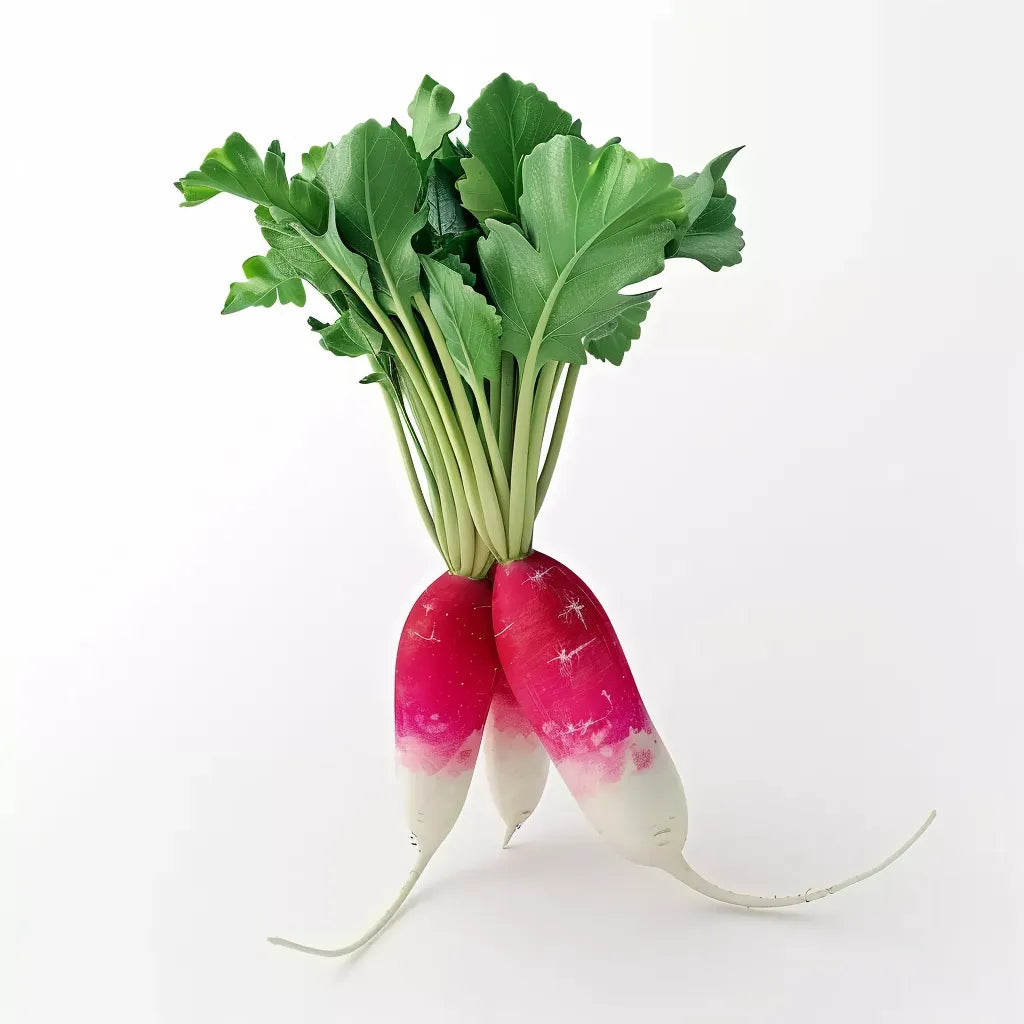
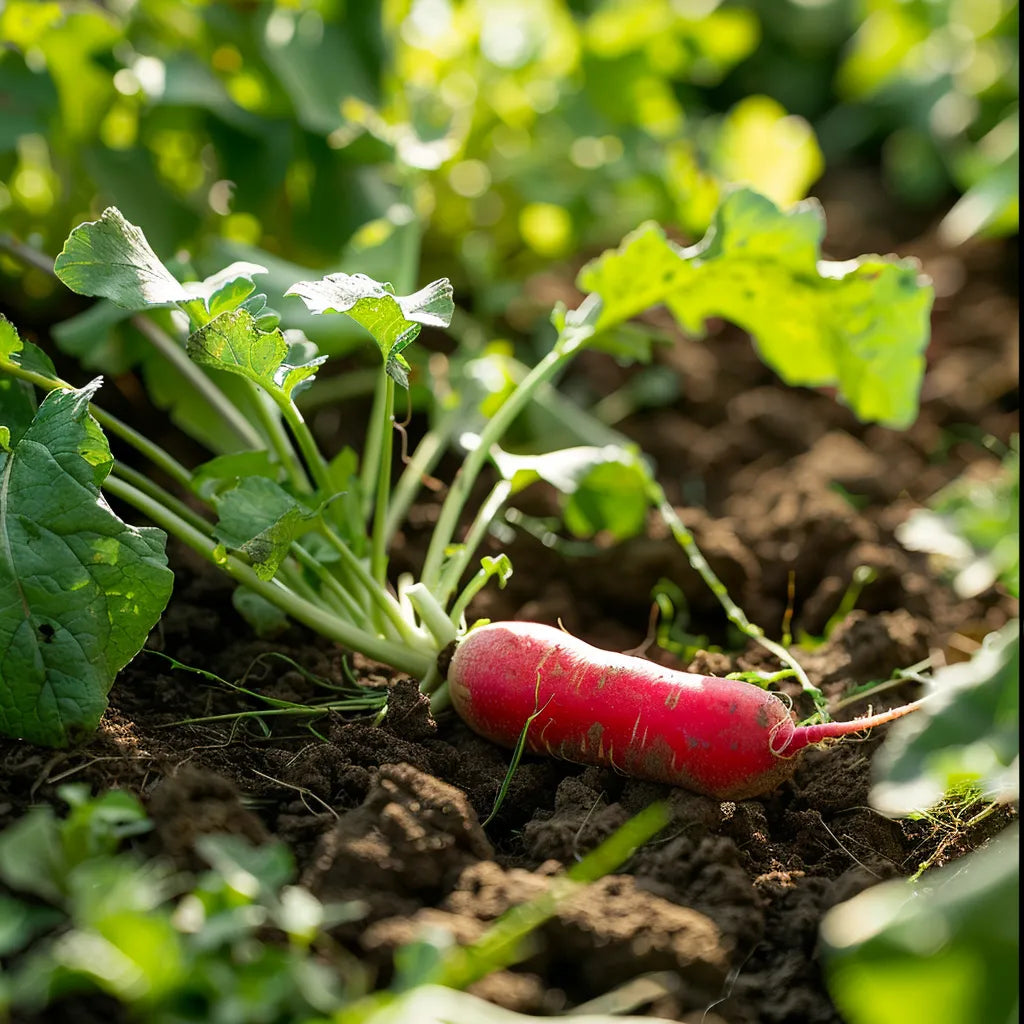
Half-long radish, half-long pink radish with a white tip, radish for every month of the year: it is the vegetable that teaches impatient people patience—or rather, the other way around. Sown today, it can be harvested in three to six weeks, making it the ideal crop for beginners, filling an empty row, or getting children involved in gardening.
Characteristics:
-
Very fast growth: 3 to 6 weeks from sowing to plate.
-
Elongated root: pink with a white tip, crisp and slightly spicy.
-
Container growing: perfectly suited to planters, patios, and balconies.
-
Successional sowing: from March to September, for continuous harvests.
Sowing advice:
-
Exposure: sunny, or slightly shaded in midsummer—the heat makes it spicy and hollow.
-
Soil: cool, loose, rich in humus, well-drained, and free of stones, which deform the root. Never add fresh manure, which causes the root to fork.
-
Method: sow thinly, directly in place, only 1 cm deep. Sow small amounts at a time but every two weeks: this is much more effective than one large sowing that all matures at once. See how to sow seeds.
Care advice:
- Thin to 4 cm if the seedlings are too crowded: when packed together, radishes produce leaves instead of roots.
-
The decisive factor: water often and never let the soil dry out. A thirsty radish becomes spicy, fibrous, and hollow—this is the number one cause of failure.
Harvesting advice:
- Harvest young and without delay: once past its optimal stage, the root becomes hollow and spongy in just a few days.
- Do not throw away the tops: they make excellent soups and pestos.
Beneficial combinations:
Benefits for biodiversity:
- If left to flower, it produces white to lilac flowers that are heavily visited by bees and hoverflies, whose larvae devour aphids.
- Its green, crisp, peppery pods can also be eaten raw—a further reason to let it flower.
Uses:
- Raw with salt, with butter on bread, in salads, or as pickles. The tops can be used in soup or pesto, and the raw pods served as an aperitif.
Harvesting your own seeds:
Leave a few plants to flower, then allow them to form their swollen pods. Harvest them when completely dry and shell them. Beware: Raphanus sativus plants cross-pollinate with one another, so isolate your seed plants from other radishes. See how to store your seeds.
Commitment to Quality: at SemiSauvage - Permaculture, we grow and select our seeds with respect for living things as our guiding principle. Based near the Auvergne Volcanoes, we choose reproducible, non-hybrid varieties, test them for germination rates, sort and package them with care, and use no chemical treatments. Our belief: to give gardeners back the ability to resow, year after year, seeds that truly belong to them.
The first harvest of the season, and the fastest crop in the vegetable garden.