Delonix regia
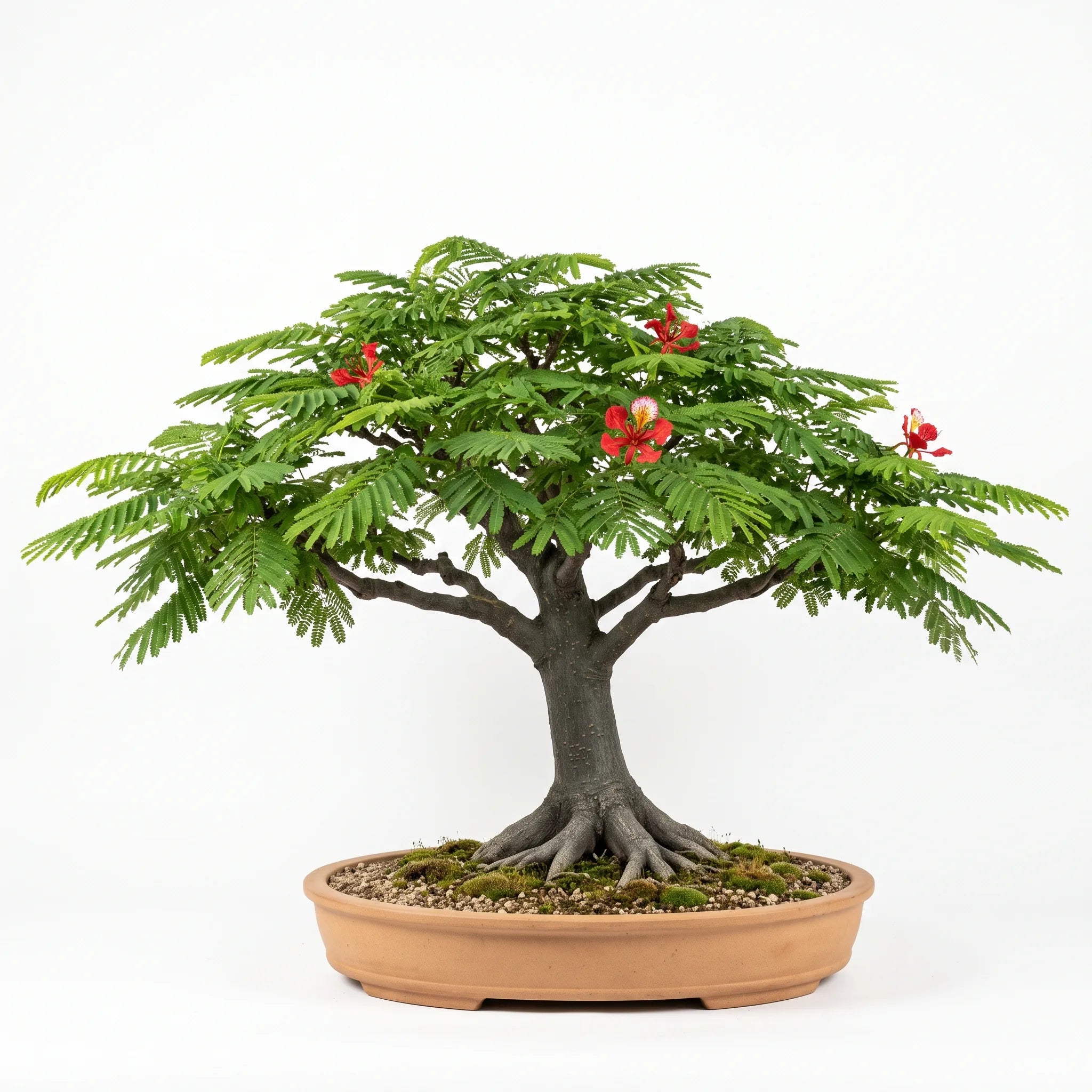
Flamboyant regal, arborele de foc, arborele-flacără, poinciana: originar din Madagascar, unde în prezent este amenințat în sălbăticie, a devenit unul dintre cei mai plantați arbori ornamentali din regiunile tropicale ale lumii. Înflorirea sa roșu-stacojiu este atât de densă, încât acoperă în întregime coroana, transformând arborele într-o flacără vegetală.
Caracteristici:
-
Înflorire spectaculoasă: ciorchini roșu-stacojii care acoperă arborele în timpul sezonului cald.
-
Port de umbrelă: până la 10 metri, cu o coroană larg răspândită, care oferă o umbră plăcută.
-
Frunziș delicat: frunze bipenate, fin divizate, cu aspect de ferigă.
Precauții:
- Arbore strict tropical: nu tolerează deloc înghețul. În Franța metropolitană, cultivarea se face obligatoriu în ghiveci, cu iernare la interior, într-un spațiu încălzit sau într-o seră. Înflorirea în ghiveci rămâne excepțională și necesită multă răbdare.
Sfaturi pentru semănat:
-
Expunere: foarte însorită, cu maximum de căldură și lumină.
-
Sol: ușor, nisipos și bine drenat. Tolerează solurile sărace — fiind o leguminoasă, fixează singur azotul din aer — dar se teme foarte mult de apa stagnantă. Un amestec de pământ pentru ghivece și nisip este potrivit pentru cultivarea în ghiveci.
-
Metodă: nu necesită stratificare la rece — dimpotrivă, trebuie aplicat un tratament termic. Tegumentul semințelor este extrem de dur: înmuiați-le timp de 24 de ore în apă caldă (o scarificare ușoară cu pila îmbunătățește și mai mult rezultatul), apoi semănați-le într-un ghiveci înalt, la 1-2 cm adâncime, primăvara sau vara, la 25-30 °C. Consultați cum să vă semănați semințele.
Sfaturi pentru plantare:
- În teren deschis, numai în zonele fără îngheț. În celelalte zone, folosiți un ghiveci mare și adânc, care trebuie adus la interior de la primele răciri, într-o încăpere luminoasă, la peste 15 °C.
- Se pretează remarcabil la bonsai, datorită frunzișului fin și trunchiului care se îngroașă rapid — consultați ghidul nostru cum să creați un bonsai dintr-o sămânță.
Sfaturi pentru îngrijire:
- Udați regulat în timpul creșterii estivale, iar iarna reduceți foarte mult udările, în perioada de repaus vegetativ, când își pierde frunzele.
Importanță pentru biodiversitate:
- Înflorirea sa meliferă este foarte apreciată de insectele polenizatoare în arealul său de cultivare.
- Fiind o leguminoasă, fixează azotul atmosferic și îmbogățește în mod natural solul din jurul său.
Utilizare:
- Arbore ornamental plantat solitar sau în aliniament în zonele fără îngheț; în ghiveci sau ca bonsai în climatul nostru. Se asociază cu palmieri, bougainvillea sau hibiscus într-o grădină tropicală.
Simbolistică:
Flamboyantul este asociat cu pasiunea și prosperitatea. În multe regiuni tropicale, înflorirea sa marchează sosirea verii și sfârșitul anului școlar — în Vietnam, este numit de altfel „floarea școlarilor”.
Recoltarea propriilor semințe:
Păstăile sale lemnoase și spectaculoase ating 60 cm lungime. Recoltați-le bine uscate direct de pe arbore, deschideți-le și păstrați semințele la loc uscat: tegumentul lor dur le asigură o longevitate de mai mulți ani. Consultați cum să vă păstrați semințele.
Angajamentul față de calitate: la SemiSauvage - Permaculture, cultivăm și selectăm semințele noastre având respectul pentru viață drept principiu călăuzitor. Așezați în apropierea vulcanilor din Auvergne, alegem soiuri reproductibile și nehibridizate, testate pentru rata lor de germinare, sortate și ambalate cu grijă, fără niciun tratament chimic. Convingerea noastră: să le redăm grădinarilor capacitatea de a semăna din nou, an după an, semințe care le aparțin cu adevărat.
Vânzare rezervată grădinarilor amatori aflați în căutarea calității și autenticității.