Capsicum annuum
Papryka kaszmirska, Kashmiri mirch: w kuchni indyjskiej zajmuje szczególne miejsce. Nie używa się jej, by paliła, lecz by barwiła — to ona nadaje kurczakowi tandoori i rogan josh głęboki czerwony kolor, nie czyniąc potrawy niezjadliwą. To łagodna odmiana, której cała wartość tkwi w jej barwie.
Charakterystyka:
-
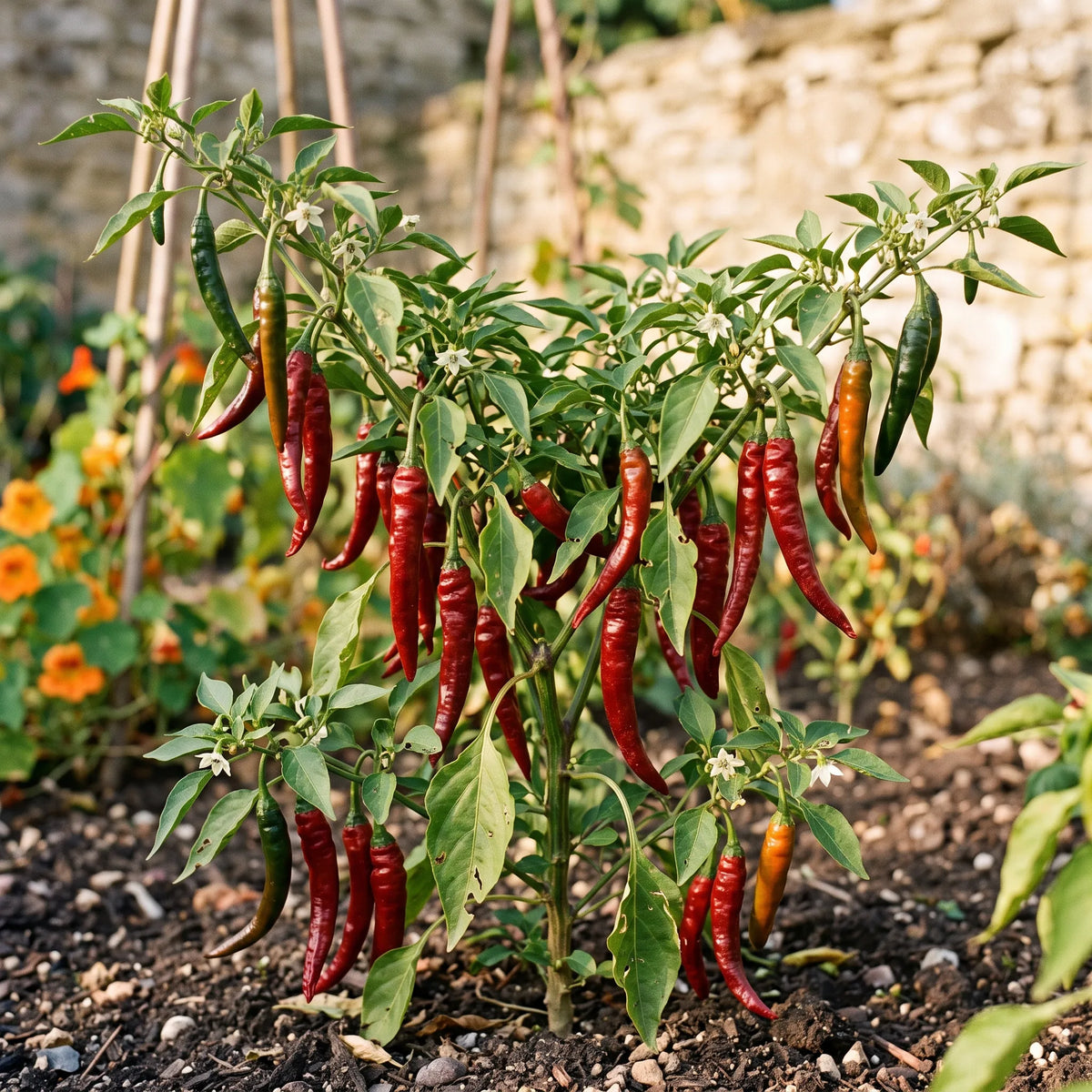
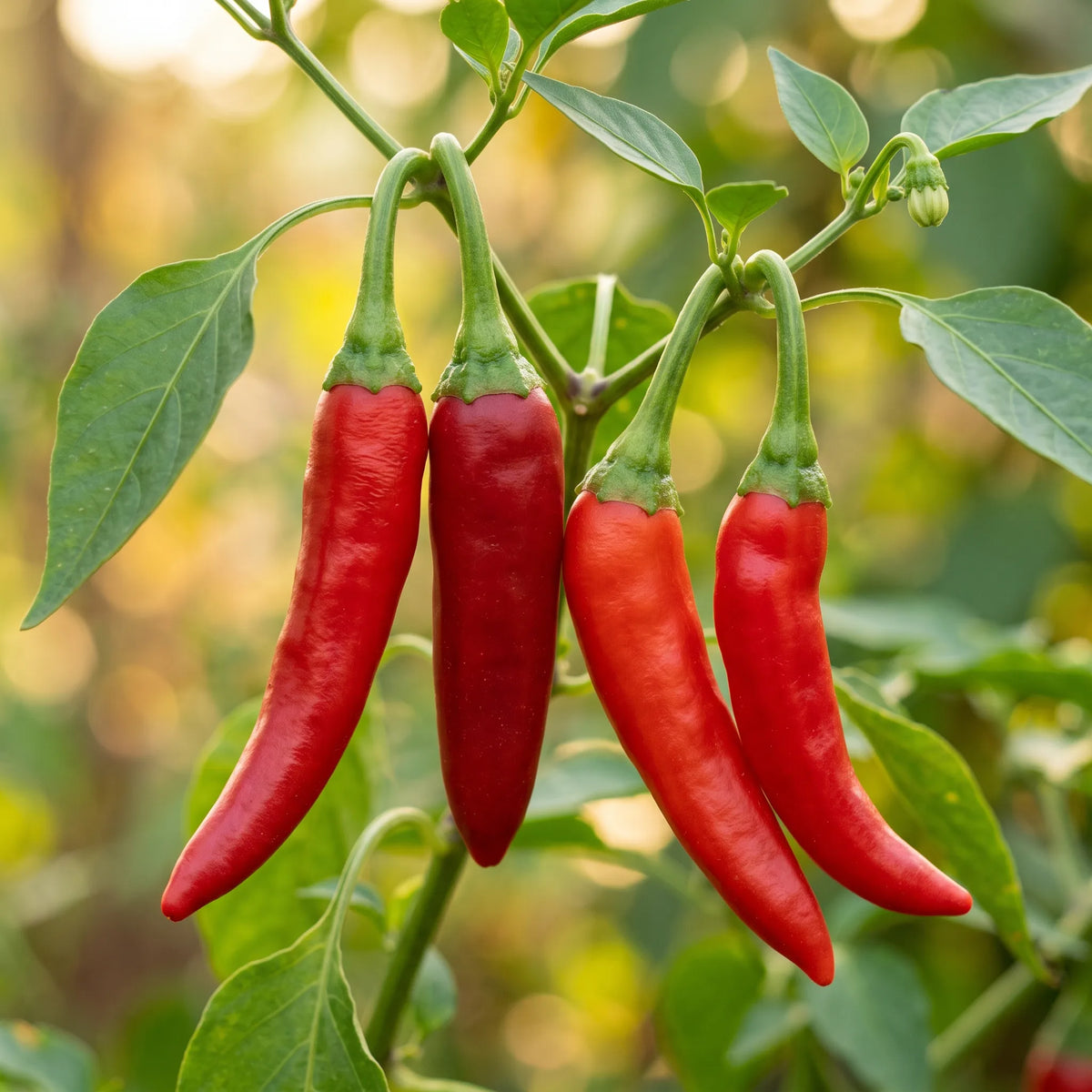
Intensywnie czerwona: bogactwo pigmentów sprawia, że jest wyjątkowym naturalnym barwnikiem.
-
Łagodna: zaledwie 1 000–2 000 jednostek Scoville’a — delikatna ostrość, odpowiednia dla każdego.
-
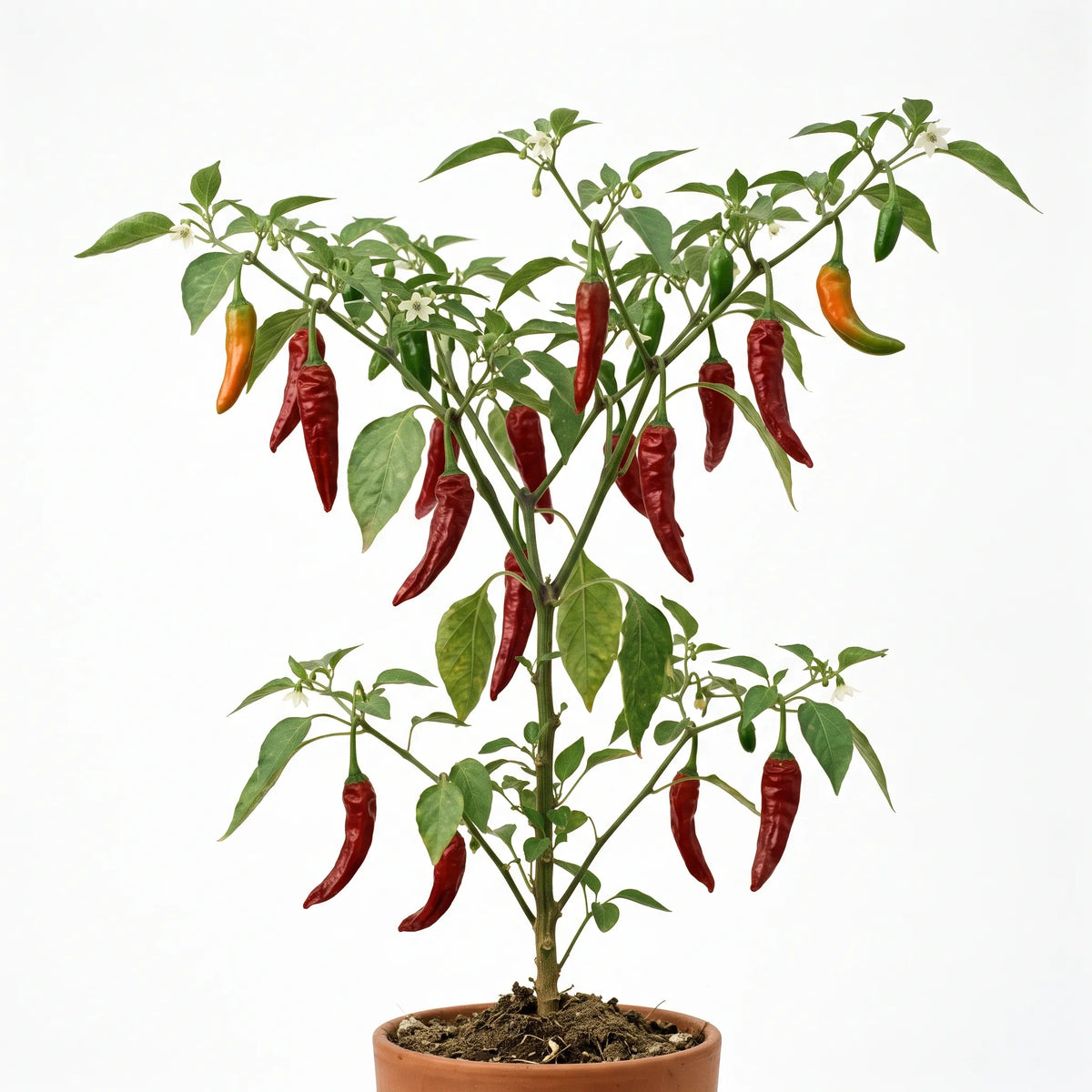
Smukłe i pomarszczone owoce: 6–8 cm, o dość cienkiej skórce, która łatwo wysycha.
-
Odmiana do stosowania w proszku: dopiero po wysuszeniu i zmieleniu pokazuje pełnię swoich możliwości.
Środki ostrożności:
- Nawet łagodna papryka zawiera kapsaicynę: po kontakcie z nią unikaj dotykania oczu i umyj ręce wodą z mydłem.
- Podczas mielenia suszonych owoców chroń się: pył z papryki podrażnia oczy i drogi oddechowe.
Wskazówki dotyczące siewu:
-
Stanowisko: pełne słońce i ciepło, w osłoniętym miejscu.
-
Gleba: żyzna, pulchna i dobrze przepuszczalna, wzbogacona kompostem. Roślina nie toleruje zastojów wody.
-
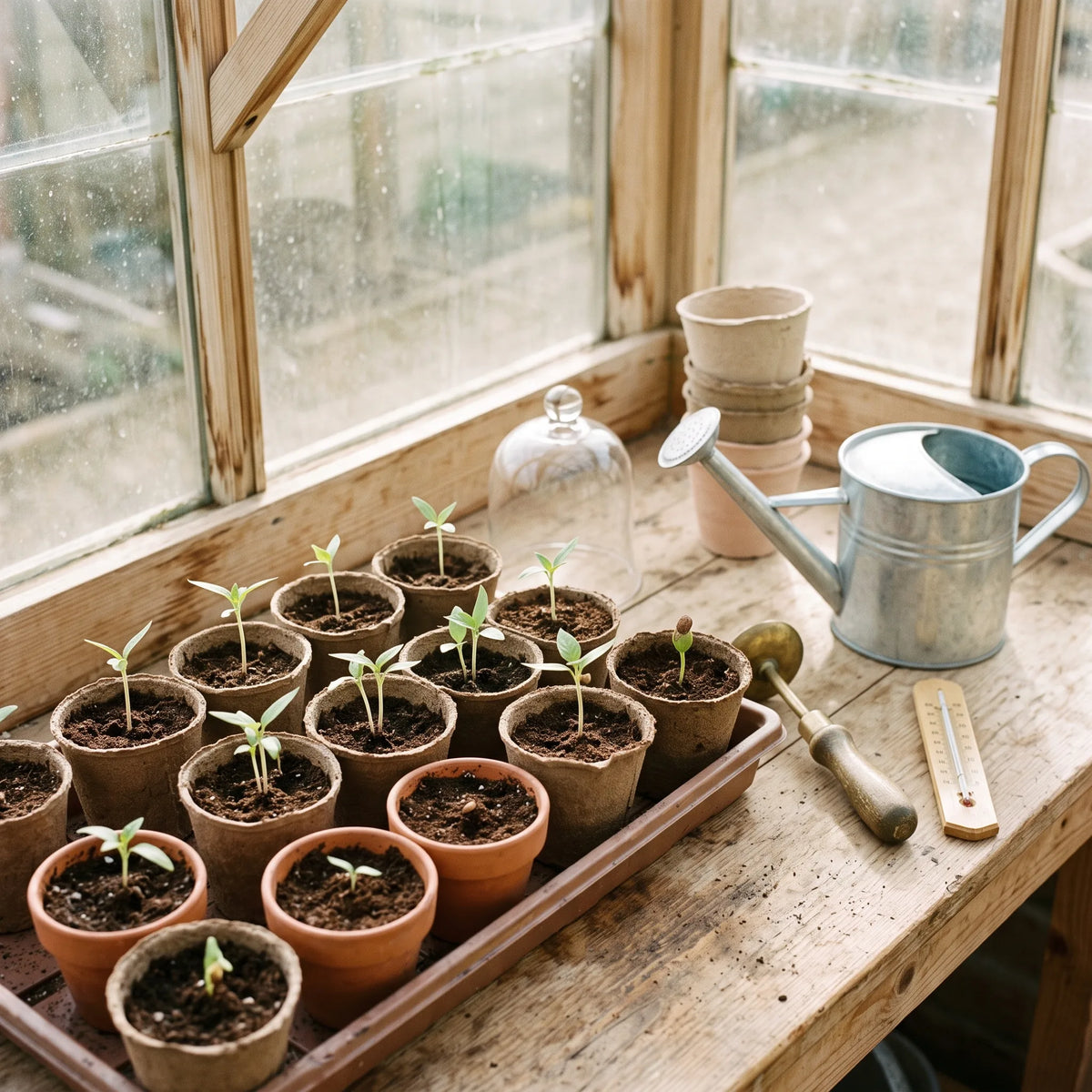
Metoda: wysiewaj od lutego do kwietnia pod osłonami lub w pomieszczeniu, w temperaturze 20–25 °C — poniżej 18 °C nasiona nie kiełkują. Kiełkowanie trwa 2–3 tygodnie. Zobacz, jak wysiewać nasiona.
Wskazówki dotyczące sadzenia:
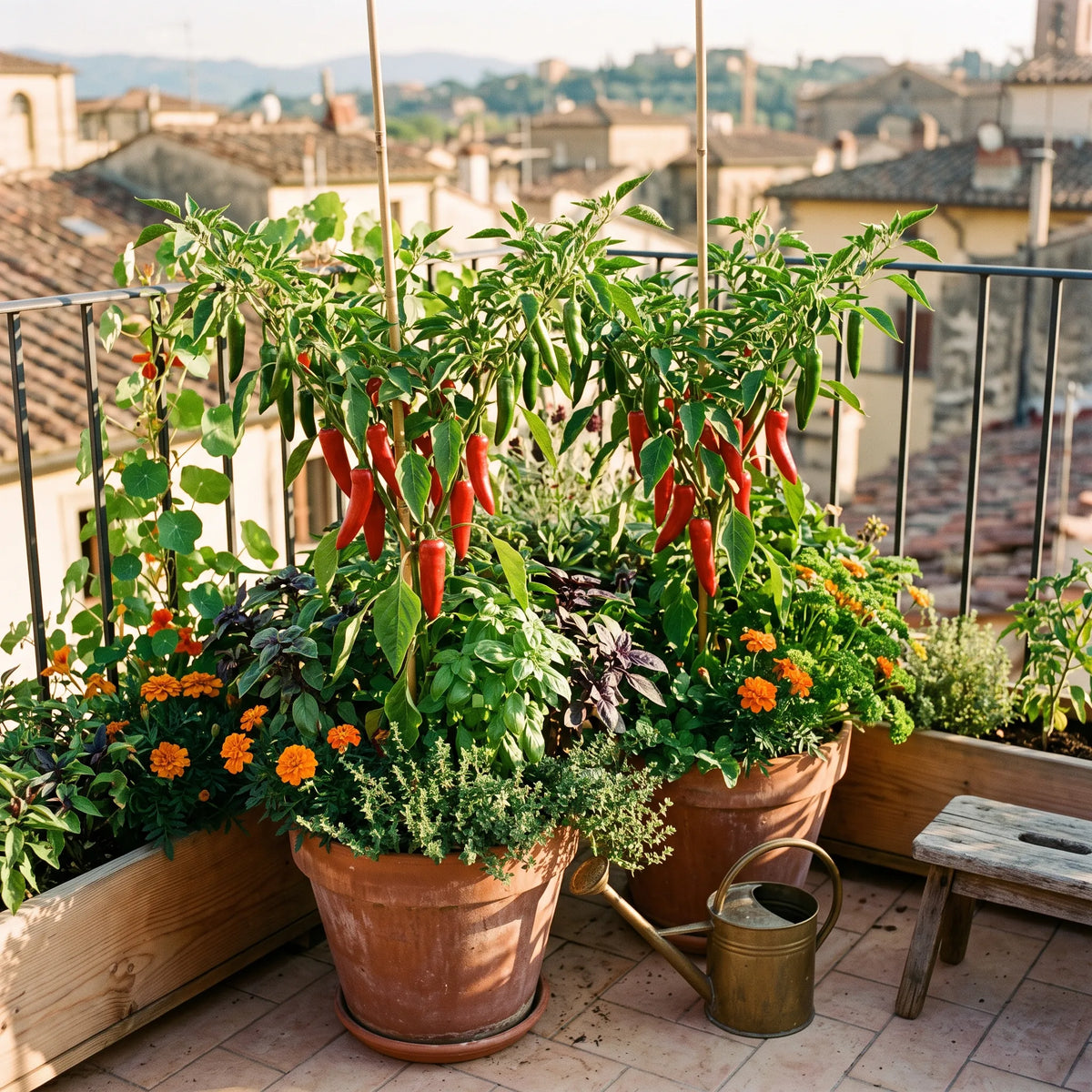
- Przesadzaj do gruntu, gdy nocą temperatura przekracza 12 °C, zachowując odstępy 50 cm. W przeciwieństwie do pomidorów nie zakopuj łodygi: zakopana szyjka korzeniowa gnije.
Wskazówki dotyczące pielęgnacji:
- Podlewaj regularnie u podstawy, bez nadmiaru wody. Ściółkuj, aby utrzymać wilgoć i świeżość gleby.
- Przenieś doniczkę do pomieszczenia przed nadejściem przymrozków: papryka jest rośliną wieloletnią i odrośnie następnej wiosny.
Wskazówki dotyczące zbioru:
- Pozostaw owoce na roślinie, aż całkowicie się zaczerwienią: w przypadku tej odmiany pełna dojrzałość jest kluczowa dla intensywności koloru, który stanowi jej największą zaletę.
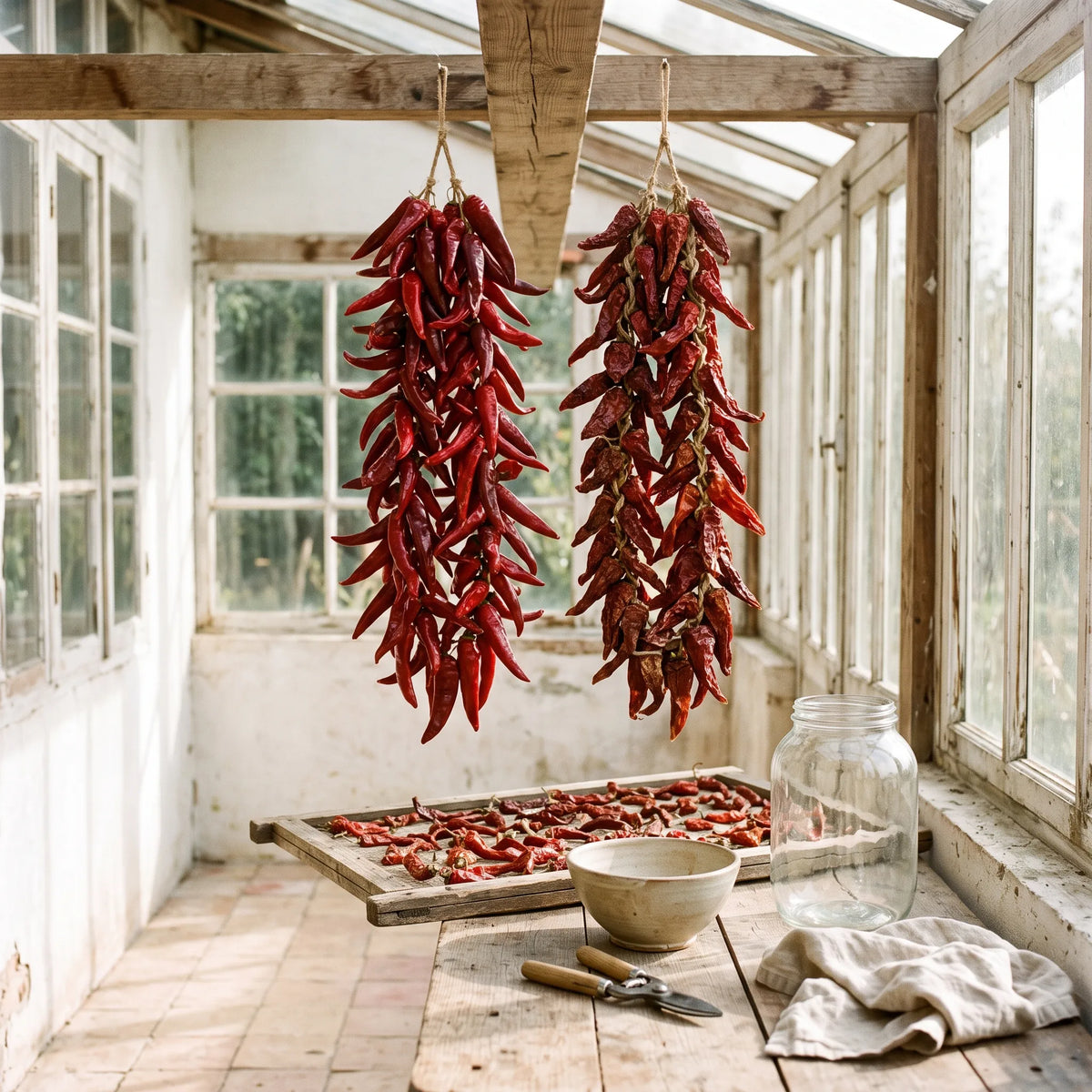
- Susz je nawleczone w girlandę, w suchym i przewiewnym pomieszczeniu, z dala od bezpośredniego światła — słońce powoduje blaknięcie pigmentów. Zmiel je, gdy staną się kruche.
Korzystne połączenia:
Znaczenie dla bioróżnorodności:
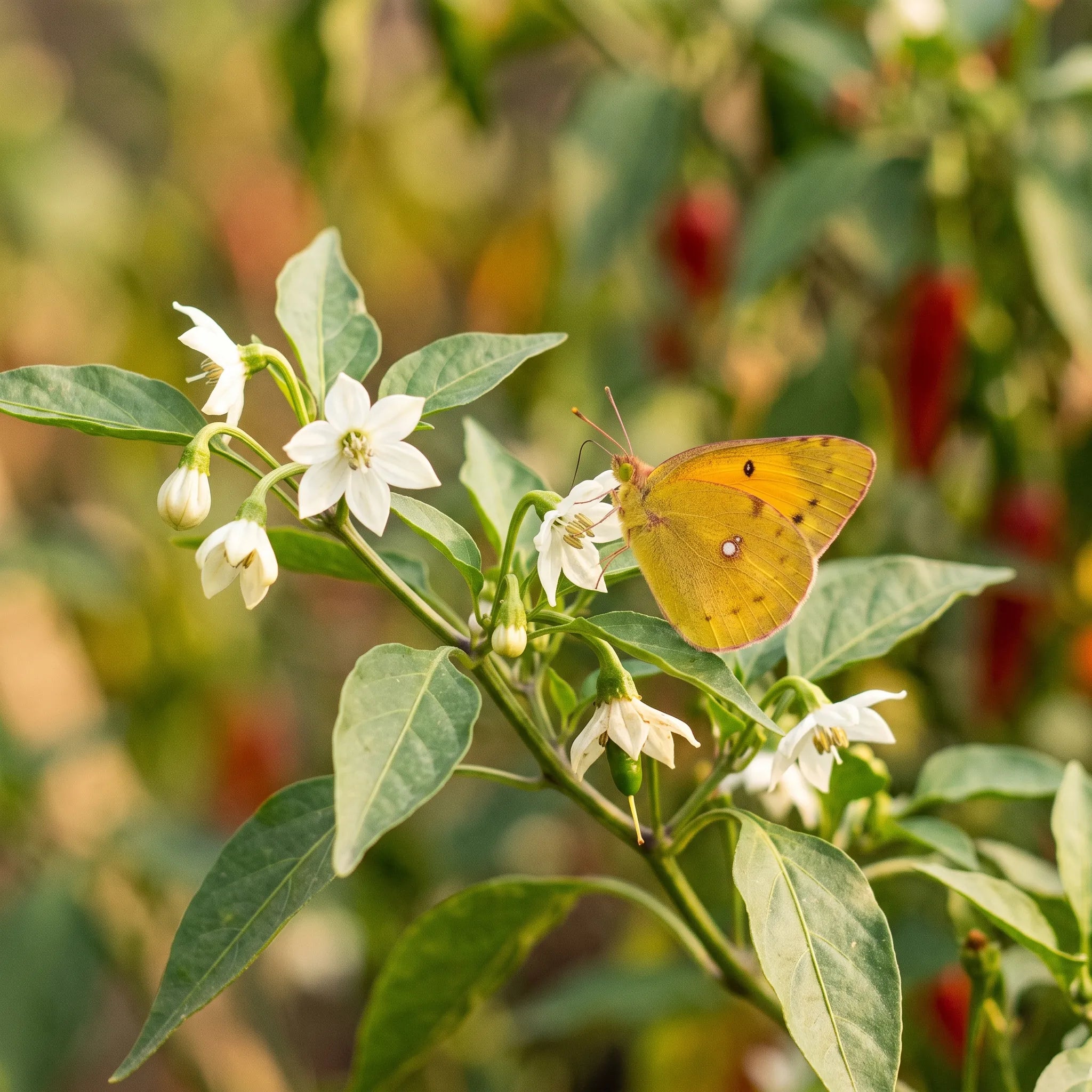
- Jej białe kwiaty są odwiedzane przez pszczoły i trzmiele przez całe lato.
- Jako mało rozpowszechniona w Europie, rozmnażalna odmiana zwiększa różnorodność ogrodu. Zobacz nasze rzadkie i niezwykłe nasiona.
Zastosowanie:
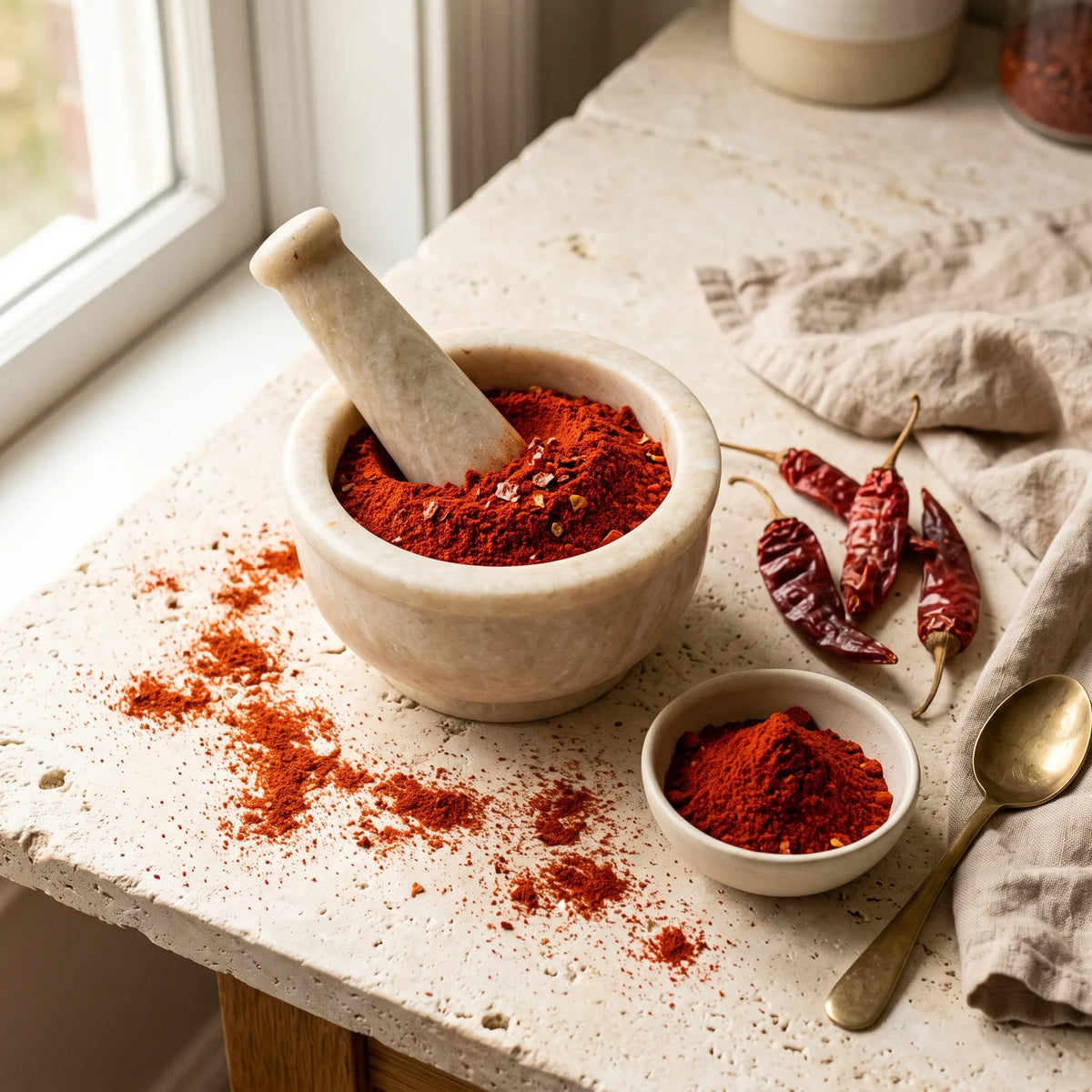
- Suszona i mielona do curry, tandoori, marynat i sosów. Pozwala uzyskać piękny czerwony kolor bez ostrości — bardzo praktyczna do przygotowywania pikantnych potraw bez pieczenia.
Zbieranie własnych nasion:
Otwórz dobrze czerwony owoc, wyjmij nasiona, opłucz je i wysusz na płasko. Uwaga, papryki łatwo się krzyżują: odizoluj roślinę przeznaczoną na nasiona, jeśli uprawiasz również ostre odmiany — w przeciwnym razie ich ostrość może pojawić się w kolejnym pokoleniu. Zobacz, jak przechowywać własne nasiona.
Zaangażowanie w jakość: w SemiSauvage - Permaculture uprawiamy i selekcjonujemy nasze nasiona, kierując się szacunkiem dla wszystkich form życia. Działając w pobliżu wulkanów Owernii, wybieramy odmiany rozmnażalne i niehybrydowe, testowane pod kątem zdolności kiełkowania, starannie sortowane i pakowane, bez żadnych zabiegów chemicznych. Wierzymy, że należy przywrócić ogrodnikom możliwość ponownego wysiewania, rok po roku, nasion, które naprawdę do nich należą.
Kolor indyjskiego curry bez pieczenia.