Solanum lycopersicum
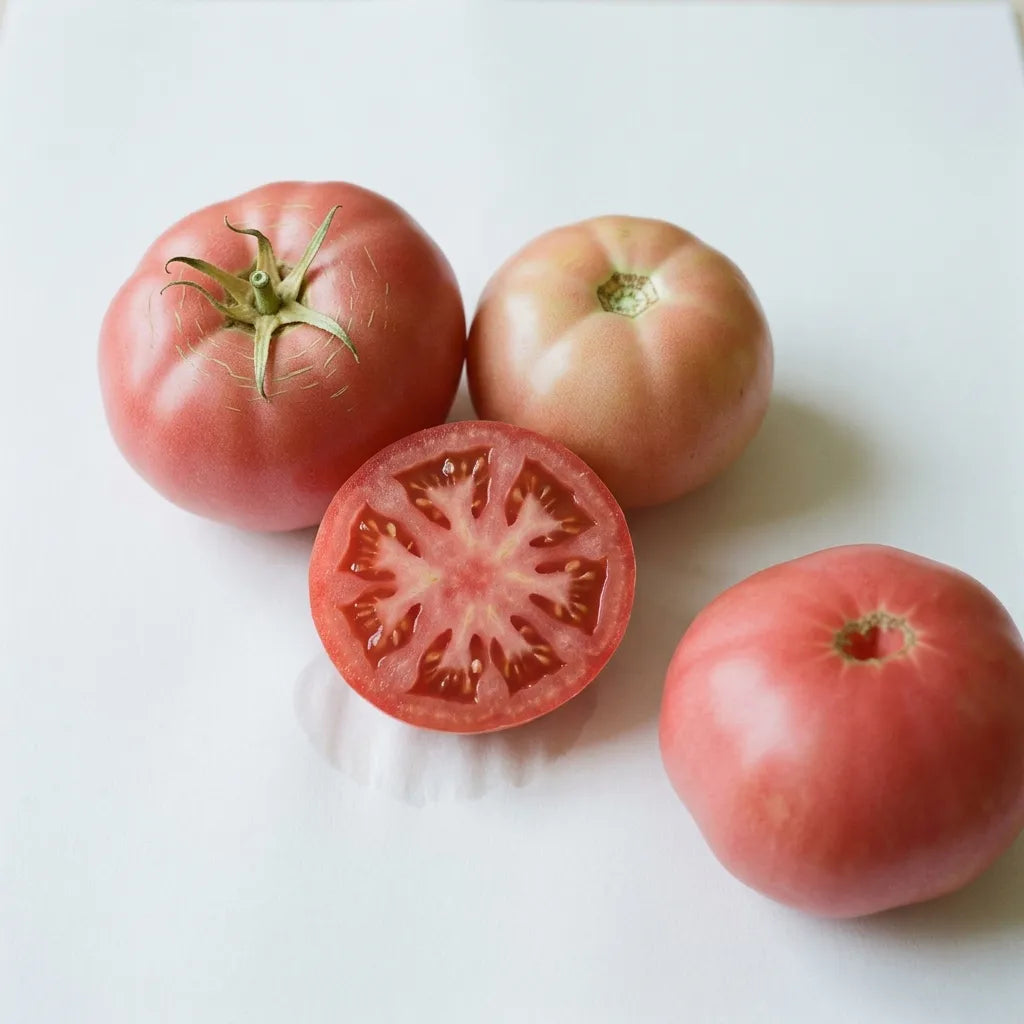
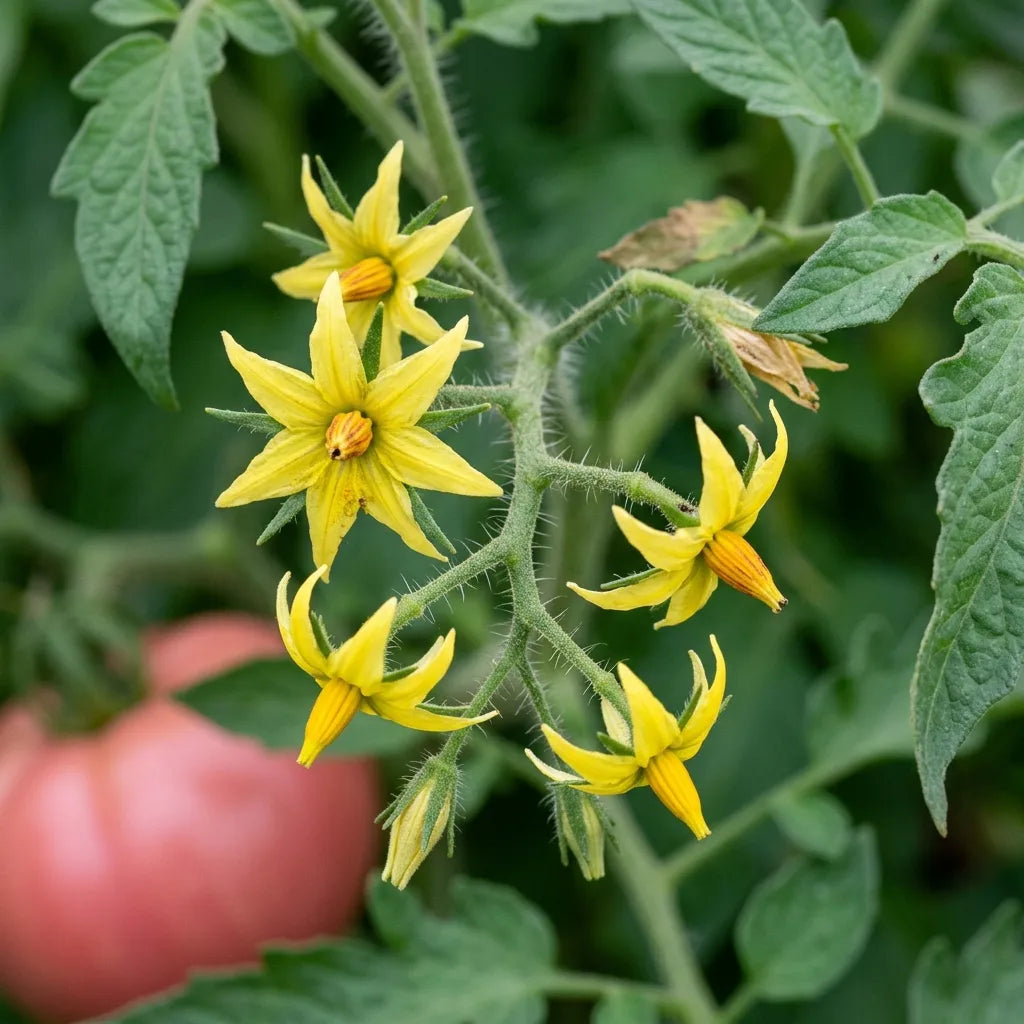
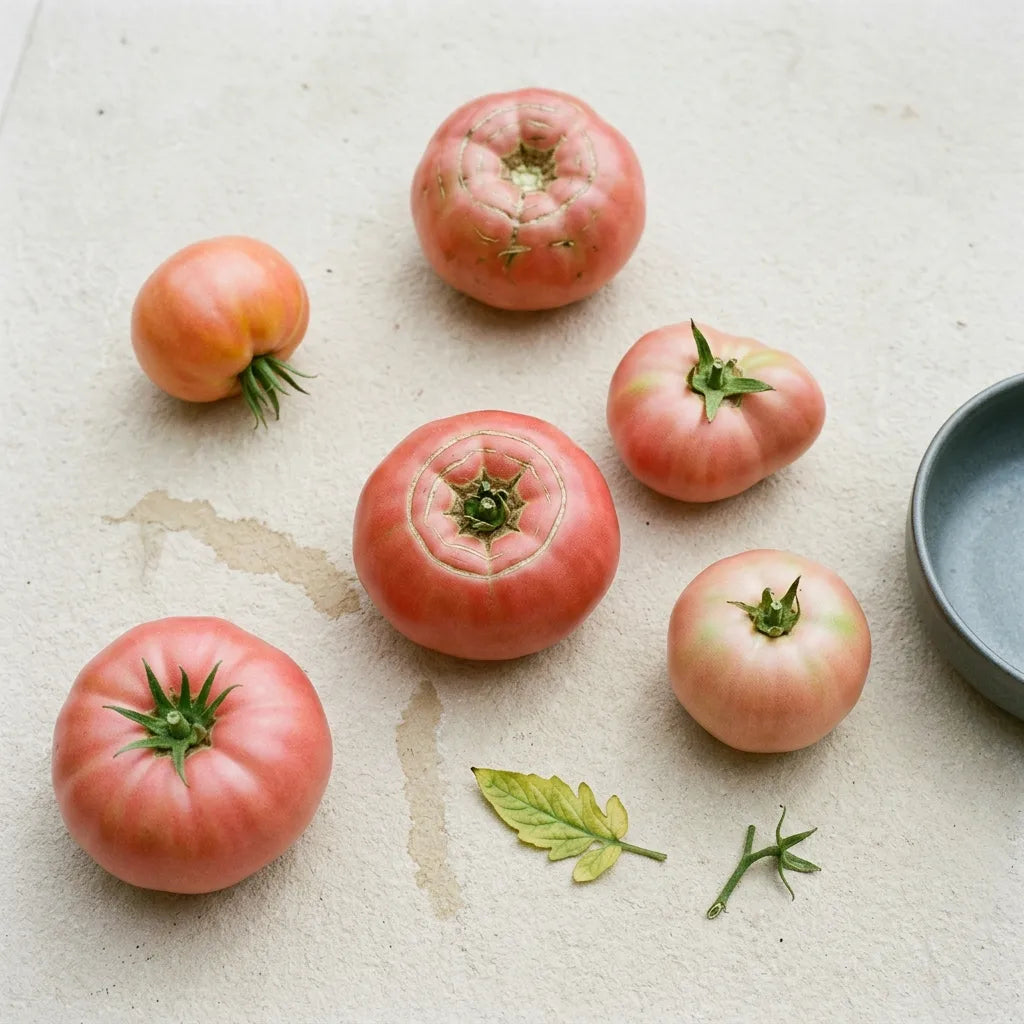
Pomidor Rose de Berne, Berner Rose: pochodzący ze Szwajcarii, to jeden z najbardziej poszukiwanych pomidorów wśród miłośników — i jeden z najbardziej delikatnych. Jego bardzo cienka skórka, przez którą nie nadaje się do transportu i dlatego nie trafia na stragany, jest właśnie tym, co stanowi o jego sławie smakowej. To pomidor, który trzeba uprawiać samodzielnie, aby go poznać.
Charakterystyka:
-
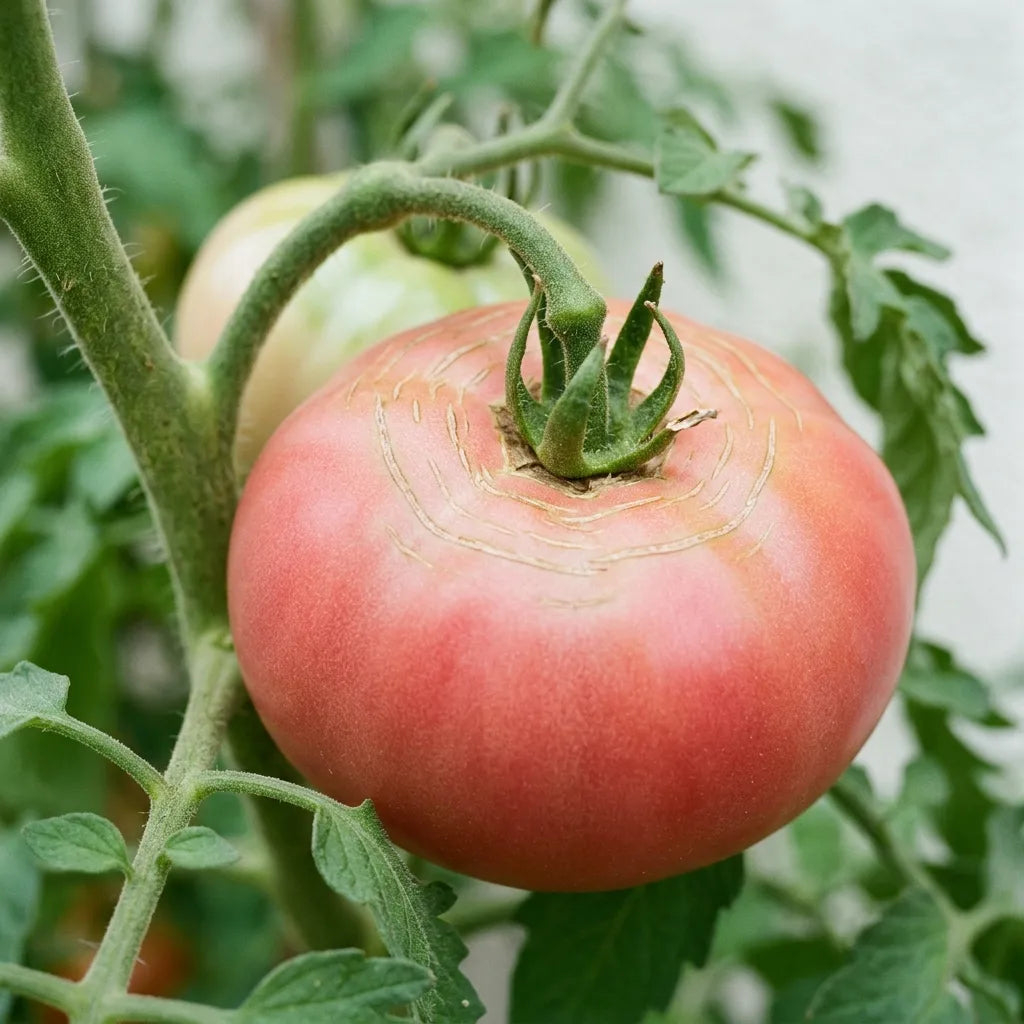
Bardzo cienka skórka: niemal niewyczuwalna w ustach, ale delikatna — nie znosi transportu ani nieostrożnego obchodzenia się.
-
Łagodny, owocowy smak: mało kwaśny, bardzo aromatyczny, regularnie zaliczany do najlepszych odmian.
-
Duże owoce: około 400 g każdy, różowe, a w pełnej dojrzałości pastelowoczerwone.
-
Rozłożone w czasie dojrzewanie: owocuje regularnie przez całe lato, zamiast dojrzewać jednorazowo.
Wskazówki dotyczące wysiewu:
-
Stanowisko: pełne słońce i ciepło.
-
Gleba: głęboka, żyzna, pulchna i dobrze przepuszczalna, wzbogacona dobrze rozłożonym kompostem.
-
Metoda: wysiewaj od marca pod osłonami, w temperaturze co najmniej 20°C — poniżej tej temperatury nasiona nie kiełkują. Przykryj warstwą podłoża o grubości 5 mm. Przepikuj do doniczek, gdy pojawią się dwie liście właściwe. Zobacz, jak wysiewać nasiona.
Wskazówki dotyczące sadzenia:
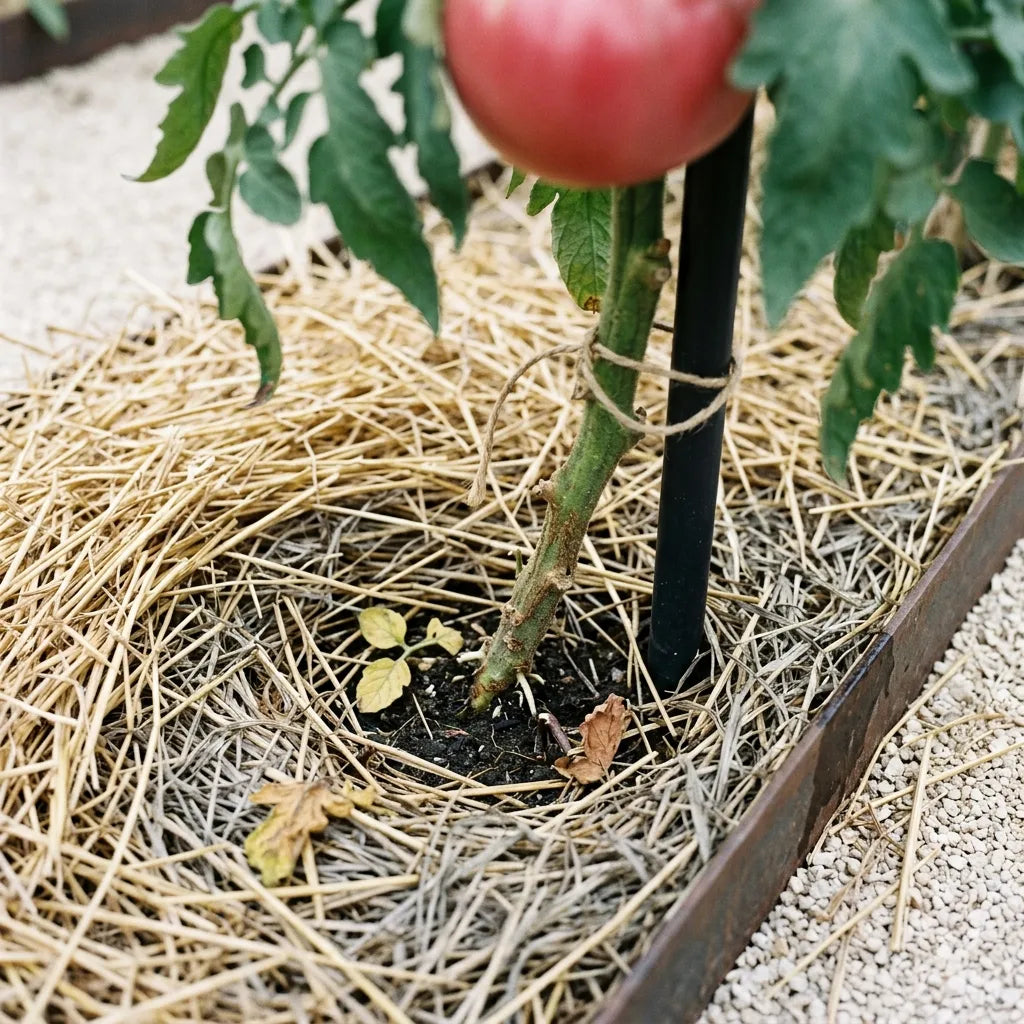
- Przesadź po ostatnich przymrozkach, zachowując odstępy od 70 do 80 cm. Zakop łodygę aż do pierwszych liści: pomidor wytwarza korzenie na całej zakopanej części, dzięki czemu roślina jest silniejsza.
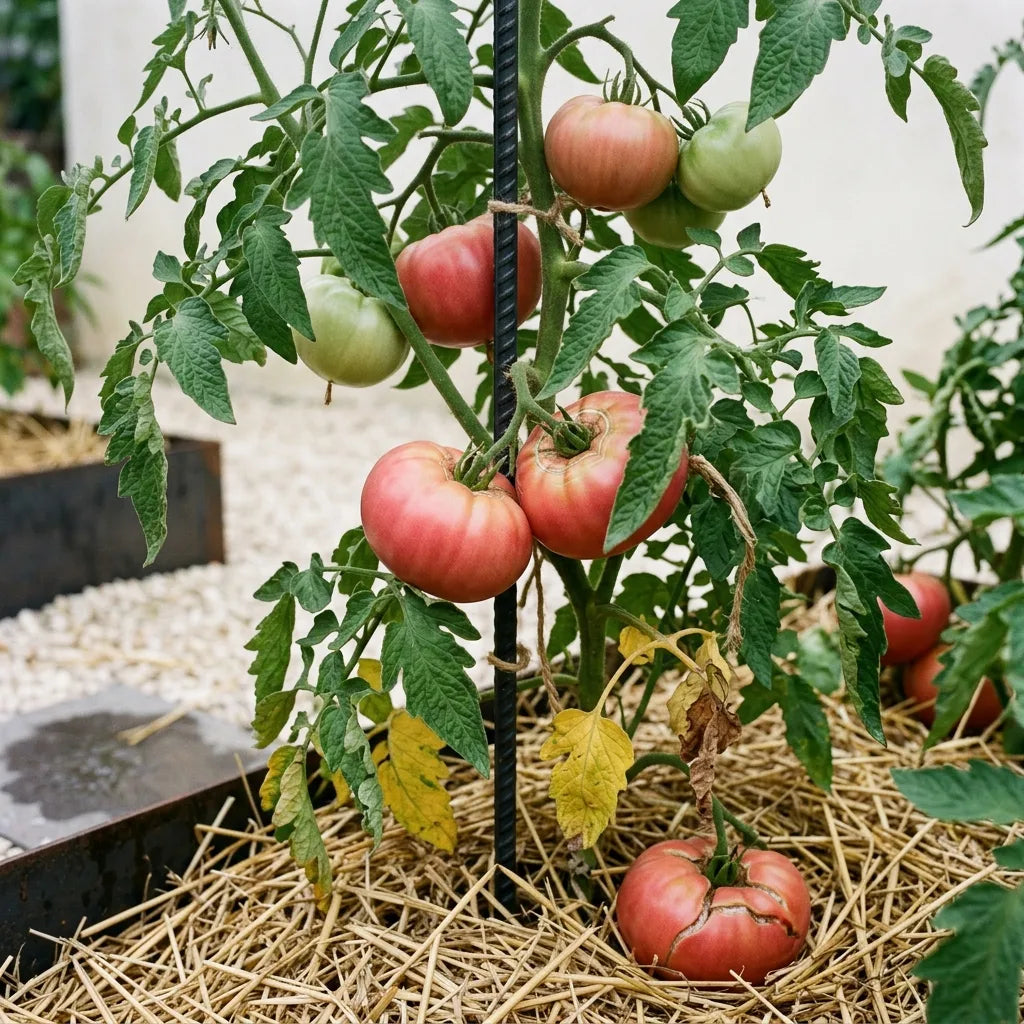
- To odmiana nieokreślona: zamontuj solidną podporę już podczas sadzenia.
Wskazówki dotyczące pielęgnacji:
-
Zawsze podlewaj przy nasadzie, nigdy po liściach, najlepiej rano: woda na liściach ułatwia wnikanie zarazy ziemniaczanej. Ściółkuj grubą warstwą.
- Podlewaj bardzo regularnie i równomiernie: ze względu na cienką skórkę ta odmiana jest szczególnie podatna na pękanie po deszczu lub podlaniu po okresie suszy. Gruba warstwa ściółki jest tu czymś więcej niż tylko udogodnieniem.
- Usuwaj pędy boczne i ogranicz liczbę gron do 5 lub 6 na roślinę.
- Stosuj płodozmian co trzy–cztery lata.
Wskazówki dotyczące zbioru:
- Zbieraj delikatnie, podtrzymując owoc: jego skórka od razu się odgniata przy najmniejszym uderzeniu. Spożyj szybko, ponieważ przechowuje się tylko przez kilka dni.
- Nigdy nie przechowuj w lodówce, ponieważ niszczy ona aromat.
Korzystne sąsiedztwo:
Znaczenie dla bioróżnorodności:
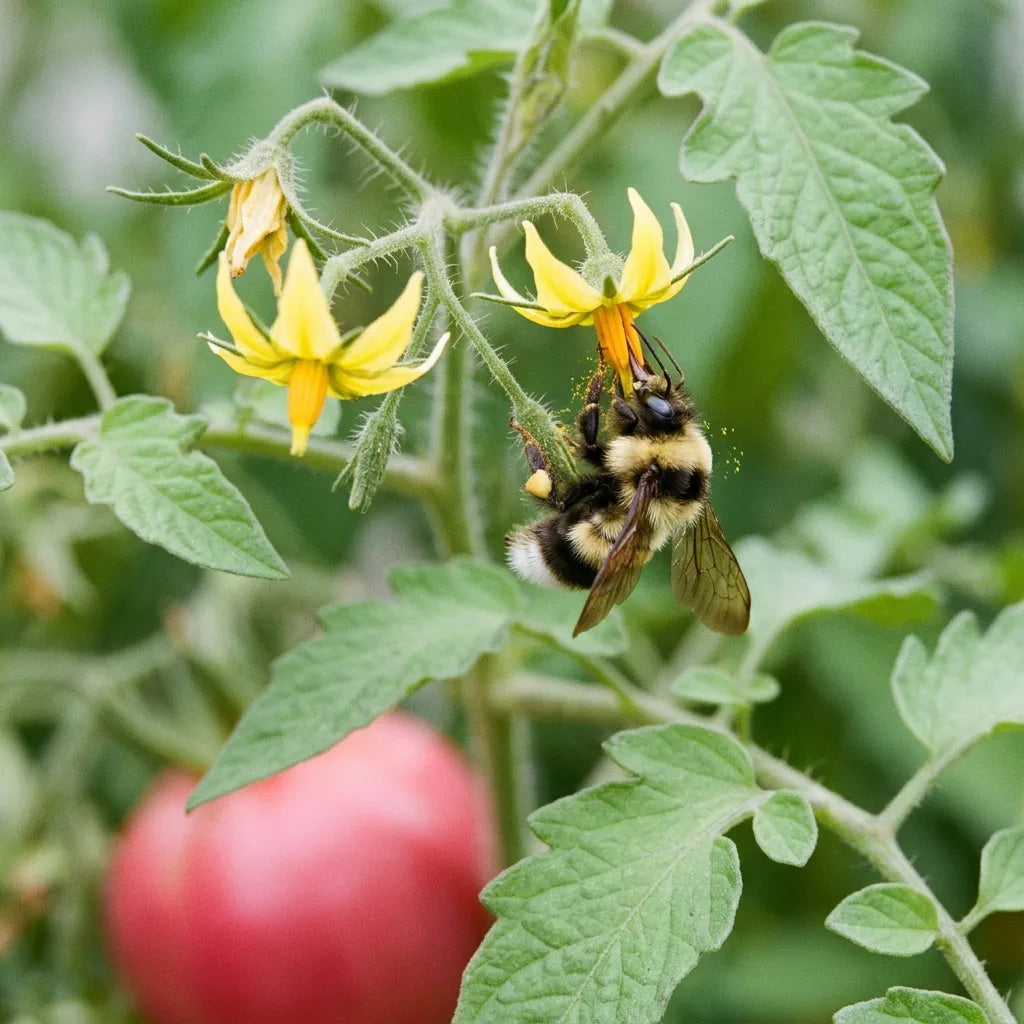
- Jego kwiaty są zapylane wibracyjnie: w pełni wykorzystują je tylko trzmiele. Zapraszając je do ogrodu, bezpośrednio poprawiasz swoje zbiory.
- To stara, powtarzalna odmiana, której delikatność wyklucza ją z handlu: uprawiając ją, podtrzymujesz ją przy życiu. Zobacz nasze stare odmiany pomidorów do wysiewu.
Zastosowanie:
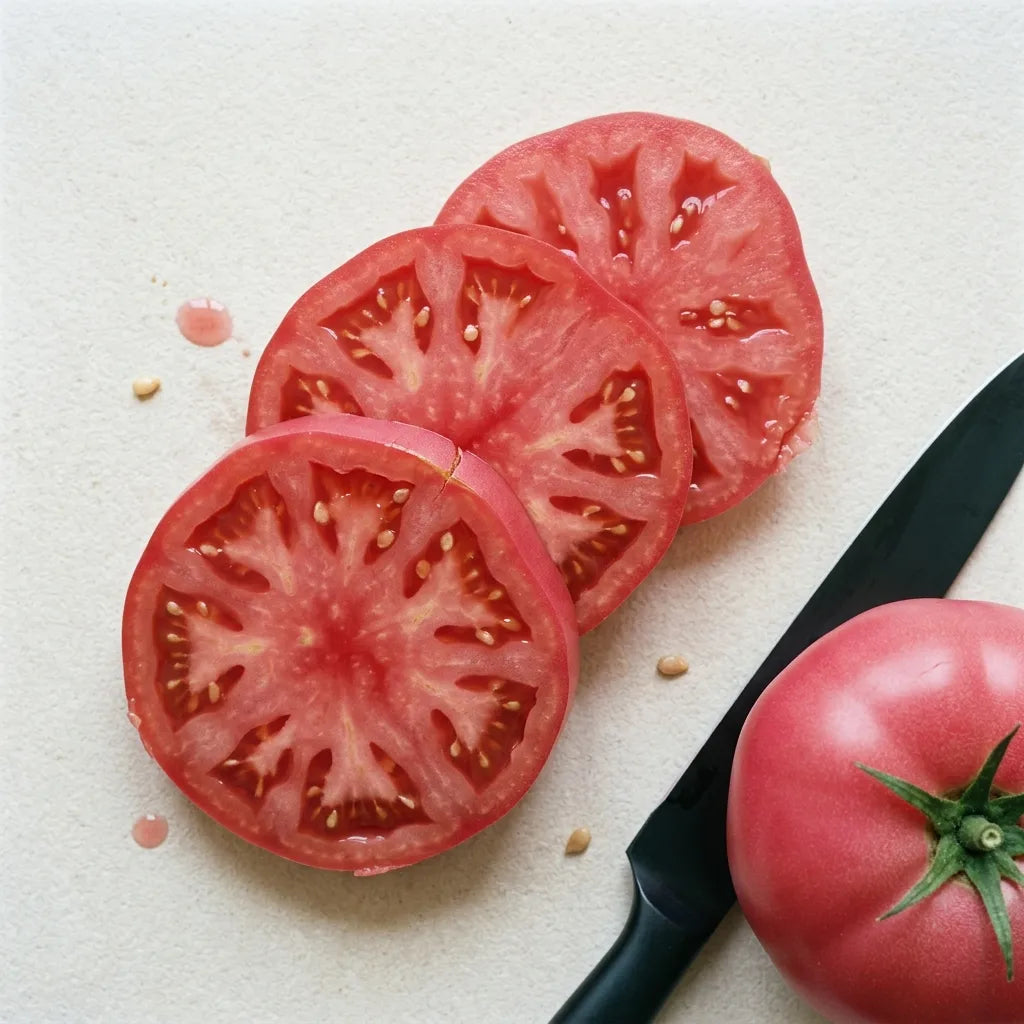
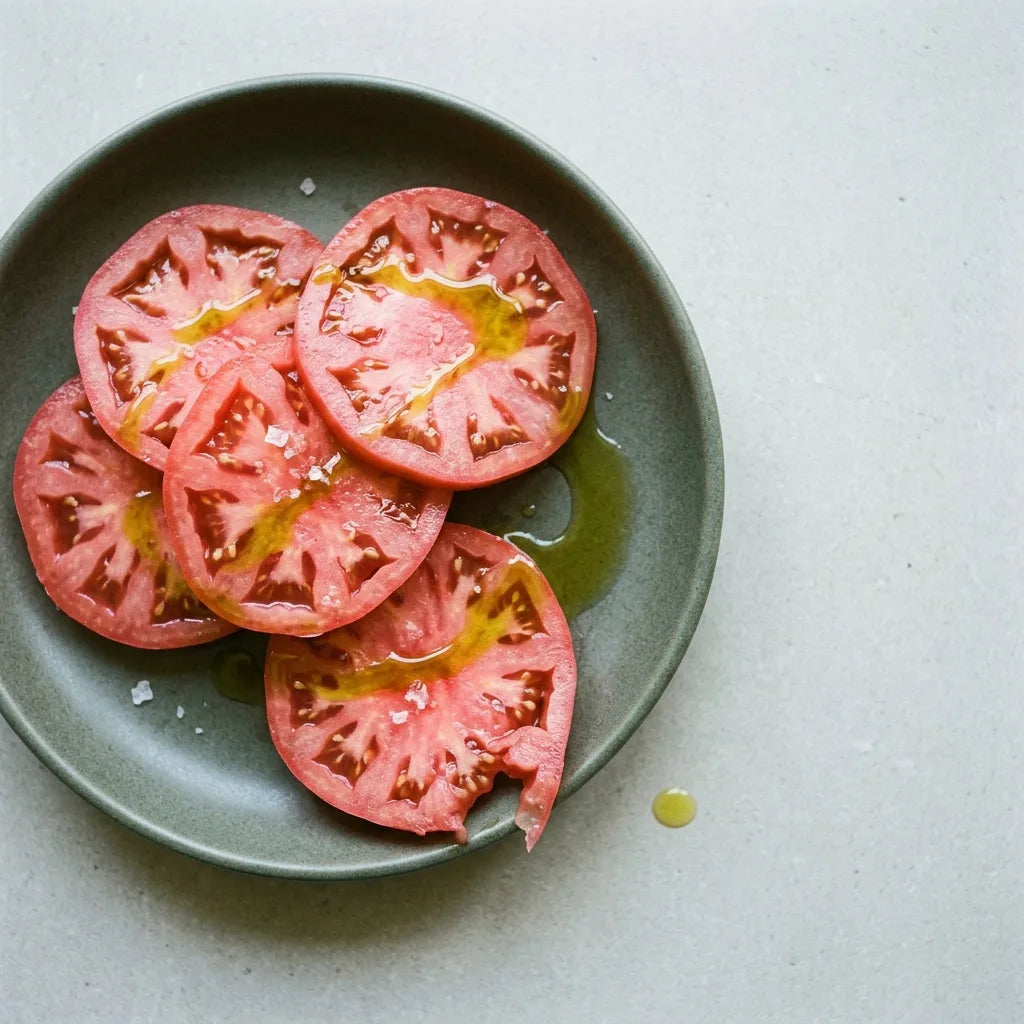
- Na surowo, w plasterkach, z odrobiną oliwy z oliwek i niczym więcej — właśnie tak najlepiej pokazuje swoje walory. Obróbka termiczna pozbawiłaby ją delikatności.
Pozyskiwanie własnych nasion:
Wybierz miąższ z pięknego, w pełni dojrzałego owocu i pozostaw go do fermentacji na dwa–trzy dni w niewielkiej ilości wody — ten etap niszczy galaretowatą otoczkę, która hamuje kiełkowanie — następnie wypłucz nasiona: zdrowe nasiona opadną na dno. Wysusz je na płasko. Zobacz, jak przechowywać nasiona.
Zaangażowanie na rzecz jakości: w SemiSauvage - Permaculture uprawiamy i selekcjonujemy nasze nasiona, kierując się szacunkiem dla żywych organizmów. Działając w pobliżu wulkanów Owernii, wybieramy odmiany powtarzalne i niehybrydowe, testujemy ich zdolność kiełkowania, sortujemy je i starannie pakujemy, bez żadnych zabiegów chemicznych. Wierzymy, że należy przywrócić ogrodnikom możliwość ponownego wysiewania, rok po roku, nasion, które naprawdę do nich należą.
Zbyt delikatny na stragany: pomidor, który trzeba uprawiać, aby go poznać.