Solanum lycopersicum
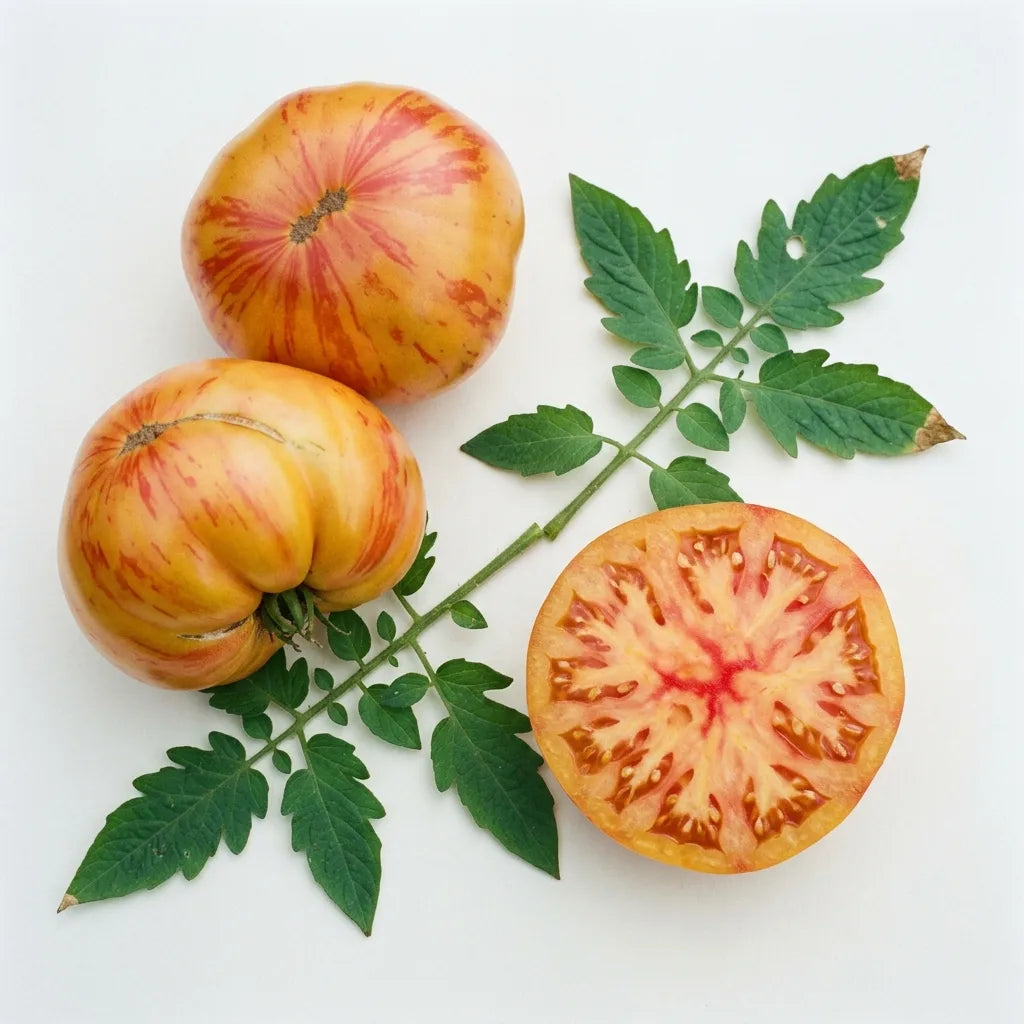
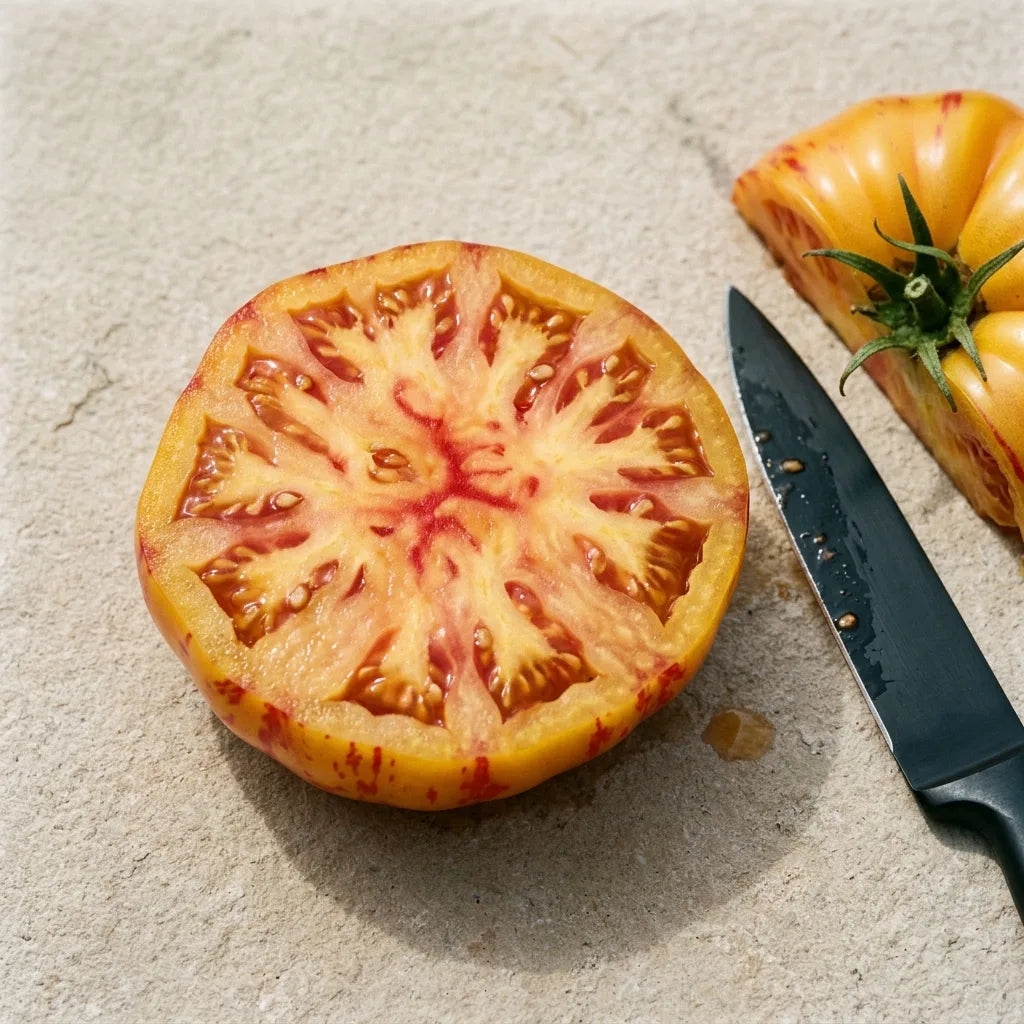
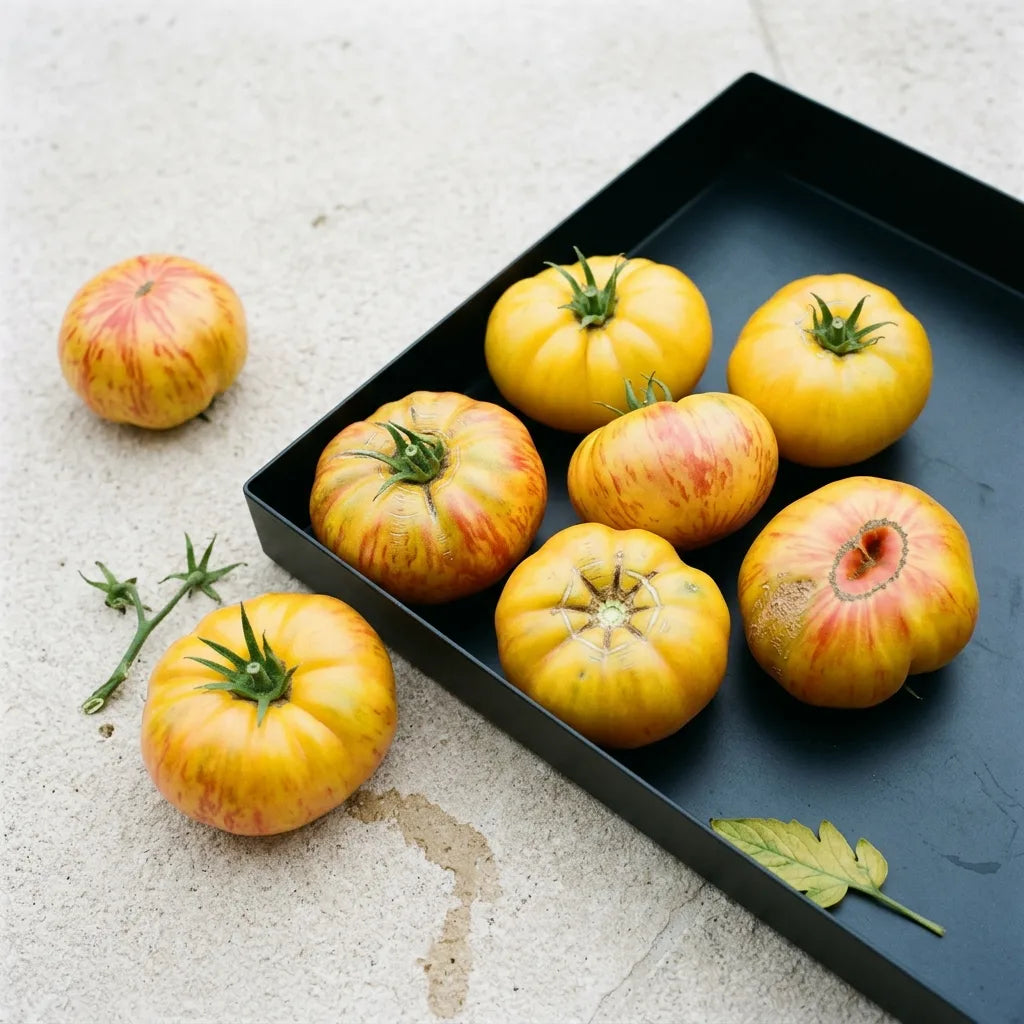
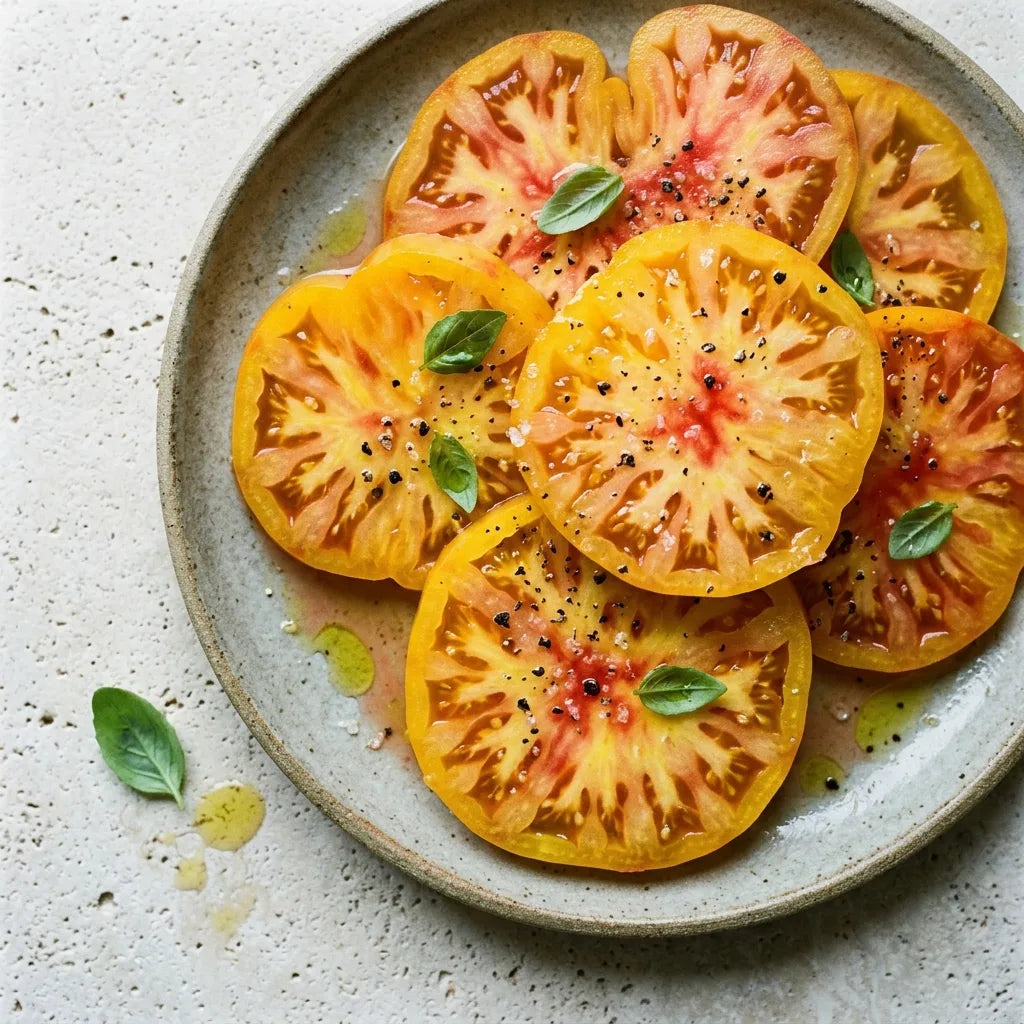
Pomidor Ananas, Pineapple, Ananas noire: nie ma nic wspólnego z tropikalnym owocem poza kolorami. Po pokrojeniu w plastry ukazuje marmurkowy wzór w odcieniach żółci, pomarańczu i czerwieni, którego nie można się domyślić z zewnątrz — każdy owoc jest inny. To pomidor bardzo dużych rozmiarów, słodki i lekko kwaskowaty, uprawiany zarówno dla wyglądu, jak i smaku.
Charakterystyka:
-
Marmurkowy miąższ: połączone odcienie żółci, pomarańczu i czerwieni, inny wzór w każdym plastrze.
-
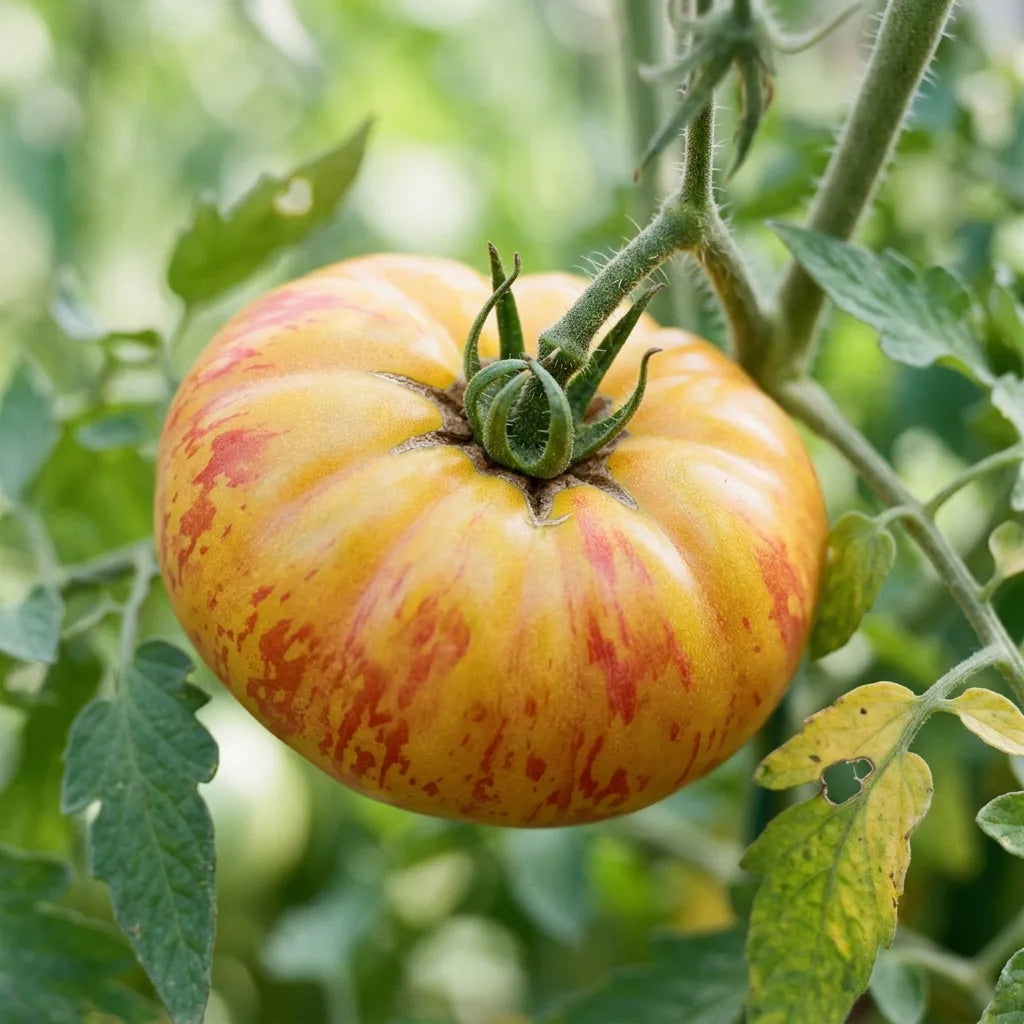
Bardzo duże owoce: często ważące 500 g i więcej, lekko żebrowane.
-
Bogaty smak: jednocześnie słodki i kwaskowaty, z niewielką liczbą pestek.
-
Stara odmiana nadająca się do rozmnażania: co roku można wysiewać własne nasiona.
Wskazówki dotyczące wysiewu:
-
Stanowisko: pełne słońce i ciepło są niezbędne, aby owoce tej wielkości mogły dojrzeć.
-
Gleba: głęboka, żyzna, pulchna i dobrze przepuszczalna. Odmiana o bardzo dużych owocach ma szczególnie wysokie wymagania pokarmowe: obfite zastosowanie dobrze rozłożonego kompostu ma kluczowe znaczenie.
-
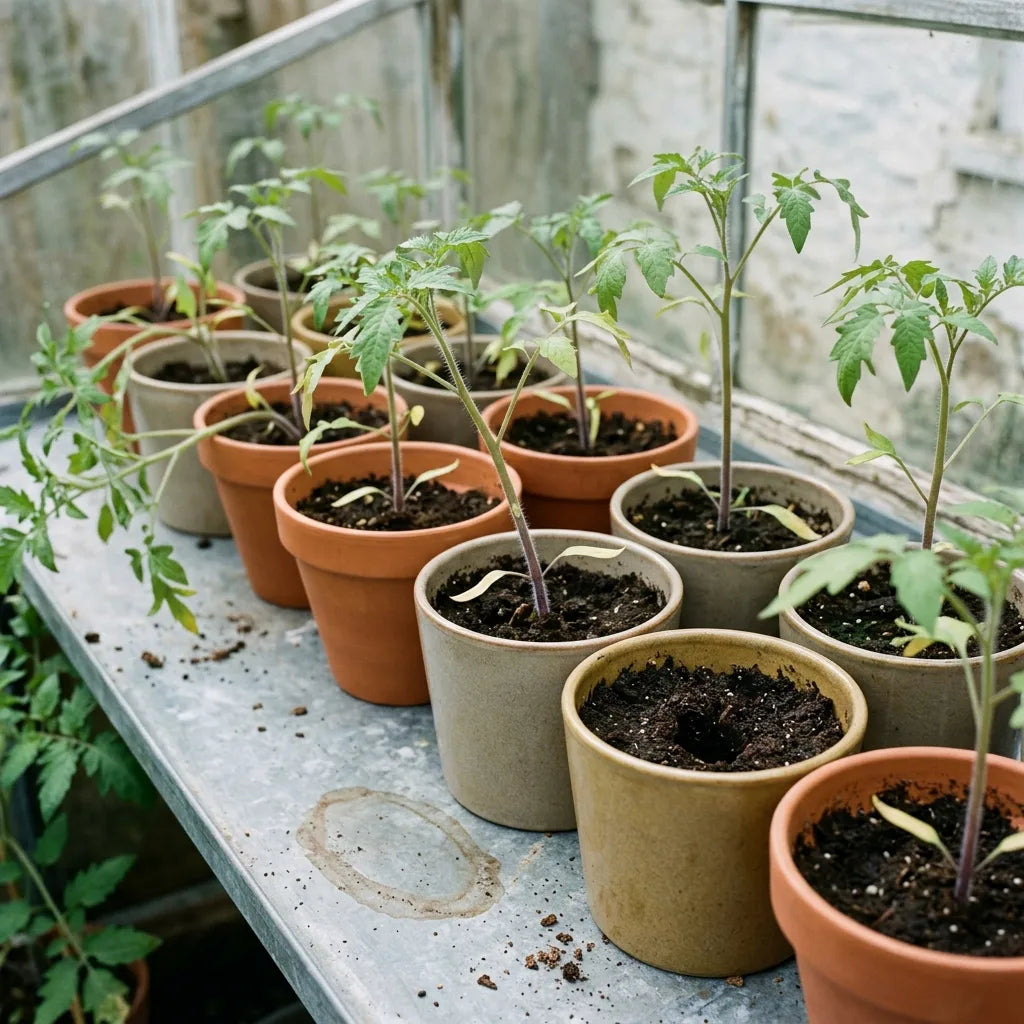
Metoda: wysiewaj od marca, pod osłonami lub w pomieszczeniu, w temperaturze co najmniej 20 °C — poniżej tej temperatury nasiona nie kiełkują. Przykryj warstwą podłoża o grubości 5 mm. Przepikuj do doniczek po pojawieniu się dwóch liści właściwych. Zobacz jak wysiewać nasiona.
Wskazówki dotyczące sadzenia:
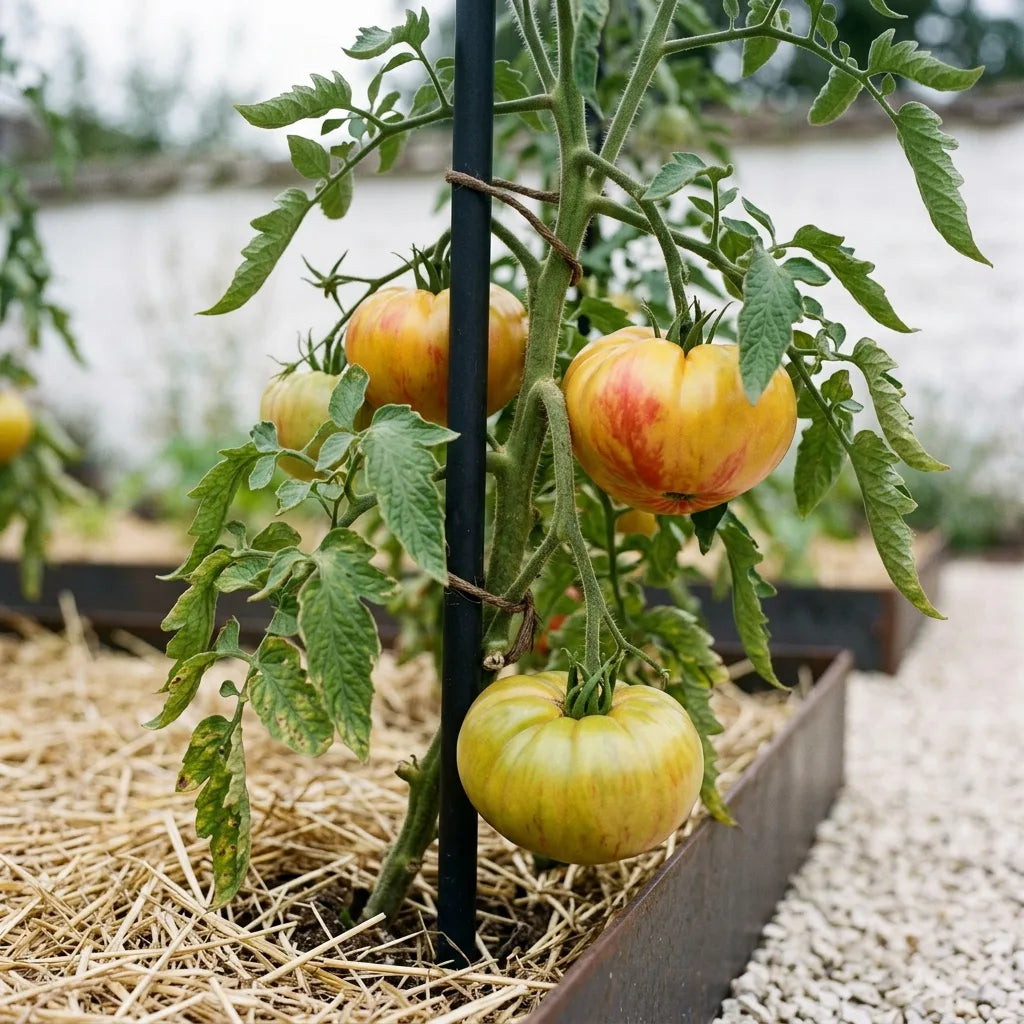
- Przesadź do gruntu po ostatnich przymrozkach, zachowując odstęp 80 cm. Zakop łodygę aż do pierwszych liści: pomidor wypuszcza korzenie na całej zakopanej części, dzięki czemu roślina jest wyraźnie silniejsza — to niezbędne, aby utrzymać tak duże owoce.
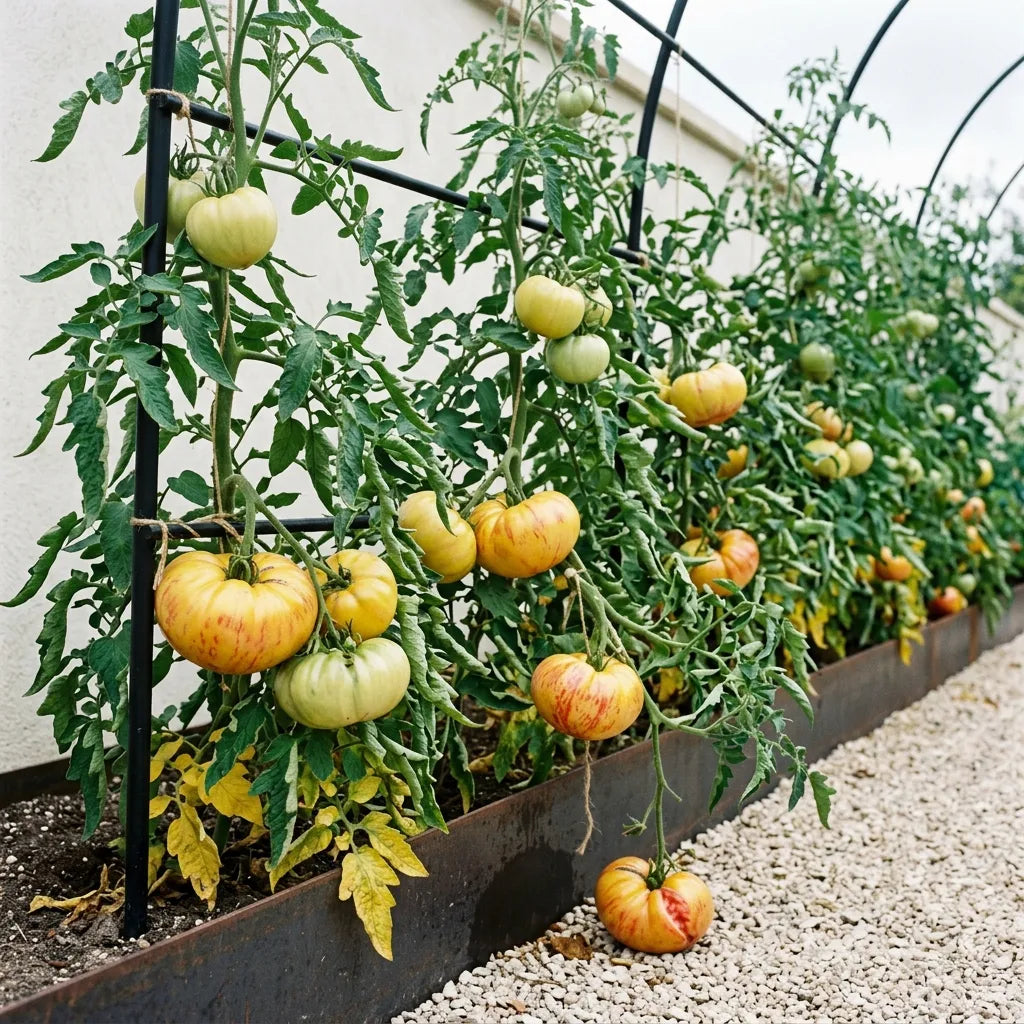
- To odmiana o nieograniczonym wzroście: już podczas sadzenia zamontuj bardzo solidną podporę.
Wskazówki dotyczące pielęgnacji:
-
Zawsze podlewaj przy nasadzie, nigdy po liściach, najlepiej rano: woda na liściach ułatwia rozwój zarazy. Ściółkuj grubą warstwą.
- Podlewaj regularnie i równomiernie: w przypadku bardzo dużych owoców nieregularne podlewanie powoduje pękanie i suchą zgniliznę wierzchołkową.
- Usuwaj pędy boczne i ogranicz liczbę gron do 4 na roślinę: to cena za uzyskanie pięknych, w pełni wykształconych owoców zamiast mnóstwa niedojrzałych.
- Stosuj trzy- lub czteroletni płodozmian.
Wskazówki dotyczące zbioru:
-
Delikatna kwestia: w przypadku odmiany wielobarwnej sam kolor nie wystarcza do oceny dojrzałości. Zwracaj uwagę na dotyk — owoc powinien wyraźnie uginać się pod palcem — oraz na zapach, który staje się wyczuwalny po osiągnięciu dojrzałości.
- Podczas zbioru podtrzymuj owoc, ponieważ jego ciężar łatwo łamie grono. Przechowuj w temperaturze pokojowej, nigdy w lodówce.
Korzystne sąsiedztwo:
Znaczenie dla bioróżnorodności:
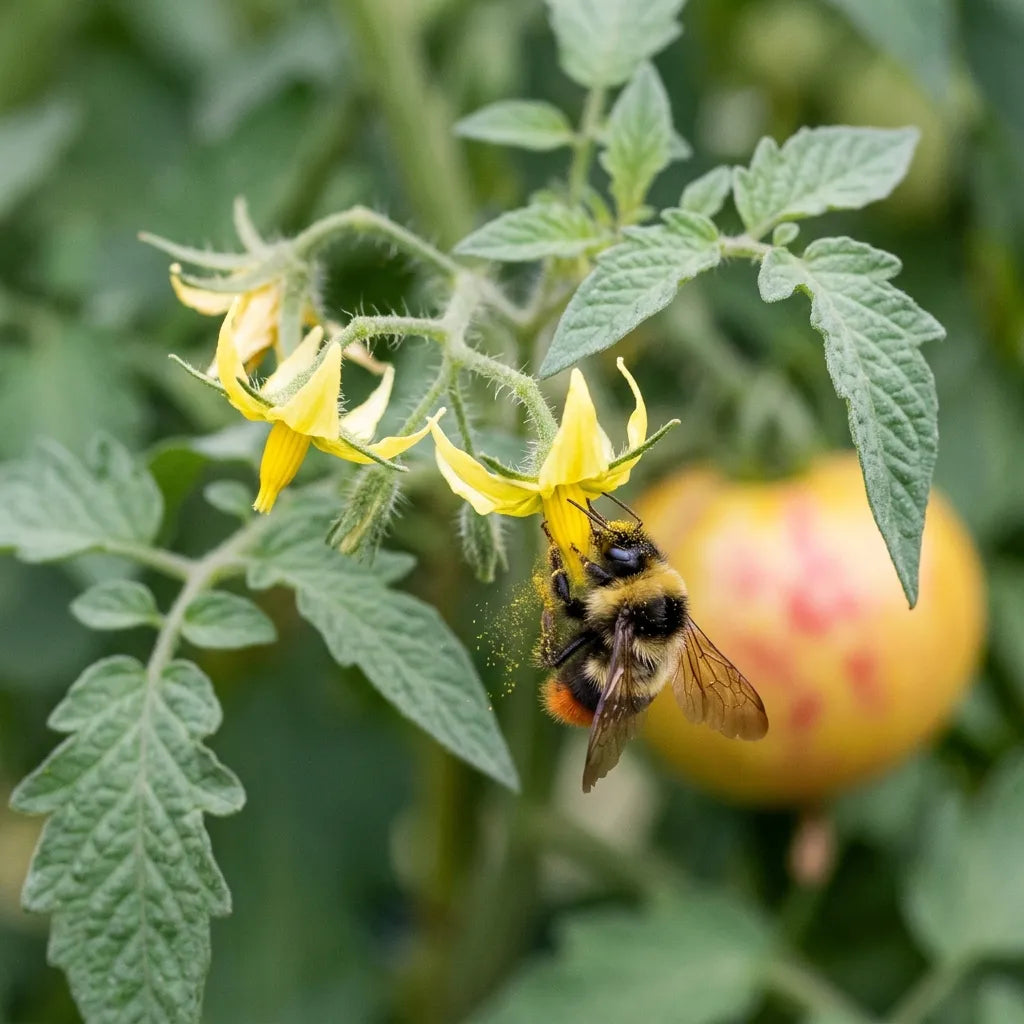
- Jej kwiaty są zapylane wibracyjnie: w pełni wykorzystują je tylko trzmiele. Zapewnienie im schronienia bezpośrednio poprawia plony, zwłaszcza w przypadku odmian o dużych owocach.
- Jako stara odmiana nadająca się do rozmnażania, przyczynia się do ochrony różnorodności upraw. Zobacz nasze stare pomidory do wysiewu.
Zastosowanie:
- Na surowo, w grubych plastrach, z odrobiną oliwy z oliwek: właśnie tak najlepiej docenić jej marmurkowy wzór i smak. Obróbka cieplna zepsułaby jedno i drugie.
Pozyskiwanie własnych nasion:
Wyjmij miąższ z pięknego, dobrze dojrzałego owocu i pozostaw go do fermentacji na dwa–trzy dni w niewielkiej ilości wody — ten etap usuwa galaretowatą otoczkę hamującą kiełkowanie — a następnie wypłucz: zdrowe nasiona opadną na dno. Wysusz je rozłożone na płasko. Zobacz jak przechowywać własne nasiona.
Zaangażowanie na rzecz jakości: w SemiSauvage - Permaculture uprawiamy i selekcjonujemy nasze nasiona, kierując się szacunkiem dla żywej przyrody. Działając w pobliżu wulkanów Owernii, wybieramy odmiany nadające się do rozmnażania i niehybrydowe, testowane pod kątem zdolności kiełkowania, starannie sortowane i pakowane, bez żadnych zabiegów chemicznych. Jesteśmy przekonani, że należy przywrócić ogrodnikom możliwość ponownego wysiewania, rok po roku, nasion, które naprawdę do nich należą.
Inny marmurkowy wzór w każdym plastrze: najbardziej efektowny ze starych pomidorów.