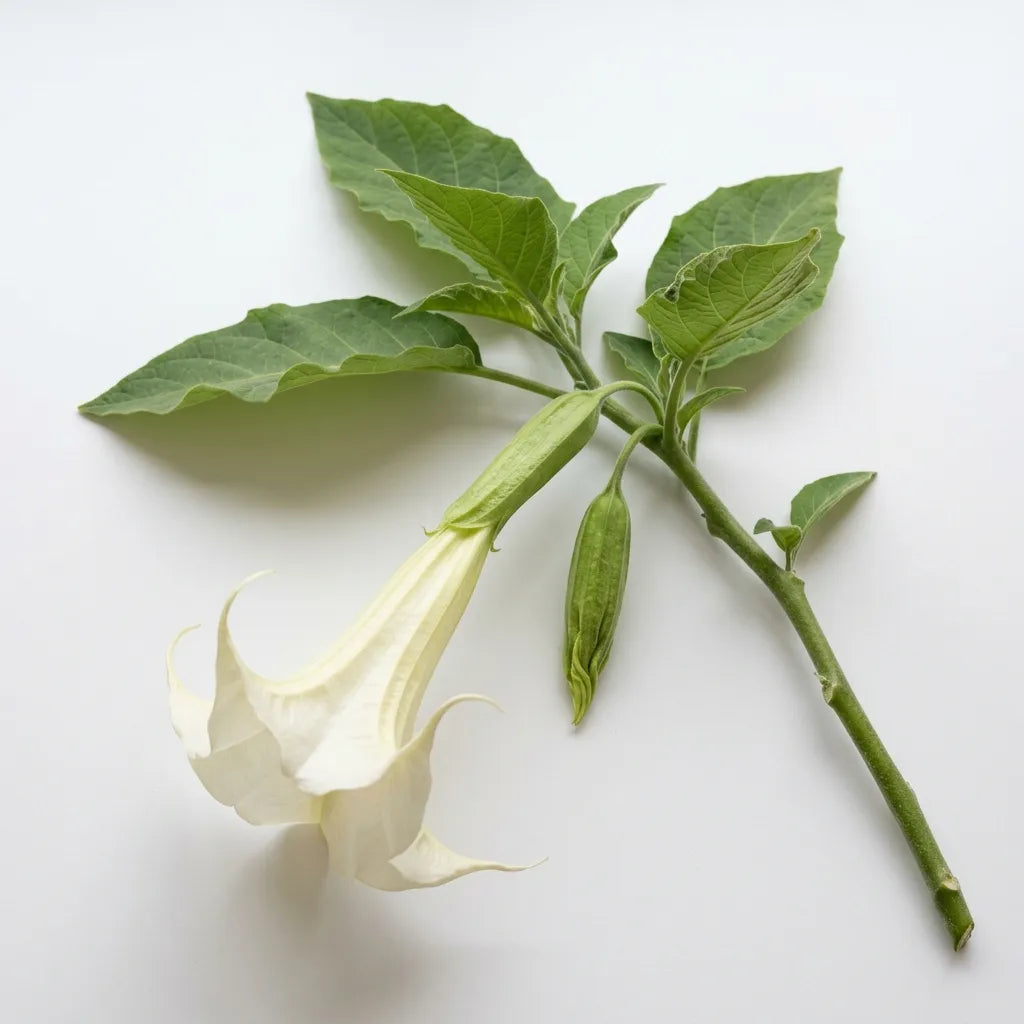
Brugmansia suaveolens
천사의 나팔, 브루그만시아, 나무독말풀: 나팔 모양의 거대한 늘어진 꽃에서 강렬한 향기가 퍼지며, 밤이 되면 야행성 수분 매개자를 유인하기 위해 향기가 더욱 짙어집니다. 매우 빠르게 자라는 인상적인 관목이지만, 충분히 숙지한 뒤 심어야 합니다.
특징:
-
인상적인 개화: 여름 내내 서리가 내릴 때까지, 나팔 모양의 거대한 흰색 꽃이 늘어져 피며 매우 짙은 향기를 풍깁니다.
-
빠른 성장: 한 계절 만에 크게 자라는 왕성한 관목입니다.
-
밤에 퍼지는 향기: 달콤한 향기가 특히 저녁과 밤에 퍼집니다.
주의 사항 — 반드시 주의 깊게 읽어 주세요:
-
식물의 모든 부위는 섭취 시 매우 유독합니다 — 꽃, 잎, 줄기, 씨앗 모두 해당합니다. 소량만 섭취해도 심각한 중독을 일으킬 수 있습니다.
-
어린아이가 자주 이용하는 정원이나 반려동물이 접근할 수 있는 곳에는 심지 마세요. 큰 꽃은 아이의 시선을 끌기 쉽습니다.
- 가지치기하거나 다룰 때는 장갑을 착용하고, 이후 손을 씻으세요. 밀폐된 공간에서 향기를 오랫동안 들이마시지 마세요.
- 어떤 형태로든 섭취하거나 조제하기 위한 목적으로 절대 사용하지 마세요.
- 서리에 약한 식물입니다. 서리를 견디지 못하므로 대부분의 지역에서는 겨울 동안 서리가 닿지 않는 곳에서 월동시켜야 합니다.
파종 방법:
-
햇빛: 햇볕이 잘 들거나 약한 반그늘이며, 따뜻하고 바람을 피할 수 있는 곳.
-
토양: 비옥하고 깊으며 촉촉하면서도 배수가 잘되는 토양. 물과 양분을 매우 많이 필요로 하는 식물이므로 퇴비를 충분히 공급하면 실제로 큰 도움이 되며, 여름에는 배지가 완전히 마르지 않도록 해야 합니다.
-
방법: 저온 처리는 필요하지 않습니다 — 이 남아메리카 원산종은 따뜻한 환경을 필요로 합니다. 씨앗을 미지근한 물에 24시간 담근 뒤, 22~25°C로 촉촉하게 유지한 배지에 1cm 깊이로 파종하세요. 씨앗은 장갑을 끼고 다루세요. 씨앗 파종 방법 보기.
식재 방법:
- 기후가 온화한 지역에서만 노지에 심고, 프랑스의 나머지 지역에서는 큰 화분에 심어 겨울에 온실이나 베란다로 들이세요.
- 통행로, 놀이 공간, 텃밭에서 떨어진 장소를 선택하세요.
관리 방법:
- 여름에는 물을 충분히 자주 주세요. 특히 화분에서는 더욱 주의해야 합니다. 물을 매우 많이 필요로 하는 식물입니다.
- 늦겨울에 가지치기하여 아담한 형태를 유지하세요. 장갑을 착용하고 아이들이 접근하지 않는 곳에서 작업하세요.
- 서리가 닿지 않고 서늘하며 빛이 있는 곳에서 월동시키고, 물주기는 크게 줄이세요.
생물다양성에 대한 가치:
- 원산지에서는 밤에 피는 흰색의 매우 향기로운 꽃이 나방과 박쥐에 의해 수분됩니다 — 이는 저녁에 향기를 내뿜는 밝은 색 꽃에서 흔히 나타나는 전략입니다.
- 우리 기후에서는 해 질 무렵 박각시나방을 유인합니다.
활용:
- 엄격히 관상용으로만 사용하세요. 테라스의 화분에 독립적으로 두거나, 통행로에서 떨어진 지중해식 정원에 노지로 심을 수 있습니다.
직접 씨앗 채종하기:
우리 기후에서는 열매가 드물게 맺히며, 열매 안의 씨앗은 반드시 장갑을 끼고 다루고 아이들의 손이 닿지 않는 곳에 내용물을 명확히 표시한 용기에 보관해야 합니다. 씨앗 보관 방법 보기.
품질에 대한 약속: SemiSauvage - 퍼머컬처에서는 생명에 대한 존중을 중심 가치로 삼아 씨앗을 재배하고 선별합니다. 오베르뉴 화산 지역 인근에 자리한 저희는 발아율을 테스트하고 정성껏 선별·포장한, 화학 처리를 전혀 하지 않은 재배 가능한 비 hybrid 품종을 선택합니다. 저희의 신념은 정원사들이 해마다 자신에게 진정으로 속한 씨앗을 다시 심을 수 있는 능력을 되찾도록 돕는 것입니다.
품질과 진정성을 추구하는 숙련된 취미 정원사에게만 판매합니다.