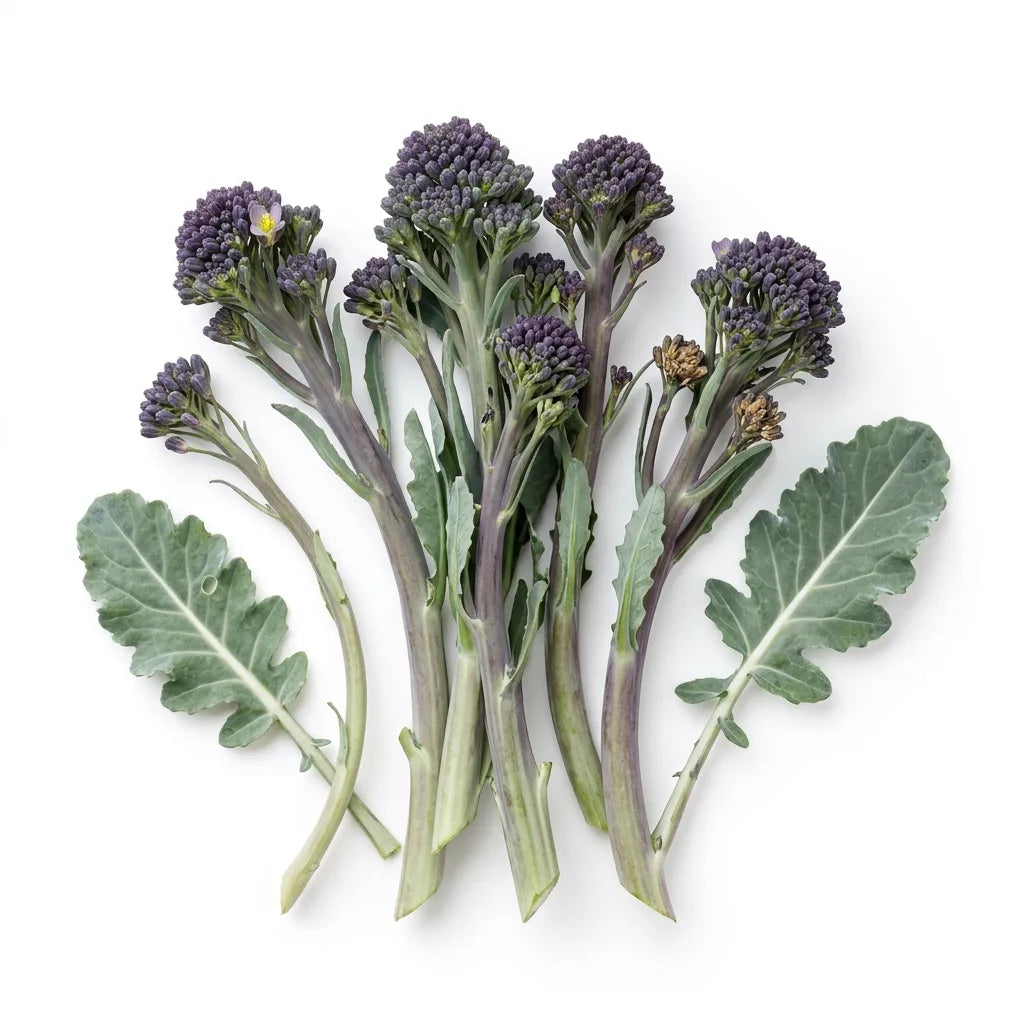
Brassica oleracea var. italica
Purple sprouting broccoli, sprouting broccoli, purple broccoli: unlike the green broccoli sold commercially, which produces one large head, this variety produces a multitude of small purple shoots that regrow after each cutting. A harvest spread over several months rather than a single head—that is the whole appeal of this heritage variety.
Characteristics:
-
Extended harvest: the shoots regrow after each cutting, over several months.
-
Purple color: highly decorative in the vegetable garden and on the plate—although it turns green when cooked.
-
Hardy: it remains outdoors through the winter and can be harvested from autumn through the following spring.
-
Less demanding: easier to grow successfully than most other cabbages.
Sowing advice:
-
Exposure: sunny.
-
Soil: deep, rich, moist, and well supplied with organic matter. Like all cabbages, it is a heavy feeder: adding well-rotted compost is genuinely beneficial. Important: avoid growing it where another brassica has grown during the previous three years, because of clubroot.
-
Method: sow from April to July in a nursery bed or pots, 1 cm deep. See how to sow your seeds.
Planting advice:
- Transplant young plants when they have 5 or 6 leaves, spacing them 60 cm apart. Bury them up to the first leaves and earth up around the base: sprouting broccoli grows tall and is easily blown over by the wind.
Care advice:
- Water regularly, as cabbage is susceptible to drought. Mulch generously.
- Covering the plants with insect-proof mesh as soon as they are planted effectively prevents cabbage white butterflies and cabbage root flies, without any treatment.
Harvesting advice:
- Cut the shoots while the buds are still tightly closed, before they flower. This is the key: the more regularly you harvest, the more new shoots the plant produces.
- The leaves can also be eaten, like spinach.
Beneficial companions:
Benefits for biodiversity:
- If you allow a few shoots to flower at the end of the growing cycle, their yellow clusters are highly attractive to pollinators and appear in spring, when food sources are still limited.
- Its presence in the winter vegetable garden provides plant cover where the soil would otherwise be bare.
Uses:
- Steamed or sautéed shoots, in gratins, or in warm salads. The young leaves can be cooked like spinach.
Saving your own seeds:
Allow a few shoots to flower in spring and then produce seeds: they form long siliques, which should be harvested when brown and dry. Note that Brassica oleracea varieties cross very easily with one another (cabbages, cauliflowers, broccoli, Brussels sprouts): isolate your seed plant. See saving your seeds.
Commitment to Quality: at SemiSauvage - Permaculture, we grow and select our seeds with respect for all living things as our guiding principle. Based near the Auvergne Volcanoes, we choose open-pollinated, non-hybrid varieties, tested for their germination rate, carefully sorted and packaged, with no chemical treatments. Our conviction: to give gardeners back the ability to resow, year after year, seeds that truly belong to them.
An heirloom vegetable that nourishes you all winter, harvest after harvest.