Papaver rhoeas “Ladybird”
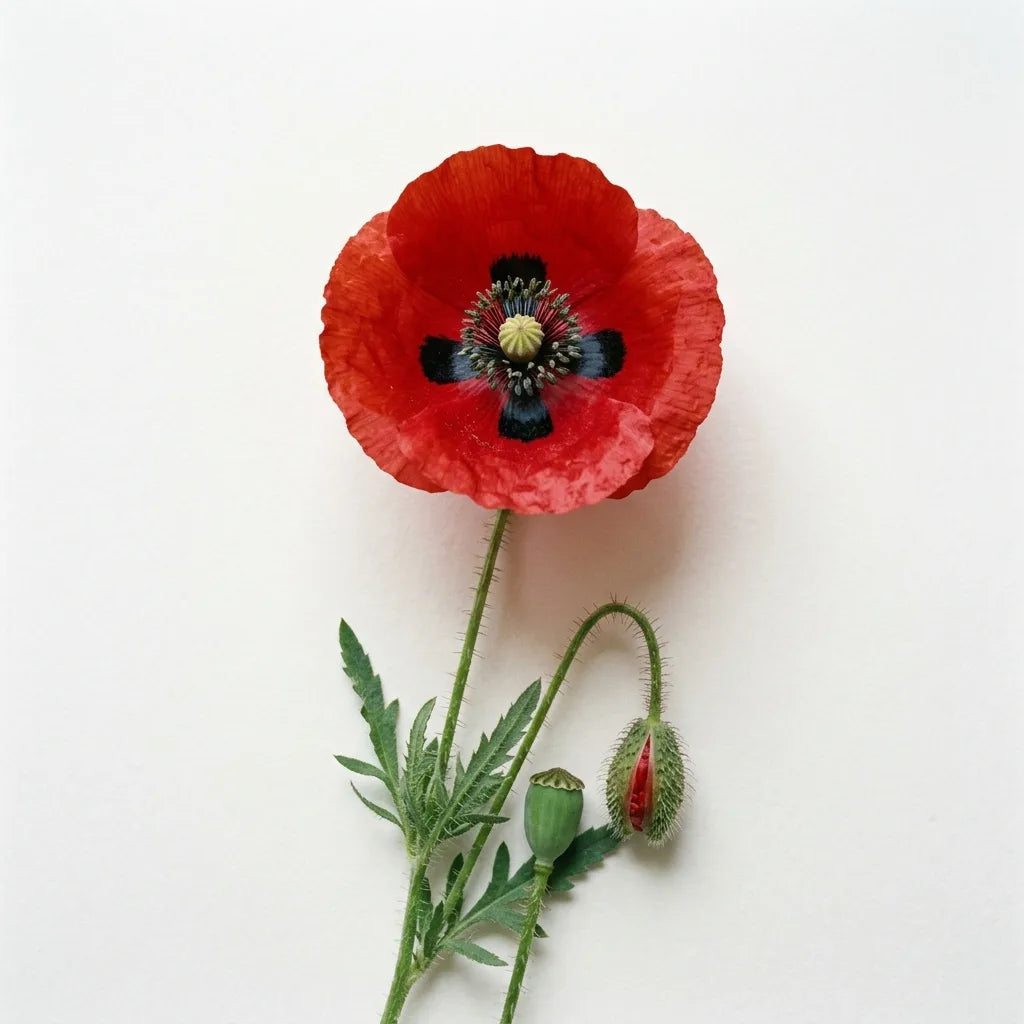
Ladybird poppy, Ladybird corn poppy: this horticultural selection of the wild corn poppy owes its name to its large, bright-red petals dotted with broad black markings at the base, reminiscent of a ladybird’s wing cases. The contrast is striking, especially when sown en masse: the effect is like a carpet of insects resting at the base of the stems.
Characteristics:
-
Contrasting flowers: large, silky petals in an intense red, marked with sharply defined black spots.
-
Extended flowering: by staggering sowings from February to July, flowering continues from June to September.
-
Mass effect: when sown over a broad area, it creates a particularly graphic display.
Precautions:
- Like all poppies, the plant contains small quantities of alkaloids: avoid ingestion, especially by young children and pets.
Sowing advice:
-
Exposure: full sun, without compromise, in an open position.
-
Soil: ordinary to poor, light and above all well drained, even stony or calcareous. It dislikes heavy, waterlogged soils. Do not fertilize: soil that is too rich encourages leaf growth at the expense of flowers, and the stems flop.
-
Method: sow directly in place, as its taproot does not tolerate transplanting — avoid sowing in pots. Stagger sowings every two weeks from February to July, barely covering the very fine seeds and lightly firming the soil. No soaking is necessary. See how to sow your seeds.
Care advice:
- Water lightly until emergence, then hardly at all. Thin to 20–25 cm if the seedlings are too dense.
Beneficial combinations:
Benefits for biodiversity:
- Like all poppies, it produces no nectar but an abundance of pollen, sought from early morning by bees and hoverflies.
- Staggering sowings spreads resources throughout the growing season, a real benefit for pollinators. See combining flowers with the vegetable garden.
Harvesting your own seeds:
Leave the seed capsules to turn brown and dry on the plant until they open into small slits at the top, then shake them over a bag like a salt shaker. Please note: as this is a horticultural selection, successive generations may produce plants with less contrast, especially near wild corn poppies. See how to store your seeds.
Commitment to Quality: at SemiSauvage - Permaculture, we grow and select our seeds with respect for living things as our guiding principle. Based near the Auvergne volcanoes, we choose reproducible, non-hybrid varieties, test them for germination rates, and carefully sort and package them without any chemical treatment. Our belief: to give gardeners back the ability to resow, year after year, seeds that truly belong to them.
Add a touch of color and cheerfulness to your garden with these Ladybird poppy seeds.