Brassica rapa subsp. chinensis
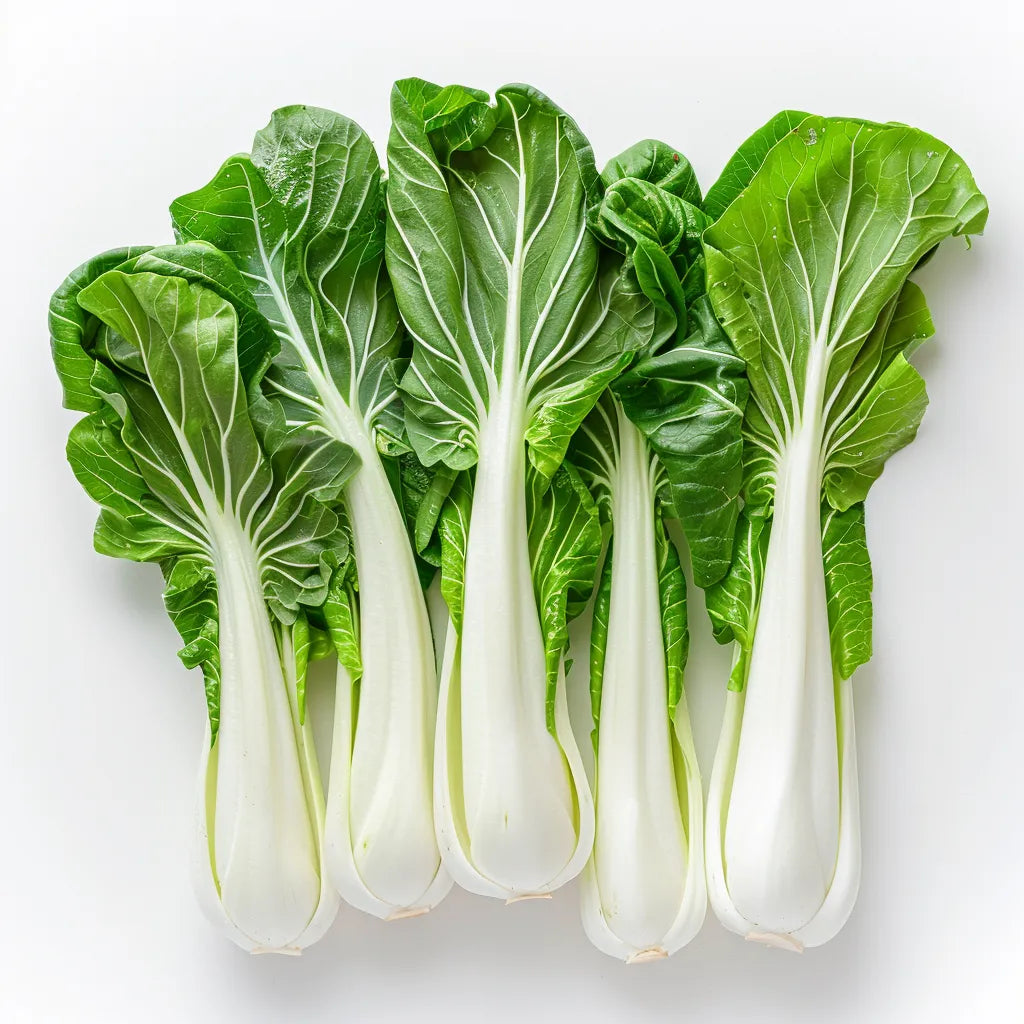
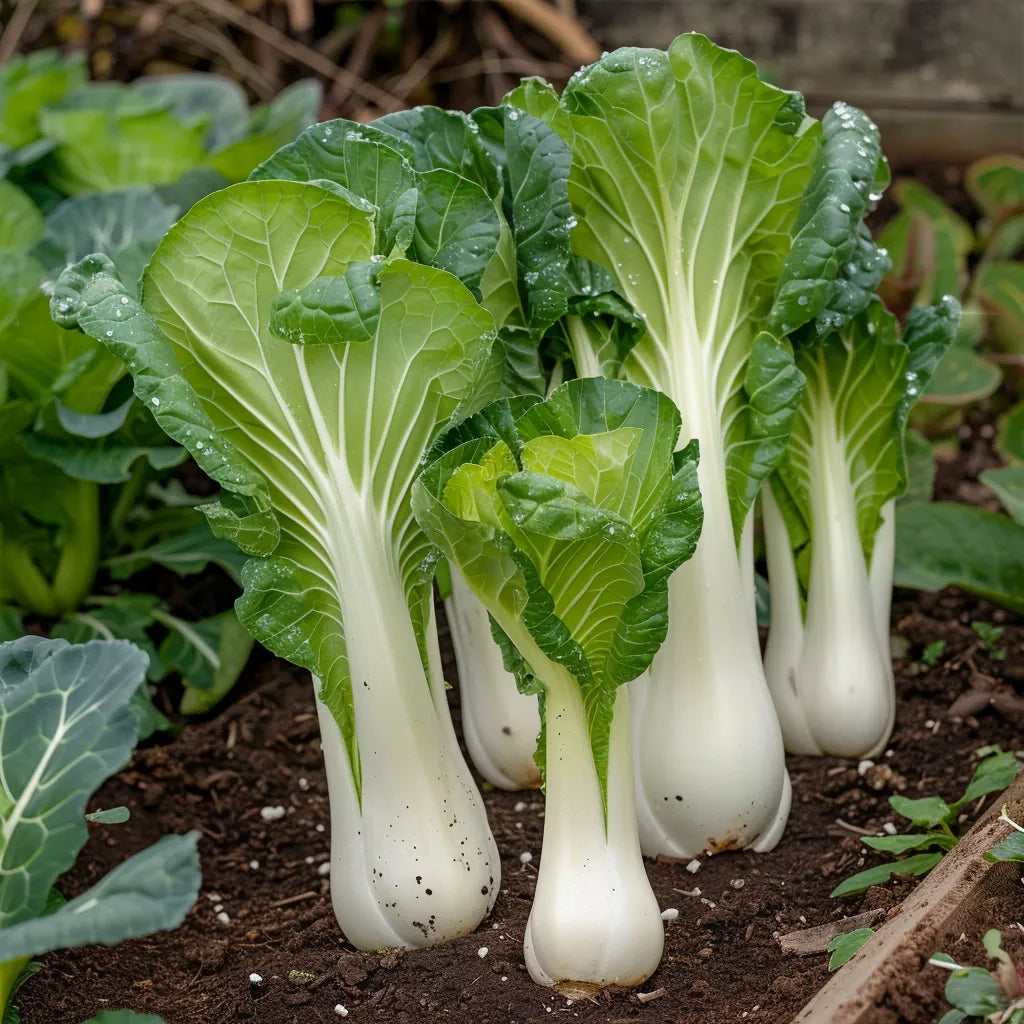
Chinese cabbage Pak Choi, bok choy, white-stemmed cabbage, spoon cabbage: cultivated in China for more than fifteen hundred years, it does not form a head like our European cabbages but produces a rosette of white, fleshy, crunchy stalks topped with dark green leaves. Two textures in a single vegetable, and such rapid growth that it can be harvested in just a few weeks.
Characteristics:
-
Dual texture: crunchy white stalks and tender leaves, to be used differently in cooking.
-
Very rapid growth: 6 to 8 weeks from sowing to harvest, ideal for filling a bed that has become available.
-
Delicate flavor: milder and less sulfurous than European cabbages, excellent both raw and cooked.
Sowing advice:
-
Exposure: sunny, but it dislikes ambient heat.
-
Soil: rich, well-aerated, deep, and above all kept moist in summer. Adding well-decomposed organic fertilizer when preparing the soil is genuinely beneficial. The critical point: the soil must never dry out, otherwise it will bolt immediately.
-
Method: sow directly in place, as its roots do not tolerate transplanting well. The soil must be warm for germination, but the crop must grow in cool conditions: therefore, favor late-summer sowings (August–September) rather than midsummer sowings. See how to sow your seeds.
Care advice:
- Thin to 25 cm apart. Water regularly and generously, and mulch: this is the key to preventing premature bolting, the main cause of failure with this crop.
- An insect-proof mesh effectively protects it from flea beetles, which pepper young leaves with holes.
Harvesting advice:
- Harvest the entire rosette by cutting it at the crown, or pick the outer leaves as needed to extend production.
Beneficial companions:
Benefits for biodiversity:
- If allowed to flower, it produces clusters of highly nectar-rich yellow flowers, valuable to bees in early spring.
- Its rapid growth makes it a good temporary ground cover that protects the soil between two crops.
Uses:
- Stir-fried in a wok, in soup, braised, or eaten raw in salads when young. Cooking tip: add the white stalks first and the leaves right at the end, as they cook much faster.
Harvesting your own seeds:
Allow one plant to go to seed in spring: it forms long siliques, which should be harvested when brown and dry. Be careful, as Brassica rapa plants cross-pollinate easily with one another (turnips, Chinese cabbages): isolate your seed plant. See how to store your seeds.
Commitment to Quality: at SemiSauvage - Permaculture, we grow and select our seeds with respect for all living things as our guiding principle. Based near the Auvergne Volcanoes, we choose reproducible, non-hybrid varieties, tested for their germination rate, carefully sorted and packaged, with no chemical treatments. Our belief: to give gardeners back the ability to resow, year after year, seeds that truly belong to them.
A fast-growing, crunchy, delicate vegetable, ideal for late-summer sowing.