Stachys byzantina (syn. Stachys lanata)
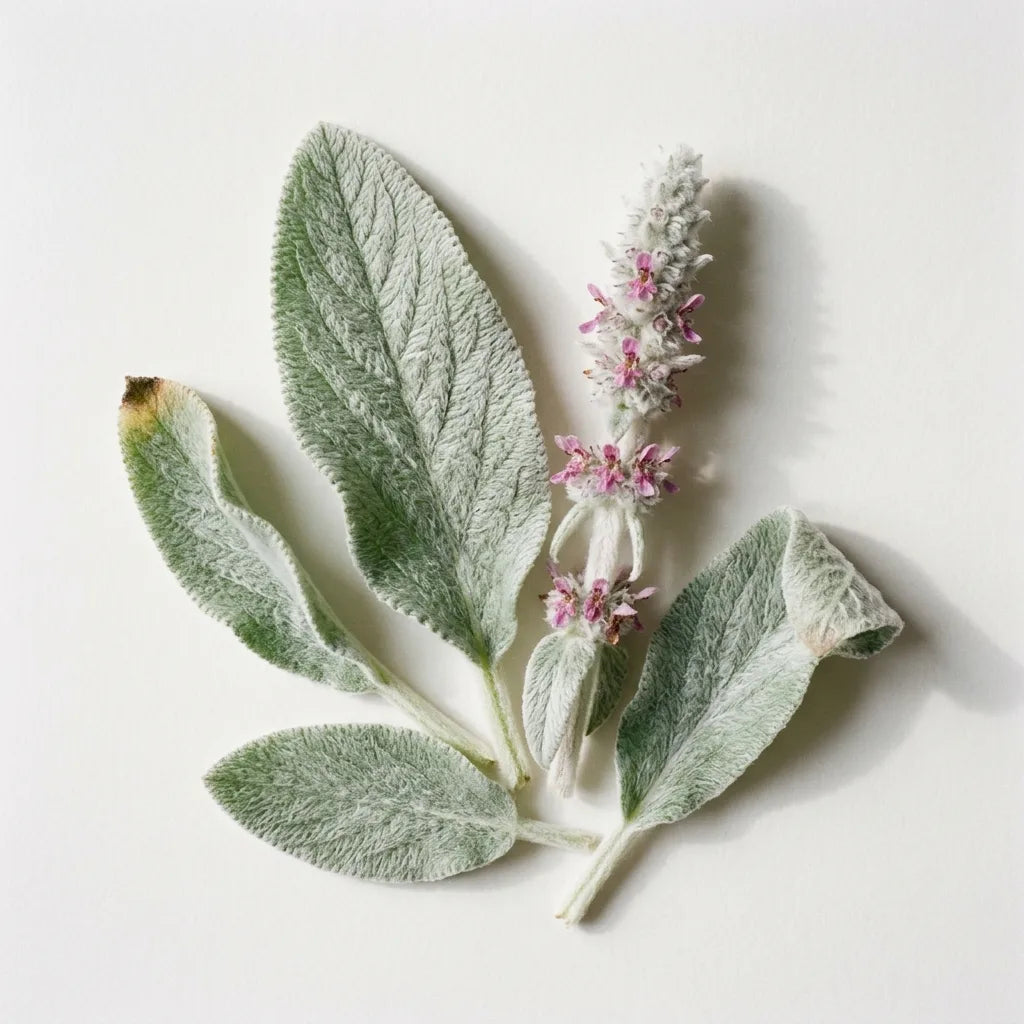
Czyściec wełnisty, królicze ucho, niedźwiedzie ucho, zajęcze ucho: jego liście pokrywa tak gęsty i miękki biały meszek, że aż nie można się oprzeć, by go dotknąć. To nie tylko ozdoba: włoski odbijają światło i ograniczają parowanie, co wyjaśnia jego wyjątkową odporność na suszę.
Charakterystyka:
-
Srebrzyste, omszone liście: miękkie w dotyku, rozświetlają rabaty przez cały rok.
-
Różowawe kłosy: pędy kwiatostanowe pojawiające się latem, pięknie kontrastujące z jasnym ulistnieniem.
-
Gęsta roślina okrywowa: niski, płożący pokrój; szybko się rozrasta i zagłusza chwasty.
-
Bardzo odporna na mróz: do -20 °C.
Wskazówki dotyczące wysiewu:
-
Stanowisko: słońce lub półcień.
-
Gleba: lekka, dobrze przepuszczalna, może być nawet uboga i kamienista. Kluczowa kwestia: omszone liście zatrzymują wodę i gniją w wilgotnych warunkach — to zimowa wilgoć, znacznie bardziej niż mróz, powoduje jej zamieranie. Unikaj organicznej ściółki u jej podstawy i wybierz raczej żwir.
-
Metoda: bez stratyfikacji. Wysiej wiosną do doniczki lub bezpośrednio do gruntu, na głębokość 1 cm, w dobrze przepuszczalnej glebie. Kiełkowanie trwa od 2 do 3 tygodni. Zobacz, jak wysiewać nasiona.
Wskazówki dotyczące sadzenia:
- Przesadź na obwódkę rabaty lub do ogrodu skalnego, zachowując odstępy 30 cm: szybko się rozrasta i wypełni wolną przestrzeń.
Wskazówki dotyczące pielęgnacji:
- Po ukorzenieniu podlewanie jest niemal zbędne, a przede wszystkim nigdy nie podlewaj liści.
- Pod koniec zimy usuń uszkodzone liście, aby roślina odzyskała atrakcyjny wygląd. Niektórzy ogrodnicy ścinają pędy kwiatostanowe, by podkreślić bardziej dekoracyjne ulistnienie.
Korzystne połączenia:
Znaczenie dla bioróżnorodności:
- Co ciekawe, dzika pszczoła — włochatka — zbiera wyłącznie meszek z jej liści, by wyścielić nim swoje gniazdo. Wysiewając tę roślinę, zapewniasz materiał budowlany konkretnemu gatunkowi.
- Latem jej kwiatostany są chętnie odwiedzane przez trzmiele.
- Gęsta pokrywa chroni glebę przed wysychaniem i zapewnia schronienie mikrofaunie.
Zastosowanie:
- Obwódki, ogrody skalne, dekoracyjna roślina okrywowa, suche i śródziemnomorskie ogrody. Niezastąpiona w ogrodach sensorycznych, gdzie dotyka się jej równie często, jak podziwia.
Symbolika:
Symbol delikatności i ochrony, królicze ucho kojarzy się ze spokojnymi przestrzeniami oraz ogrodami projektowanymi z myślą o dzieciach i dotyku.
Zbiór własnych nasion:
Pozostaw kilka kłosów, aż całkowicie wyschną na roślinie, a następnie wykrusz je nad pojemnikiem: małe brązowe nasiona opadną na dno kielichów. Zobacz, jak przechowywać nasiona.
Nasze zobowiązanie do jakości: w SemiSauvage - Permaculture uprawiamy i selekcjonujemy nasze nasiona, kierując się szacunkiem dla żywej przyrody. Działamy w pobliżu wulkanów Owernii i wybieramy odmiany zdolne do rozmnażania oraz niehybrydowe, testowane pod kątem zdolności kiełkowania, starannie sortowane i pakowane, bez żadnych zabiegów chemicznych. Wierzymy, że należy przywrócić ogrodnikom możliwość ponownego wysiewania, rok po roku, nasion, które naprawdę do nich należą.
To roślina, której nie sposób nie pogłaskać, przechodząc obok.