Jacaranda mimosifolia
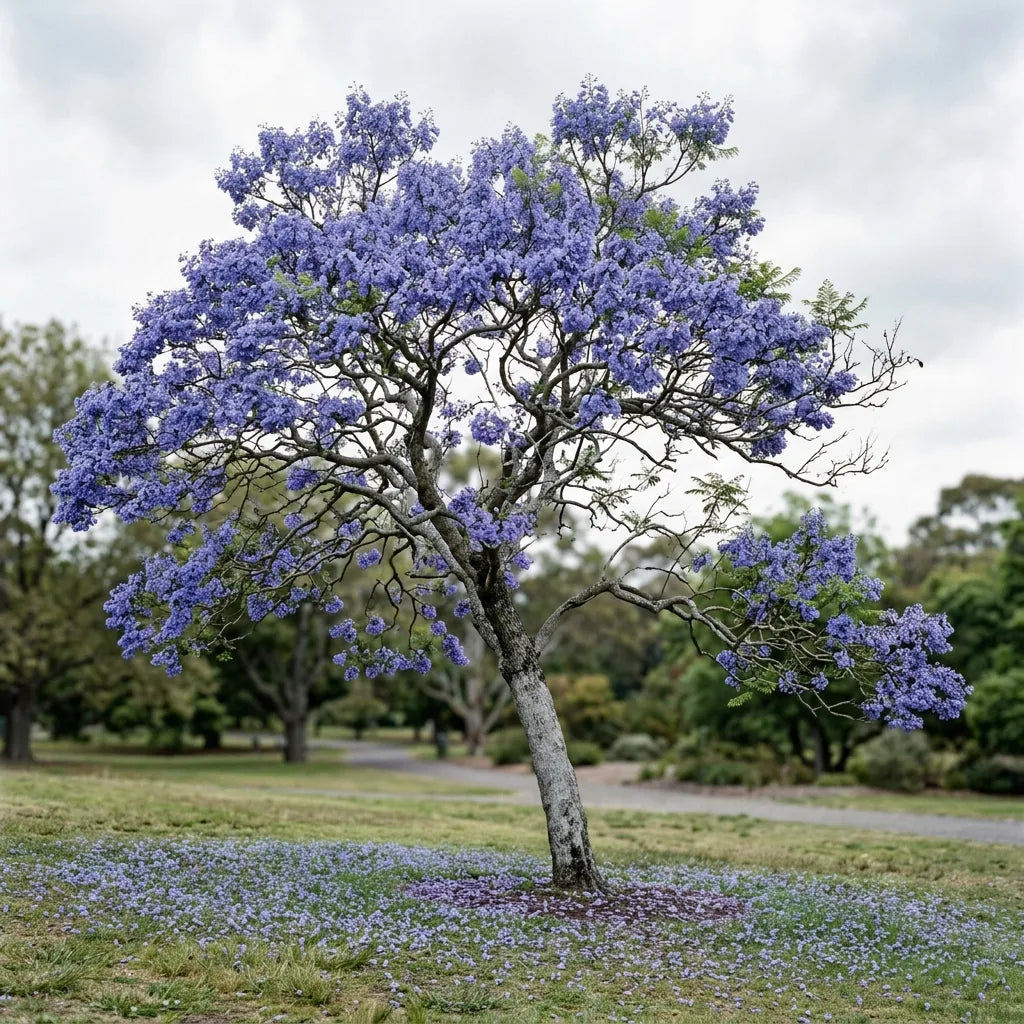
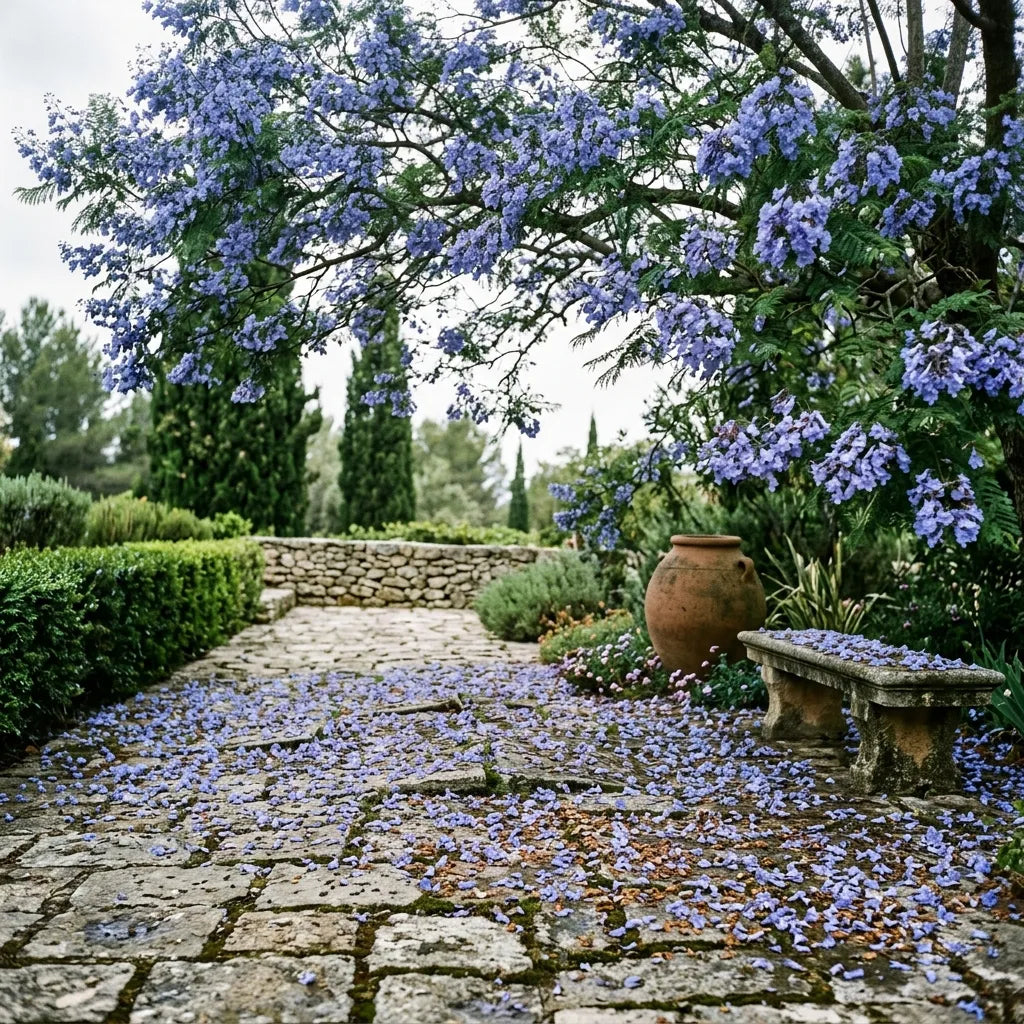
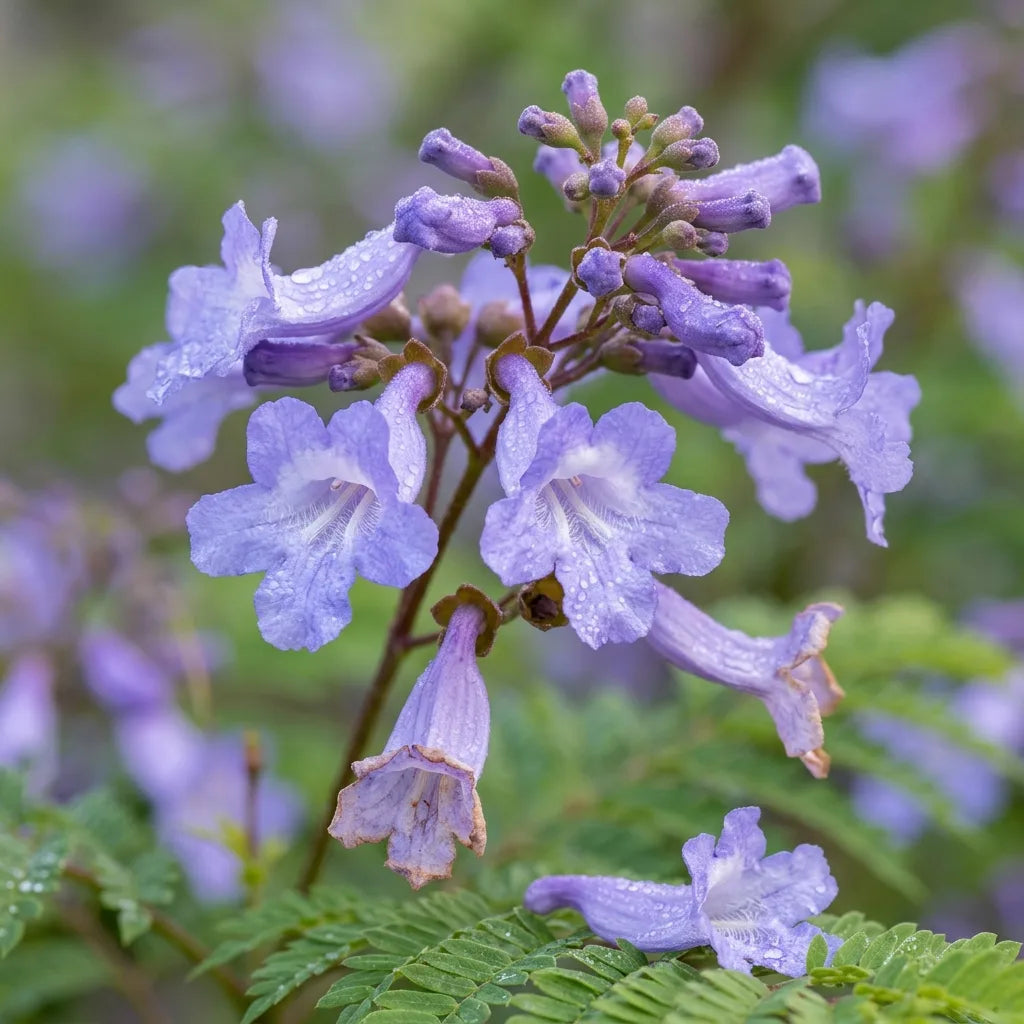
Fioletowe drzewo butelkowe, jacaranda, drzewo ostrygowe: gdy kwitnie, najpierw traci wszystkie liście, pozostawiając jedynie grona niebiesko-fioletowych kwiatów — kolorową chmurę zawieszoną w próżni. W Pretorii czy Buenos Aires kwitnienie jacarand jest corocznym wydarzeniem, które zamienia całe aleje w fioletowe tunele.
Charakterystyka:
-
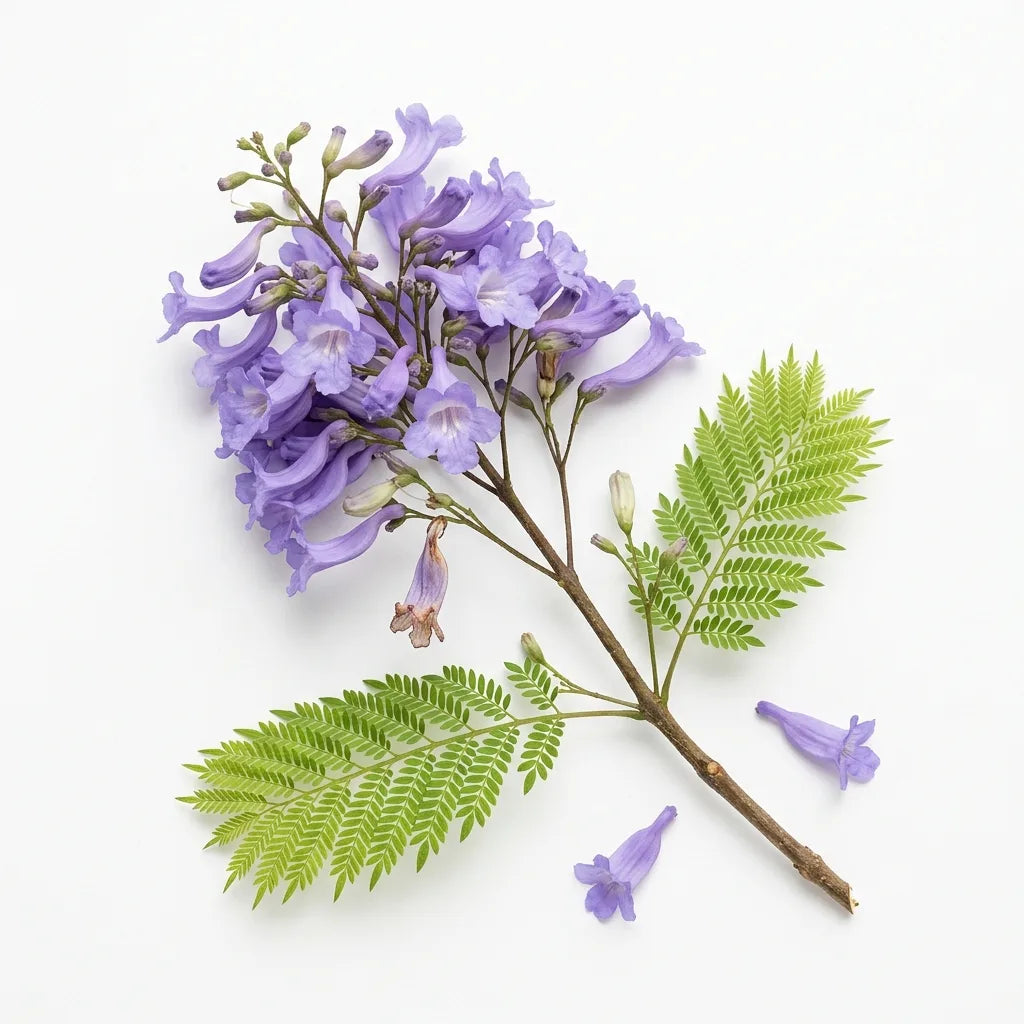
Spektakularne kwitnienie: duże grona niebiesko-fioletowych kwiatów wiosną i latem, często przed pojawieniem się liści.
-
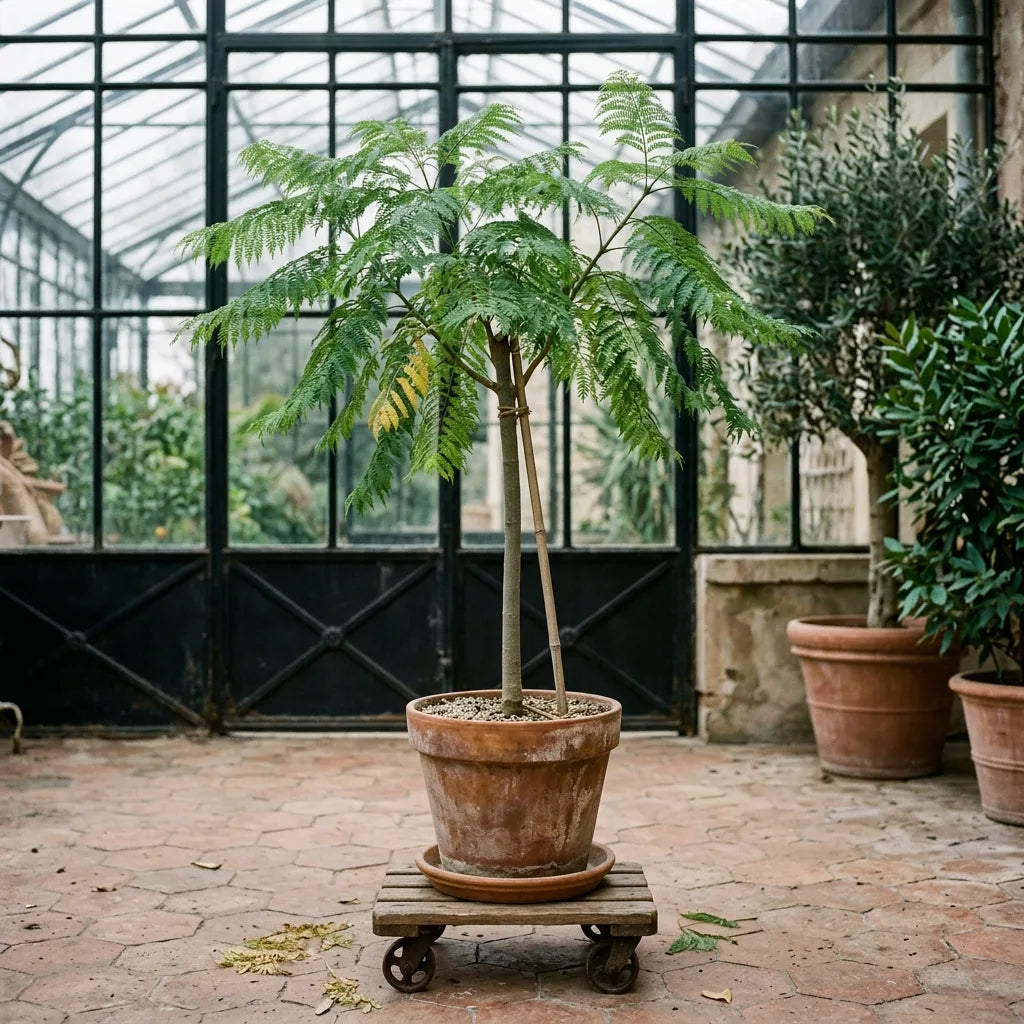
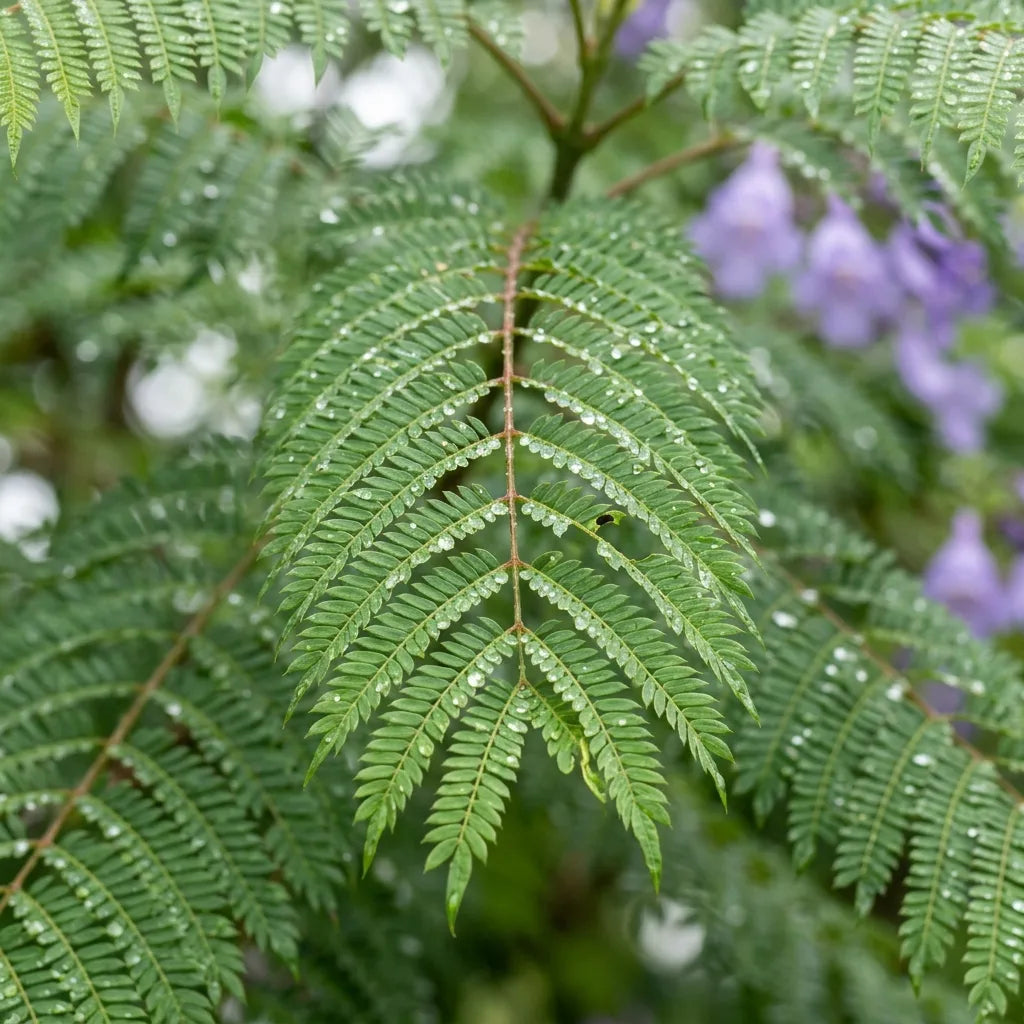
Ulistnienie przypominające paproć: bardzo drobno podzielone liście podwójnie pierzaste, od których pochodzi epitet mimosifolia.
-
Duże drzewo: 10–15 metrów w ciepłym klimacie, o rozłożystym i wdzięcznym pokroju.
Środki ostrożności:
- To drzewo subtropikalne, które nie znosi długotrwałych mrozów: we Francji metropolitalnej uprawia się je w donicy i zimuje w miejscu zabezpieczonym przed mrozem, z wyjątkiem Lazurowego Wybrzeża, gdzie może rosnąć w gruncie, w osłoniętym miejscu.
- Kwitnienie w donicy jest rzadkie i wymaga kilku lat cierpliwości: w naszym klimacie uprawia się je przede wszystkim ze względu na dekoracyjne ulistnienie.
Wskazówki dotyczące siewu:
-
Stanowisko: pełne słońce, w miejscu osłoniętym przed silnymi wiatrami, które uszkadzają delikatne ulistnienie.
-
Gleba: lekka, piaszczysta i dobrze przepuszczalna. Roślina toleruje ubogie gleby, ale zdecydowanie nie znosi zastoju wody przy korzeniach. W donicy dobrze sprawdzi się mieszanka ziemi ogrodniczej z piaskiem.
-
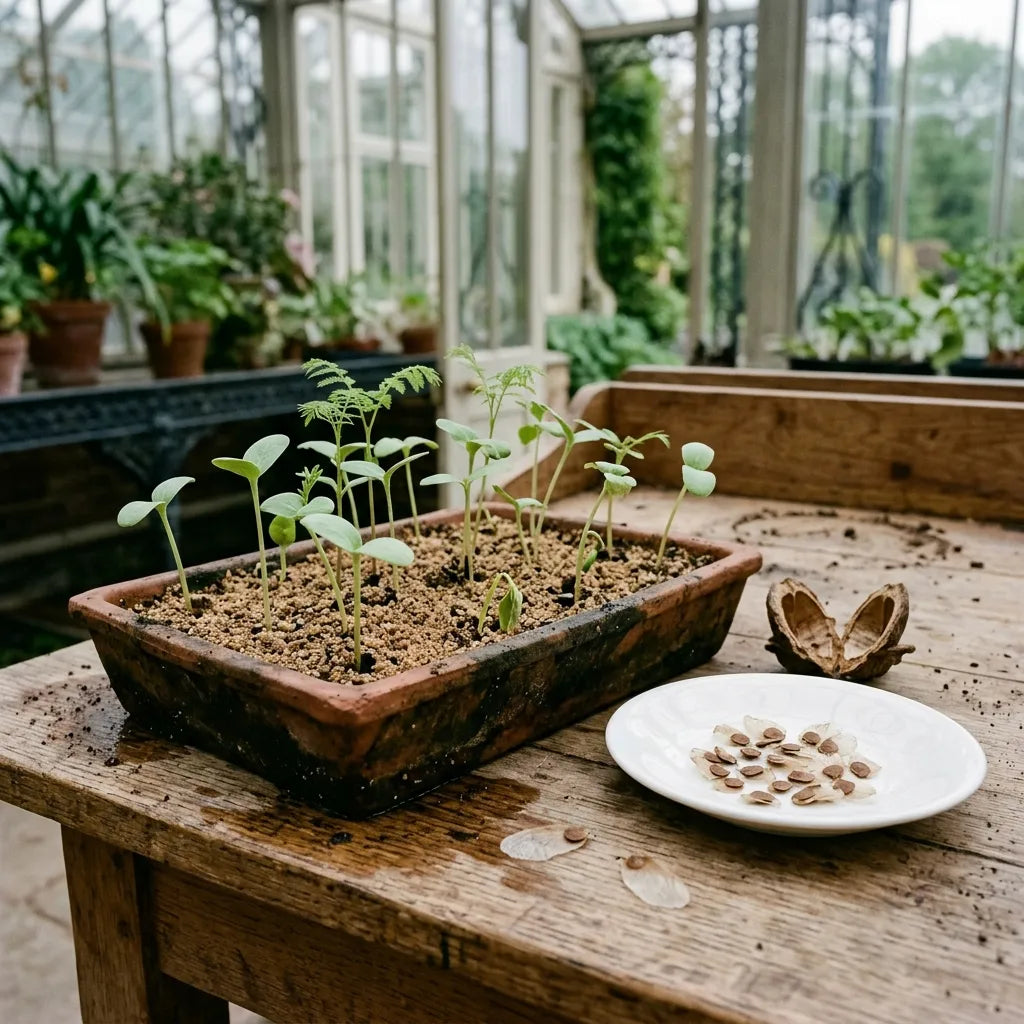
Metoda: bez stratyfikacji na zimno — ten gatunek subtropikalny wymaga ciepła. Namoczcie oskrzydlone nasiona przez 24 godziny w letniej wodzie, a następnie wysiejcie je na powierzchni lub przykryjcie bardzo cienką warstwą podłoża, utrzymując wilgotność w temperaturze 22–25 °C. Kiełkowanie jest zazwyczaj szybkie i niezawodne. Zobaczcie jak wysiewać nasiona.
Wskazówki dotyczące sadzenia:
- W głębokiej donicy, którą należy przenieść do pomieszczenia przy pierwszych chłodach, w jasne miejsce o temperaturze powyżej 10 °C. Do gruntu wyłącznie w osłoniętym miejscu o klimacie śródziemnomorskim.
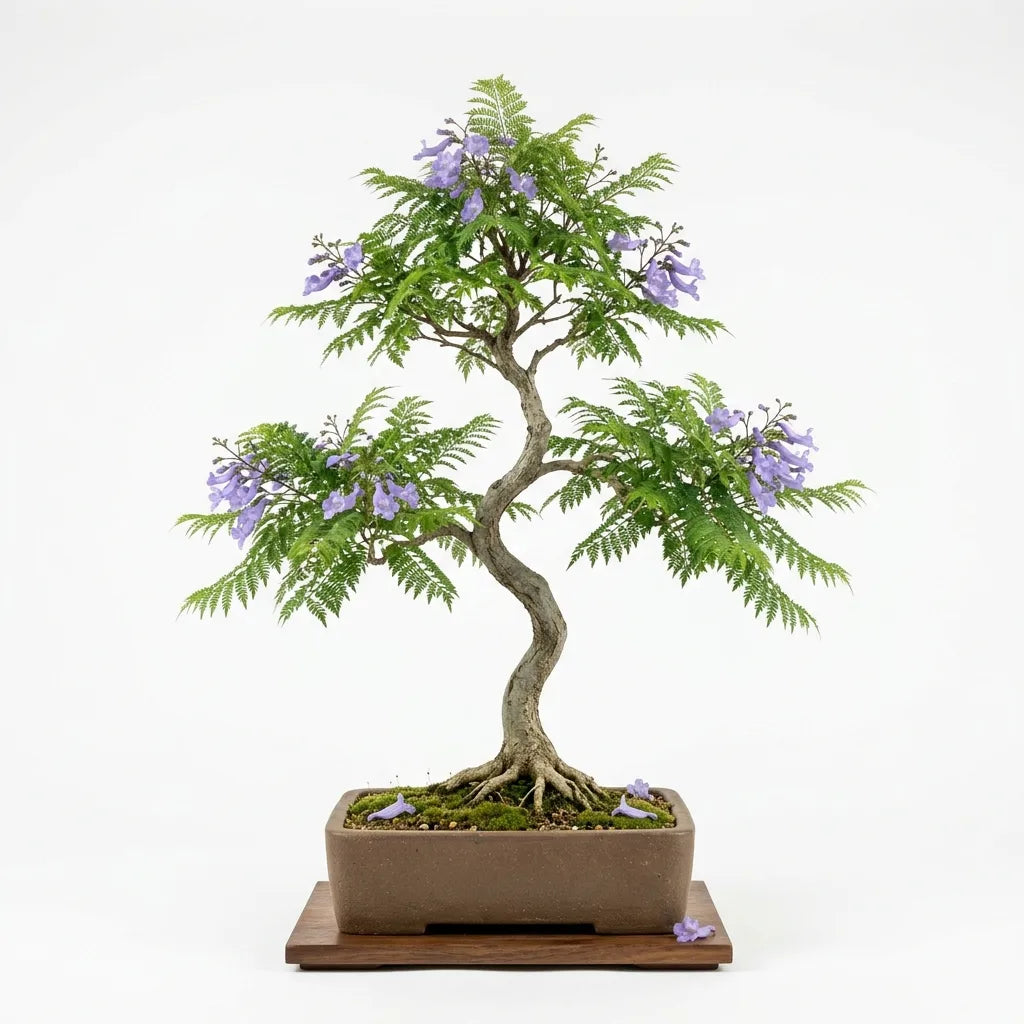
- Delikatne ulistnienie i szybko grubiejący pień sprawiają, że jest to doskonały materiał na bonsai — zobaczcie nasz poradnik jak stworzyć bonsai z nasiona.
Wskazówki dotyczące pielęgnacji:
- W okresie wzrostu podlewajcie regularnie, ale bez nadmiaru wody, a zimą, podczas spoczynku wegetacyjnego, znacznie ograniczcie podlewanie.
Znaczenie dla bioróżnorodności:
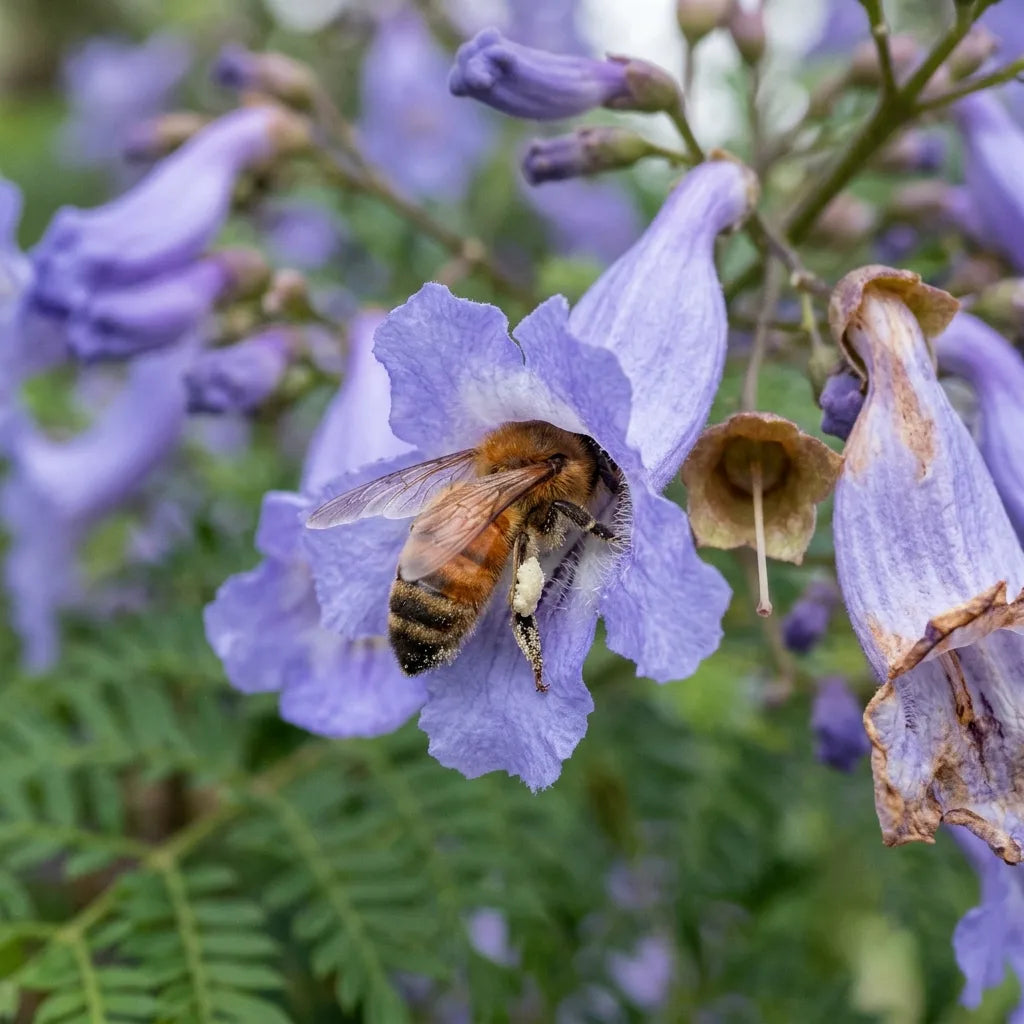
- W swoim naturalnym zasięgu rurkowate kwiaty bogate w nektar są zapylane przez pszczoły i kolibry.
- Lekkie ulistnienie przepuszcza światło i pozwala uprawiać rośliny u podnóża drzewa, w przeciwieństwie do drzew o gęstej koronie.
Zastosowanie:
- Drzewo ozdobne do dużych ogrodów i obsadzania alei w ciepłym klimacie; w naszych szerokościach geograficznych uprawiane w donicy lub jako bonsai. Suszone kwiaty nadają się do kompozycji florystycznych.
Symbolika:
W Ameryce Południowej i Afryce Południowej kwitnienie jacarandy zwiastuje koniec roku akademickiego: studenci mówią, że kwiat, który spadnie na głowę, przynosi szczęście na egzaminach. Symbolizuje odnowę i mądrość.
Zbieranie własnych nasion:
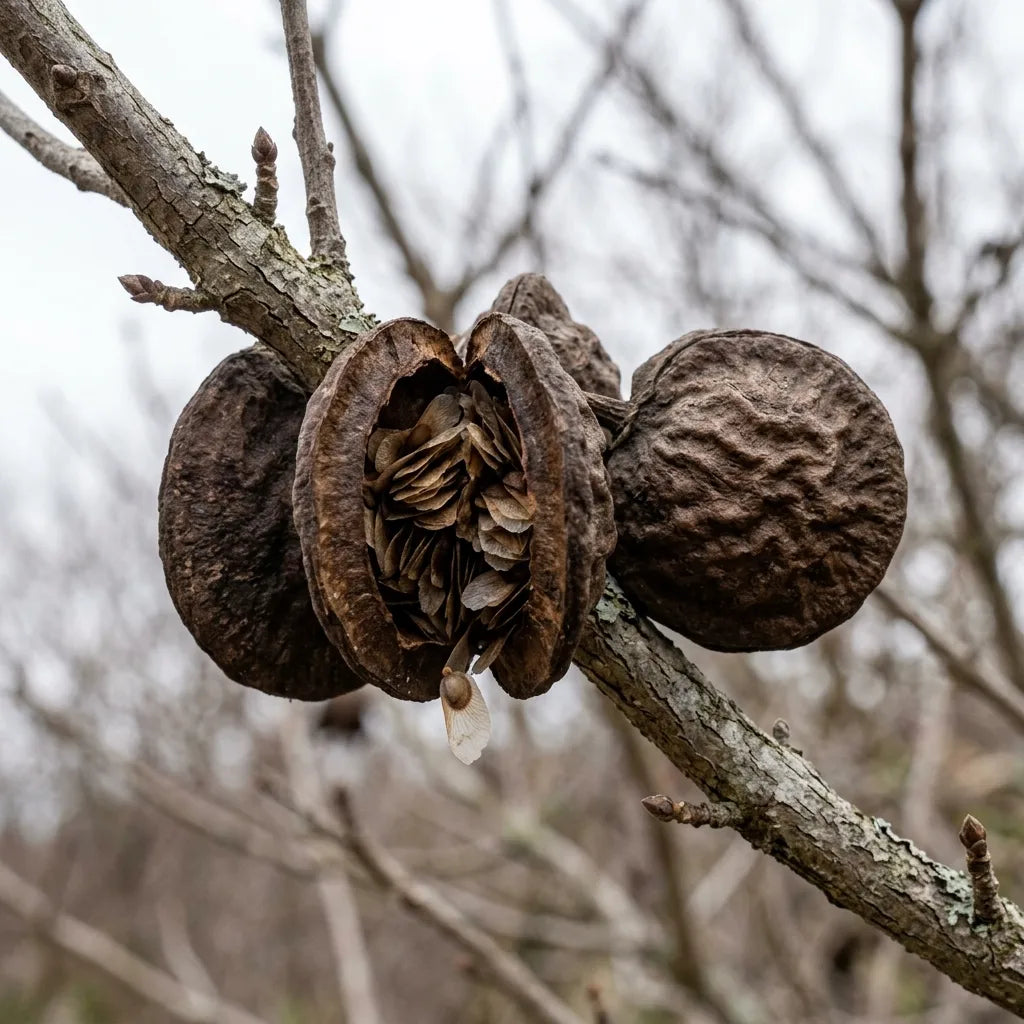
Jej owoce to płaskie, okrągłe, bardzo dekoracyjne, zdrewniałe torebki, które w dojrzałości otwierają się na dwie klapy, uwalniając oskrzydlone, papierzaste nasiona. Zbierajcie suche torebki z drzewa. Zobaczcie jak przechowywać nasiona.
Zaangażowanie na rzecz jakości: w SemiSauvage - Permaculture uprawiamy i selekcjonujemy nasze nasiona, kierując się szacunkiem dla życia. Działając w pobliżu wulkanów Owernii, wybieramy odmiany zdolne do rozmnażania i niehybrydowe, testowane pod kątem zdolności kiełkowania, starannie sortowane i pakowane, bez żadnych chemicznych środków ochrony. Wierzymy, że należy przywrócić ogrodnikom możliwość ponownego wysiewania, rok po roku, nasion, które naprawdę do nich należą.
Sprzedaż przeznaczona dla ogrodników-amatorów poszukujących jakości i autentyczności.