Papaver orientale
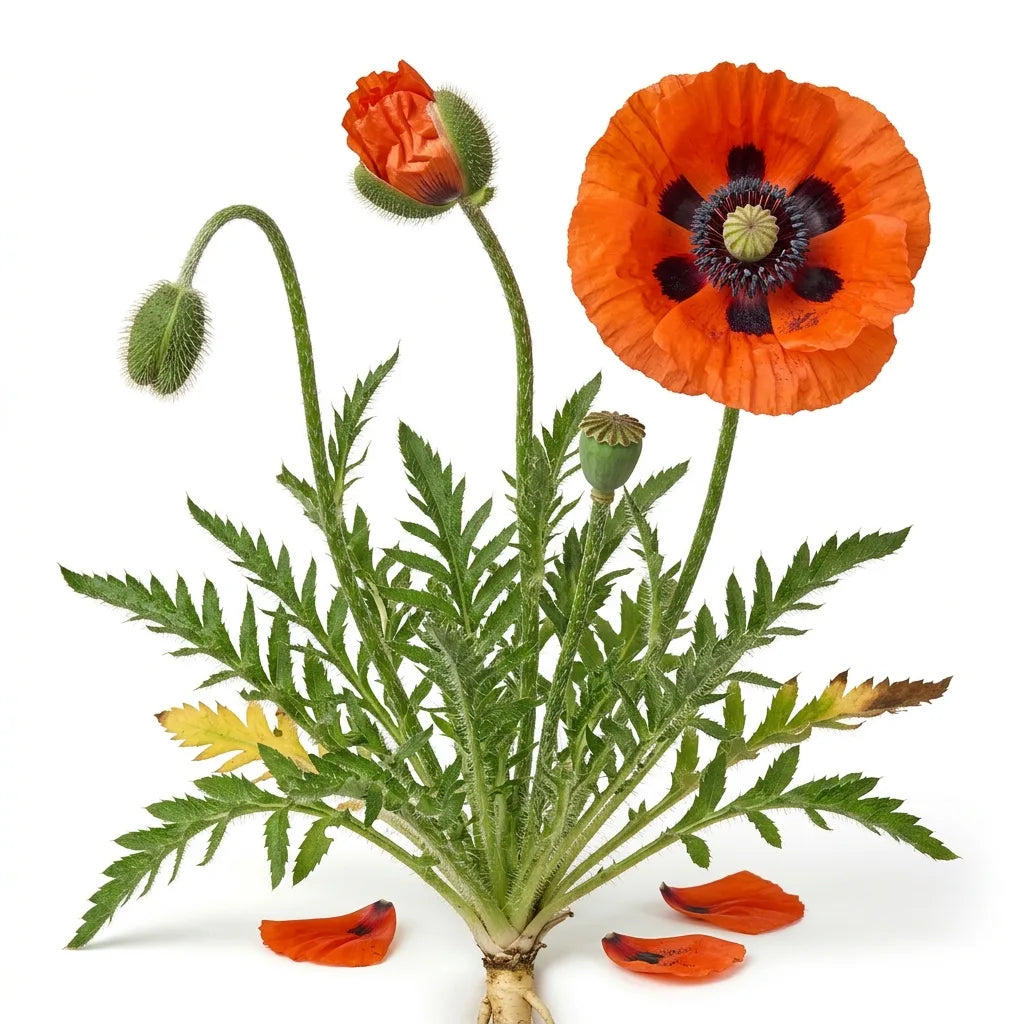
Mak wschodni, wieloletni mak olbrzymi, mak turecki: pochodzi z gór Kaukazu i Anatolii, a jego kwiaty są największe w całej rodzinie maków — osiągają do 15 cm średnicy. Jego szczególną cechą jest to, że po spektakularnym kwitnieniu w maju i czerwcu jego liście całkowicie zanikają latem, by ponownie pojawić się jesienią. To zaskakujący cykl, który warto znać, zanim uzna się roślinę za martwą.
Charakterystyka:
-
Olbrzymie kwiaty: największe w swoim rodzaju, z płatkami pomarszczonymi jak bibułka, często z czarną plamą u nasady.
-
Bardzo odporna bylina: wytrzymuje temperatury od -20 do -30°C i zadomawia się na stałe, osiągając do 1 metra wysokości.
-
Letni spoczynek: jej liście żółkną i zanikają po kwitnieniu, a następnie odrastają jesienią.
Środki ostrożności:
- Jak wszystkie maki, roślina zawiera alkaloidy: należy unikać jej spożywania, zwłaszcza przez małe dzieci i zwierzęta domowe.
Wskazówki dotyczące siewu:
-
Stanowisko: słoneczne i dobrze odsłonięte, co jest niezbędne do obfitego kwitnienia.
-
Gleba: uboga, kamienista i wapienna doskonale jej odpowiada, ale toleruje również żyźniejsze podłoża, pod warunkiem że są bardzo dobrze przepuszczalne i głębokie. Bezwzględnie należy unikać wilgotnych zimą gleb, które powodują gnicie jej korzenia palowego.
-
Metoda: stratyfikacja nasion na zimno poprawia kiełkowanie. Następnie wysiej nasiona bezpośrednio do gruntu jesienią lub na początku wiosny, ledwie je przykrywając. Jego korzeń palowy bardzo źle znosi przesadzanie: unikaj wysiewania do doniczek.
Wskazówki dotyczące pielęgnacji:
- Podlewaj bardzo oszczędnie: roślina preferuje lekko suche gleby i źle znosi nadmiar wody.
- Po kwitnieniu przytnij żółknące liście i posadź w pobliżu inną roślinę, która wypełni letnią pustkę pozostawianą przez mak w rabacie.
Korzystne zestawienia:
Znaczenie dla bioróżnorodności:
- Jego ogromne kwiaty oferują bardzo obfity pyłek, który od świtu jest dosłownie oblegany przez pszczoły i trzmiele.
- Wczesne kwitnienie, przypadające na maj i czerwiec, następuje w kluczowym okresie rozwoju kolonii.
Zbiór własnych nasion:
Pozostaw duże torebki nasienne, aby zbrązowiały i wyschły na roślinie, aż otworzą się w postaci małych szczelin pod koroną, a następnie odwróć je nad woreczkiem, jak solniczkę. Suche torebki są również bardzo efektownym elementem suchych bukietów. Zobacz jak przechowywać własne nasiona.
Zaangażowanie w jakość: w SemiSauvage - Permaculture uprawiamy i selekcjonujemy nasze nasiona, kierując się szacunkiem do żywej przyrody. Działając w pobliżu wulkanów Owernii, wybieramy odmiany zdolne do rozmnażania z nasion i niehybrydowe, testujemy ich zdolność kiełkowania, a następnie starannie je sortujemy i pakujemy, bez żadnych zabiegów chemicznych. Wierzymy, że należy przywrócić ogrodnikom możliwość ponownego wysiewania, rok po roku, nasion, które naprawdę do nich należą.
Podaruj swoim rabatom każdej wiosny największe kwiaty maków, jakie istnieją.