Acer palmatum
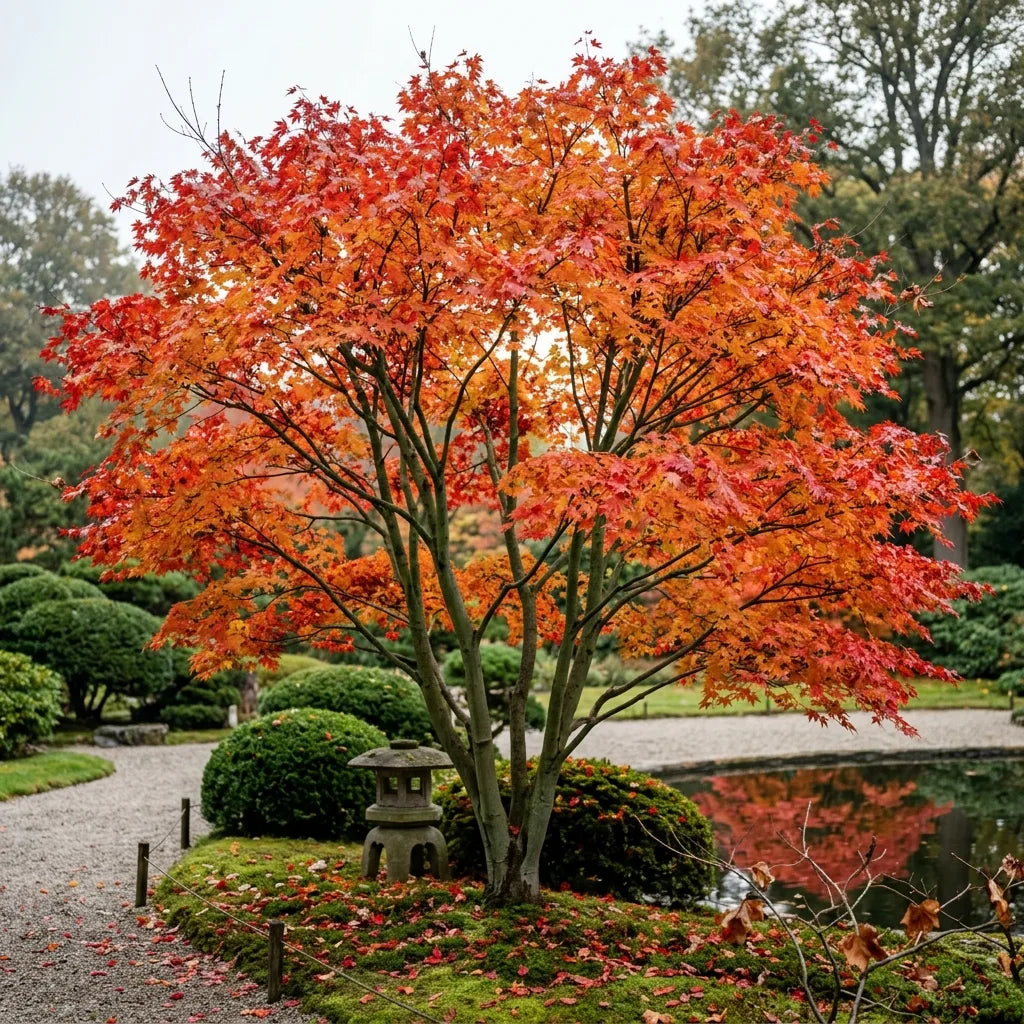
In Japan heeft het bewonderen van het vlammende herfstblad van de esdoorn een eigen naam: momijigari, de “esdoornjacht”, een eeuwenoude traditie die net zo belangrijk is als het bewonderen van kersenbloesems in de lente. De Japanse esdoorn, of handvormige esdoorn, dankt zijn bekendheid aan zijn blad, dat het volledige kleurenpalet doorloopt, van zachtgroen tot diep purperrood.
Kenmerken:
-
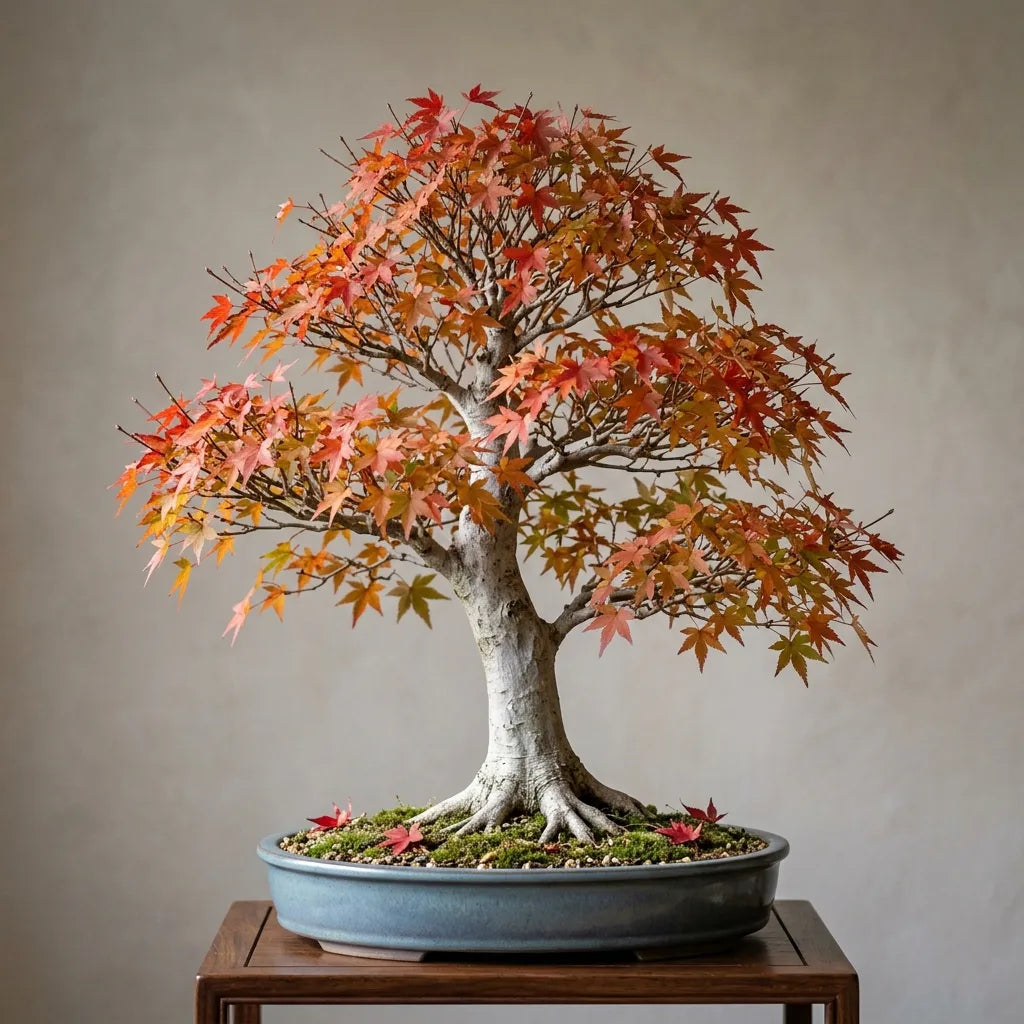
Sierlijke vorm: hij kan in de volle grond 15 meter hoog worden, maar leent zich ook uitstekend voor een struikvorm of als bonsai.
-
Spectaculair blad: de handvormige bladeren, gedragen door een lange bladsteel, verkleuren in de loop van de seizoenen van groen naar goudgeel en vervolgens naar purperrood.
-
Langzame groei: geduld is vereist, maar zijn levensduur wordt in tientallen jaren gemeten.
Zaaitips:
-
Standplaats: halfschaduw is absoluut noodzakelijk, beschut tegen uitdrogende wind en de felle middagzon, die het blad verschroeit.
-
Bodem: vochtig, goed gedraineerd, rijk aan organisch materiaal en vooral licht zuur tot neutraal — dit is doorslaggevend. In kalkrijke grond kwijnt hij weg en verkleurt het blad geel (chlorose). Plant hem in kalkrijke grond uitsluitend in een pot met een geschikt substraat, zoals heidegrond.
-
Methode: laat de gevleugelde zaden 24 tot 48 uur weken in lauw water en pas vervolgens een koude stratificatie van 2 tot 3 maanden toe: deze dubbele stap bootst de natuurlijke afwisseling van de seizoenen na en doorbreekt de kiemrust van het zaad. Zaai ze daarna in een potje, beschut tegen de elementen.
Planttips:
- Plant ze de daaropvolgende lente uit in diep bewerkte grond en zorg ervoor dat de wortelhals niet wordt begraven. Breng een royale mulchlaag aan om de oppervlakkige wortels vochtig te houden.
Onderhoudstips:
- Geef de eerste jaren regelmatig water en laat de grond nooit volledig uitdrogen.
- Snoei zo weinig mogelijk, uitsluitend aan het einde van de winter om dood hout te verwijderen: de esdoorn verdraagt zware snoei slecht. Raadpleeg voor de bonsaivorm onze gids een bonsai uit zaad kweken.
Belang voor de biodiversiteit:
- De bloemen van de esdoorn, onopvallend maar vroeg in de lente, bieden een van de eerste bronnen van nectar en stuifmeel van het seizoen aan bijen die uit hun winterrust komen.
- Zijn dichte kroon biedt nestelende vogels beschutting en zijn bladstrooisel voedt het bodemleven — zie de basis van een levende bodem.
Symboliek:
In de Japanse cultuur wordt de esdoorn geassocieerd met het verstrijken van de tijd en de vergankelijkheid van de dingen (mono no aware): zijn herfstpracht, even intens als kortstondig, maakt hem tot een poëtisch symbool dat sterk aanwezig is in de Japanse kunst en poëzie.
Zelf zaden oogsten:
Verzamel vanaf de herfst de gevleugelde zaden aan de boom zodra ze bruin worden en gemakkelijk loslaten. Houd er rekening mee dat esdoorns gemakkelijk kruisen: de zaailingen kunnen een ander blad krijgen dan de moederplant, wat juist de charme vormt van vermeerdering uit zaad. Zie zaden bewaren.
Toewijding aan kwaliteit: bij SemiSauvage - Permaculture kweken en selecteren we onze zaden met respect voor het leven als leidraad. Vanuit onze vestiging nabij de vulkanen van Auvergne kiezen we zaadvaste, niet-hybride rassen, die op hun kiemkracht zijn getest, zorgvuldig gesorteerd en verpakt worden, zonder enige chemische behandeling. Onze overtuiging: tuiniers opnieuw in staat stellen om jaar na jaar zaden uit te zaaien die werkelijk van hen zijn.
Schaf deze zaden van de Japanse esdoorn aan voor een vleugje herfstpracht, in de volle grond of als bonsai.