Tanacetum vulgare
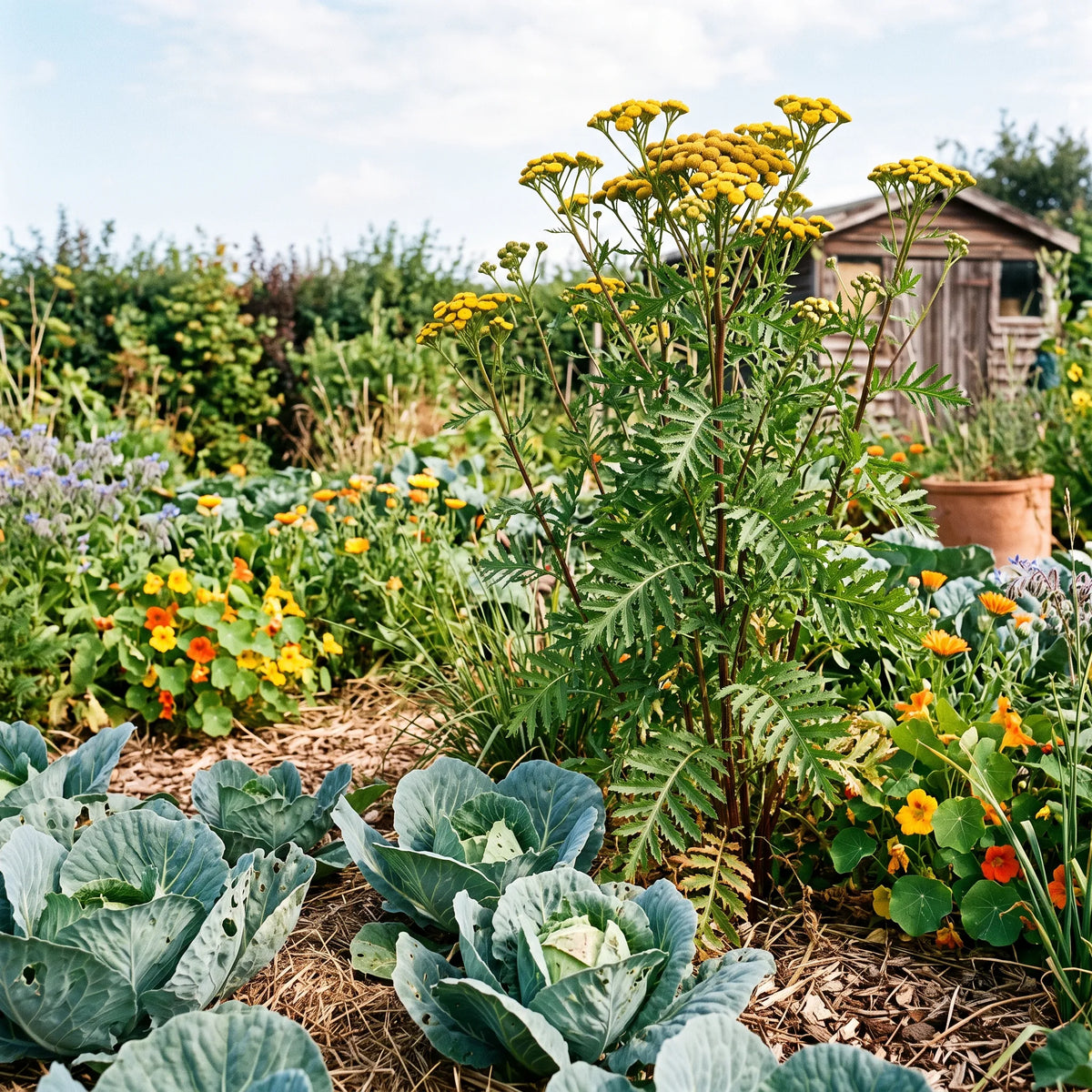
Bitter herb, worm herb, sweet-smelling herb in some regions: tansy lives up to its nicknames, as its powerful fragrance leaves no one indifferent. Long planted near homes and pantries to keep insects at bay, it remains a valuable ally in the vegetable garden today.
Characteristics:
-
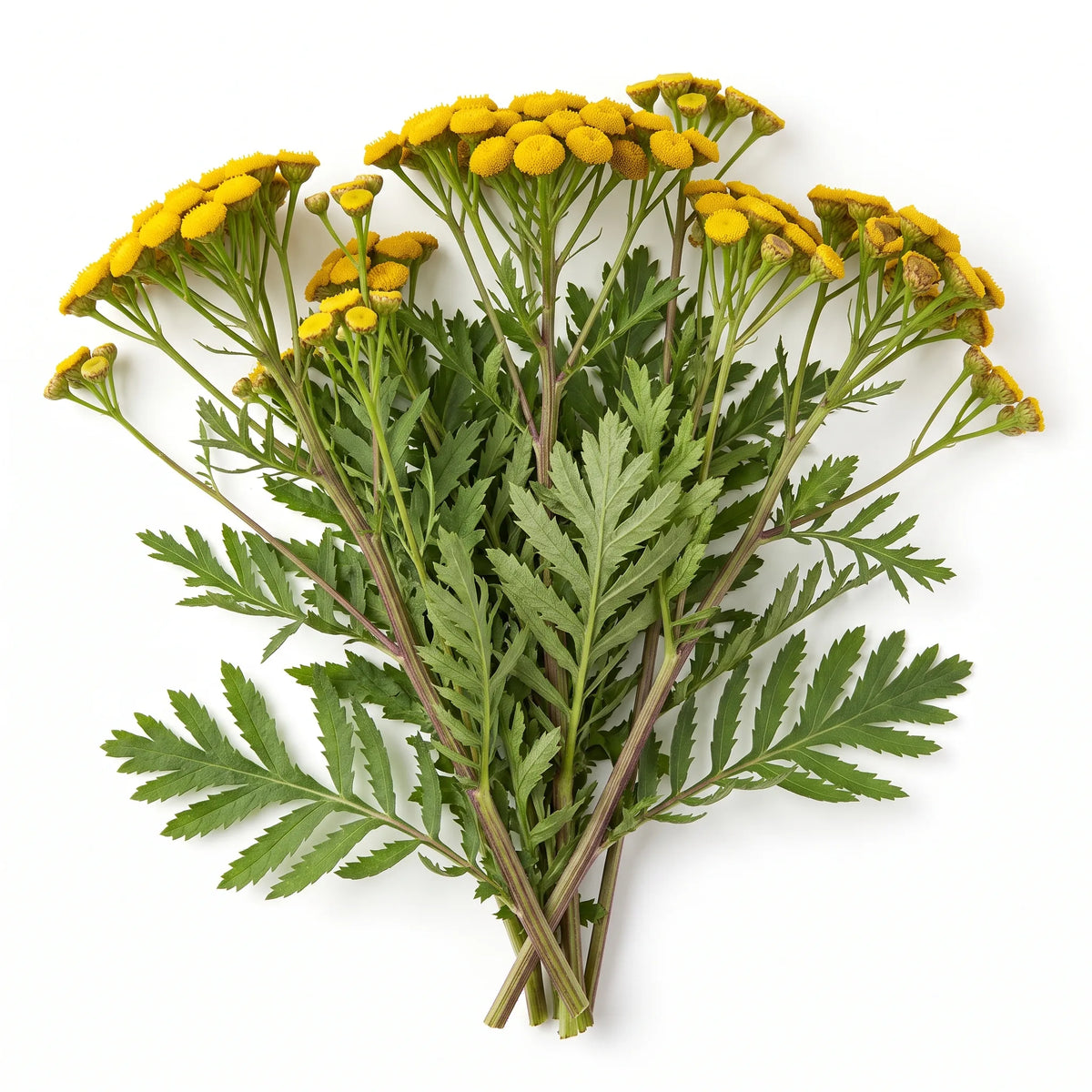
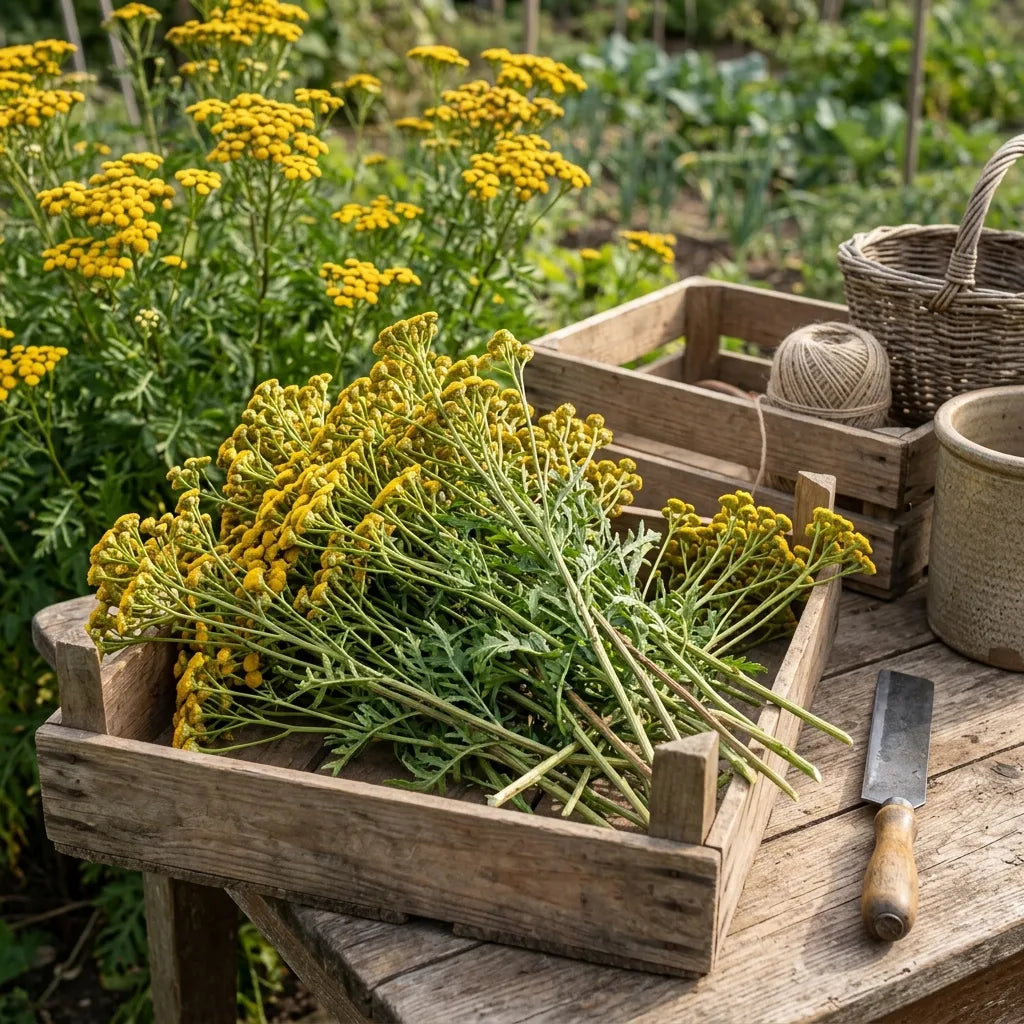
Vigorous perennial: upright stems growing up to 1.50 m tall, forming a dense clump that spreads rapidly through its creeping rhizomes.
-
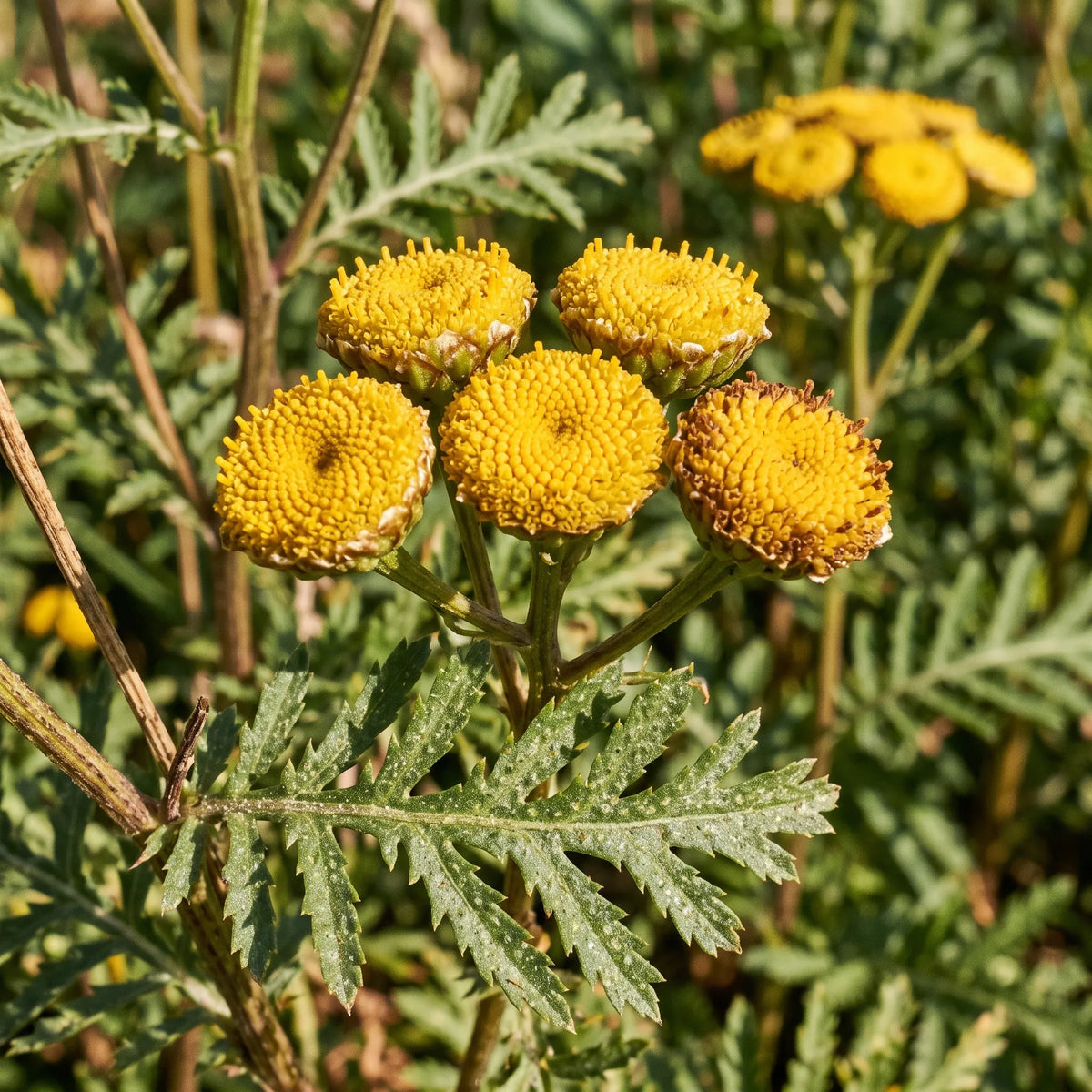
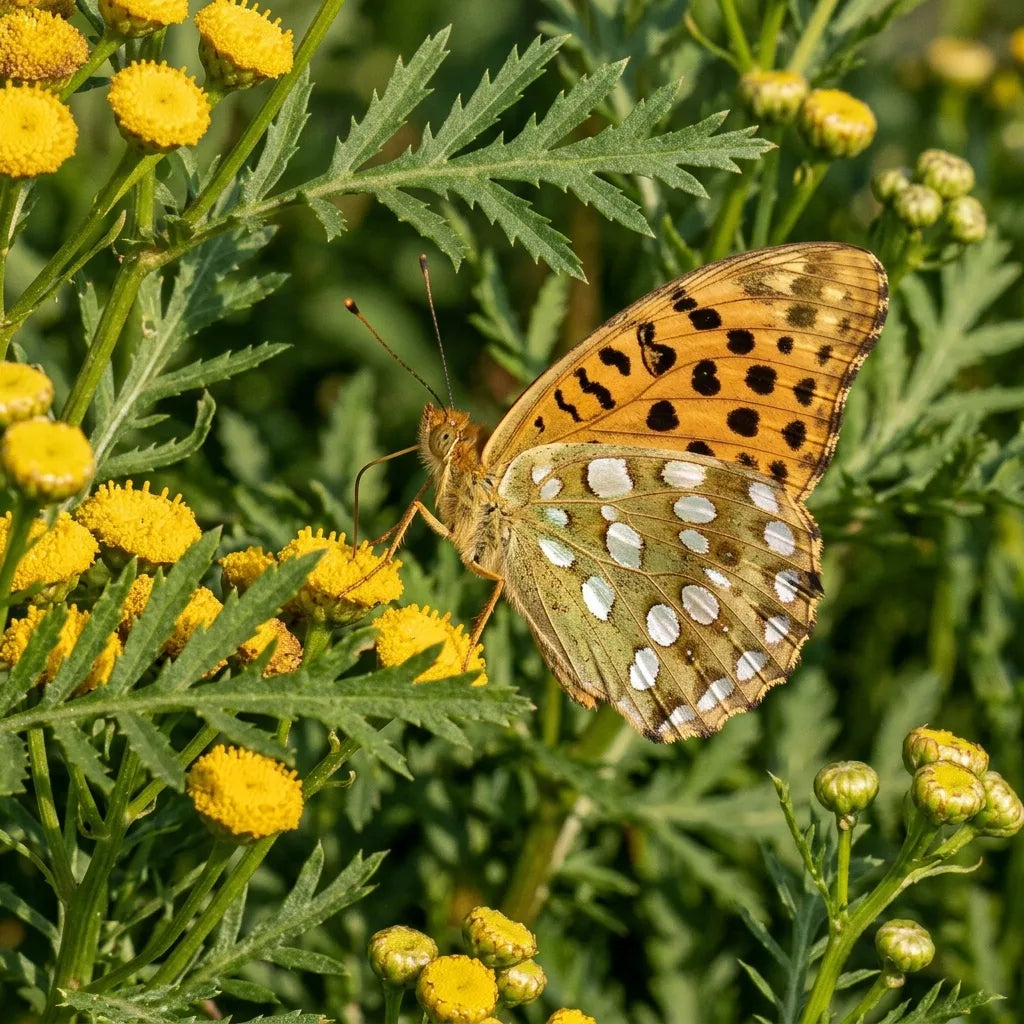
Aromatic foliage: finely divided, it releases a characteristic camphor-like scent when crushed.
-
Golden-button flowers: flat umbels of yellow flower heads, from July to September.
Precautions:
- Tansy is toxic if ingested, especially in concentrated form: do not consume it, and keep it out of reach of children and pets. Its use is limited to decorative and repellent purposes in the garden.
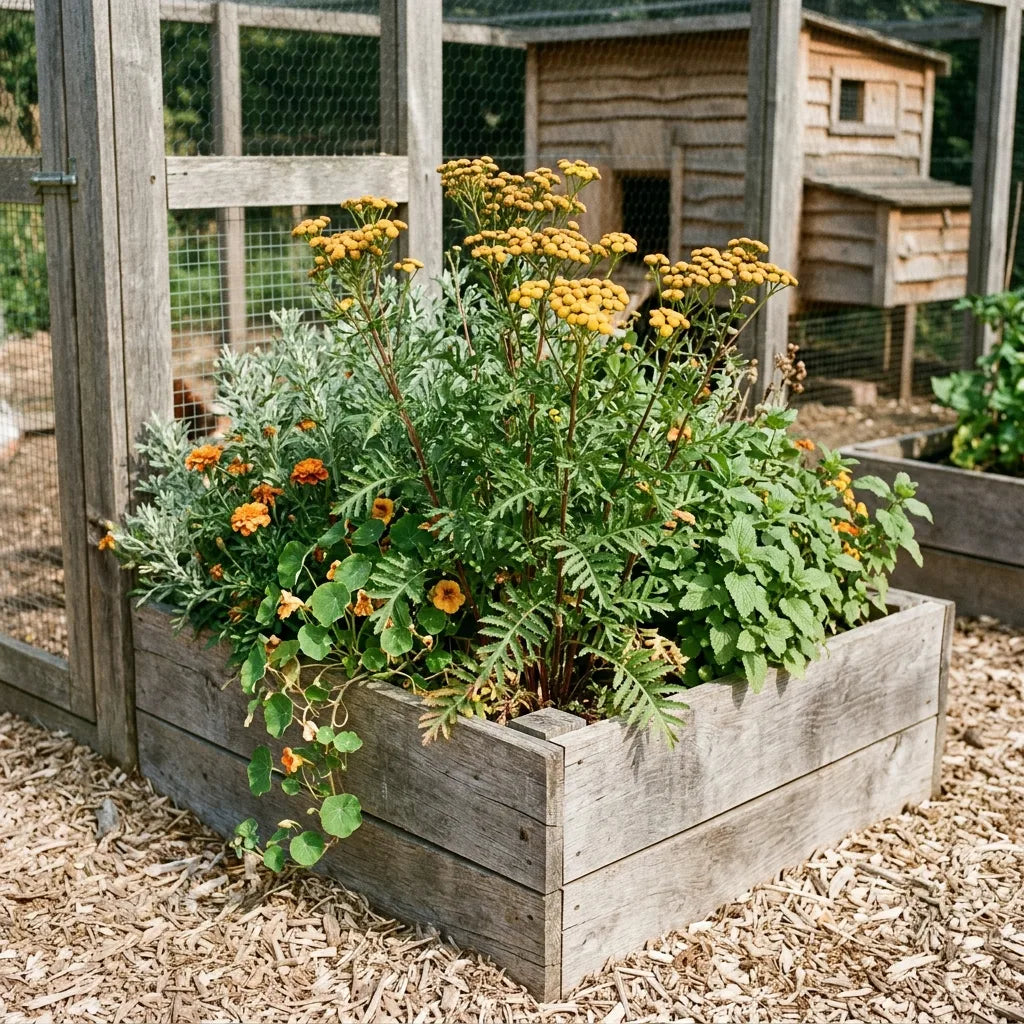
- Its creeping rhizomes can make it invasive: restrict it to a defined area, a contained border, or a large pot if you are concerned about its spread.
Sowing advice:
-
Exposure: full sun to partial shade; it is not demanding.
-
Soil: ordinary soil, even poor, dry, or stony soil—it grows spontaneously on banks and along paths. No fertilization is necessary; it only dislikes permanently waterlogged soil.
-
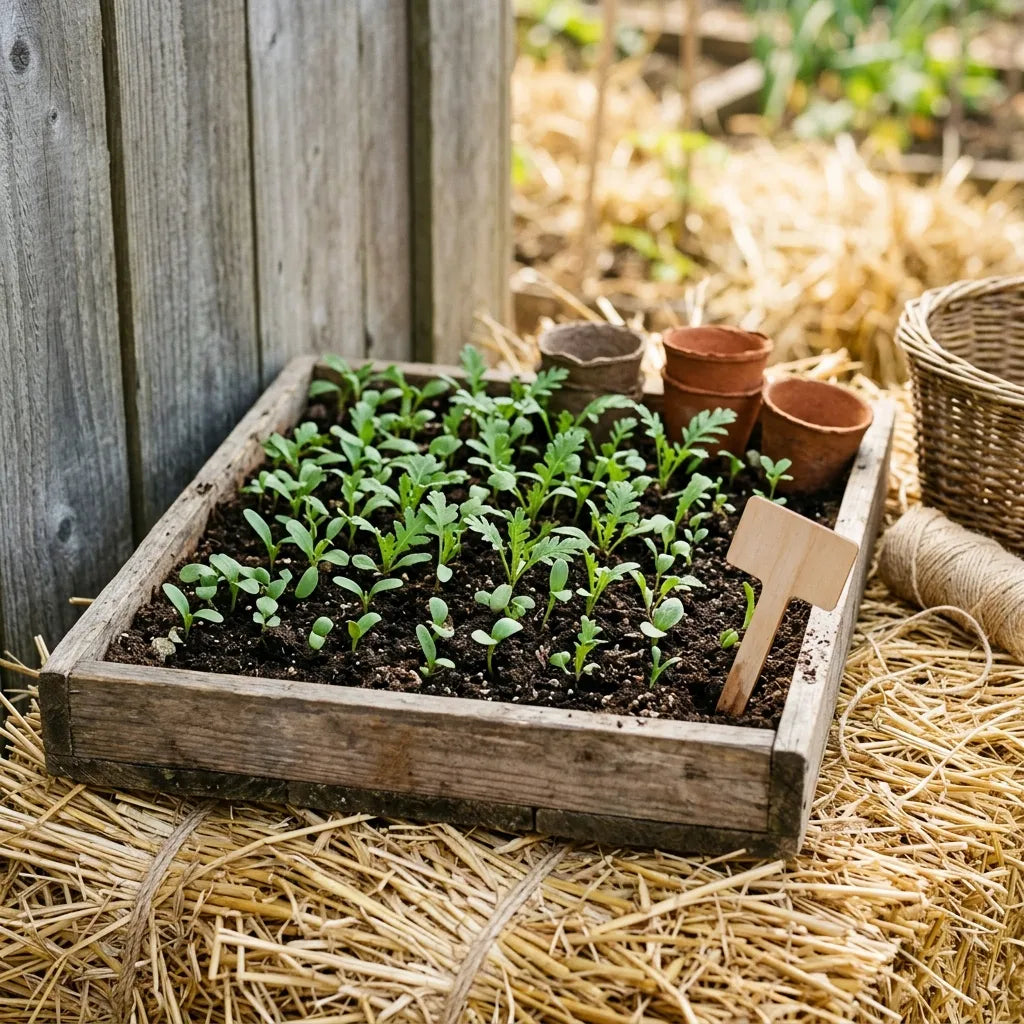
Method: sow on the surface in spring, directly in place or in a pot for later transplanting, barely covering the seeds. No soaking is necessary. See how to sow your seeds.
Care advice:
- Cut the stems back at the end of winter. Divide the clump every 2–3 years to contain it and rejuvenate it.
Beneficial companion planting:
Benefits for biodiversity:
- Its flat umbels are particularly accessible to short-tongued insects: hoverflies, beetles, and small beneficial wasps readily find food there.
- It naturally repels several unwanted insects while welcoming beneficial species—a valuable dual role in permaculture.
Uses:
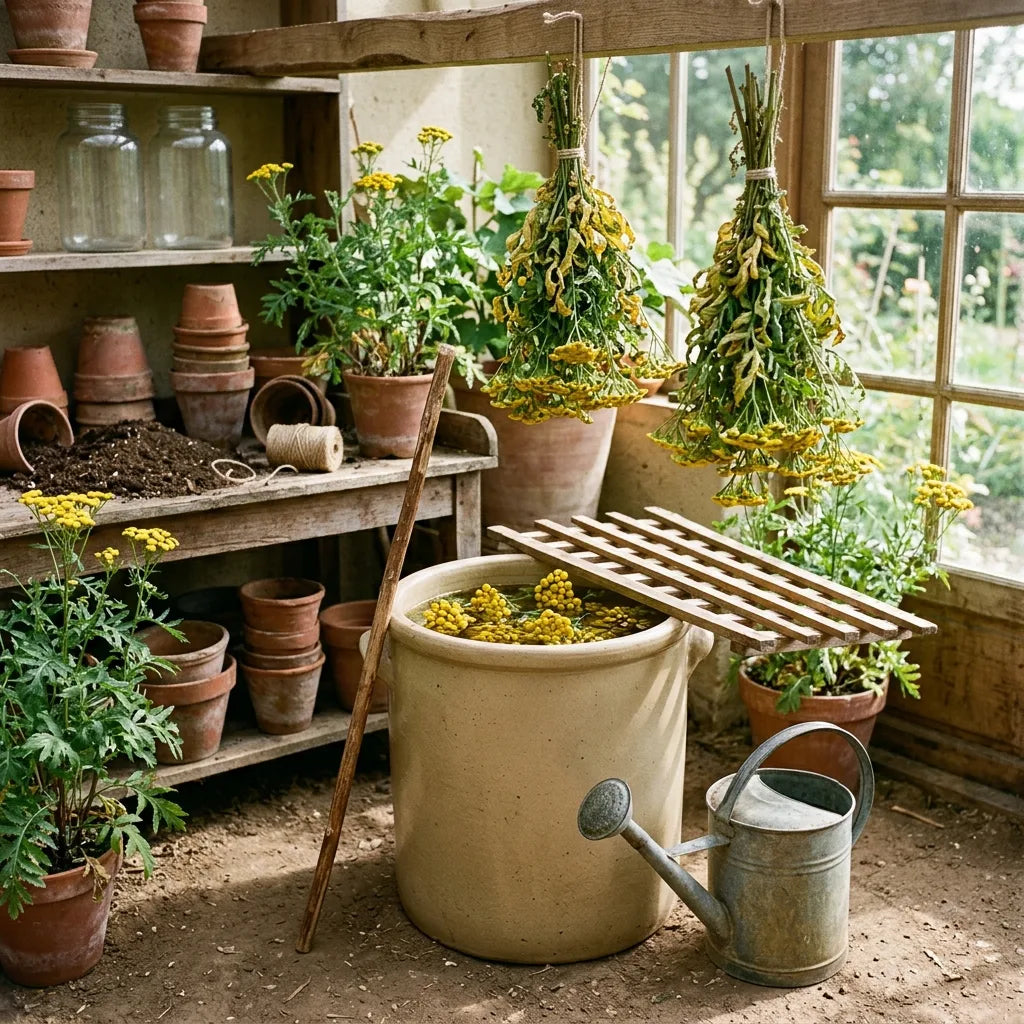
- A natural repellent and fungicide, tansy can be used dried in sachets or bouquets, or as a maceration, infusion, liquid fertilizer, or decoction to deter stink bugs, moths, fleas, and ants.
Harvesting your own seeds:
Let a few yellow umbels turn brown and dry completely on the plant, then shake out the seeds over a container: they are tiny. Tansy also spreads very effectively through its rhizomes, without even needing to be sown. See how to store your seeds.
Commitment to Quality: at SemiSauvage - Permaculture, we grow and select our seeds with respect for all living things as our guiding principle. Based near the Volcanoes of Auvergne, we choose reproducible, non-hybrid varieties, test them for germination rates, and carefully sort and package them without any chemical treatment. Our belief: to give gardeners back the ability to resow, year after year, seeds that truly belong to them.
Choose tansy for your garden for natural protection against unwanted insects.