Lupinus polyphyllus
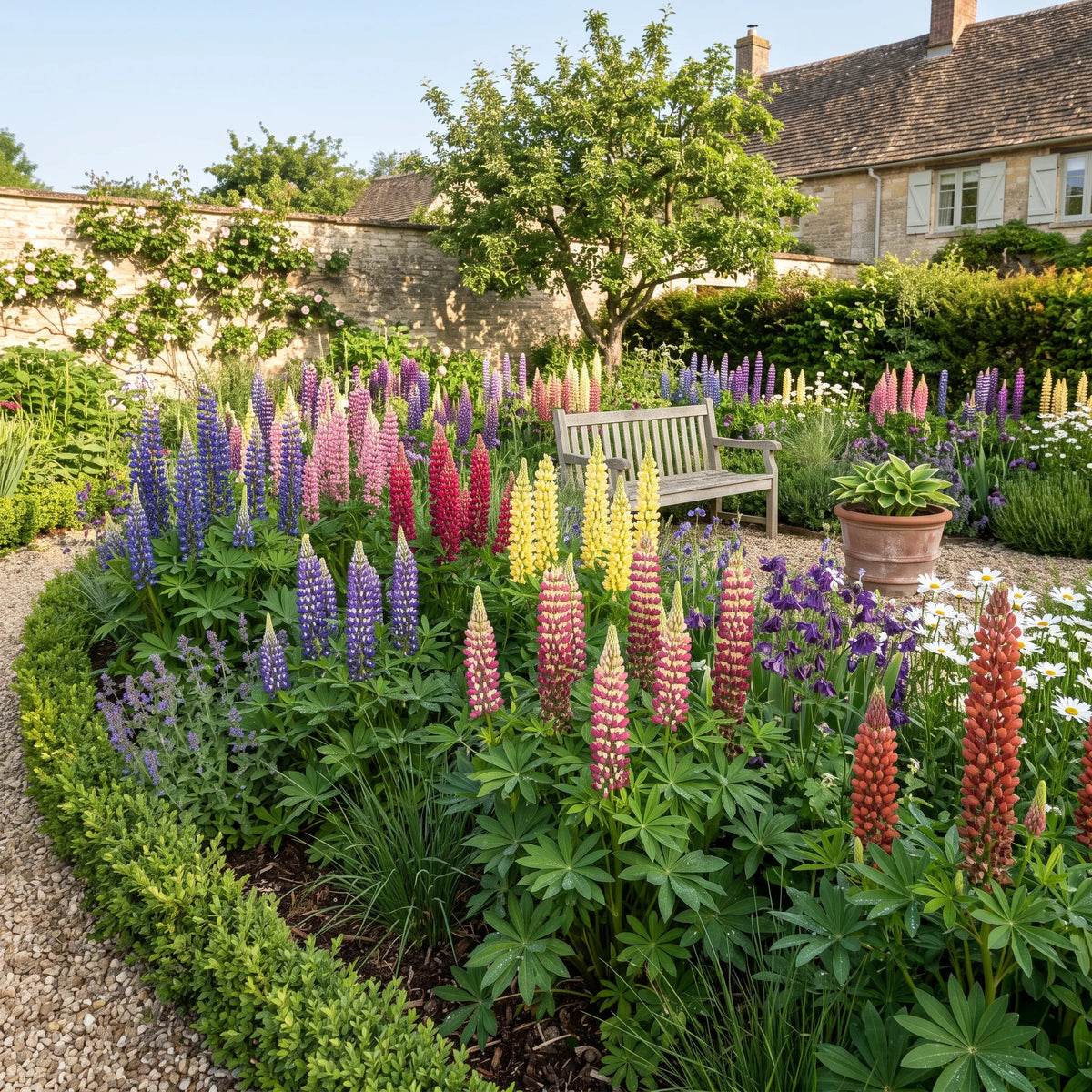
Perennial lupin, Russell lupin: these hybrids owe their name to George Russell, an English gardener who devoted more than twenty years of his retirement to patiently selecting the finest colors before presenting them to the public in 1937. Their upright flower spikes make them one of the most beautiful vertical accents in the perennial garden.
Characteristics:
-
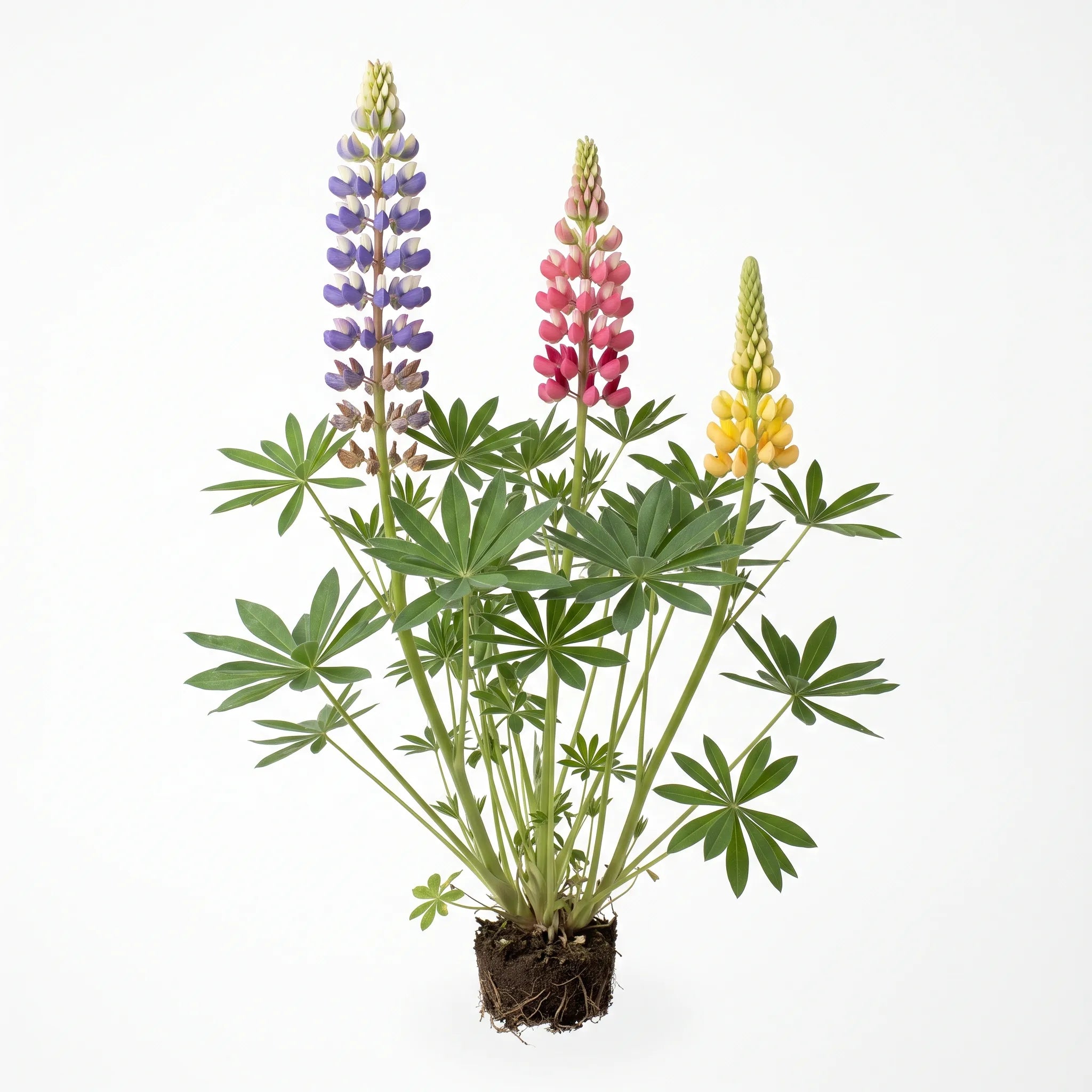
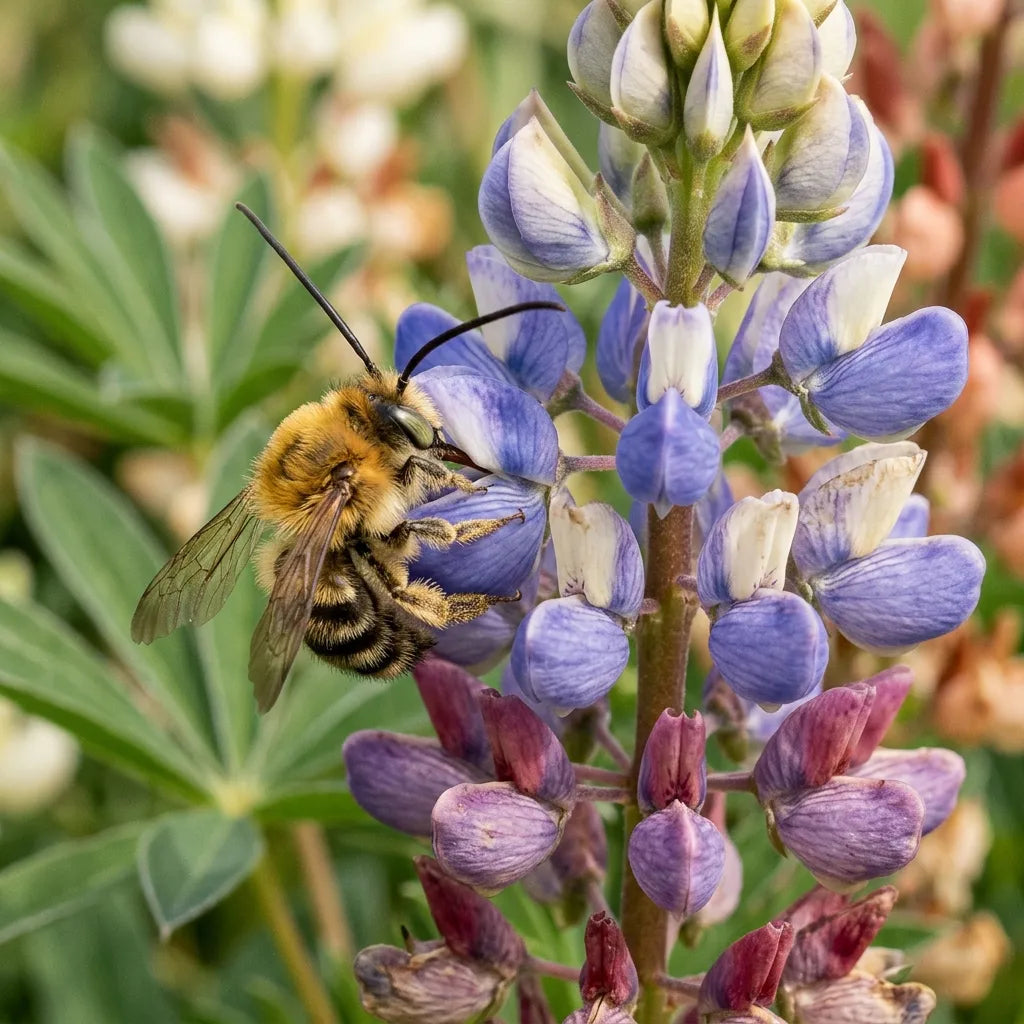
Spectacular flower spikes: flowers measuring approximately 2 cm, arranged in dense whorls to form upright spikes with a striking presence in borders.
-
Graphic foliage: compound palmate leaves, highly decorative even outside the flowering season, that beautifully hold drops of dew.
-
Fast growth: vigorous rooting, with a taproot that grows deep.
Sowing advice:
-
Exposure: full sun to partial shade.
-
Soil: light, deep, preferably sandy, moist but very well drained, and above all neutral to acidic — this is the critical point: lupins decline in chalky soil, where their foliage turns yellow. There is no need to fertilize; they fix nitrogen from the air themselves.
-
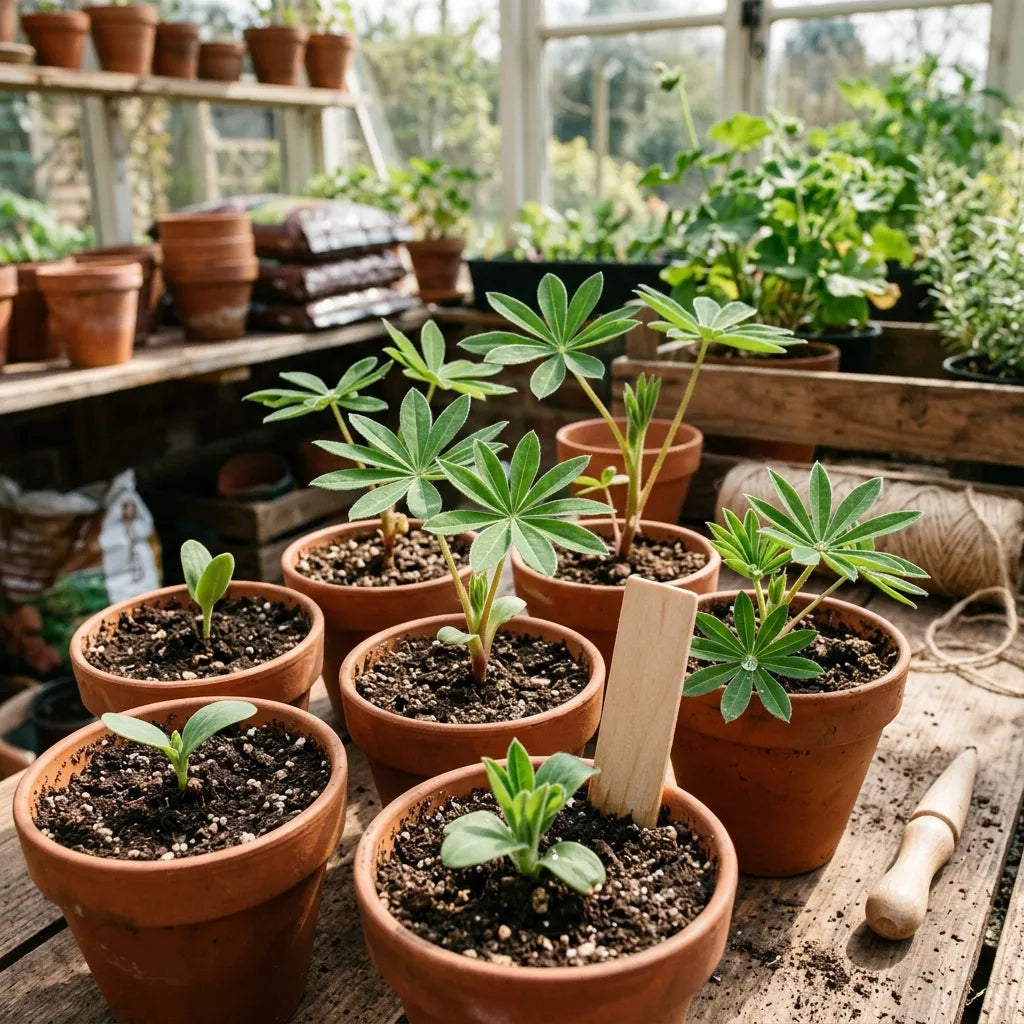
Method: sow directly in place, as their taproot does not tolerate transplantation well. Soak the seeds in lukewarm water for 24 hours before sowing: their seed coat is hard, and this step significantly improves germination. See how to sow seeds.
Care advice:
- Water regularly to keep the soil moist, but never allow standing water to accumulate.
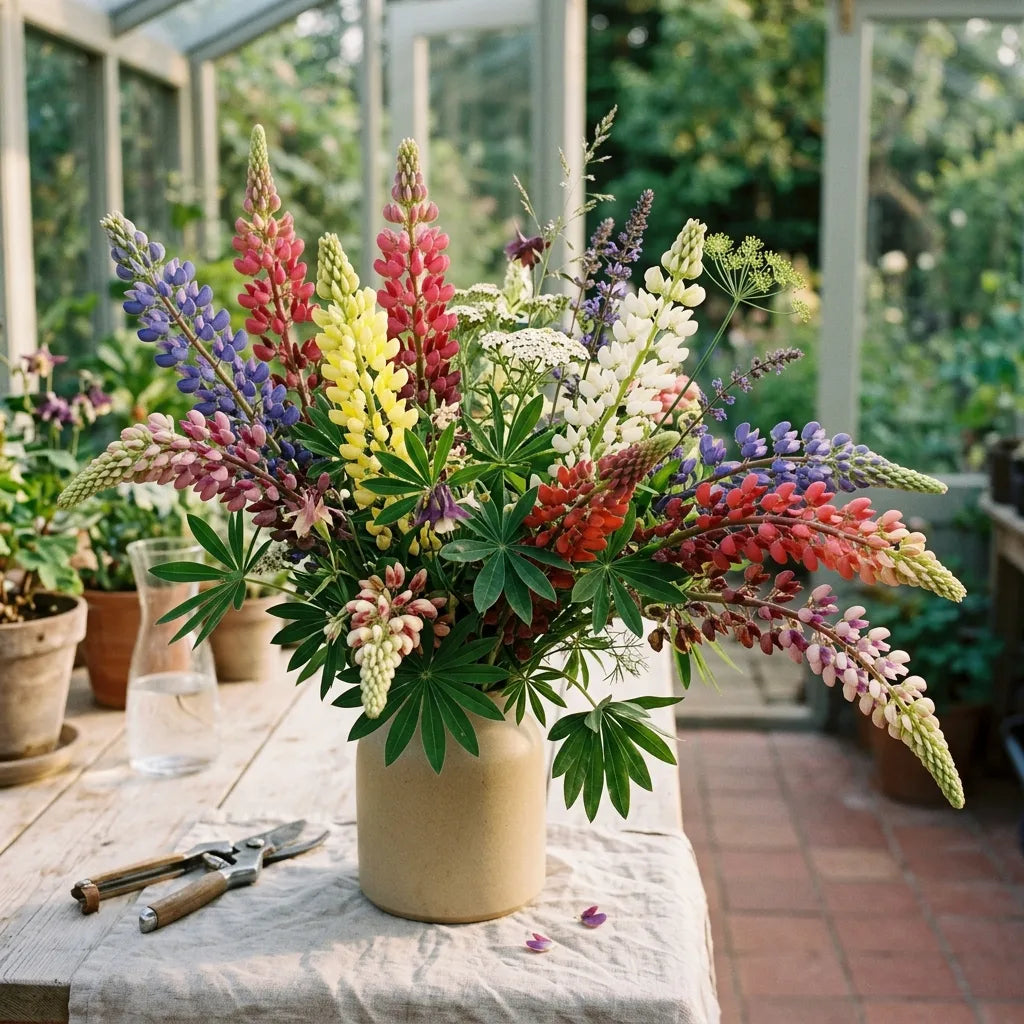
- Cut off faded flower spikes to encourage a second bloom in late summer, or leave a few to go to seed.
Beneficial companion planting:
Benefits for biodiversity:
- Its flowers are especially sought after by bumblebees, which are the only insects powerful enough to force them open and reach the pollen.
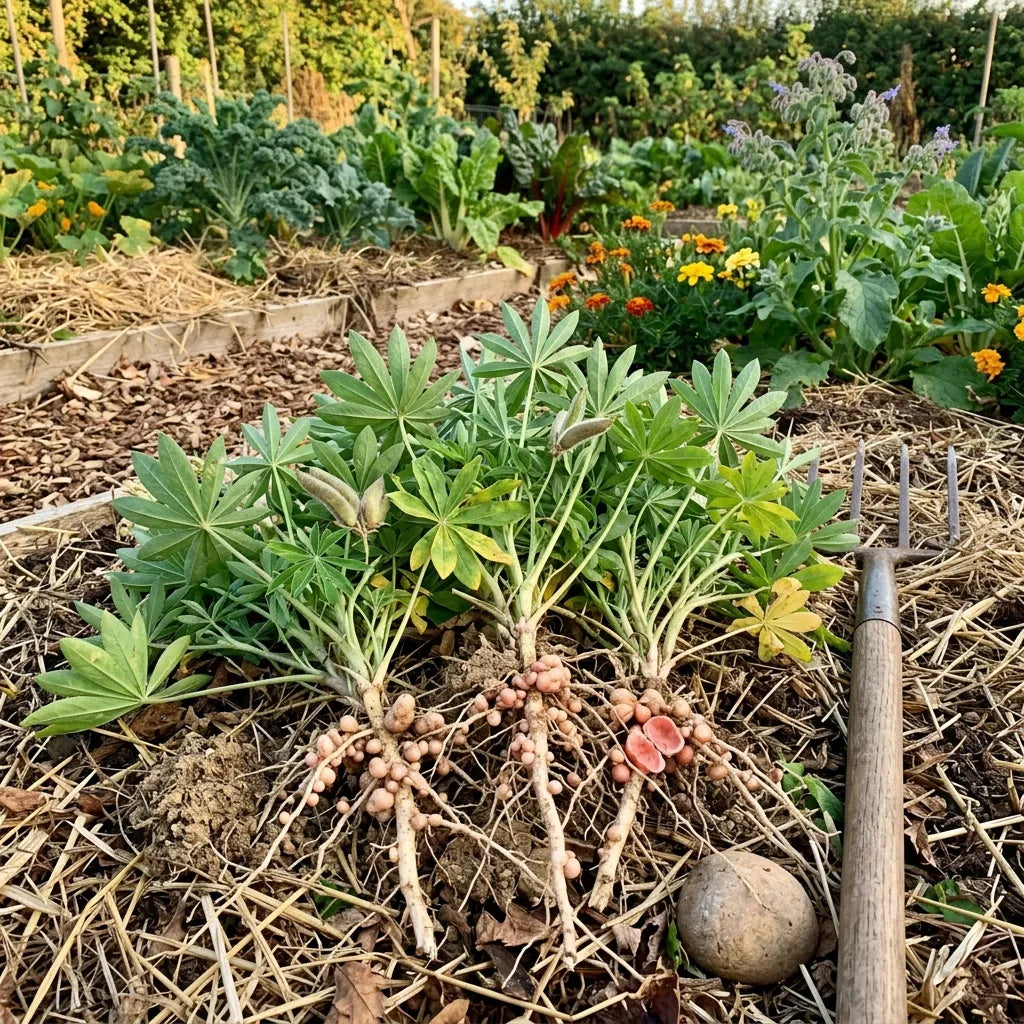
- Its root nodules fix atmospheric nitrogen and nourish the soil’s microbial life — see the basics of living soil.
Harvesting your own seeds:
Leave the hairy pods to turn brown and dry on the plant, then harvest them before they open on their own with a twisting motion. Please note: since Russell lupins are hybrids, seedlings produce varied colors, often different from the parent plant — that is the whole surprise of letting them self-seed. See how to store your seeds.
Commitment to Quality: at SemiSauvage - Permaculture, we grow and select our seeds with respect for living things as our guiding principle. Based near the Volcanoes of Auvergne, we choose reproducible, non-hybrid varieties, tested for their germination rate, carefully sorted and packaged, with no chemical treatment whatsoever. Our belief: to give gardeners back the ability to sow, year after year, seeds that truly belong to them.
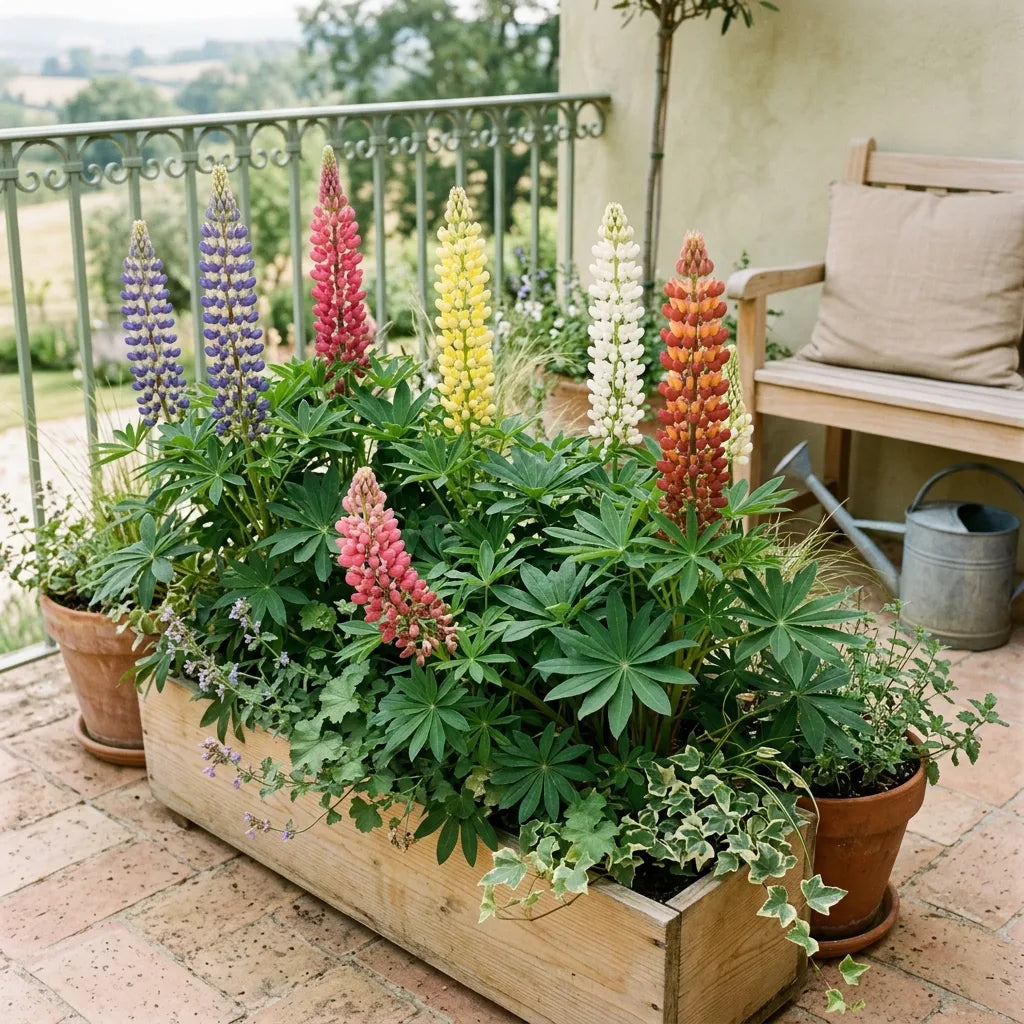
Add verticality to your borders with these Russell dwarf lupin seeds.