Trifolium repens
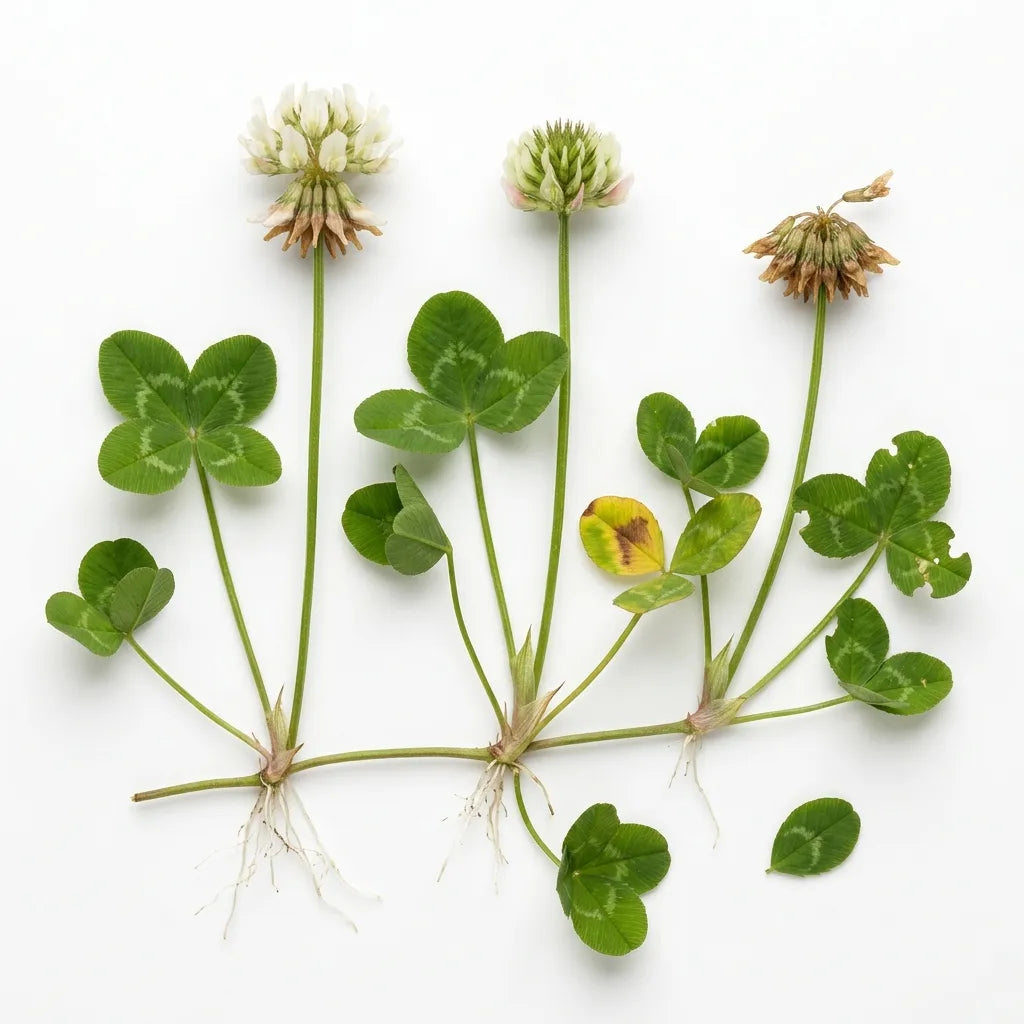
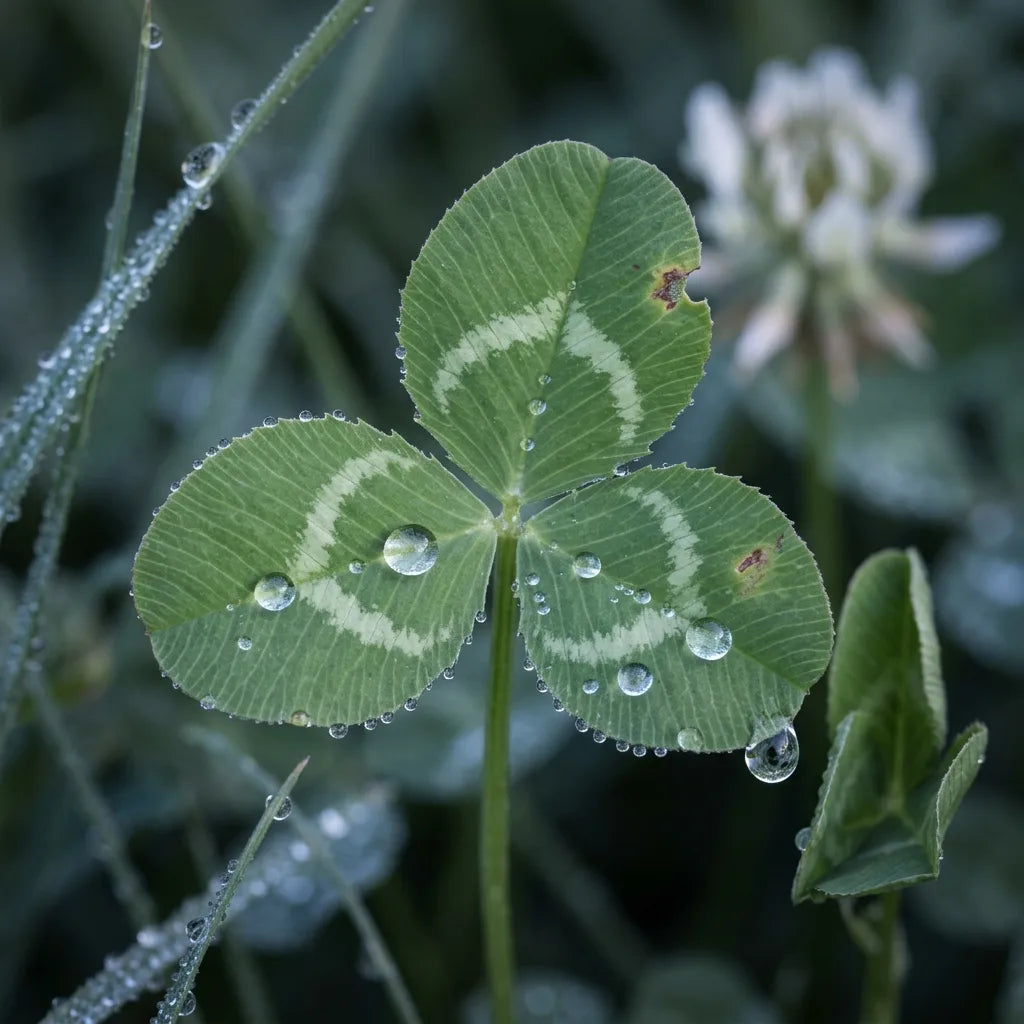
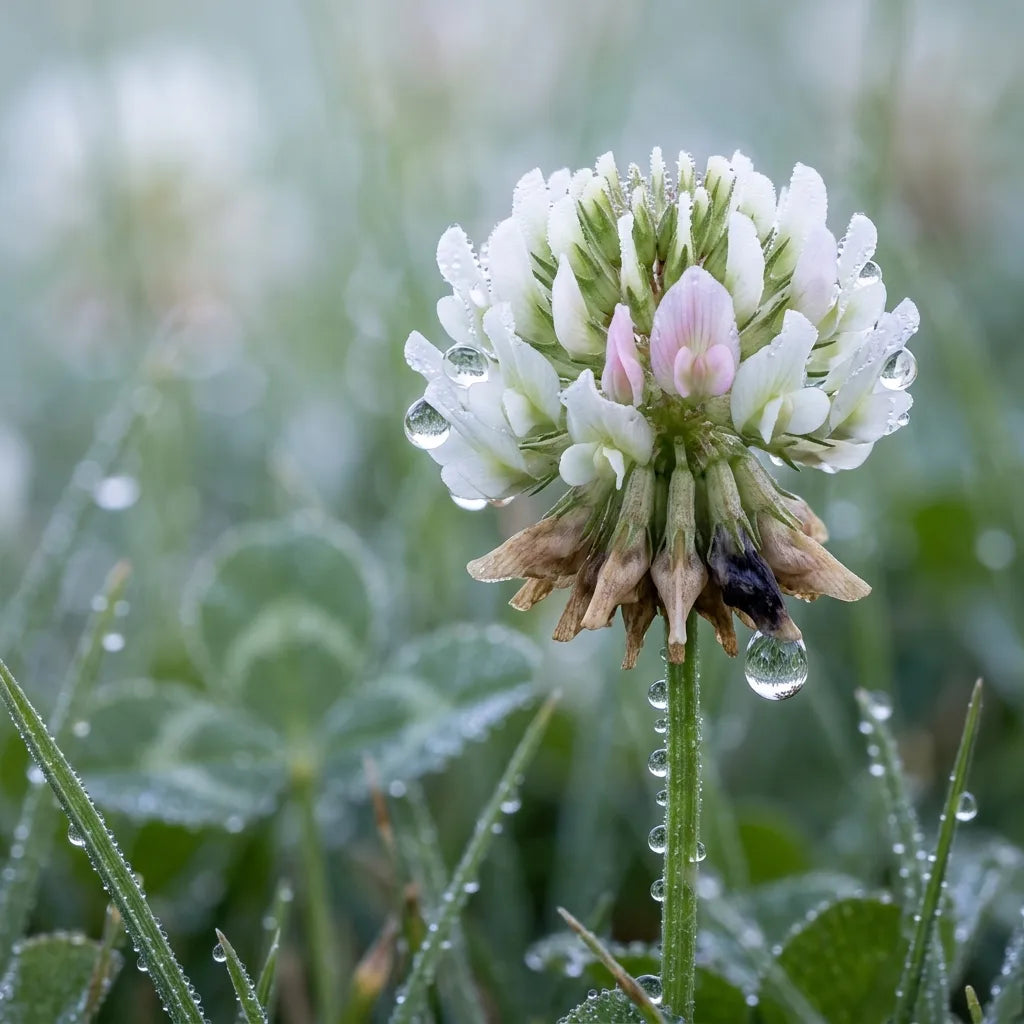
Creeping clover, meadow clover, or simply white clover: this small ground-covering plant found everywhere in meadows hides many talents. A symbol of Ireland, it is now making a strong comeback in ecological gardens for its many uses, from ground cover to green manure, not to mention its irresistible appeal to bees.
Characteristics:
-
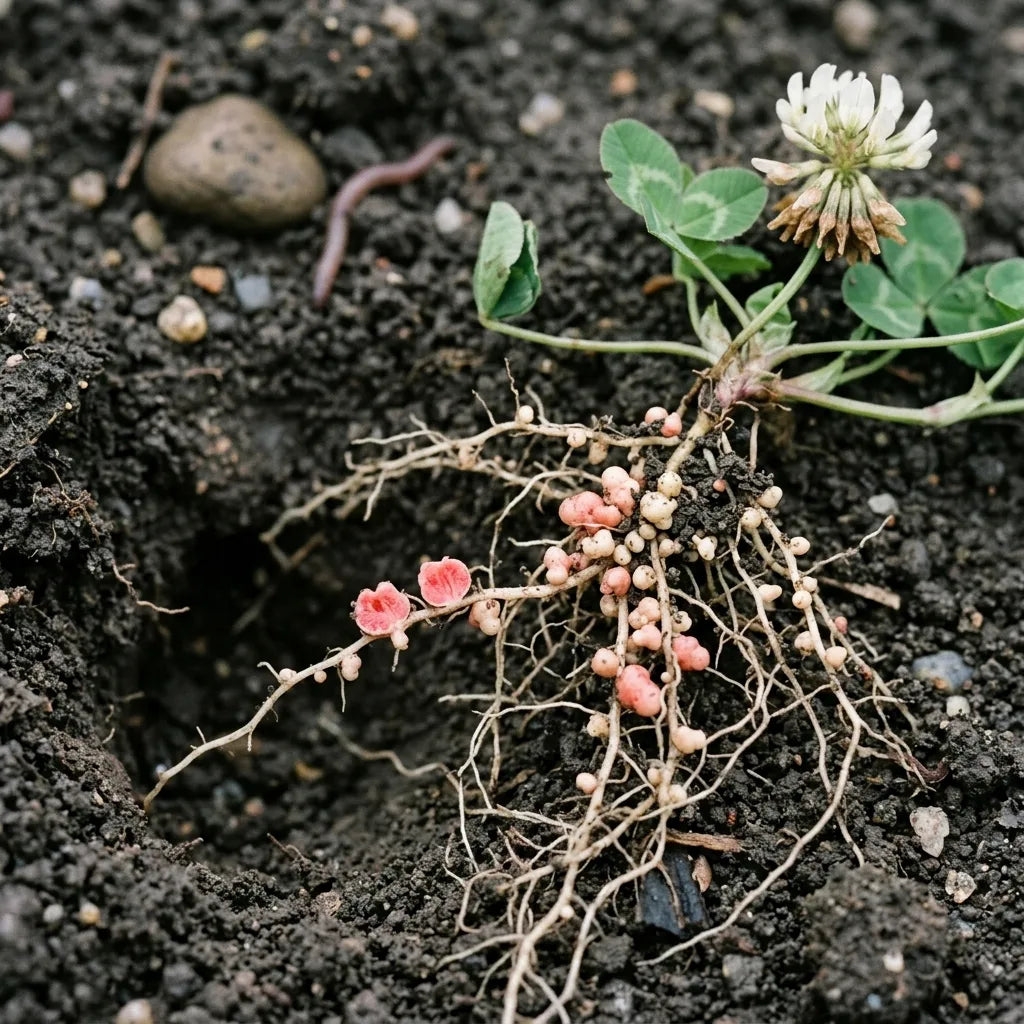
Soil improver: like all legumes, white clover fixes atmospheric nitrogen in the soil through bacteria in its roots, naturally enriching it.
-
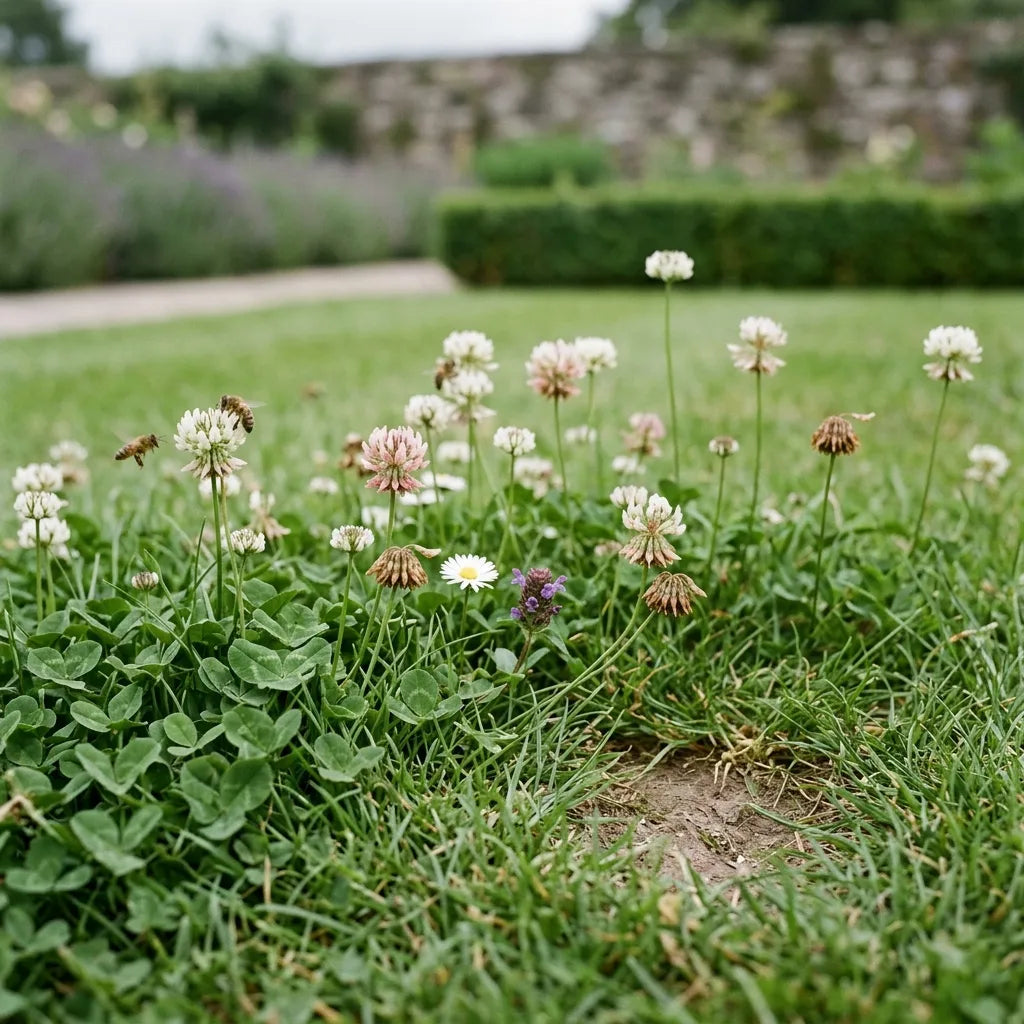
Tolerant of foot traffic: it can be used alongside a lawn, or even partially replace it, without fearing repeated passage.
-
Spreading perennial: it spreads on its own through stolons and self-seeds, forming a dense, long-lasting carpet.
Sowing advice:
-
Exposure: full sun to partial shade — it tolerates light shade well, making it a versatile ground cover.
-
Soil: all types, even poor soils, as long as they remain moist. No fertilization is needed: as a nitrogen-fixing plant, it requires no additional nutrients and thrives where other plants struggle. It does not tolerate very dry, scorching soils in summer.
-
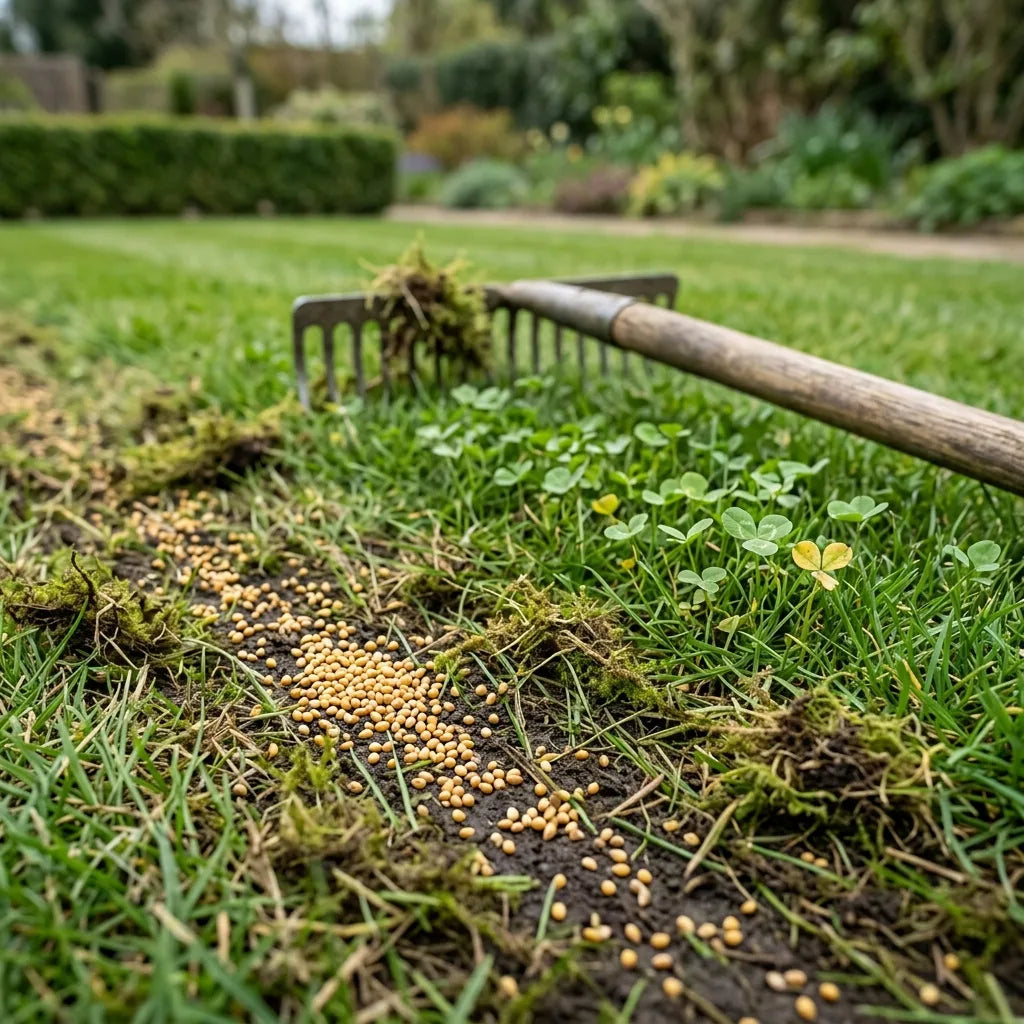
Method: sow directly in place by broadcasting in March–April or September, on raked soil that has then been rolled or firmed. No pots or pre-soaking are needed for these small seeds. See how to sow your seeds.
Care advice:
- Virtually none once established: it spreads on its own through stolons. A high mowing is enough to contain it if it spreads too far.
Beneficial combinations:
Benefits for biodiversity:
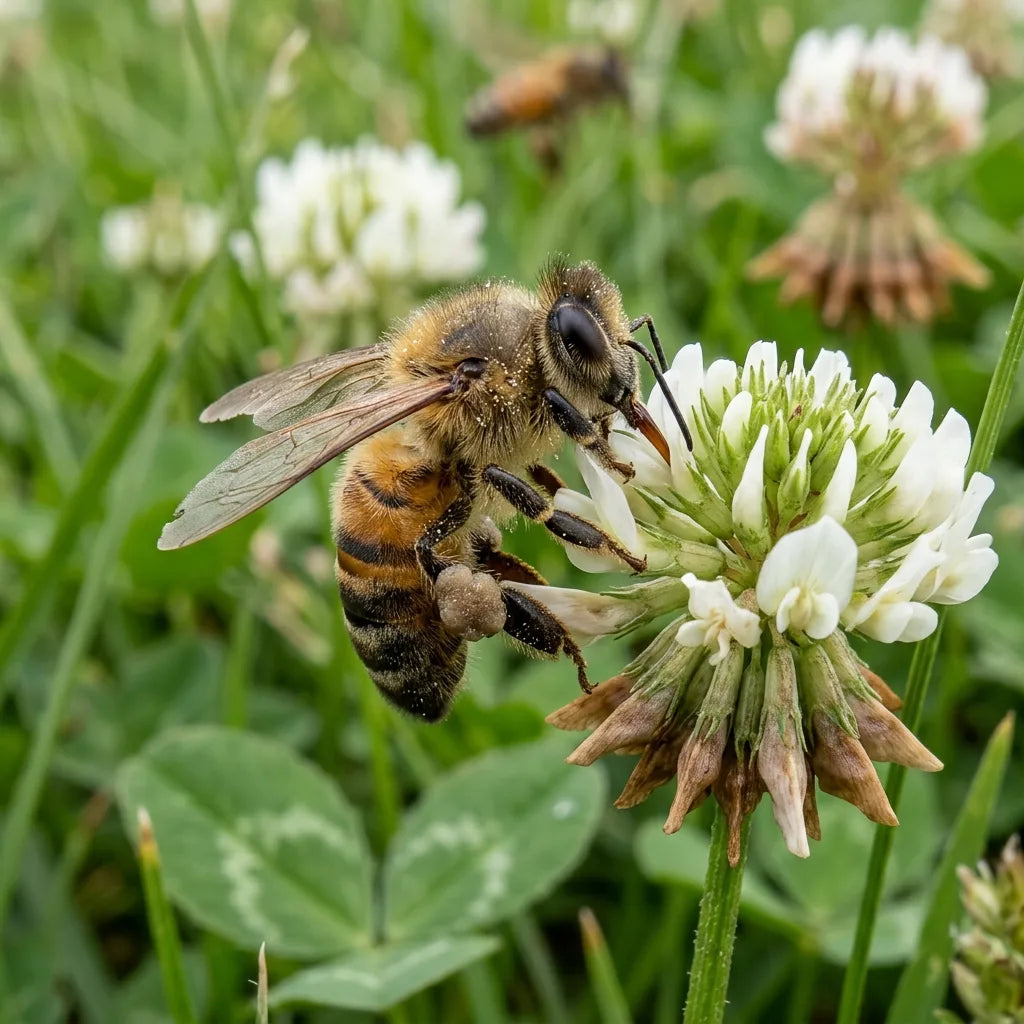
- An outstanding nectar plant, white clover feeds honeybees, bumblebees, and many wild pollinators over a long flowering period.
- By fixing atmospheric nitrogen through its root nodules, it indirectly nourishes the entire microbial life of the soil — a mechanism explained in the basics of living soil.
Uses:
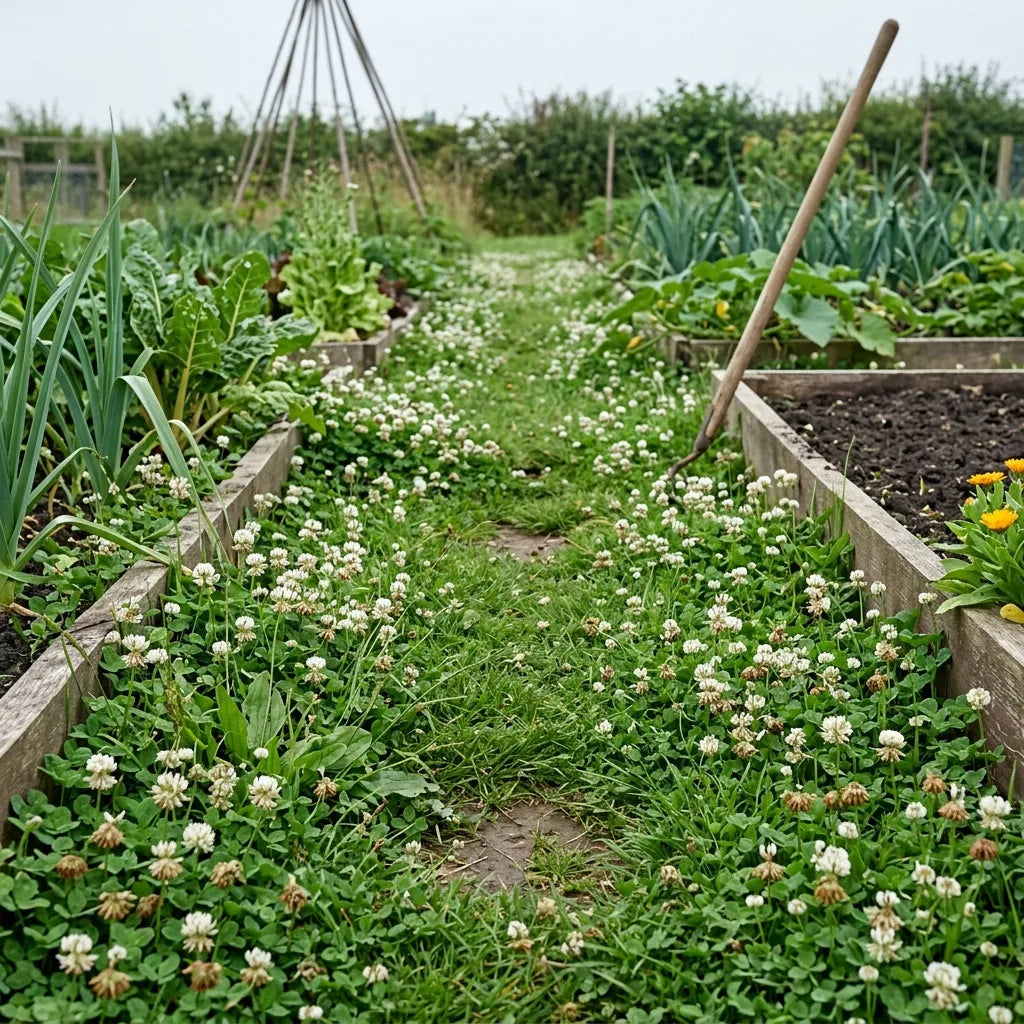
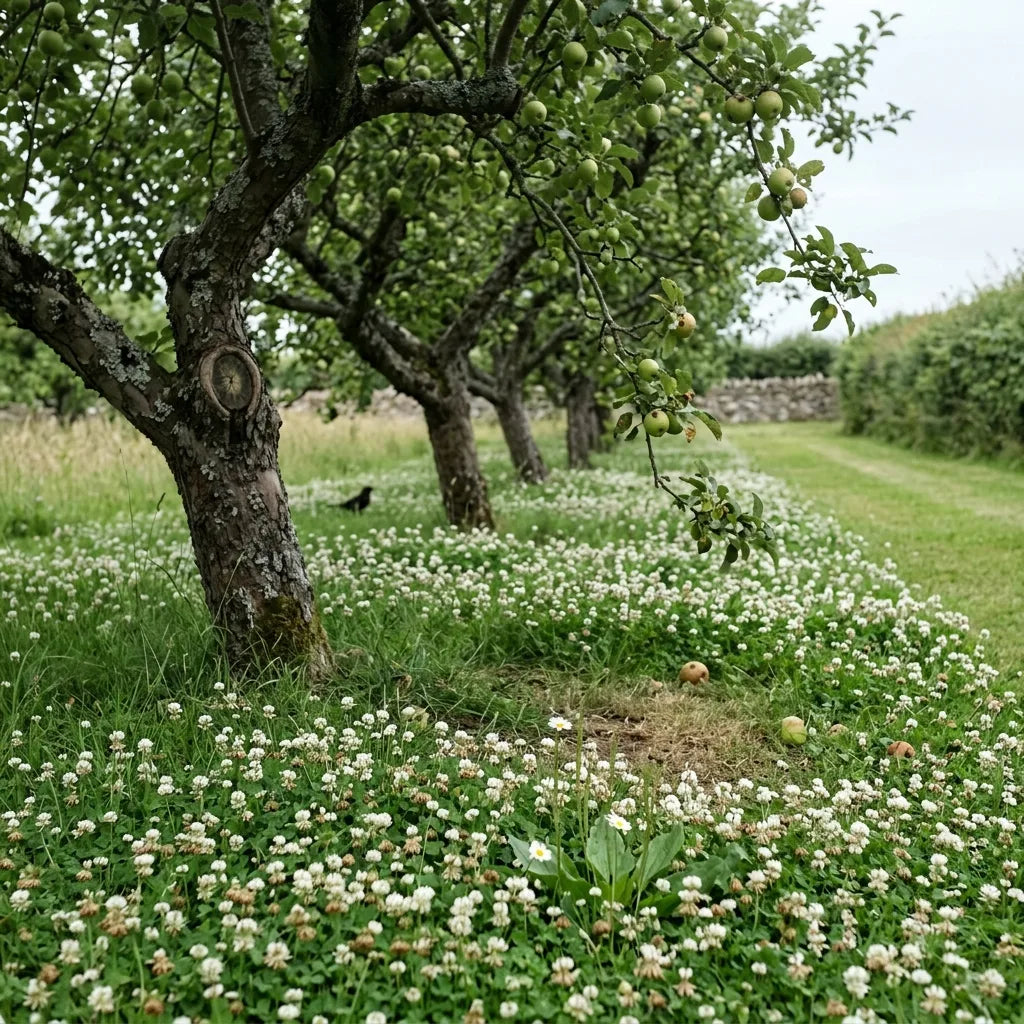
- As ground cover, in a flowering lawn, or as green manure before a nitrogen-hungry crop.
- The flowers and young leaves can be eaten raw in salads, cooked, or made into an infusion.
Symbolism:
The clover is the national symbol of Ireland: according to tradition, Saint Patrick used it to illustrate the Holy Trinity to the Irish. Finding a four-leaf clover is traditionally said to bring good luck.
Harvesting your own seeds:
Leave a few browned flower heads to dry on the plant, then rub them by hand to collect the small seeds. White clover self-seeds spontaneously from one year to the next, in addition to spreading through its stolons. See how to store your seeds.
Commitment to Quality: at SemiSauvage - Permaculture, we grow and select our seeds with respect for all living things as our guiding principle. Based near the Auvergne Volcanoes, we choose reproducible, non-hybrid varieties, tested for their germination rate, carefully sorted and packaged, without any chemical treatment. Our belief: to give gardeners back the ability to resow, year after year, seeds that truly belong to them.
Add these white clover seeds to your garden to create a lush, vibrant space while supporting biodiversity.