Solanum lycopersicum
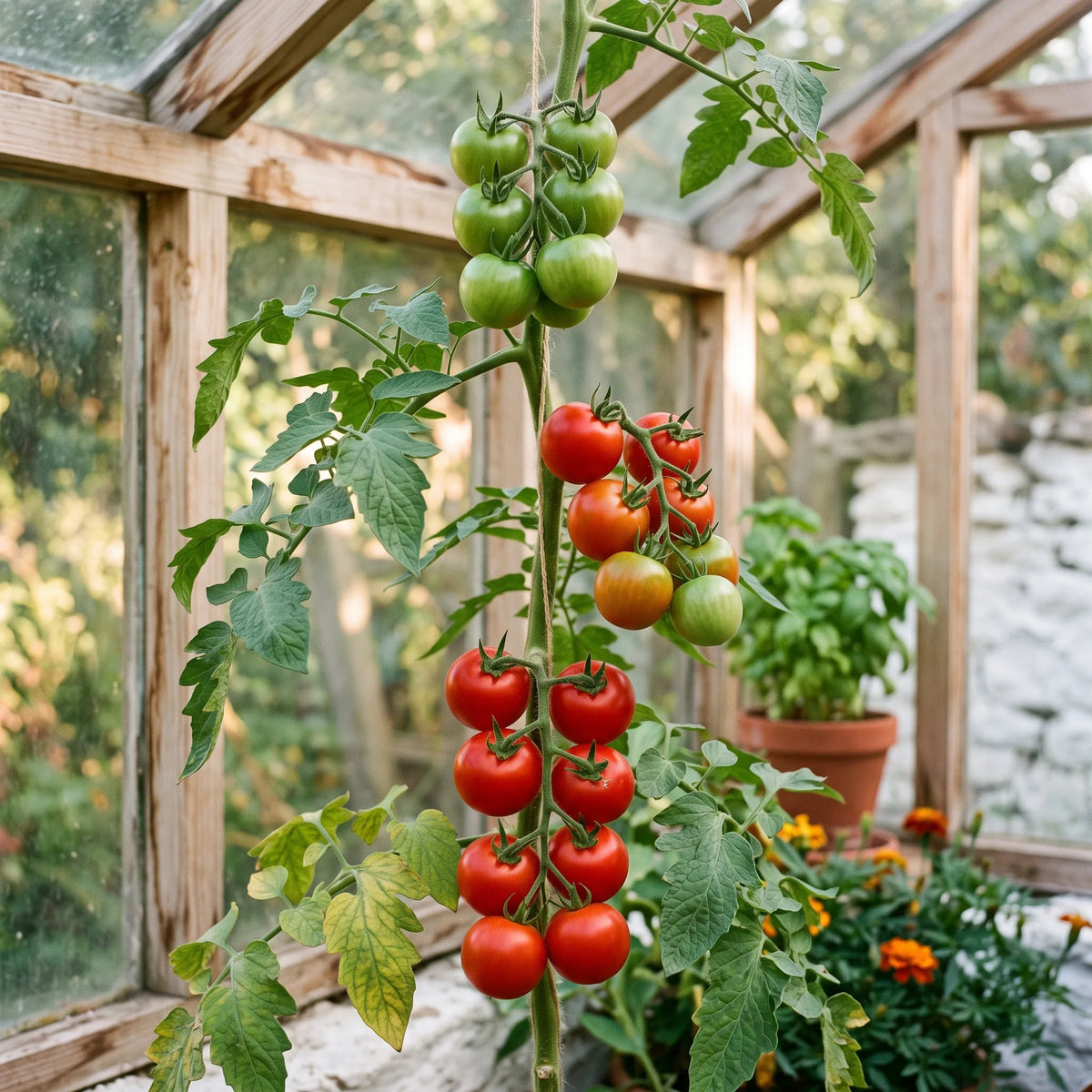
Moneymaker Tomato: its English name says exactly what it is—the tomato that makes money. Selected in England in the 1910s for greenhouse cultivation, it has the rare ability to set fruit well in cool, damp weather, when most varieties fail to do so.
Characteristics:
-
Adapted to damp climates: this is its true specialty—it sets fruit well where humidity causes other varieties to fail.
-
Vigorous and productive: regular clusters of medium-sized, round fruits.
-
Early: about three months from sowing to the first harvests.
-
Dense flesh, few seeds: delicious both fresh and cooked.
Sowing advice:
-
Position: full sun. It tolerates poorly sunny summers better than other varieties.
-
Soil: rich, loose and well drained, enriched with well-rotted compost.
-
Method: sow from February to April under cover, at a minimum of 20 °C—below this temperature, the seeds will not germinate. Waiting until the end of the frosts to sow would cost nearly two months of the growing season. Transplant into pots at the two-true-leaf stage. See how to sow seeds.
Planting advice:
- Transplant into the open ground after the last frosts, spacing plants 60 cm apart. Bury the stem up to the first leaves: the tomato produces roots along the entire buried section, resulting in a more vigorous plant.
- This is an indeterminate variety: install a sturdy stake at planting time. It performs particularly well in a greenhouse, which is what it was bred for.
Care advice:
-
Always water at the base, never over the foliage, preferably in the morning. Its tolerance of ambient humidity does not eliminate the need for this precaution: blight remains its main threat.
- Ventilate the plants well and do not overcrowd them, especially in a greenhouse: air circulation is the best prevention against fungal diseases.
- Remove suckers. Rotate crops every three to four years.
Harvesting advice:
- Harvest when fully red, when the fruit yields slightly under the finger. Store at room temperature, never in the refrigerator.
Beneficial companion plants:
Benefits for biodiversity:
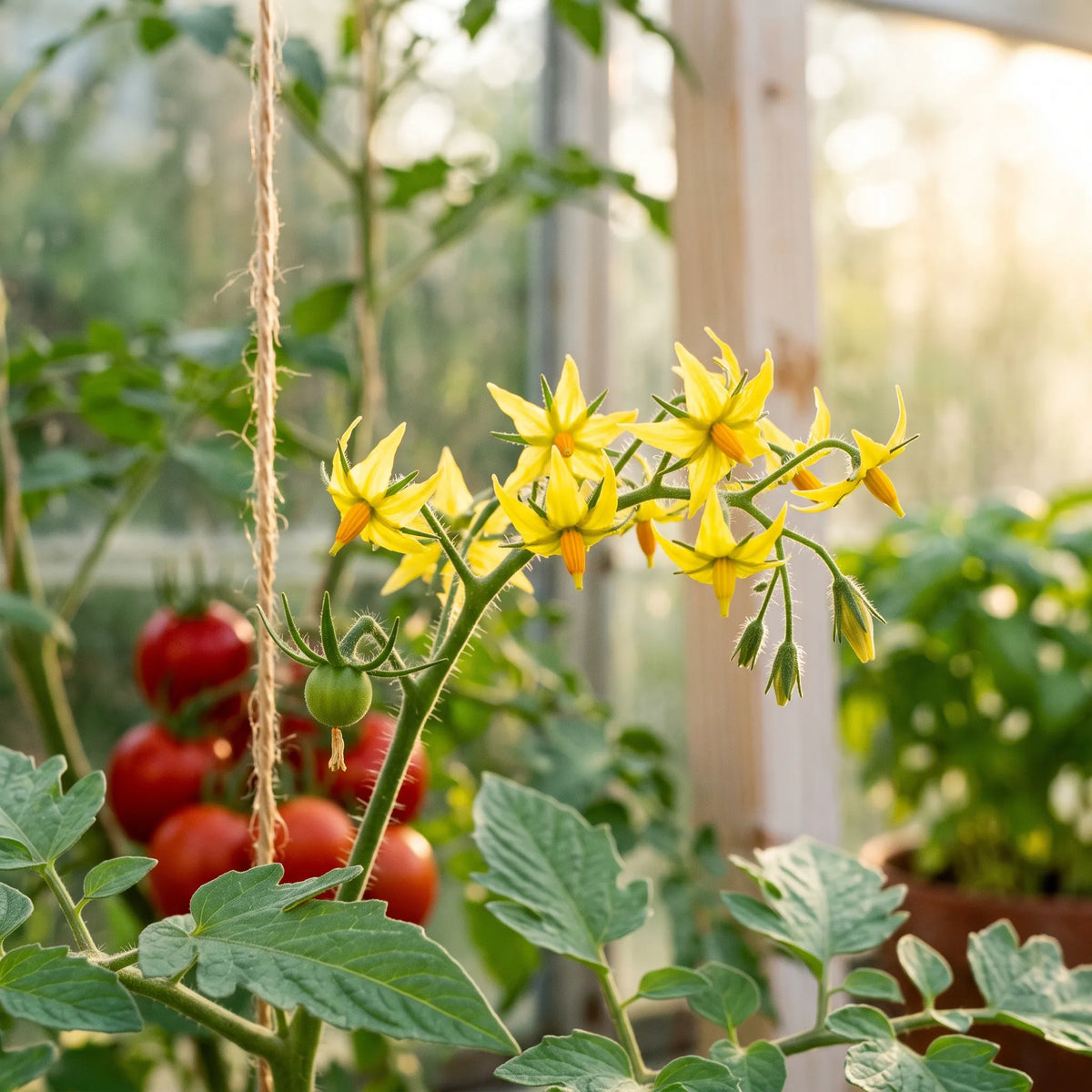
- Its flowers are pollinated by vibration: only bumblebees make full use of them. In a closed greenhouse, gently shake the flowering stems to make up for their absence.
- An heirloom, open-pollinated variety, growing it helps preserve cultivated diversity. See our heirloom tomatoes to sow.
Uses:
- Raw in salads, stuffed, in sauces or preserved. Its dense flesh and reliable production make it an all-purpose tomato.
Harvesting your own seeds:
Scoop the pulp from a fine, fully ripe fruit and let it ferment for two to three days in a little water—this step breaks down the gelatinous coating that inhibits germination—then rinse: the healthy seeds will sink to the bottom. Dry them flat. See how to save your seeds.
Commitment to Quality: at SemiSauvage - Permaculture, we grow and select our seeds with respect for all living things as our guiding principle. Based near the Auvergne Volcanoes, we choose open-pollinated, non-hybrid varieties, tested for their germination rate, carefully sorted and packaged, with no chemical treatment. Our belief is that gardeners should regain the ability to resow, year after year, seeds that truly belong to them.
The tomato for uncertain summers, bred for the English greenhouse.