Coriandrum sativum
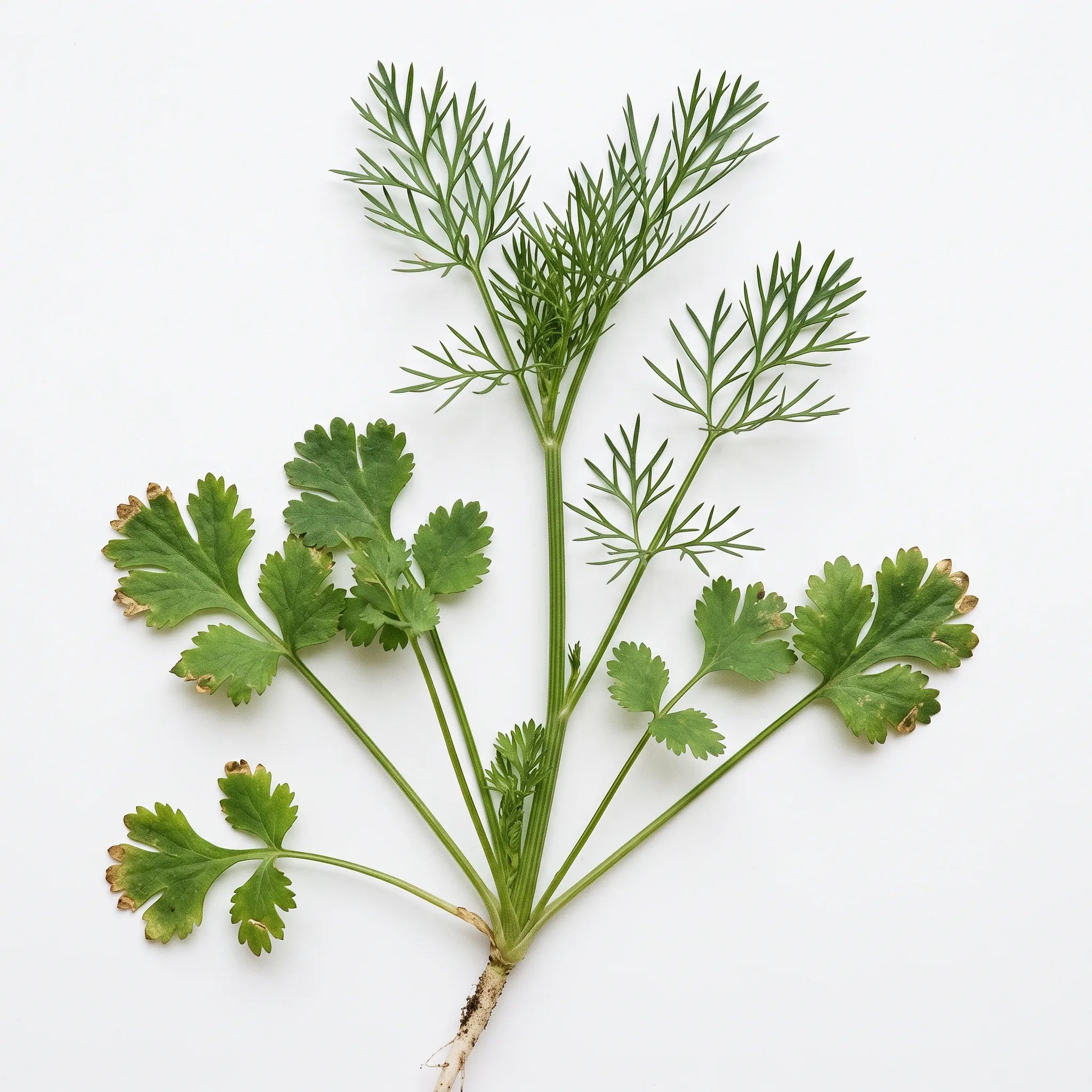
Coriander, Arabic parsley, Chinese parsley, cilantro: few plants are so divisive. Some people perceive its leaves as soapy — a very real genetic trait linked to an olfactory receptor. For everyone else, it is an irreplaceable aroma. And an interesting fact: its seeds taste nothing like its leaves; they are warm and citrusy.
Characteristics:
-
Two spices in one: fresh herbaceous leaves, and warm, citrusy dried seeds.
-
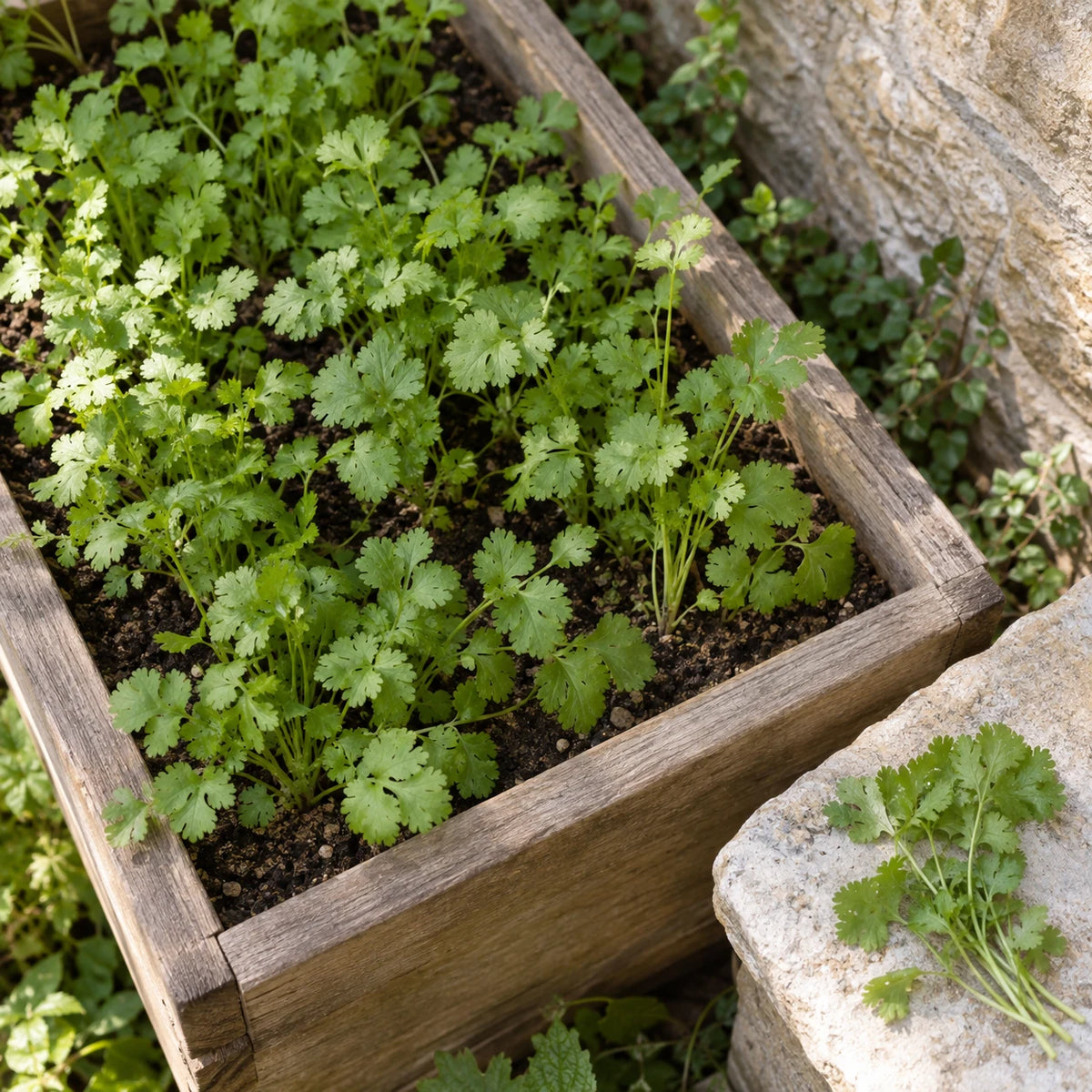
Fast-growing annual: first leaf harvest three to four weeks after sowing.
-
Easy to grow: from sowing to harvest, it requires almost nothing.
-
Self-seeds once established in the garden.
Sowing advice:
-
Exposure: sunny, or partial shade in midsummer to delay bolting.
-
Soil: light, well-drained, and kept moist. It does not need rich soil, but soil that dries out will make it flower immediately.
-
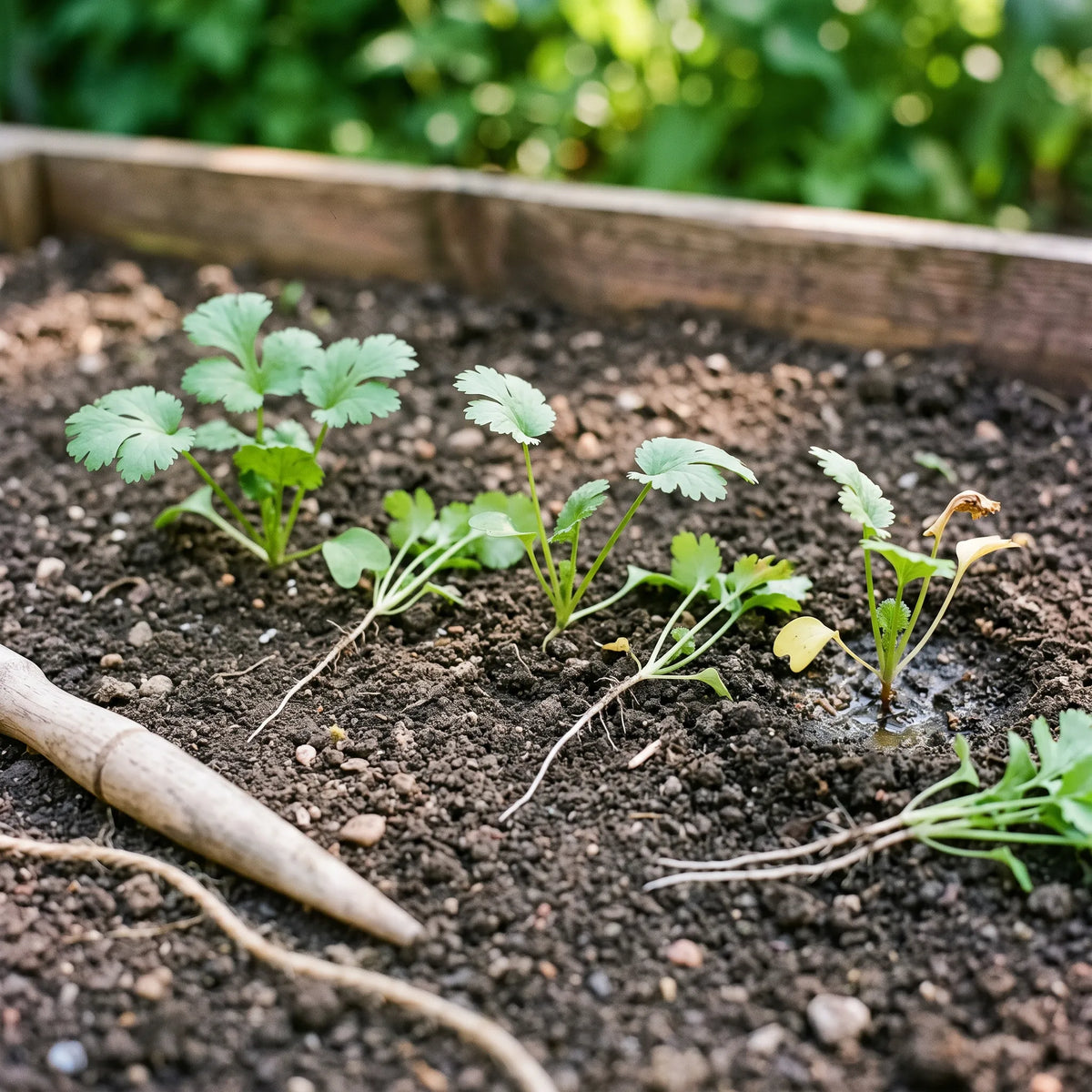
Method: sow directly in place — its taproot tolerates transplanting very poorly, which is the most common cause of failure. From April in the south, and May in the northern half, at a depth of 1 cm. Possible in a heated greenhouse from February–March. See how to sow your seeds.
Care advice:
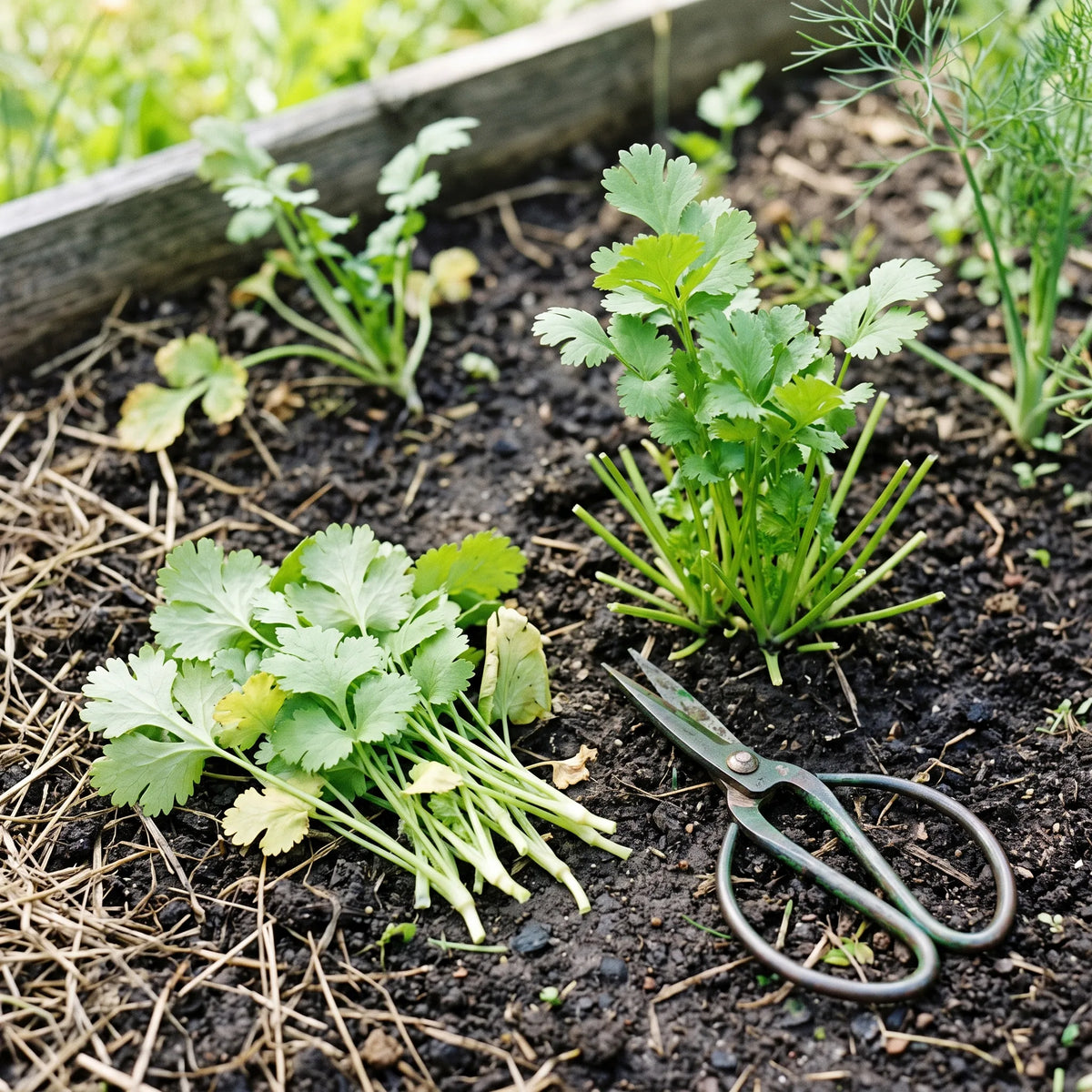
- Thin to 15 cm apart. Water regularly to delay flowering.
-
The decisive tip: stagger sowings every three weeks. Coriander bolts quickly whatever you do — it is better to renew it than to fight it.
Harvesting advice:
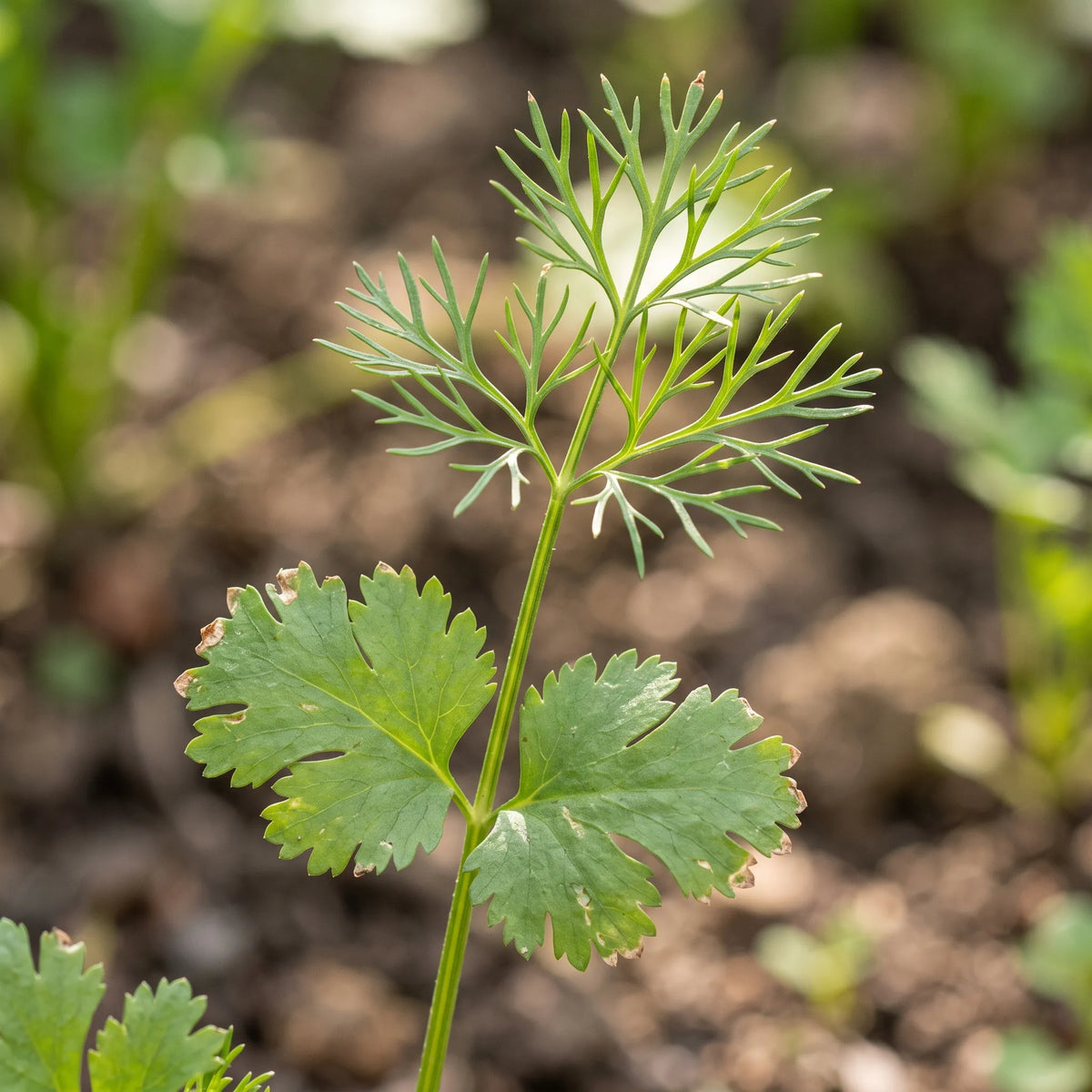
- Pick the young leaves, taking the outer stems. They can be frozen, but should not be dried: they lose all their aroma.
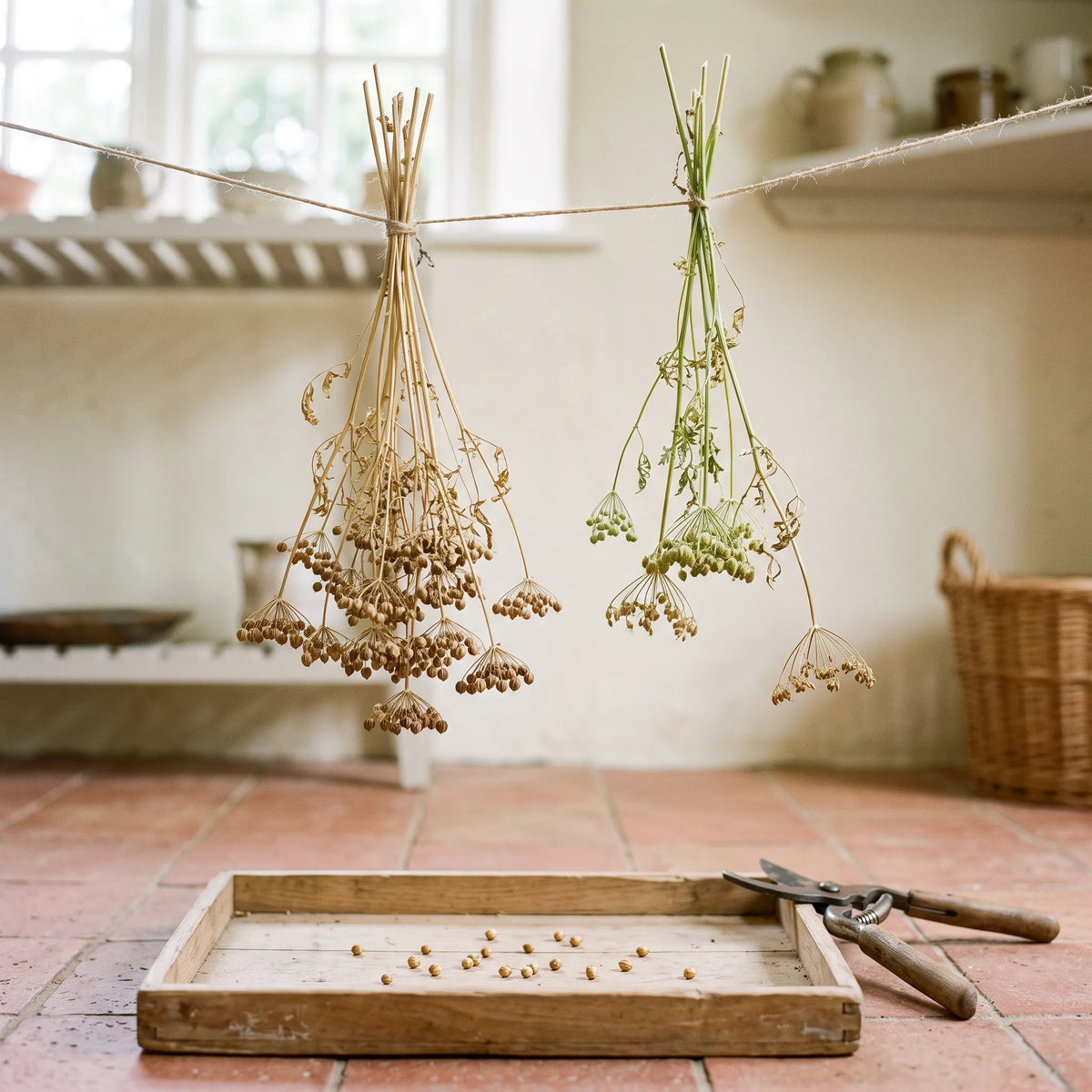
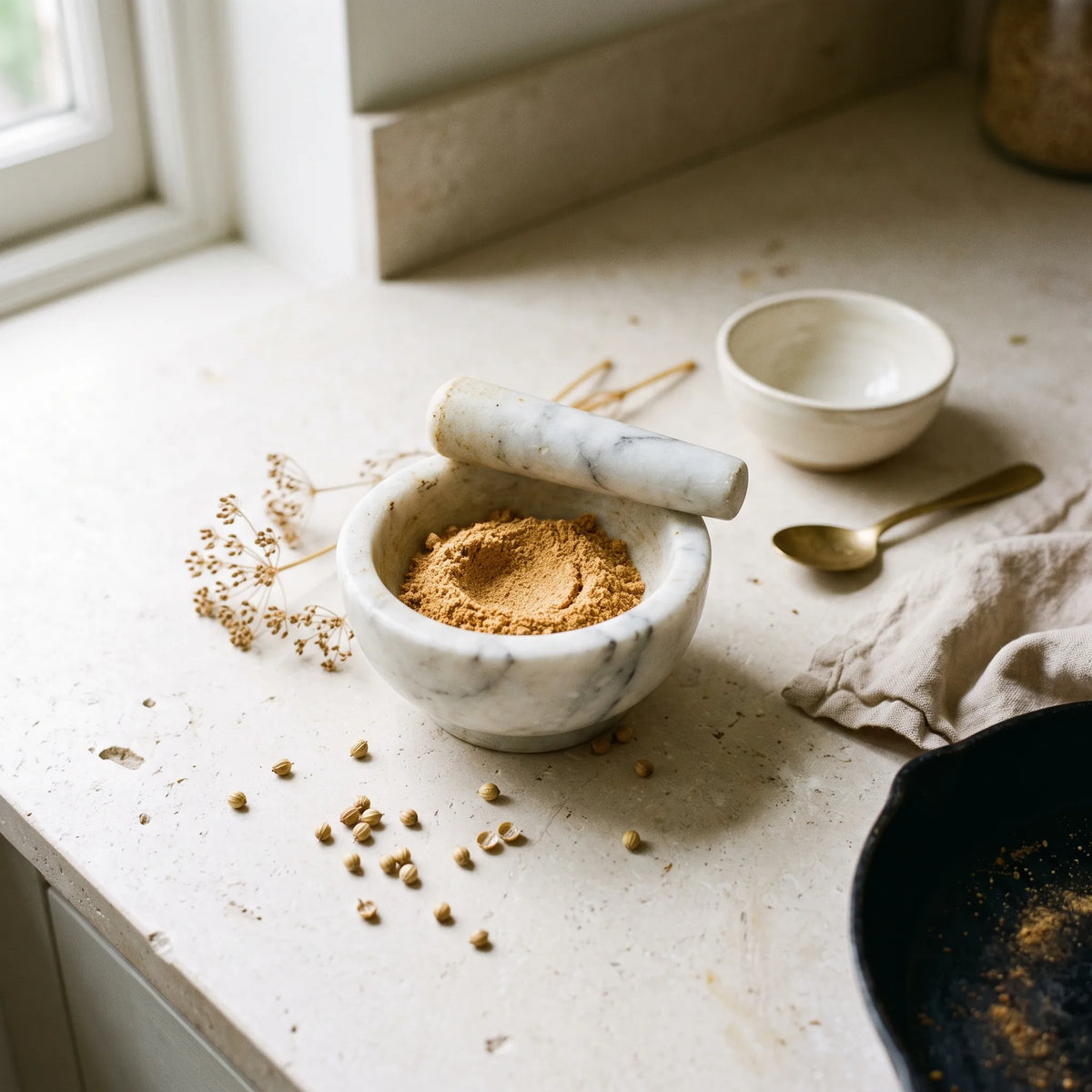
- For the seeds, cut the umbels when they turn brown, before the seeds scatter, and finish drying them under cover. Their fragrance improves after a few weeks in storage.
Beneficial companion planting:
Benefits for biodiversity:
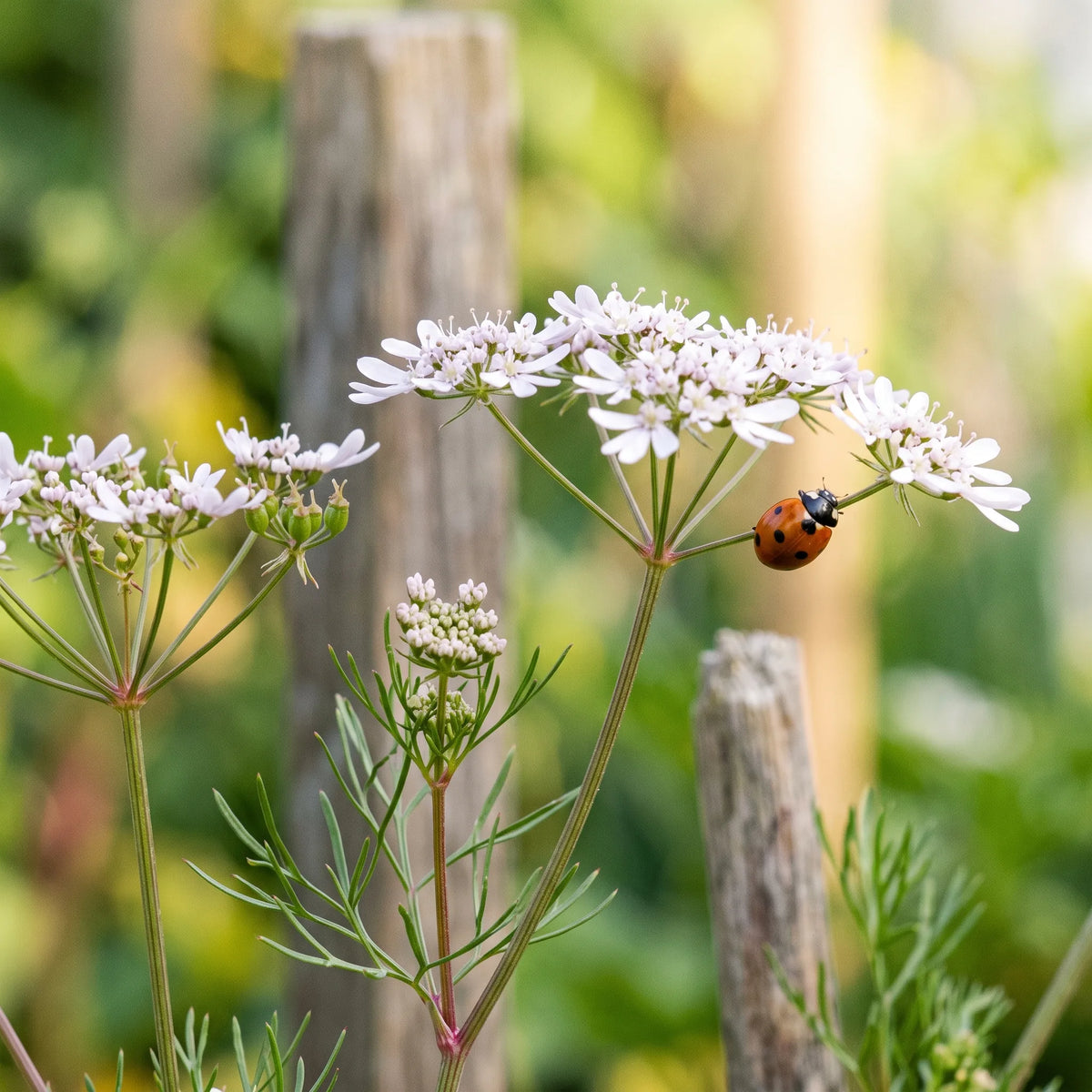
- Its bolting, often seen as a failure, is actually a blessing: its pinkish-white umbels attract large numbers of hoverflies, parasitoid wasps, and ladybirds, all predators of aphids. Let a few plants bolt deliberately.
- Like all plants in the carrot family, it is a host plant for swallowtail caterpillars.
Uses:
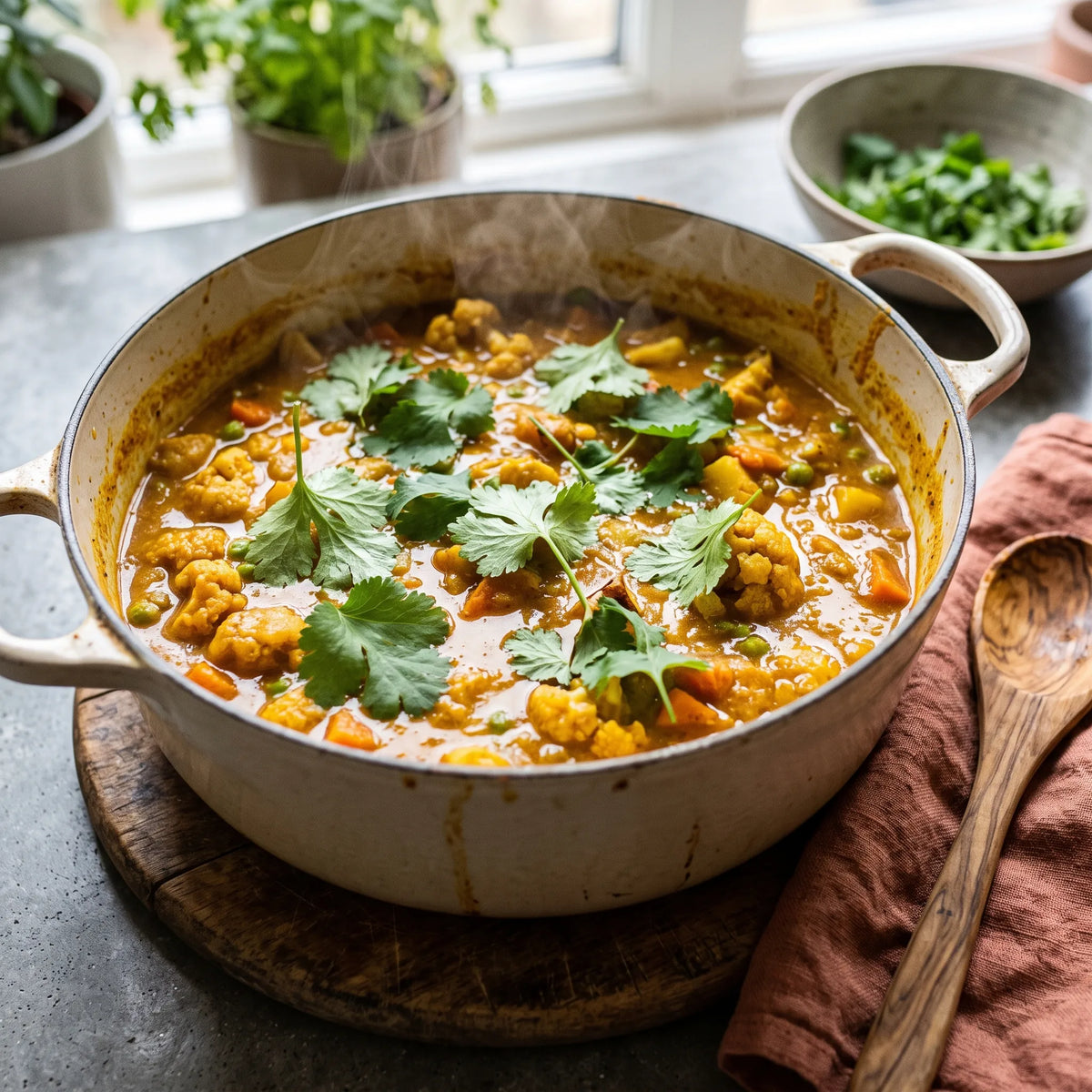
- Fresh leaves added off the heat: Mexican, Indian, Thai, Vietnamese, and Moroccan cuisines. Roasted and ground seeds in curries, marinades, cured meats, and gingerbread.
- A traditional medicinal plant, and one of the oldest cultivated plants in the world. See our medicinal plants to sow.
Harvesting your own seeds:
This is the harvest itself: let a few umbels ripen completely and dry them upside down in a paper bag. Some can be used in cooking, and the rest for the next sowing. See how to store your seeds.
Our Commitment to Quality: at SemiSauvage - Permaculture, we grow and select our seeds with respect for living things as our guiding principle. Based near the Auvergne Volcanoes, we choose reproducible, non-hybrid varieties, tested for their germination rate, carefully sorted and packaged, with no chemical treatment. Our belief: to give gardeners back the ability to resow, year after year, seeds that truly belong to them.
One plant, two spices, and a magnet for beneficial insects when allowed to flower.