Brassica oleracea var. gemmifera “Sanda”
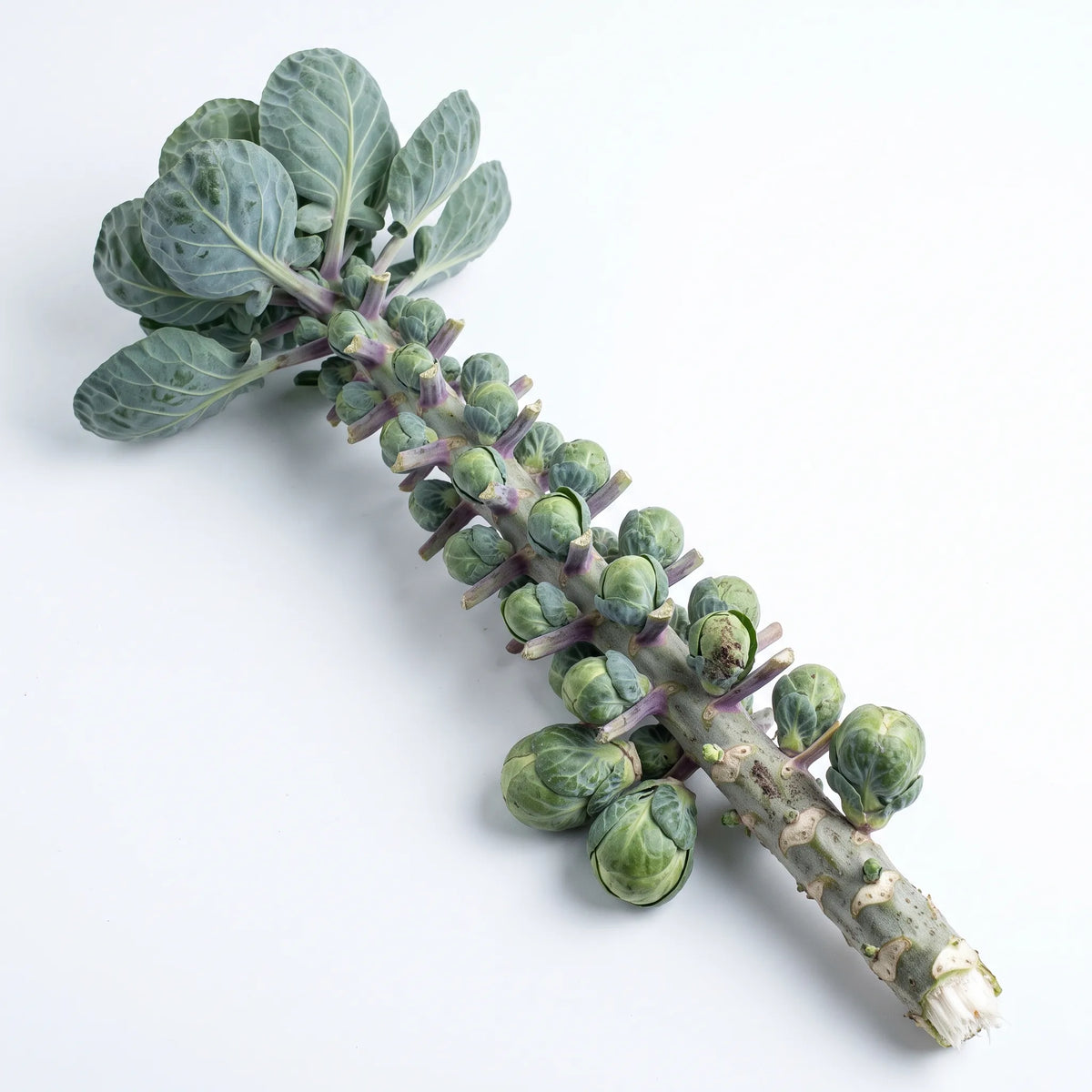
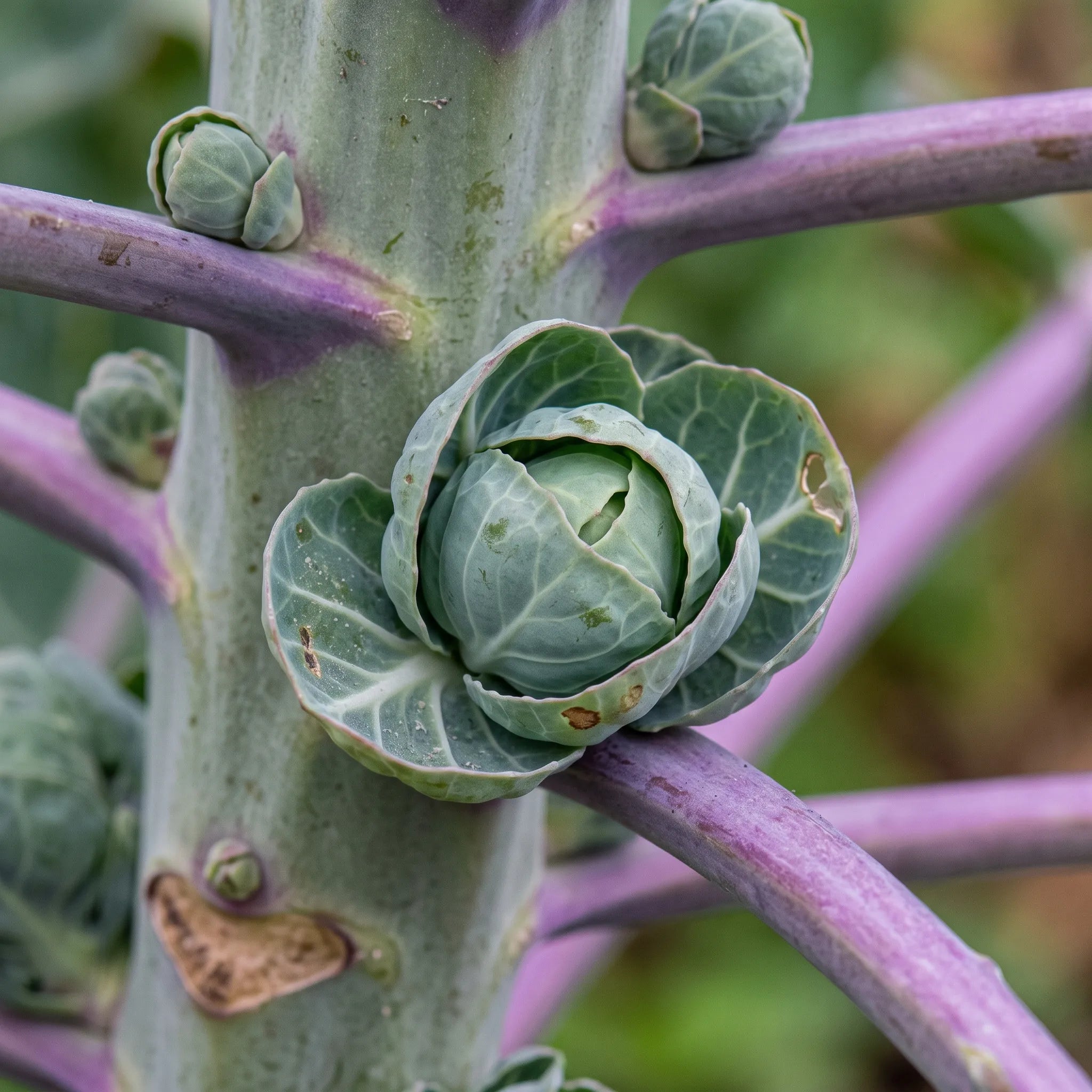
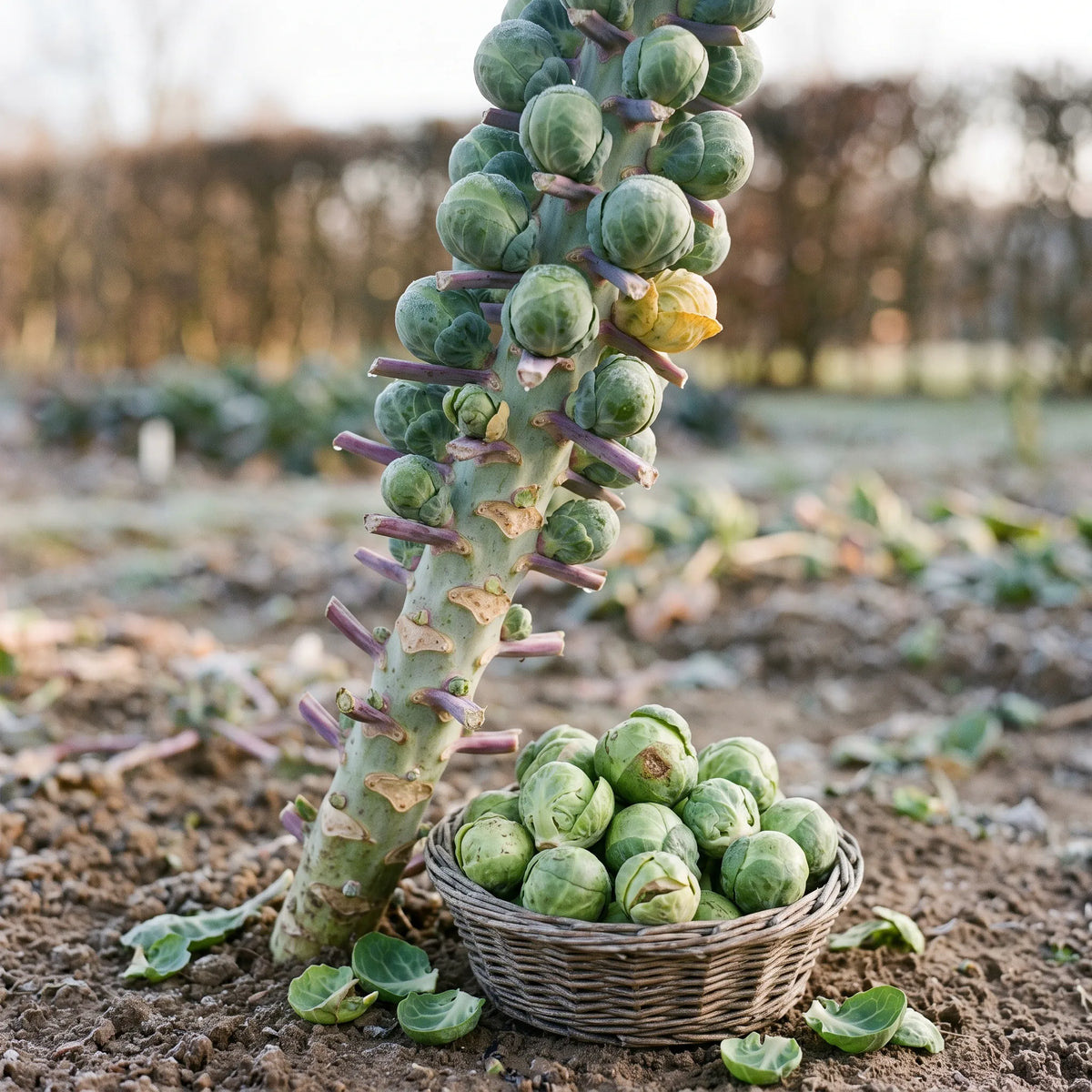
Sanda Brussels sprout, sprout cabbage, rosette cabbage: its small heads are not fruits but axillary buds, one at each leaf axil along the stem. An improvement on the Rosny variety, Sanda is mid-season, highly cold-resistant, and produces 20 to 75 small sprouts per plant.
Characteristics:
-
Very productive: 20 to 75 sprouts per plant, with relatively clustered maturity.
-
Medium-tall growth: easier to support than tall varieties, with purple petioles.
-
Firm heads: tightly packed and solid, they store well.
-
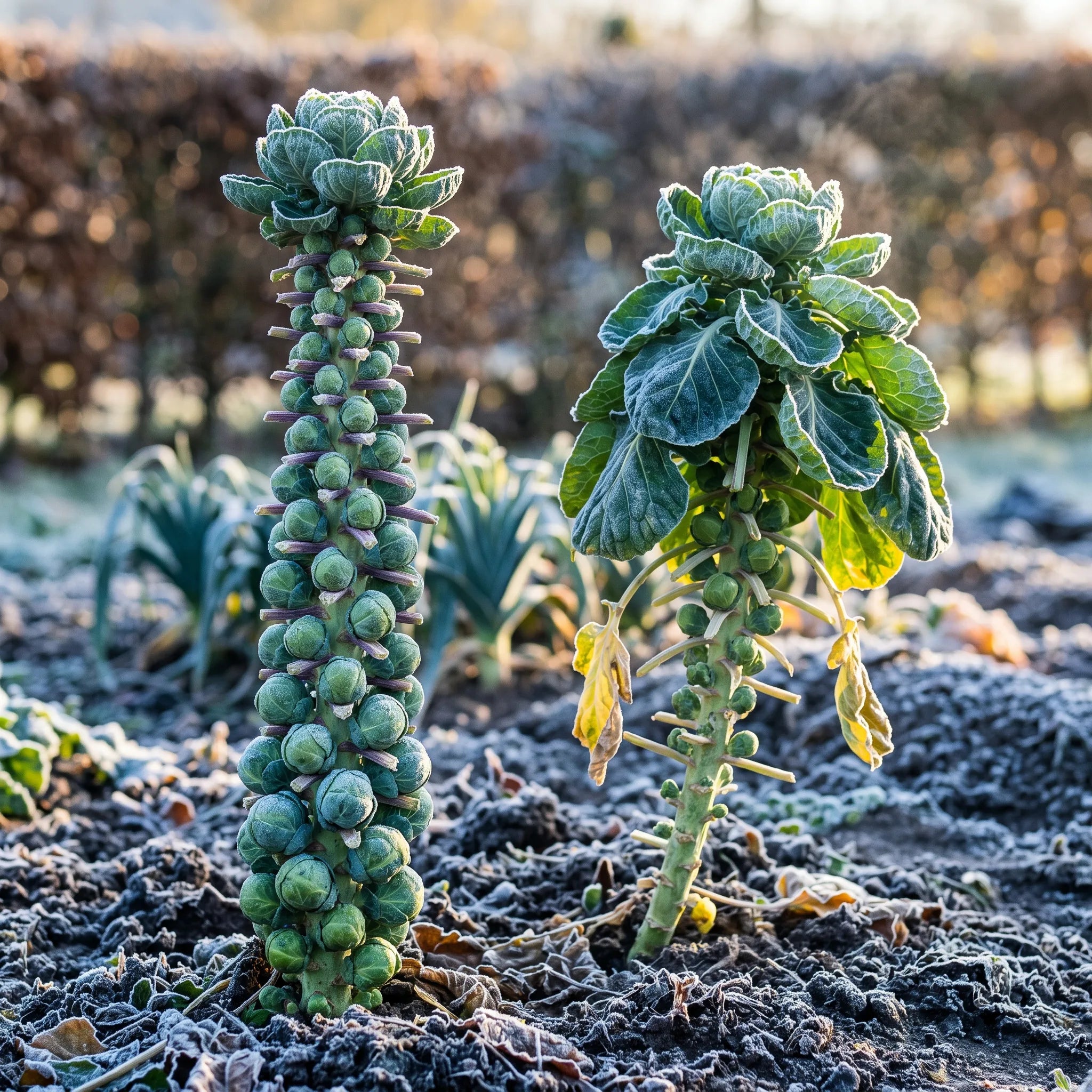
Highly cold-resistant: it can be harvested in the middle of winter, when the vegetable garden is dormant.
Sowing advice:
-
Exposure: sunny.
-
Soil: deep, moist, rich, and above all well-settled. This is the particularity of Brussels sprouts: in soil that is too loose or too nitrogen-rich, the heads remain loose and “leafy” instead of tightening. Avoid fresh manure; use compost applied the previous autumn instead.
-
Method: sow from April to May in a nursery, 1 cm deep. The growing cycle is long: sow early for a winter harvest. See how to sow your seeds.
Planting advice:
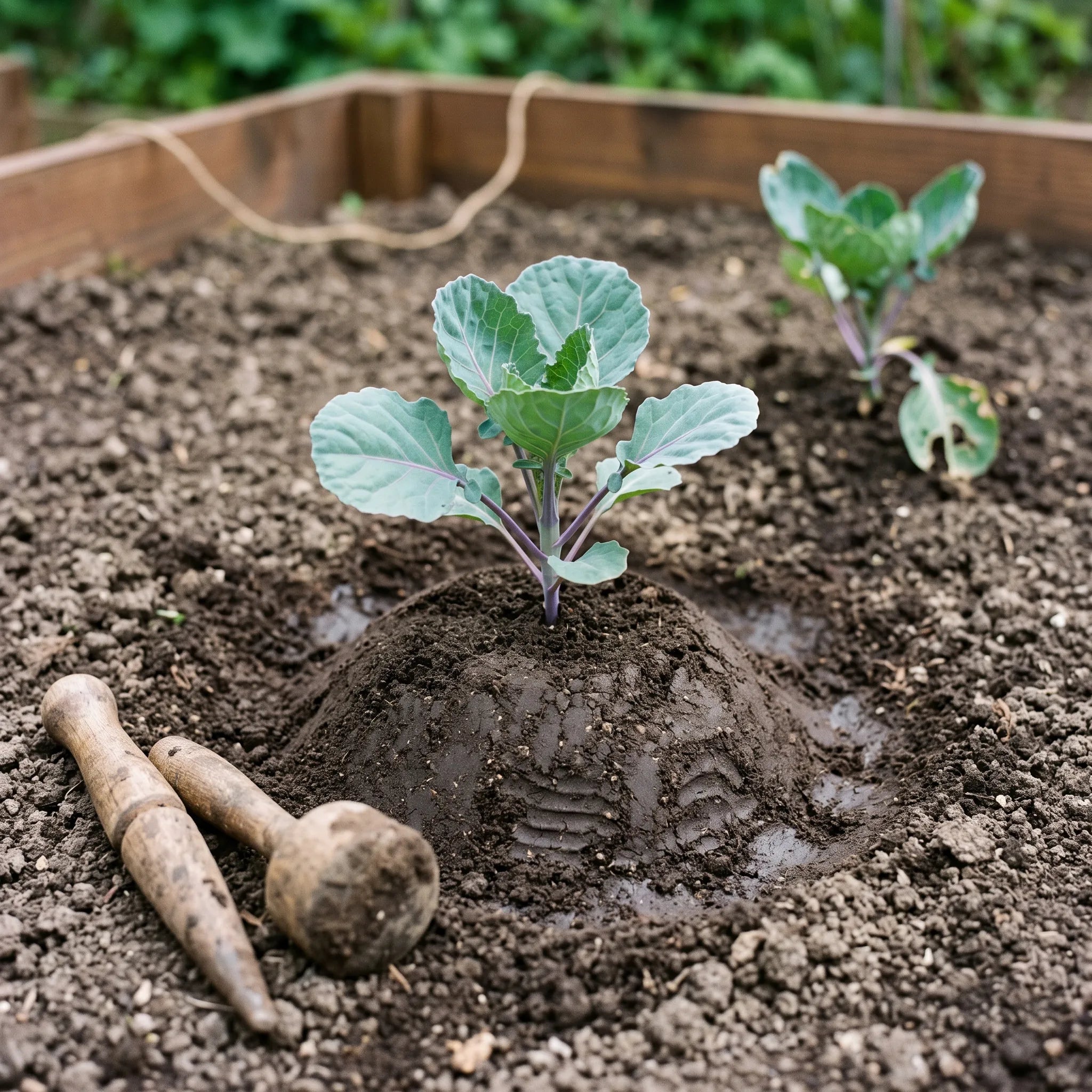
- Transplant at the 5- or 6-leaf stage, spacing plants 60 to 70 cm apart. Bury them up to the first leaves, earth up, and firmly press down the soil around the base — a poorly anchored plant will topple under its own weight and produce poorly.
Care advice:
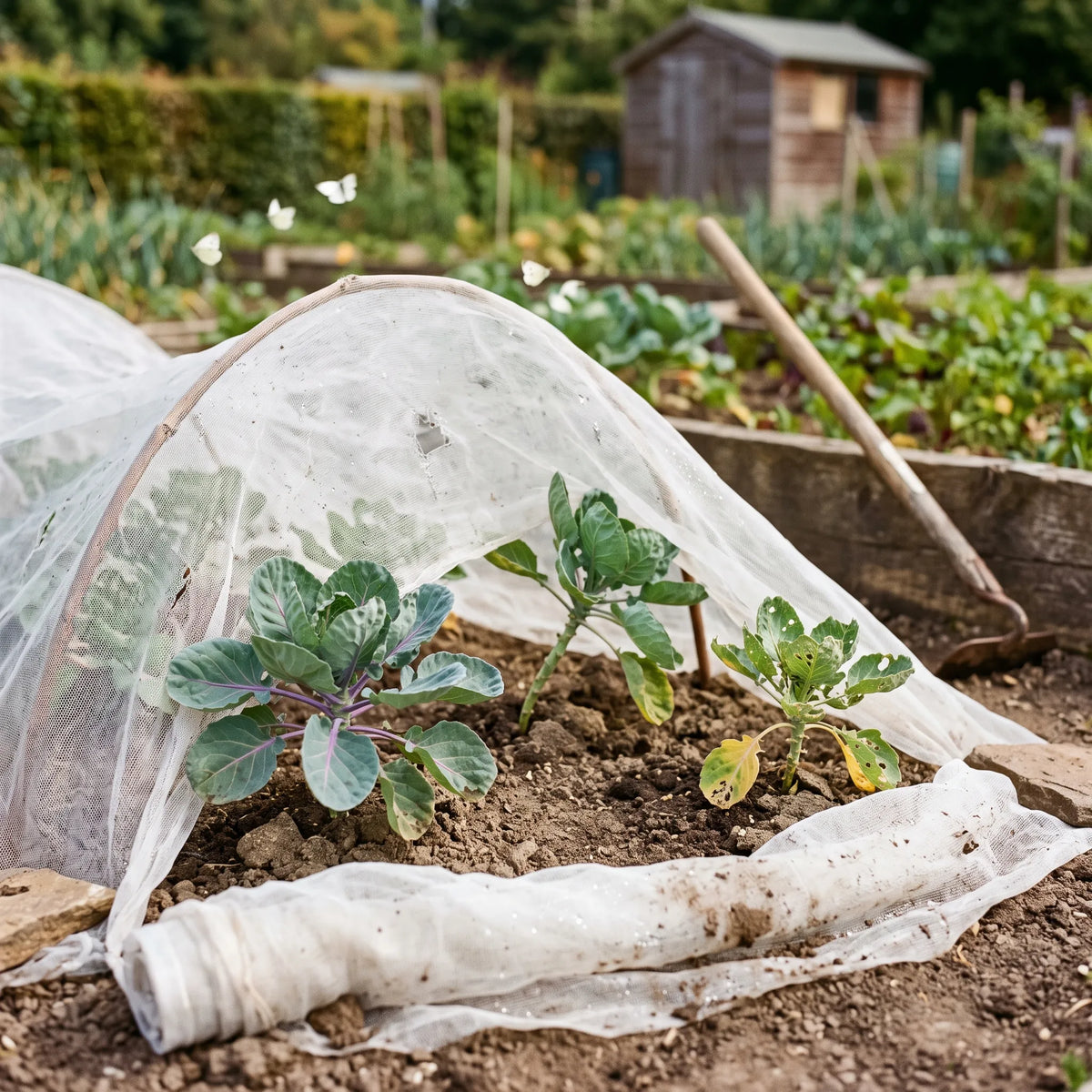
- Water regularly during growth. An insect-proof mesh installed at planting time prevents cabbage white butterflies and cabbage flies.
-
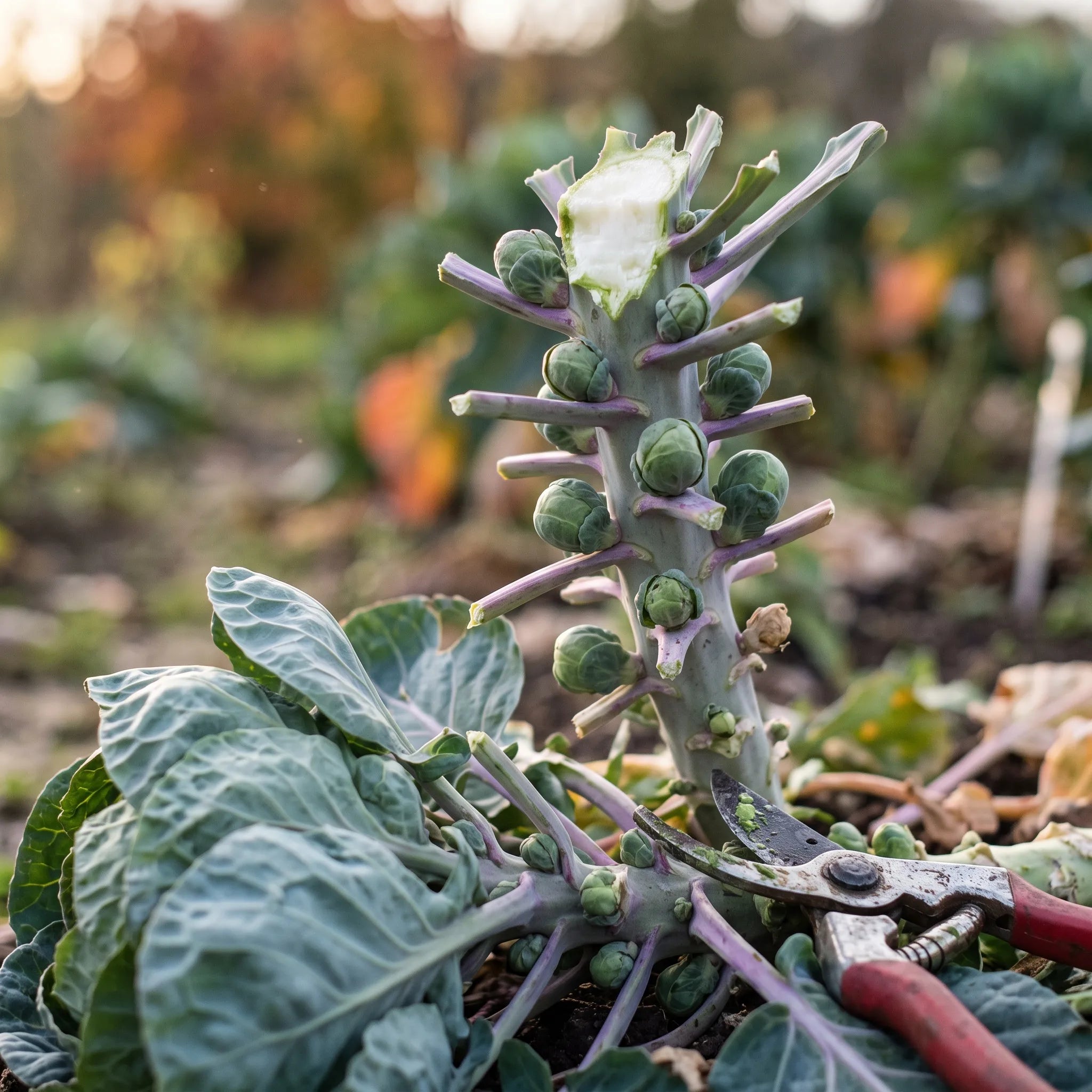
End-of-season tip: pinch out the plant’s growing tip in October. The sap will then be redirected to the heads, which will enlarge and tighten within a few weeks.
Harvesting advice:
- Harvest in late autumn and throughout winter, in several batches, starting with the sprouts at the bottom, which are more advanced. Detach them with a twisting motion.
- If possible, wait for the first frosts: the cold converts starch into sugars and noticeably mellows their flavor.
Beneficial companions:
Benefits for biodiversity:
- Its long presence in the vegetable garden, from spring to the end of winter, maintains permanent plant cover that protects the soil and shelters beneficial organisms.
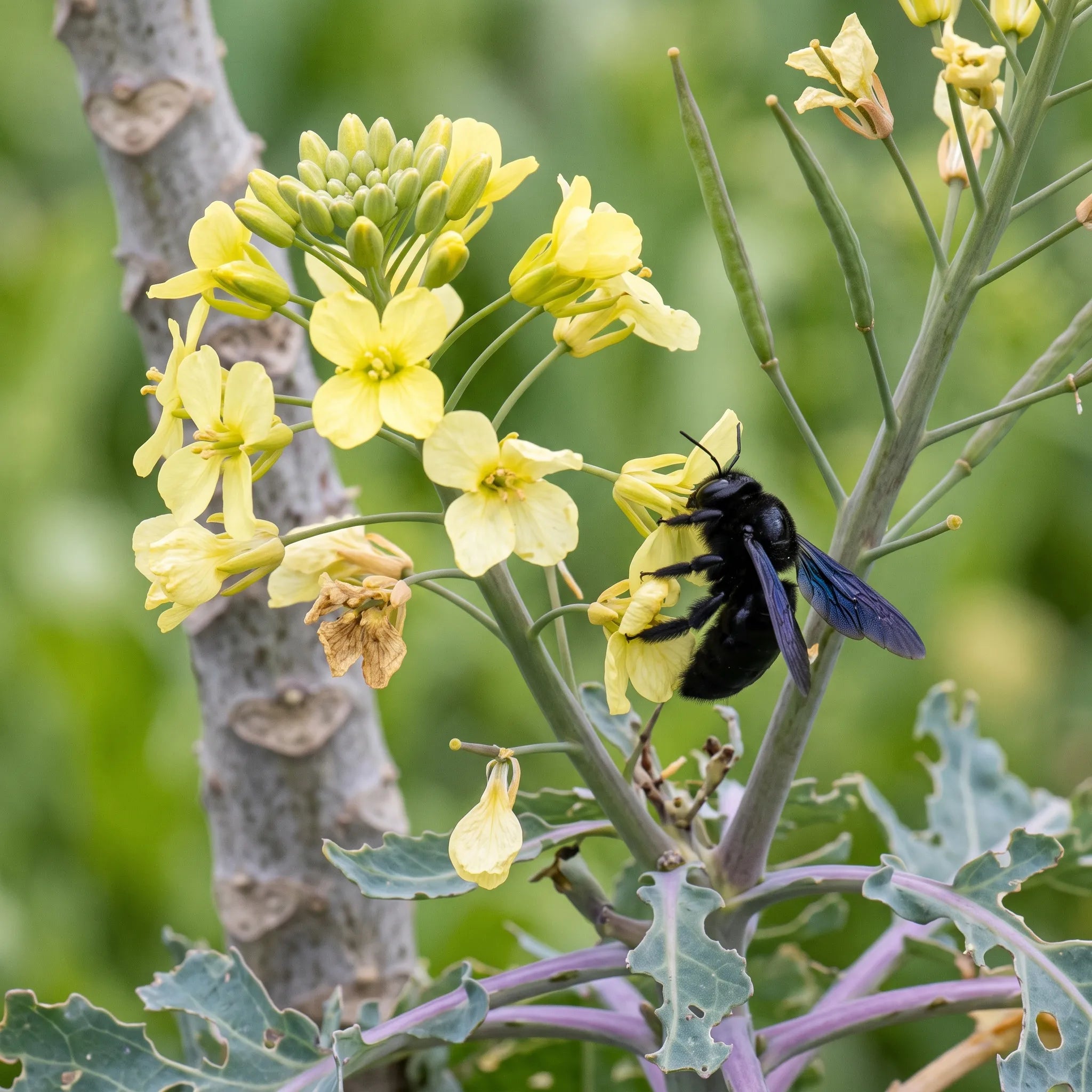
- If left to flower in its second year, it produces highly nectar-rich yellow clusters, valuable at the very beginning of spring.
Uses:
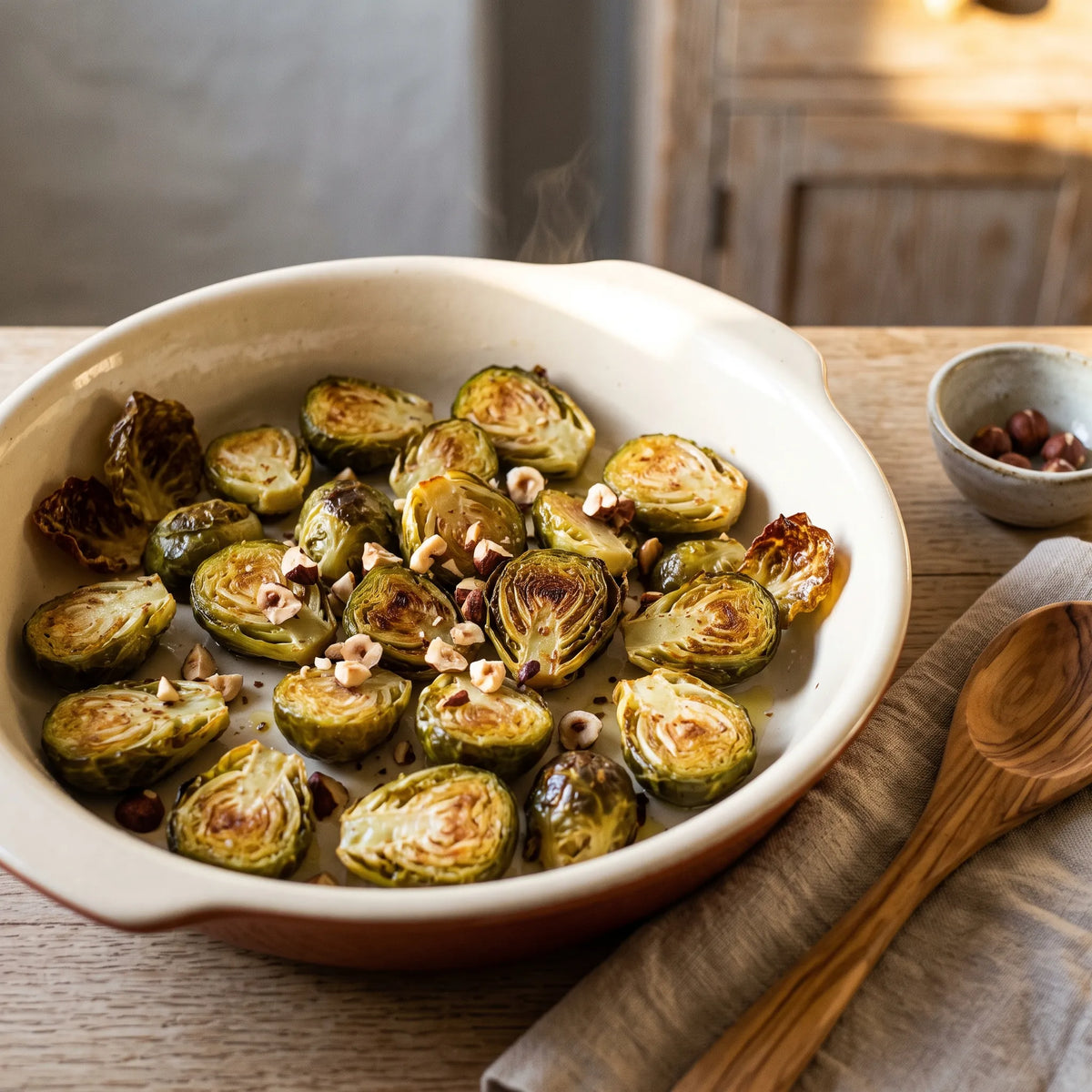
- Steam, then sauté in a pan with bacon or hazelnuts; roast in the oven, halved; or finely slice raw into a salad. Avoid lengthy boiling, which is responsible for their poor reputation.
Harvesting your own seeds:
As a biennial, it goes to seed in its second year: leave one plant in the ground after harvesting, and it will flower in spring. Harvest the brown, dry pods. Be aware that Brassica oleracea varieties cross very easily with one another: isolate your seed plant. See saving your seeds.
Commitment to Quality: at SemiSauvage - Permaculture, we grow and select our seeds with respect for all living things as our guiding principle. Based near the Auvergne Volcanoes, we choose reproducible, non-hybrid varieties, tested for their germination rate, carefully sorted and packaged, with no chemical treatment. Our conviction: to give gardeners back the ability to resow, year after year, seeds that truly belong to them.
Up to 75 small sprouts per plant, harvested in the middle of winter.