Brassica oleracea var. botrytis “Natalino”
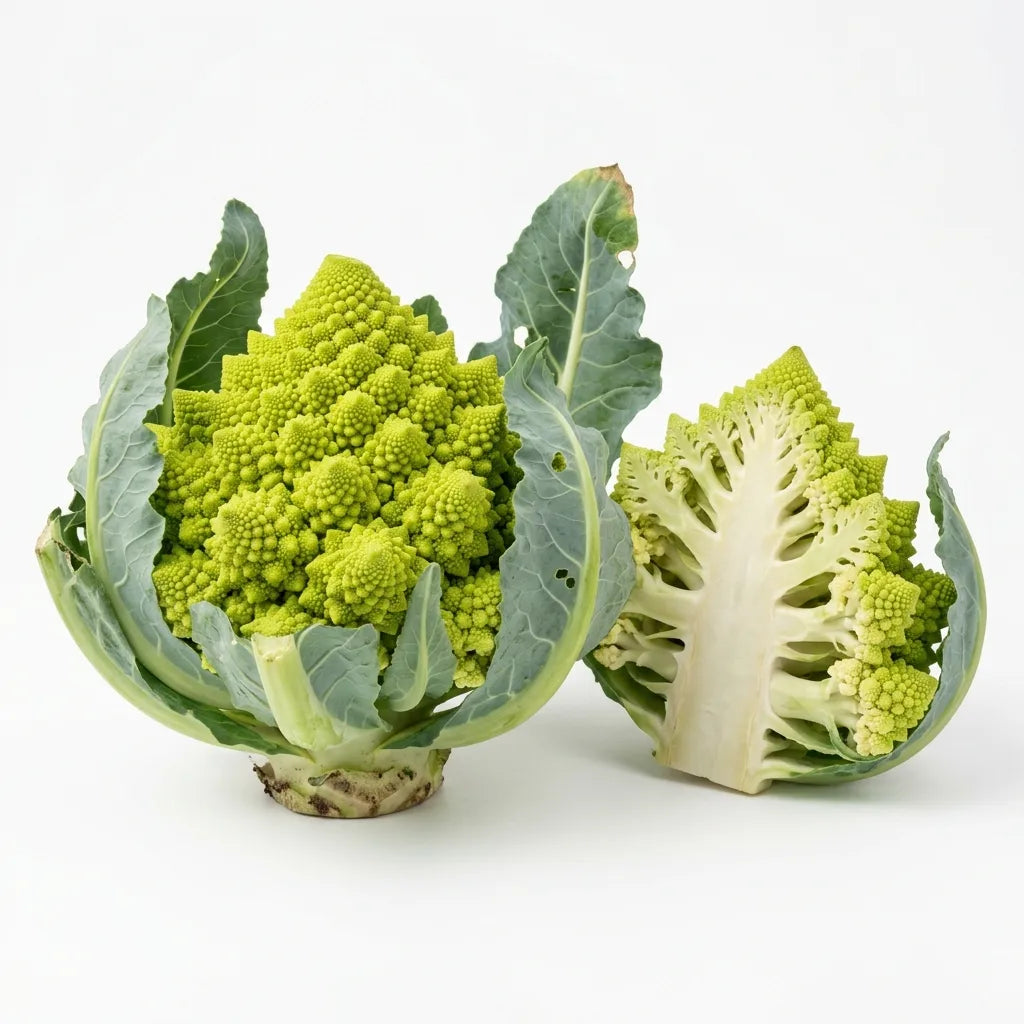
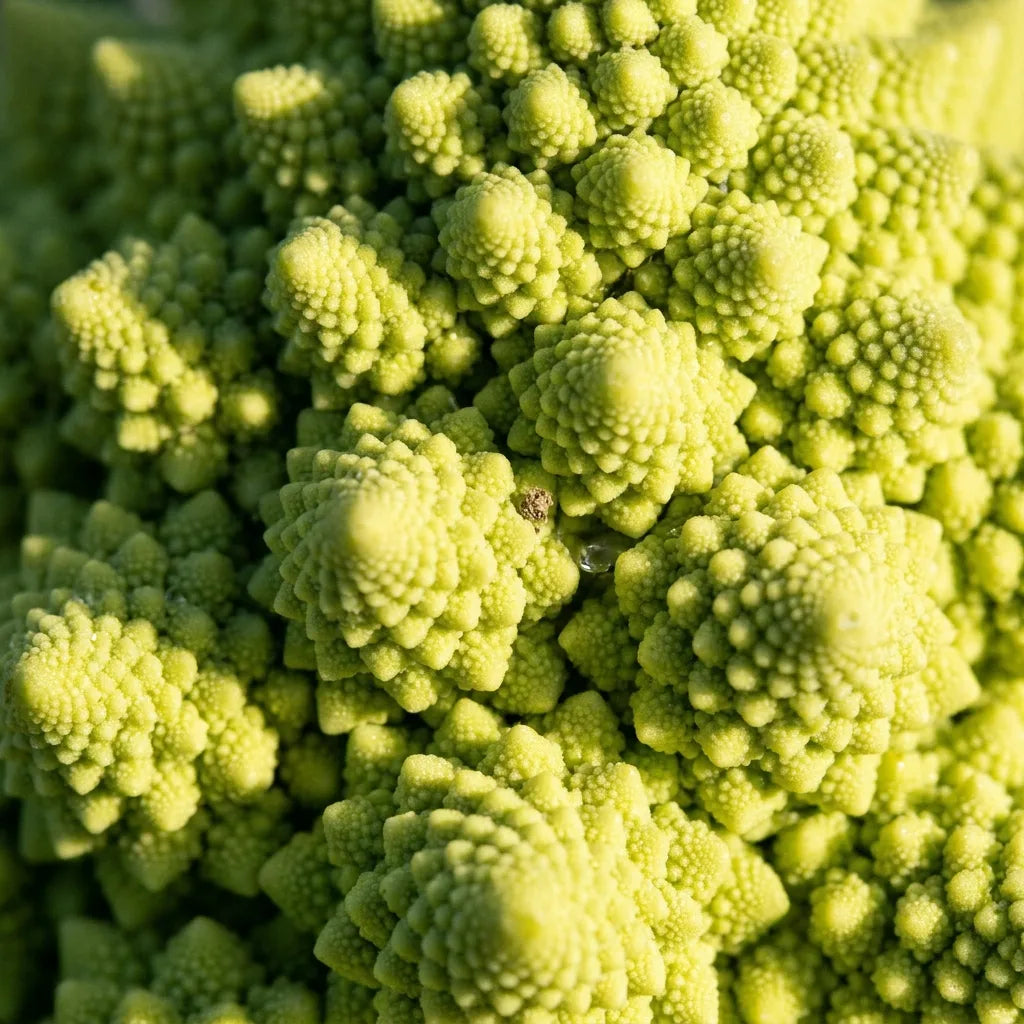
Natalino Romanesco cabbage, Romanesco broccoli, Roman cauliflower: its tender green head is as much a mathematical curiosity as it is a vegetable. Each floret reproduces the shape of the whole, in spirals that follow the Fibonacci sequence—it is a natural fractal, and the only vegetable you look at before eating.
Characteristics:
-
Spectacular geometry: tender green, conical head with fractal spirals.
-
Delicate, sweet flavor: somewhere between broccoli and cauliflower, with no bitterness.
-
Old Italian variety, still rare on French market stalls.
-
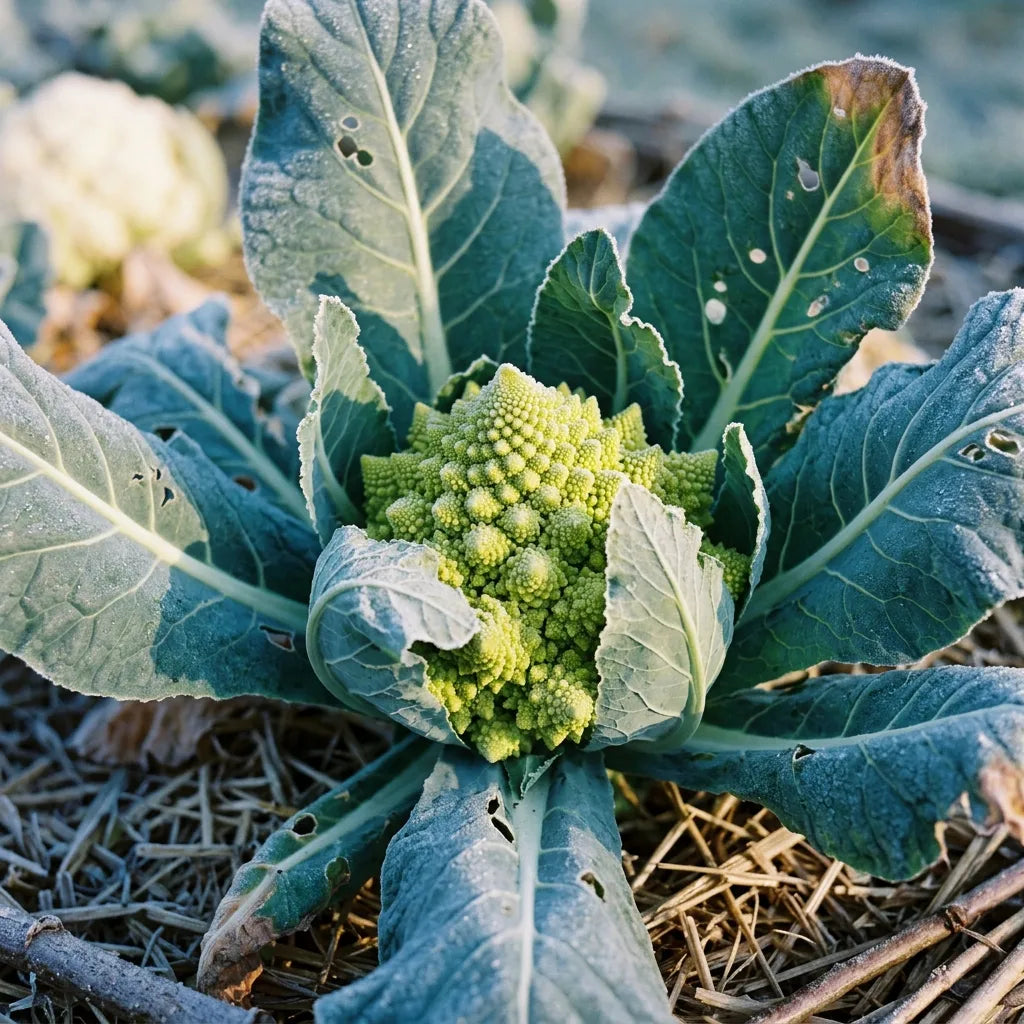
Autumn harvest: it extends the cabbage season until the first frosts.
Sowing advice:
-
Exposure: sunny.
-
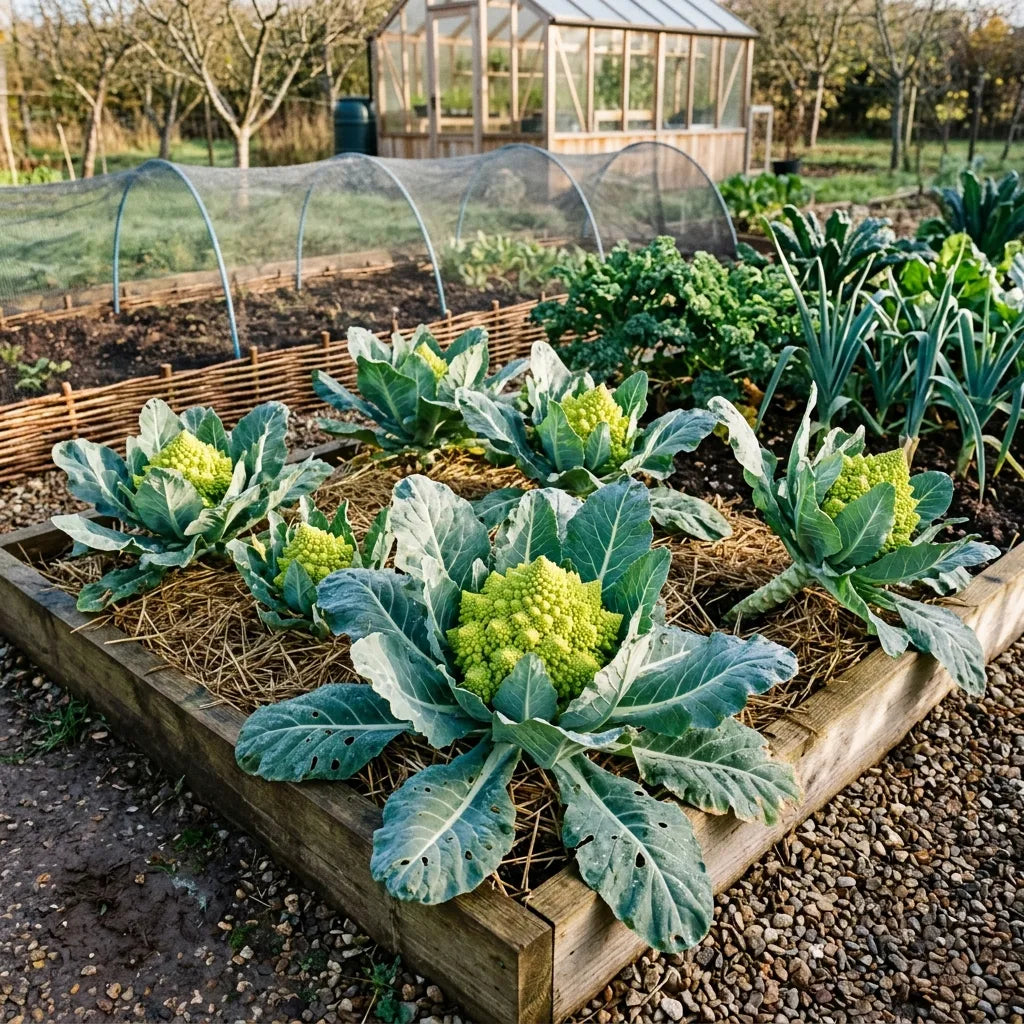
Soil: rich in organic matter, cool, deep, and well drained. Like all cauliflowers, it is a heavy feeder: a generous application of well-rotted compost is essential. Avoid growing it where a brassica has been grown during the previous three years.
-
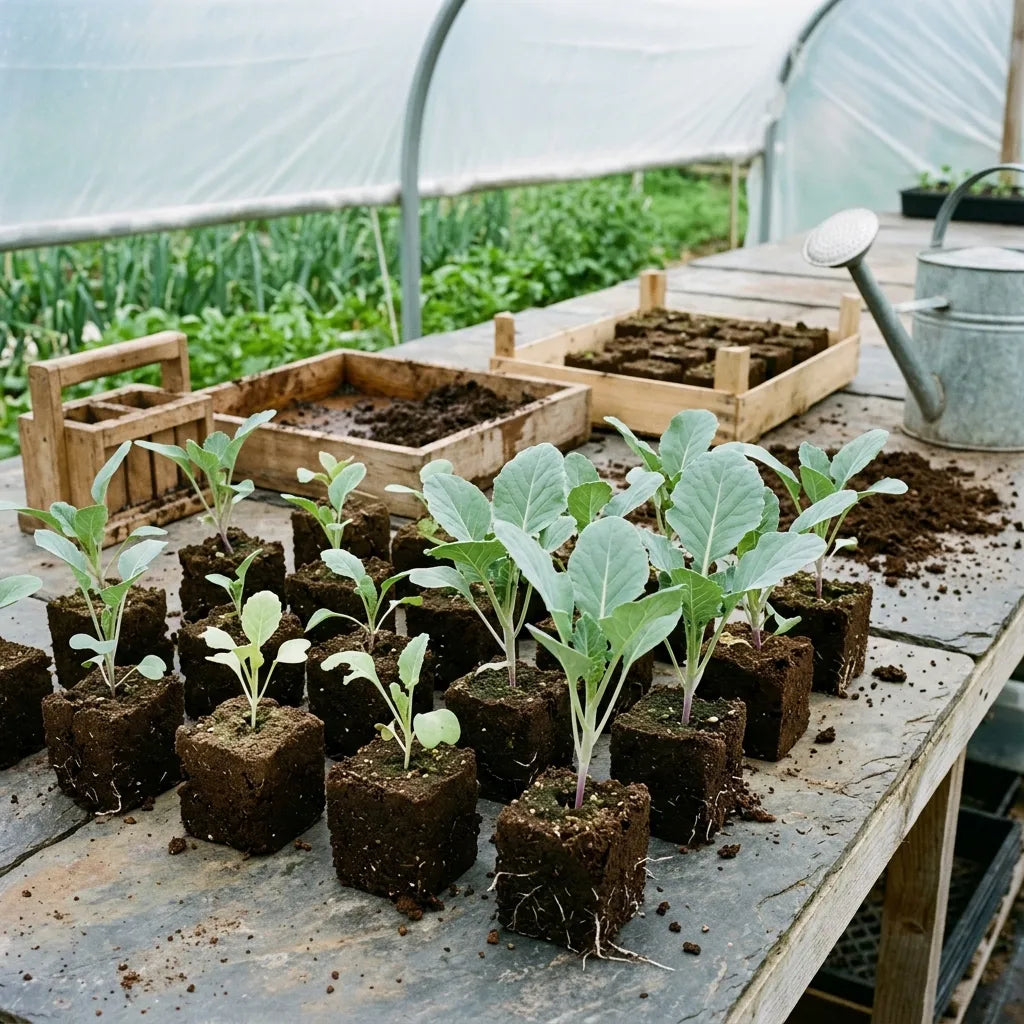
Method: sow from March to June in a nursery, covering the seeds with 2 cm of soil before watering. See how to sow your seeds.
Planting advice:
- Transplant 5 to 6 weeks later, when several leaves have developed, spacing plants 60 cm apart. Bury up to the first leaves and earth up around the base.
Care advice:
-
The critical point: watering must be frequent and regular, as Romanesco does not tolerate drought. One dry spell and the head may remain tiny or fail to form. Apply a thick mulch.
- An insect-proof mesh placed immediately after planting prevents cabbage white butterflies and cabbage flies without treatment.
Harvesting advice:
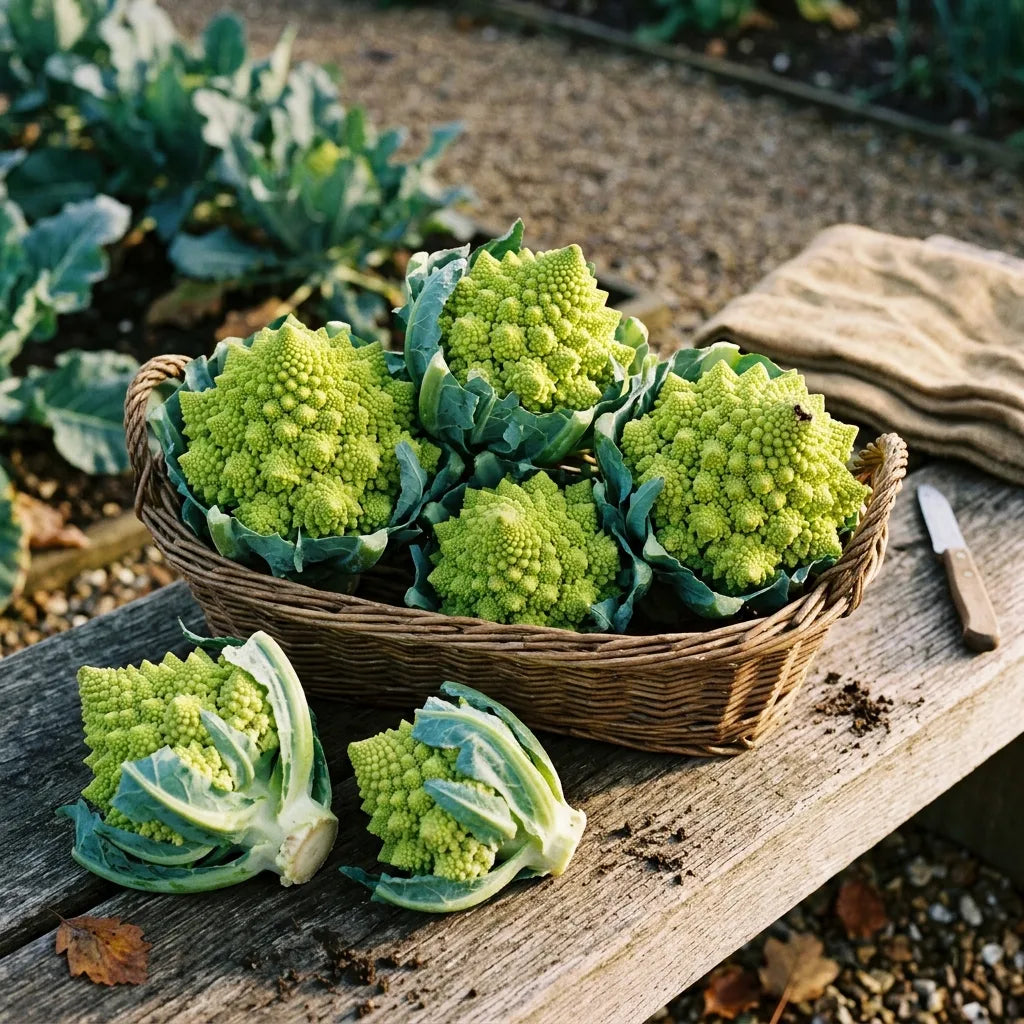
- Harvest when the head is well formed and the spirals are clearly defined, before the florets begin to spread apart. Unlike white cauliflower, there is no need to blanch it: its green color is not harmed by the sun.
- The leaves can also be cooked, like Swiss chard.
Beneficial companions:
Benefits for biodiversity:
- A head left to flower produces a huge, extremely nectar-rich yellow inflorescence—if one gets away from you, let it flower rather than pulling it out.
- Growing rare heirloom varieties directly contributes to preserving cultivated diversity.
Uses:
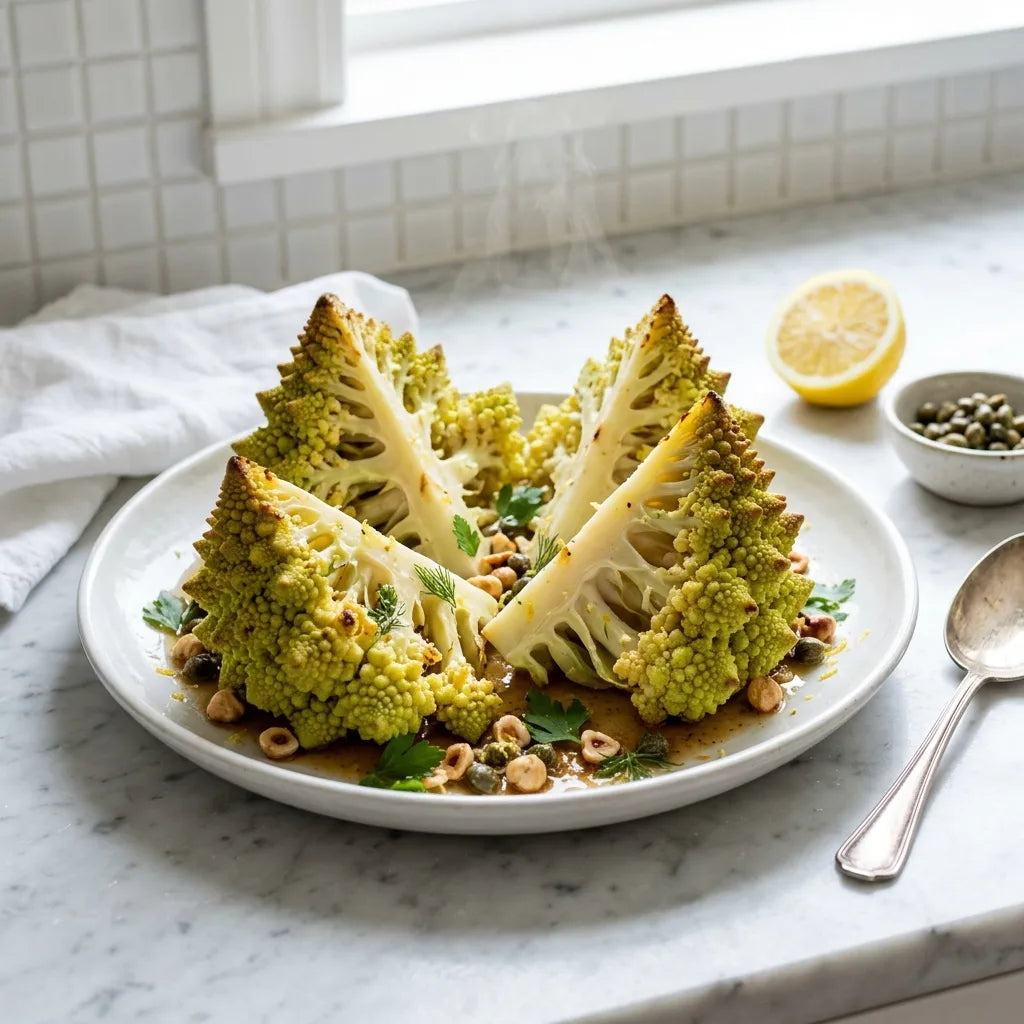
- Steam or roast in whole florets to preserve its geometry, or use in gratins, veloutés, or raw as an appetizer. Avoid boiling in plenty of water, which softens it and erases its pattern.
Harvesting your own seeds:
Let a head flower and then form seed pods, which should be harvested when brown and dry. Be careful: Brassica oleracea varieties cross-pollinate very easily with one another, so isolate your seed plant from other cabbages. See how to save your seeds.
Commitment to Quality: at SemiSauvage - Permaculture, we grow and select our seeds with respect for all living things as our guiding principle. Based near the Auvergne Volcanoes, we choose open-pollinated, non-hybrid varieties, tested for their germination rate, carefully sorted and packaged, with no chemical treatment. Our belief: to give gardeners back the ability to resow, year after year, seeds that truly belong to them.
An edible fractal to grow in your vegetable garden.