
In this article 7
A packet of seeds costs almost nothing and weighs almost nothing. Yet it's one of the few gifts that continues to exist six months later—and sometimes six years later, if the recipient harvests their own seeds. This guide answers the three questions we ask ourselves before giving seeds: who will genuinely enjoy them, what to choose depending on the situation, and how to present them so that they feel like a real gift rather than a packet in an envelope.
Why give seeds instead of an object
Three solid reasons that go beyond the environmental argument.
The pleasure unfolds over time
An object provides its greatest satisfaction when unwrapped, then that satisfaction fades. A seed does the opposite: the unwrapping is modest, followed by sowing, germination, and the first harvest. With an heirloom tomato, that means five to six months during which the recipient regularly thinks of the person who gave it to them.
It's a gift that doesn't accumulate
No clutter, no risk of duplicates, and no object they won't know what to do with. For people who say they “don't want anything” or are decluttering, it's often the only option that works.
It gets passed on
With reproducible seeds, the recipient can harvest their own seeds and sow them again, or even share them. The gift continues and spreads—something no object can do.
Who to give them to, and exactly what to choose
This is where the gift makes a difference: poorly chosen seeds end up at the back of a drawer. The deciding factor isn't how much the person enjoys gardening, but the space they have available and the time they can devote to it.
Someone who has never gardened
The rule: choose species that are forgiving and quick to produce. Radishes (harvest in three weeks), lettuce, nasturtiums, zucchini. Absolutely avoid species with slow or unpredictable germination—parsley, valerian, and plants requiring stratification—which will make it seem like “it didn't work.”
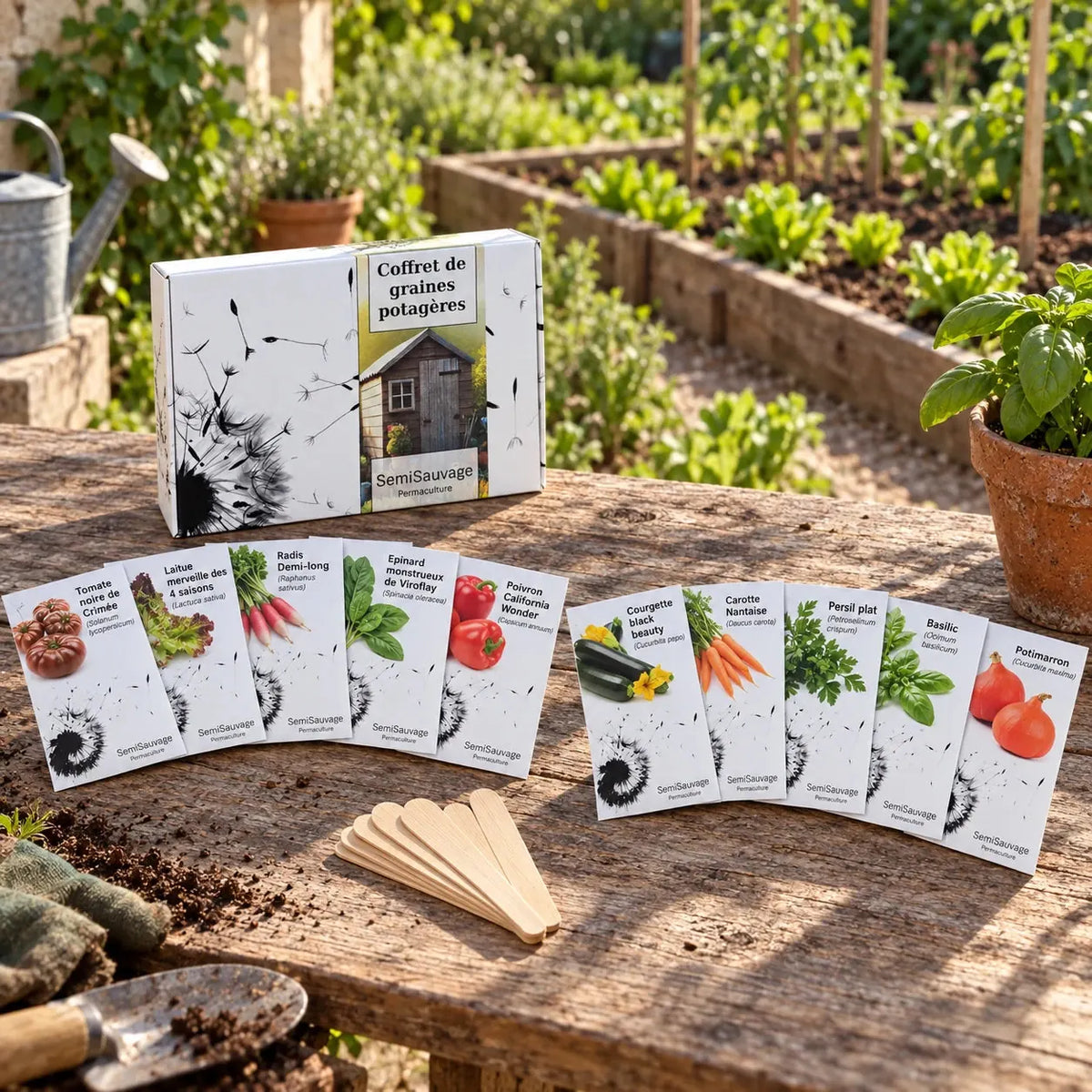
Best choice: a beginner's kit rather than individual packets, because it provides the order in which to sow.
Someone who has only a balcony or windowsill
The natural impulse—to give tomatoes—is often a mistake: a potted tomato plant needs a container at least 30 cm wide and daily watering in summer. Prefer herbs: basil, chives, parsley, thyme, oregano. They need little soil, can be harvested as needed, and are useful in the kitchen every day.
Our article Balcony vegetable garden details the suitable compact varieties.
Someone who cooks
Target what you can't find in stores: Thai basil, lemon basil, dill, savory, tarragon, aji charapita chili pepper. The criterion isn't ease of cultivation but scarcity in local retail channels—give what can't be bought.
See also our edible flowers: nasturtium, borage, calendula, which turn a salad into a restaurant-worthy plate.
An already experienced gardener
The classic pitfall: giving them radishes. They already have them. What interests them are the heirloom varieties they haven't tried yet—Black Krim tomato, Chioggia beetroot, foxtail amaranth—or the useful species that go beyond the classic vegetable garden.
This is also the profile for which cultivated mycelium works well: it's a new technique, not just another species.
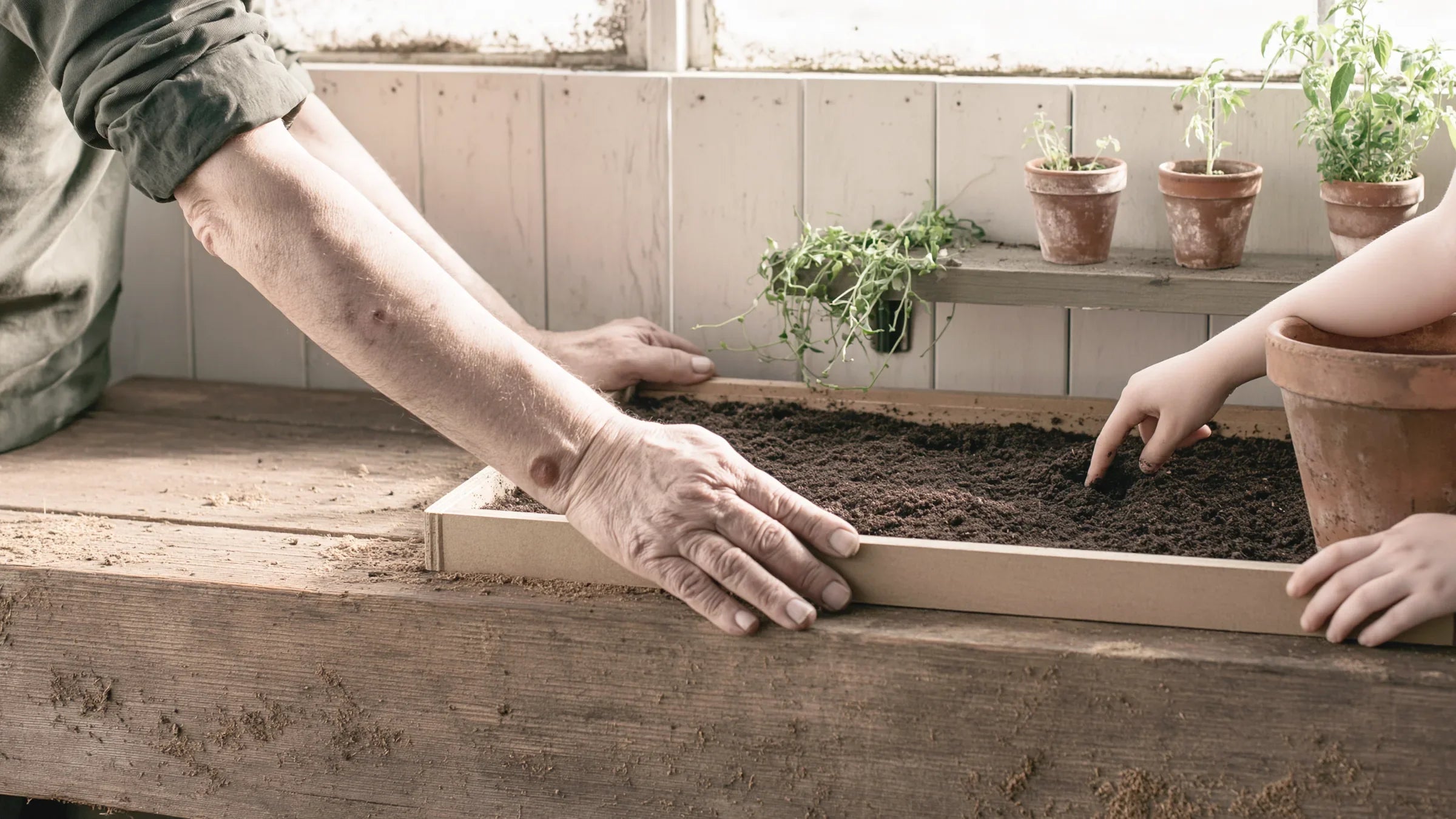
A family with children
The criteria are speed and spectacle: radishes, sunflowers, beans (the seed is large enough for small hands to handle), squash, nasturtiums. A bean in a jar on cotton wool remains the most memorable experience—the method is described in How to sow seeds in cotton wool, pots, or directly in the ground.
Someone who has just moved in
A meaningful housewarming gift: perennials or trees and shrubs. You don't plant a lavandin or a maple for one season, but for the years to come—which is exactly right for the occasion.
When to give it: the question of seasonality
This is the point most guides overlook, and yet it determines whether the gift will be used or forgotten.
| Timing | What works |
|---|---|
| Christmas and winter | The best time: give it when planning the garden for the year. Direct them towards spring sowings, to be started as early as February–March. |
| Spring birthday | Ideal: the person can sow them right away. This is the only case in which giving a single packet, without a gift box, works perfectly. |
| Summer birthday | Warning: most sowing periods have passed. Direct them towards summer sowings (succession radishes, lamb’s lettuce, rocket) or species that can be sown all year round in pots. |
| Autumn | Autumn sowings (garlic, lamb’s lettuce, green manures, trees requiring stratification) allow for immediate action. |
Simple rule: if the gift is given more than three months before the sowing period, choose a gift box rather than individual packets. The gift box survives the wait; the single packet gets lost.
The eco-responsible criterion, in practical terms
“Eco-responsible gift” has become an empty phrase. Here is what makes it real in the case of seeds:
- Compostable packaging: kraft envelopes, paper labels, no plastic blister packaging.
- Almost no transport impact: a seed gift box weighs just a few dozen grams.
- No obsolescence: when stored correctly, seeds remain viable for several years (see How to store your seeds from one year to the next).
- A multiplying effect: with open-pollinated seeds, one gifted seed can produce hundreds the following year.
This last point is what really distinguishes open-pollinated seeds from a standard garden-centre packet. We explain why in What is the difference between F1, hybrid and open-pollinated seeds?.
How to present it so it feels like a gift
A single packet of seeds handed to someone doesn't look like a gift. A few simple combinations make all the difference:
- With a container: two or three terracotta pots, a wooden planter, or a flexible grow bag.
- With a tool: a dibber, a small watering can with a fine rose.
- With labels and a pencil — negligible, but essential and never something people buy spontaneously.
- With a handwritten note indicating what to sow first and when. That's what turns a packet into an invitation.
For a long-distance gift, the advantage is obvious: a few packets fit in a stamped letter-size envelope.
Frequently asked questions
What if the person has no garden at all?
A bright windowsill is enough for basil, chives, or arugula. The species that can be sown year-round are precisely those that do not depend on a season or an outdoor space.
How long can a gift box wait before being sown?
Several years without any problems for most species, provided they are stored in a dry, cool place. Only onions, leeks, and parsnips lose their germination capacity quickly.
Can you give seeds to someone who lives abroad?
Within the European Union, without difficulty. Outside the EU, each country applies its own import regulations, and some require a phytosanitary certificate. We explain this point in detail in Selling Seeds in France and Europe.
Are seeds suitable as a corporate gift?
Yes, and it's a growing use case: low unit cost, a consistent message, and no leftover stock to deal with afterward. Contact us for bulk orders.
In summary
- Beginner — a beginner's box, with fast-growing, forgiving species.
- Balcony — herbs, never large tomatoes.
- Cook — things you can't buy: fragrant basil varieties, edible flowers, rare peppers.
- Experienced gardener — heirloom varieties or cultivation mycelium.
- Children — large seeds, fast, spectacular growth.
- Housewarming — perennials and shrubs that become part of the landscape over time.
The only real criterion is the available space and the time the person can devote to it. Everything else follows from that.
Discover our seed gift boxes — reproducible seeds, plastic-free kraft packaging, and a booklet to help you know where to start.

Leave a comment
This site is protected by hCaptcha and the hCaptcha Privacy Policy and Terms of Service apply.