
In this article 7
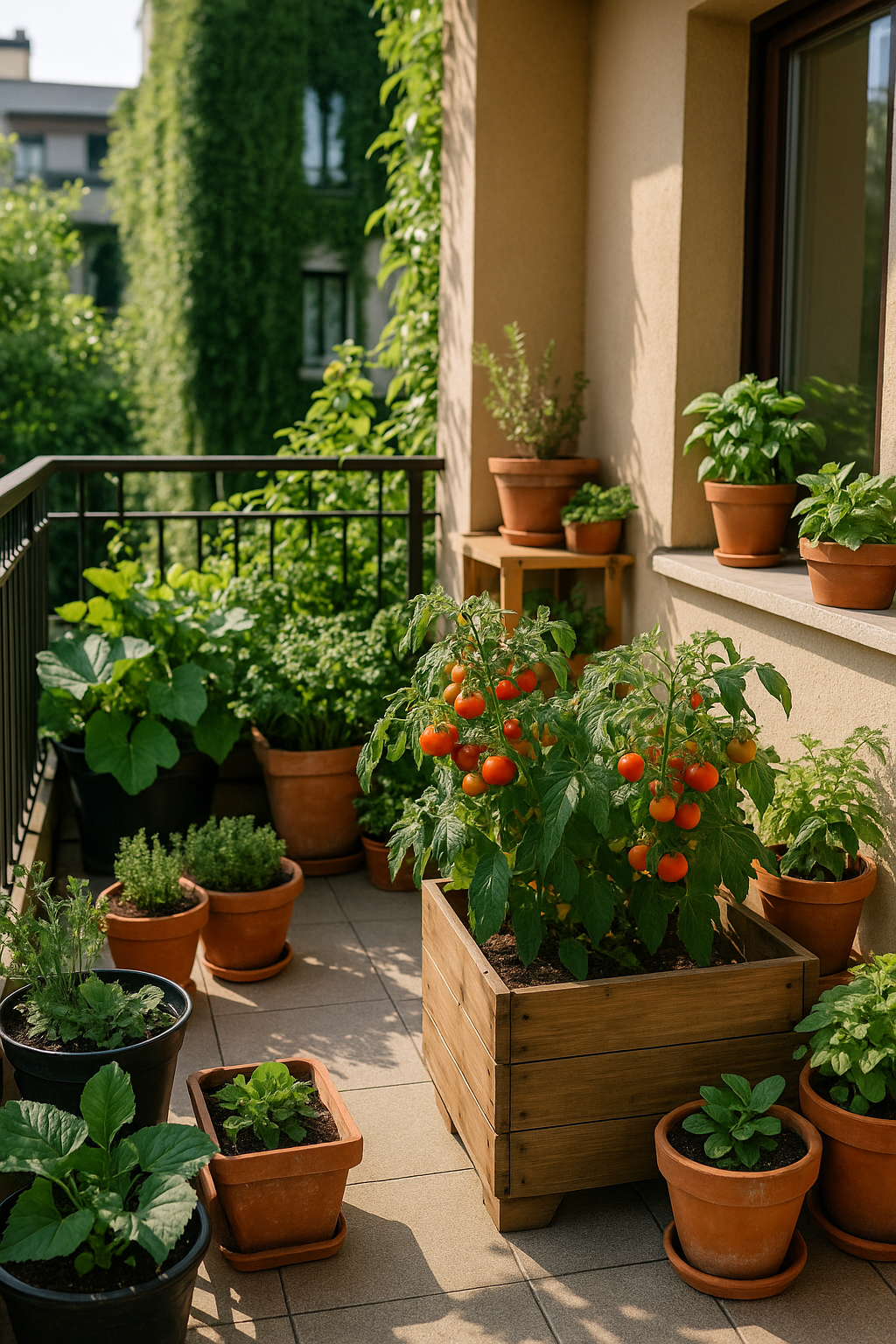
Growing on a balcony is not a scaled-down version of a vegetable garden: it is a different activity, with its own constraints. The main one is neither space nor light, but the volume of substrate. In the ground, a plant explores, compensates, and seeks out water and minerals wherever they are. In a pot, it has only what you have provided—and when that reserve is exhausted, there is no recourse.
Everything that follows stems from this constraint: choose a generously sized container, compose a substrate that lasts the season, water accordingly, and choose species that can cope with limited volume.
Sizing the containers
This is the most consequential decision, and the one where optimism most often leads us astray. A pot that is too small dooms the crop from the outset: no amount of care can make up for insufficient volume.
| Crop | Minimum volume | Depth |
|---|---|---|
| Herbs (basil, chives, parsley) | 3 to 5 L | 15-20 cm |
| Lettuce, arugula, lamb's lettuce | 5 L | 15-20 cm |
| Radishes, spinach, New Zealand spinach | 10 L | 20-25 cm |
| Cherry tomatoes, bell peppers, chili peppers | 15 to 20 L | 30 cm |
| Large-fruited tomatoes, zucchini, eggplant | 30 to 40 L | 40 cm |
| Bush beans, peas | 15 L | 25-30 cm |
| Long carrots, parsnips | — | 40 cm minimum |
Three details that make all the difference
- Drainage holes, always. A container without drainage turns the bottom into an anaerobic zone where roots rot. If you repurpose an object, drill holes in it.
- Prefer a light-colored pot. A black pot in full southern sun can exceed 40 °C at root level, a temperature at which roots stop functioning and then become damaged. A light-colored terracotta pot, or simply shading it with another pot, solves the problem.
- A saucer in summer only. It provides a small but useful reserve during hot weather, but in winter it drowns the roots and encourages freezing.
At the same volume, a wide, shallow pot dries out much faster than a narrow, deep pot: less exposed surface means less evaporation. The extra depth also lets roots grow down to where the substrate stays cool.
The substrate: a miniature living soil
A commercial potting soil used on its own is depleted and compacts within two months: its structure relies on fibers that decompose, and nothing replaces them. A mix that lasts the season:
- 60% quality potting soil for vegetables — the base
- 20% mature compost — the fertility reserve and, above all, the microbial life that will make it available
- 20% drainage material — coco coir, perlite, fine pozzolana, or coarse sand
Some people add a small amount of clay (bentonite) to improve water retention: it is effective in moderation.
Mulch your pots too
This is the most worthwhile thing you can do on a balcony, and almost nobody does it. Two centimeters of hemp, flax, cocoa shells, or simply dry leaves significantly reduce evaporation, prevent the substrate from crusting over, and buffer temperature fluctuations.
Maintaining fertility
A pot has no reserves: nutrients are carried away with the drainage water. Add compost or vermicompost every six to eight weeks for heavy-feeding crops (tomatoes, zucchini, peppers), and less often for Mediterranean herbs, which prefer lean conditions. An apartment worm composter closes the loop: kitchen waste returns to the pots.
What to grow according to exposure
Full south-facing exposure, 6 hours of sun or more
Anything is possible, but the constraint becomes thermal rather than light-related. Favor cherry tomatoes, bell peppers, chili peppers, eggplants, and Mediterranean herbs — thyme, oregano, savory — which prefer relatively dry, poor substrates. Provide light shade during the hottest hours in July and August.
East- or west-facing, 4 to 6 hours of sun
This is actually the best exposure for a balcony vegetable garden: morning or evening sun, and much less water stress. Lettuces, Swiss chard, radishes, dwarf beans, strawberries, basil, and zucchini in a large container.
North-facing or shade, less than 4 hours
A challenging situation, but not a hopeless one. Parsley, chives, mint, sorrel, lamb’s lettuce, spinach, arugula, and summer lettuces that bolt much more slowly in the shade. On the other hand, give up on fruiting vegetables: without sufficient light, they produce leaves rather than a harvest, and you will lose a season hoping.
Make use of the vertical space
A 3 m² balcony often offers 6 m² of wall space. Trellises for sweet peas and climbing beans, tiered shelves to prevent the pots from shading one another, wall pockets for herbs, and hanging baskets for trailing cherry tomatoes and nasturtiums.
Watch the weight. A 40 L container filled with wet soil weighs around thirty kilos. On an older balcony, distribute the loads along the load-bearing wall rather than at the edge, and check the allowable load if in doubt.
Watering: the real challenge
This is what causes most balcony vegetable gardens to fail, in both directions: lack of water kills quickly, while excess water kills slowly but surely by suffocating the roots.
- Test with your finger to a depth of 3 cm before each watering. A growing medium that looks dark on the surface may be dry underneath, while a light-colored medium may still be damp. The weight of the lifted pot is another good indicator.
- Water generously until it drains through the holes, then let it dry out partially before watering again. Small, frequent amounts only wet the top of the pot and keep the roots near the surface.
- Early in the morning or in the evening, never in full sun on the foliage.
- Completely dried-out growing medium becomes hydrophobic: it shrinks, water runs along the sides and out through the drainage holes without moistening the root ball. In that case, immerse the pot in a basin for twenty minutes, until the bubbles stop.
- Plan ahead for absences. In July, a 20 L potted tomato plant drinks every day. Group the pots in the shade before leaving, double the mulch, or install a timer-controlled drip irrigation system — the most reliable solution for absences of more than three days.
Wind: an underestimated challenge
At height, wind dries things out faster than the sun and breaks stems. An openwork windbreak — reed screening, trellis, or a row of sturdy plants — is significantly more effective than a solid wall, which creates turbulence behind it and can worsen the problem. Always stake fruiting vegetables, even dwarf varieties, and prefer heavy or weighted containers on upper floors.
Frequently asked questions
Can potting soil be reused from one year to the next?
Yes, provided you rejuvenate it: remove the roots and large debris, then mix it with one-third fresh compost and a little drainage material. Replace the substrate completely if there has been a root disease, and avoid planting the same botanical family in the same pot two years in a row—crop rotation applies to containers too.
Are clay pebbles needed at the bottom?
Contrary to common practice, this is not always useful. A drainage layer at the bottom creates a change in texture that can retain water just above it, exactly where you wanted to avoid it. A properly draining substrate and good drainage holes are usually sufficient; a layer of clay pebbles can still be useful in very deep containers or those without side drainage holes.
What should you do in winter?
Corn salad, spinach, arugula, and perennial herbs can stay outdoors without any problems. Two precautions: group the pots against a wall, and remember that roots freeze much faster in pots than in the ground—it is the container that should be wrapped in winter fleece or cardboard, not just the foliage.
Do balcony vegetables have less flavor?
No, provided fertility and watering are adequate. Mild water stress can even concentrate flavors, particularly in tomatoes—but if repeated, it greatly reduces yields and causes the fruits to split.
Can you harvest your own seeds on a balcony?
Yes, and it is even simpler than in the garden for self-pollinating species: fewer nearby varieties means less cross-pollination. Tomatoes, beans, lettuce, and basil are particularly well suited to this. See How to save your seeds.
Key points
Think big when it comes to containers, mulch your pots, and start with three or four carefully chosen species rather than ten poorly placed ones. A well-managed balcony can produce all the herbs a kitchen needs and enough to accompany summer meals—which is already considerable in three square meters.
Going further
- Creating a permaculture garden in a small space
- The sowing calendar month by month
- Basil seeds: sowing and companion planting
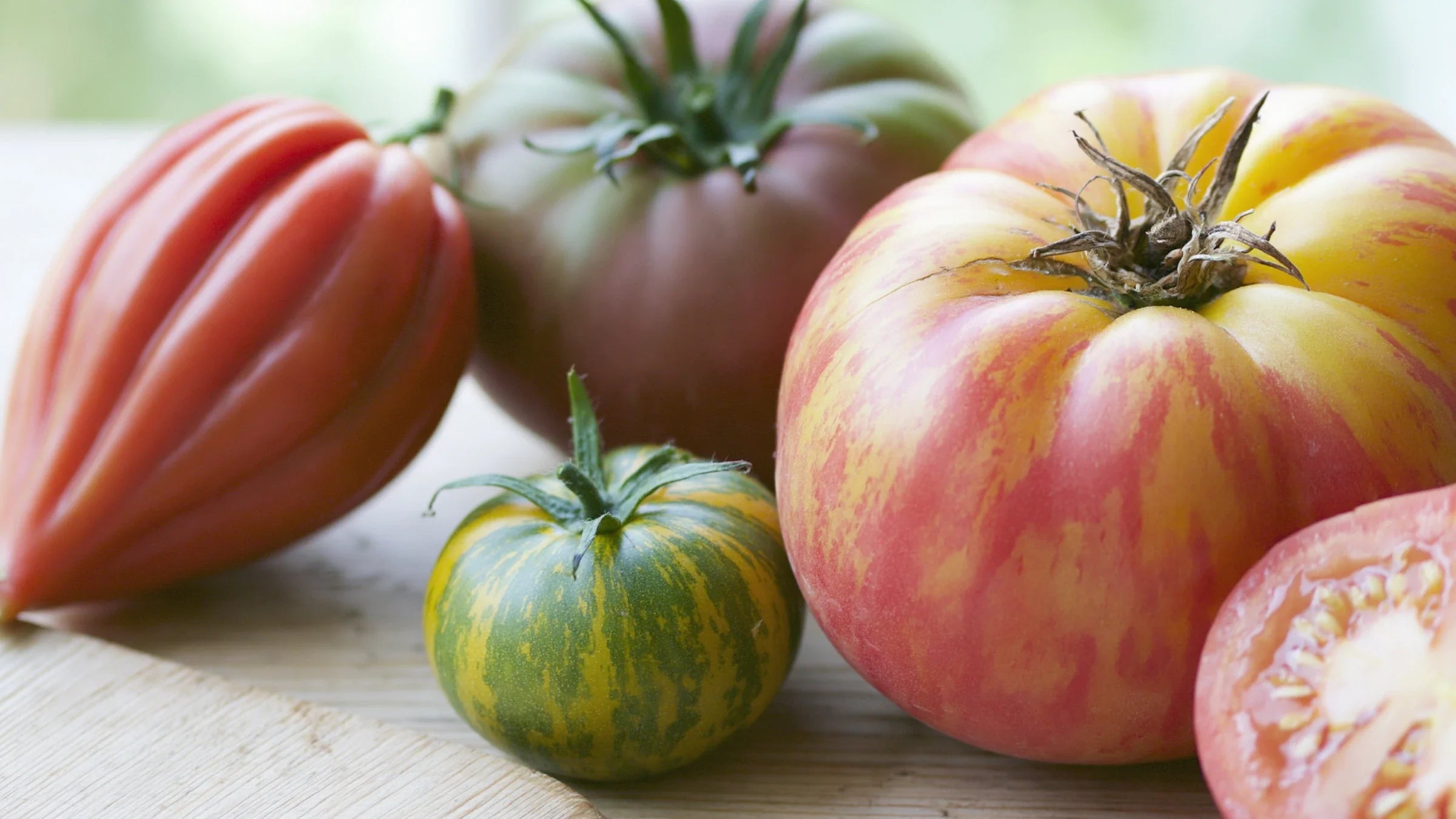
- Heirloom tomato seeds: varieties, sowing, and care
Our year-round sowing seeds and our culinary and medicinal herb seeds, particularly well suited to container growing.

Leave a comment
This site is protected by hCaptcha and the hCaptcha Privacy Policy and Terms of Service apply.