

The first visit to a garden centre often costs more than the first harvest is worth. You buy a rototiller that you will use twice, a sprayer you will never use, and forget the twenty-cent labels you will be missing all summer.
A natural vegetable garden requires few tools, but the right ones. This guide distinguishes what is essential from the first season, what can wait, what is useless—and why some tools are frankly counterproductive when cultivating living soil.
The six essential tools
With these six, you can manage a family vegetable garden from A to Z. Everything else is a convenience.
1. The grelinette (or digging fork)
This is the defining tool of the natural vegetable garden, and the one that replaces the spade. Its tines penetrate the soil and lift it with a levering motion: the soil is loosened and aerated without turning over the layers. Soil life remains in place—that is the whole difference from ploughing, and the biological reason is explained in detail in The Basics of Living Soil.
Choose: 3 tines for light soil or a smaller person, 4 tines for general use, and 5 tines only in very loose soil. A broad grelinette becomes impossible to drive into clay soil. Wooden handles are preferable: they absorb vibrations and can be replaced.
2. The hoe or serfouette
For opening a furrow, breaking up a surface crust, and earthing up potatoes. The serfouette—with a hoe blade and a pointed blade—is more versatile than a simple hoe. In a mulched vegetable garden, you will use it less than you think: mulch eliminates most of the need for hoeing.
3. The hand trowel
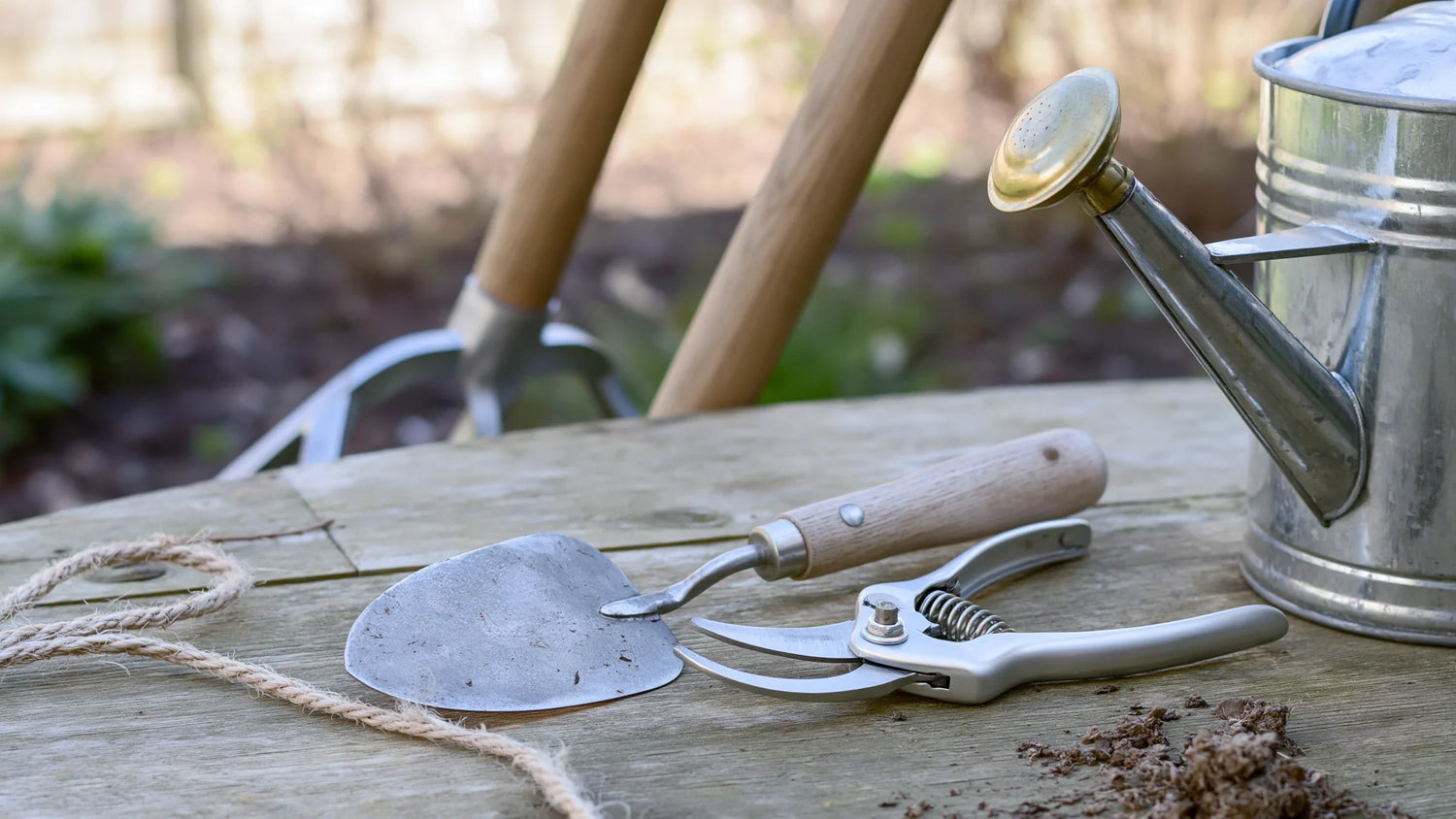
The most frequently used tool of all, and the one you should not skimp on. Transplanting, planting, lifting a root ball, and digging a planting hole. Choose one made from a single piece of forged steel, with the tang running through the handle: models with a blade fitted into the handle break at the joint, always at the first stone.
4. The rake
Level a bed before sowing, lightly cover broadcast seeds, and gather debris. Choose a model with rigid metal tines, not a lawn rake.
5. A watering can with a fine rose
The rose matters more than the watering can. A fine rose pointing upward produces a gentle spray that does not dislodge seedlings. A direct stream on a freshly sown row of radishes moves the seeds and creates gaps in the emergence. Two 8 to 10 L watering cans are better than one 15 L can, for back support.
6. Pruning shears
Harvesting, pruning, cutting green manures, and preparing mulch. Prefer a model with a bypass blade, which makes a clean cut, rather than an anvil model, which crushes the tissues. Above all, choose a model whose parts can be replaced—blade, spring, and bolt. A good pair of pruning shears lasts thirty years.
Seed-starting equipment
This is the category where you can recover and reuse almost everything.
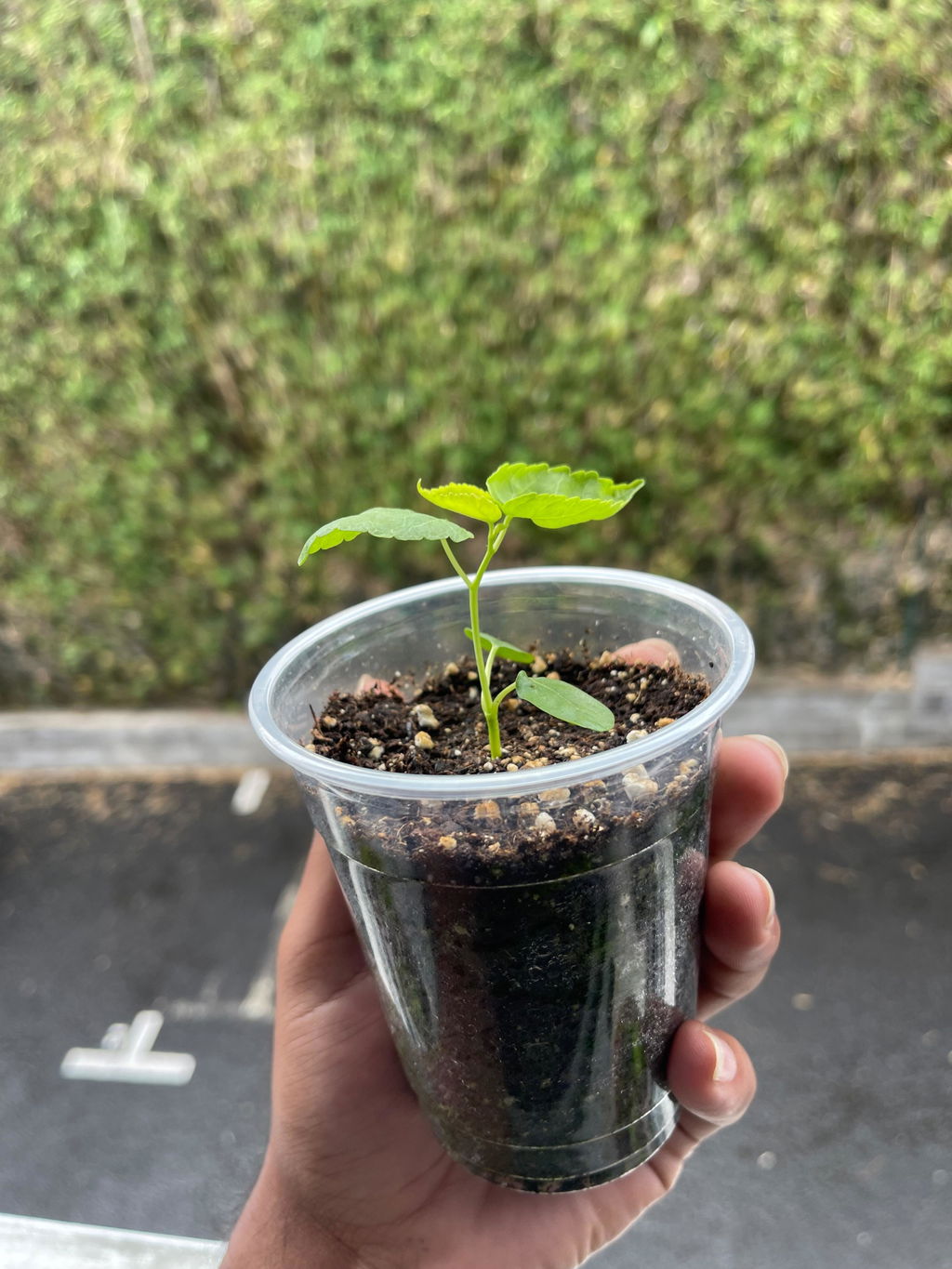
- Containers—pots, seed trays, and plug trays. Egg cartons, pierced yogurt pots, and toilet paper rolls work perfectly for the first year. The only requirement: a drainage hole.
- Seed-starting mix—fine-textured and low in nutrients, unlike potting soil. A seed contains its own reserves; a substrate that is too rich produces weak, sensitive seedlings.
- Labels and a pencil—inexpensive, indispensable, and never bought spontaneously. Marker ink fades in the sun after three weeks; pencil lasts an entire season. Strips cut from plastic shutters or tin cans work perfectly well.
- A hand sprayer—solely for moistening seeds at the surface without displacing them.
- A soil thermometer—a few dollars, and probably the best investment in the vegetable garden. It is the soil temperature, not the air temperature, that triggers germination. See The month-by-month sowing calendar.
What comes in the second year
Useful, but not urgent—wait until you know how you actually garden.
- A wheelbarrow—as soon as you move compost or mulch in quantity. Choose a pneumatic wheel rather than a solid one on soft ground.
- A compost bin or worm composter—depending on the space available. Below about one cubic meter, a pile will not heat up; in an apartment, a worm composter is the only realistic solution.
- A rainwater collector—a 50 m² roof collects about 30 liters per millimeter of rainfall.
- Fleece and insect netting—fleece gives you two to three extra weeks in spring; netting is the only truly effective protection against carrot fly and cabbage white butterflies.
- A cold frame—even one improvised from an old window. It extends the season at both ends.
- Stakes—hazel or bamboo cut on-site work just as well as store-bought stakes.
What is useless—or harmful
- The rototiller and the cultivator. This is the most expensive and most damaging purchase. It pulverizes soil aggregates, severs the mycorrhizal network, and creates a plough pan—a compacted layer just below the working depth that water and roots can no longer penetrate. The soil appears loose at the surface and becomes impermeable below.
- The spade. The same logic applies to manual work. Keep it if necessary for planting a tree, but not for working a garden bed.
- Backpack sprayer. If you do not spray, it has no use. And a vegetable garden with living soil does not spray.
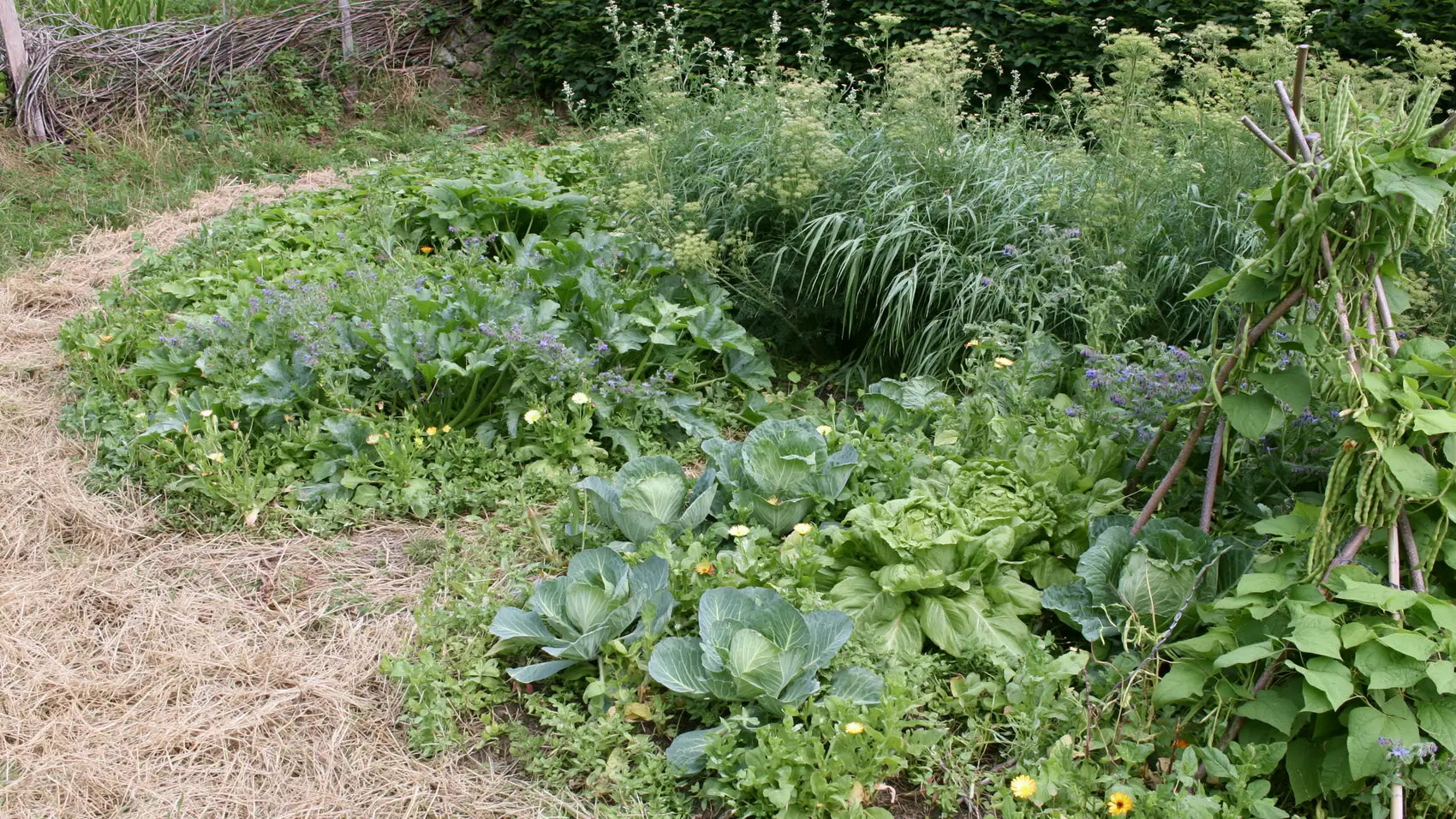
- Plastic mulch fabric. It suffocates soil life, nourishes nothing, and will break down into fragments that are impossible to collect. A layer of straw or leaves does the same job while nourishing the soil.
- Low-end “tool kits.” Blades with handles, soft steels, and varnished handles that cause blisters. A single good hand trowel is better than a set of six.
- Commercial fertilizers and soil amendments, as a first resort. Compost, mulch, and green manures cover most of the needs of a home vegetable garden.
Buy well, and make it last
What distinguishes a good tool
- Forged steel rather than stamped steel: it is denser, stays sharp, and does not bend.
- Full tang — the metal part that extends through the handle along its entire length. It is the number-one durability criterion for a hand tool.
- Ash handle — flexible, absorbs vibrations, and above all, replaceable.
- Replacement parts available — the real question to ask in a store is: “Can the blade be replaced?” If the answer is no, the tool is disposable.
Secondhand and borrowing
Old tools are often better than cheap new ones: the steel used to be thicker. A rusty blade can be brushed and sharpened; a broken handle can be replaced. Flea markets, reuse centers, and estate-sale clearances are excellent sources.
For equipment used twice a year — a shredder, ladder, or rototiller if you really insist — consider tool libraries and borrowing from neighbors. It fits the logic of gardening: don't own what you don't use.
Maintain
- Clean after every use — damp soil left on a blade will corrode it within a season.
- Lightly oil the metal parts before winter, using linseed oil or vegetable oil.
- Sharpen — a hoe, hand cultivator, and pruning shears should cut, not tear. A sharpening stone and five minutes per season are all it takes.
- Disinfect the pruning shears with alcohol between plants when pruning after a disease — this is the most common way diseases spread in the vegetable garden.
- Store indoors, hanging rather than left on the ground.
A realistic first-year budget
In order of priority if the budget is tight:
- A good transplanting trowel — the tool that will be used most
- A fine-rose watering can
- Repairable pruning shears
- Reproducible seeds — a purchase that does not need to be repeated if you save them
- Something to use as mulch — often free: leaves, grass clippings, cardboard, salvaged straw
- A broadfork — the most expensive, but durable for thirty years
The rake, hoe, and the rest complement one another as real needs arise.
Frequently asked questions
Do you need a broadfork in the first year?
Not necessarily. If you start with cardboard on a lawn or on beds that are already loose, you can wait. It becomes useful for loosening compacted soil or before establishing deep-rooted crops.
Short-handled or long-handled tools?
Both, depending on your posture. Long handles for working standing up — broadfork, rake, hoe; short handles for anything done crouching — transplanting trowel, dibber. A handle poorly sized for your height tires your back faster than the work itself.
What about stainless-steel tools?
They do not pick up soil, which is pleasant in clay soil, and they do not rust. However, stainless steel is generally softer than carbon steel: the blade loses its edge more quickly. An acceptable compromise for a transplanting trowel, less so for a cutting tool.
Do you need a garden shredder?
Rarely cost-effective on a household scale, and typically something to borrow or share. Pruning shears and a little patience produce enough material to mulch an ordinary vegetable garden.
What about gloves?
Useful for tough jobs — brambles, wood, nettles — but work with bare hands when sowing and transplanting: you can feel the soil, its structure, and its moisture. This is a source of information that gloves take away.
Key takeaways
Six tools are enough, and the question to ask before every purchase is always the same: can the blade and handle be replaced? A natural vegetable garden costs little in terms of equipment — most of the fertility comes from compost, mulch, and seeds, not hardware.
To go further
- How to create a permaculture vegetable garden: complete guide
- Planning your garden according to zones and exposure
- How to sow seeds in cotton, pots, or directly in the ground
- Composting: feeding the soil by imitating nature
The only consumables that really matter: our vegetable seeds and our starter kits — reproducible, so they only need to be bought once.

Zostaw komentarz
Ta strona jest chroniona przez hCaptcha i obowiązują na niej Polityka prywatności i Warunki korzystania z usługi serwisu hCaptcha.