Cichorium endivia var. latifolium
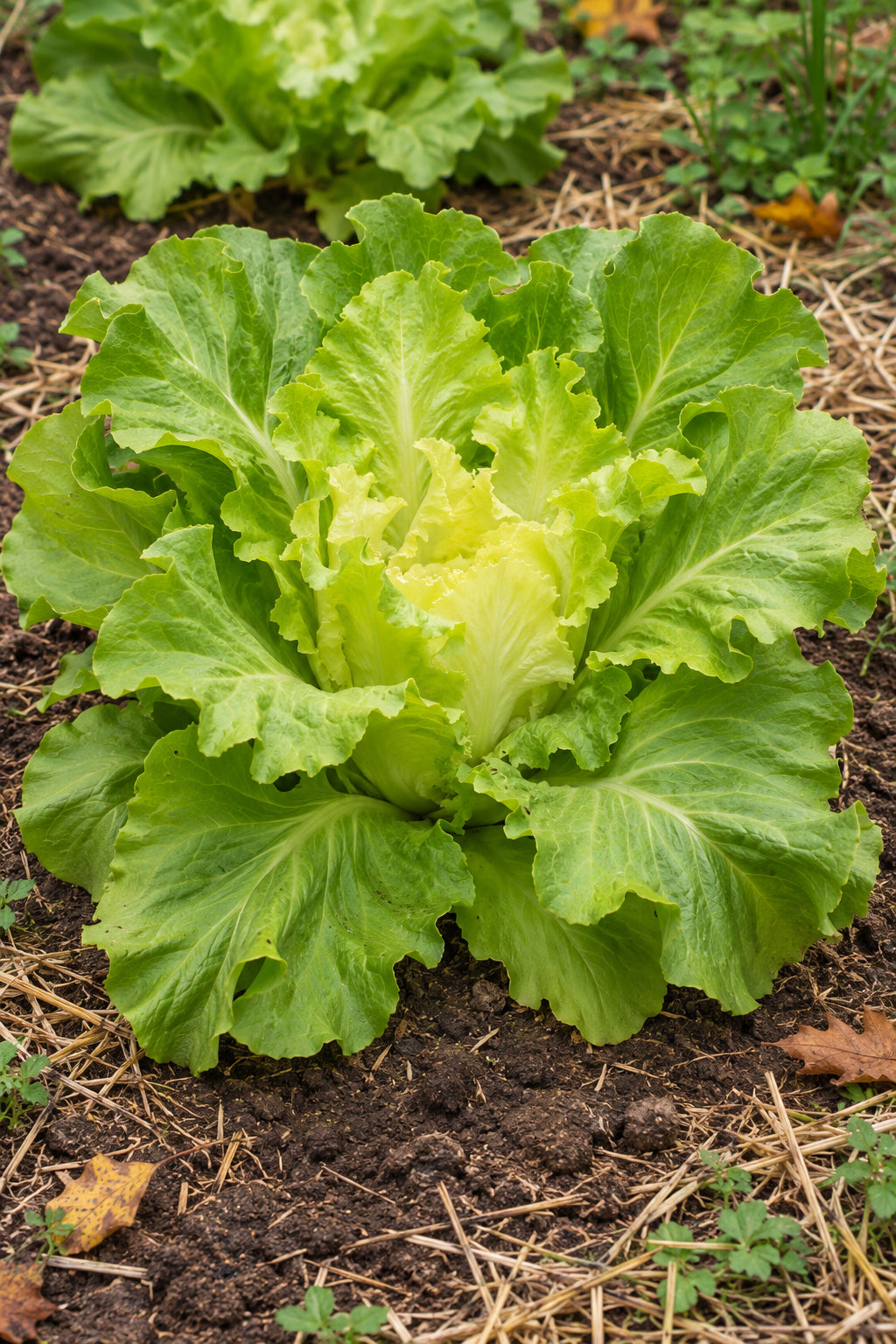
‘Géante Maraîchère’ escarole is a broad-leaved chicory that forms a large head with a paler heart. It belongs to the same species as frisée, but develops broad, less deeply cut foliage that is well suited to eating raw or braised. Sown in summer, it takes over from spring vegetables in a cleared bed. The key is to maintain steady growth: cool soil during germination and establishment helps the rosette develop without interruption.
Characteristics:
- Escarole chicory with broad leaves and a pale heart.
- A harvest of leaves that can be eaten raw or cooked, for a variety of dishes.
- A crop that thrives in loose, cool, well-drained soil; sowing times vary depending on the climate.
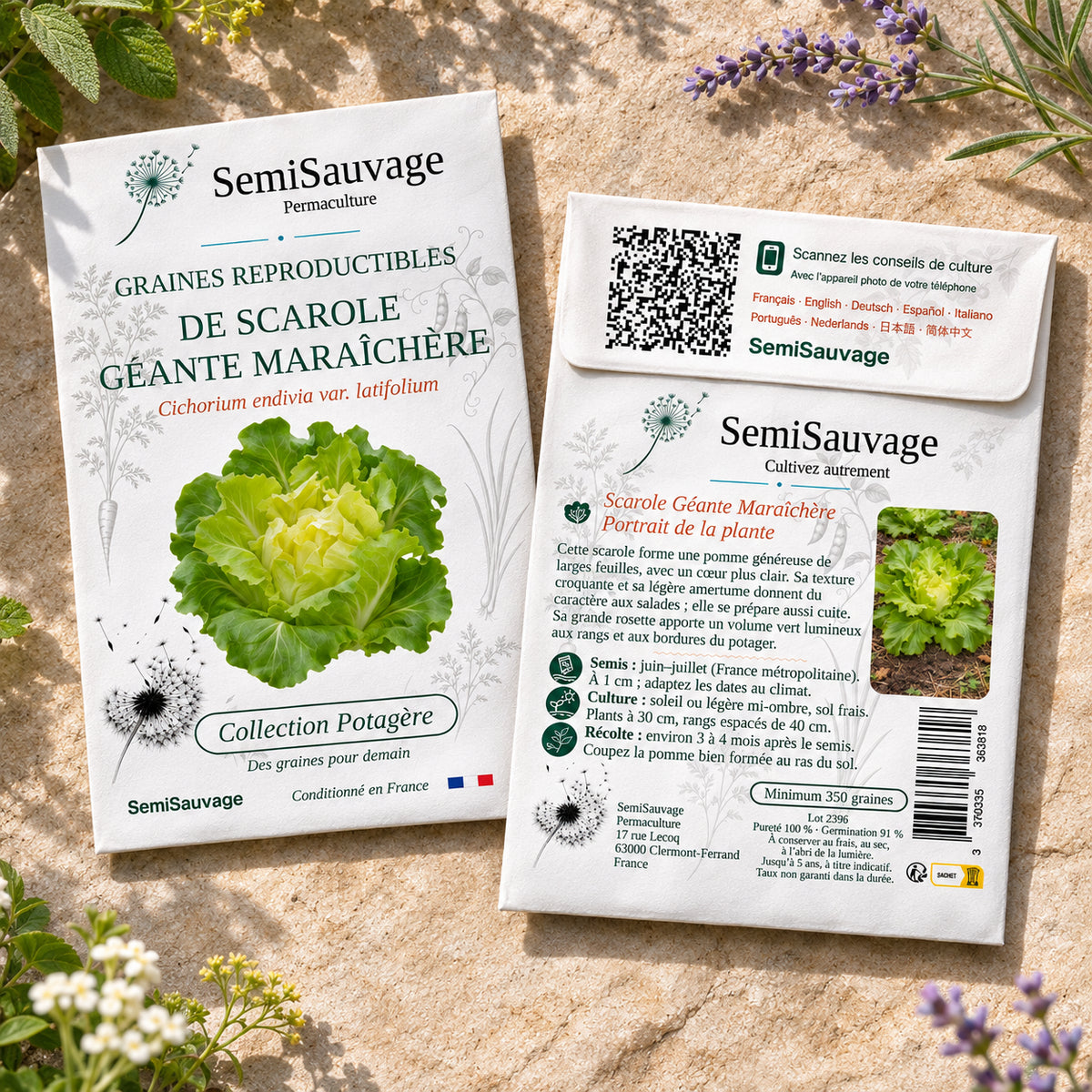
- Open-pollinated seeds; packet of at least 350 seeds.
Sowing tips:
-
Timing: Sow from June to July, in place or in a nursery bed, in finely prepared soil.
-
Method: Cover the seeds lightly, press gently, then water with a fine spray.
-
Germination: Keep the surface moist while the seeds germinate. Sowing too early can cause the plants to bolt before forming a nice head.
Planting tips:
Thin or transplant the seedlings, leaving about 30 cm between plants. Each rosette needs room to spread its leaves without being crowded by its neighbors. Plant in full sun or light partial shade, in enriched, well-drained soil. Water after transplanting. Our sowing guide helps you choose between starting seeds in a nursery bed and sowing directly in the vegetable garden.
Care tips:
Keep the soil cool with regular watering, especially after transplanting and in dry weather. Mulch between the plants once they have taken root, leaving the heart uncovered. Remove competing weeds while they are still small. L’the goal is steady growth, without alternating between waterlogged soil and prolonged drought.
Harvest:
Harvest when the head is well formed, cutting the plant at its base. The date depends on sowing, weather and plant development: observe the rosette rather than relying on a fixed date. Staggering sowings helps spread out the harvest and lets you pick as needed for cooking.
Cooking uses:
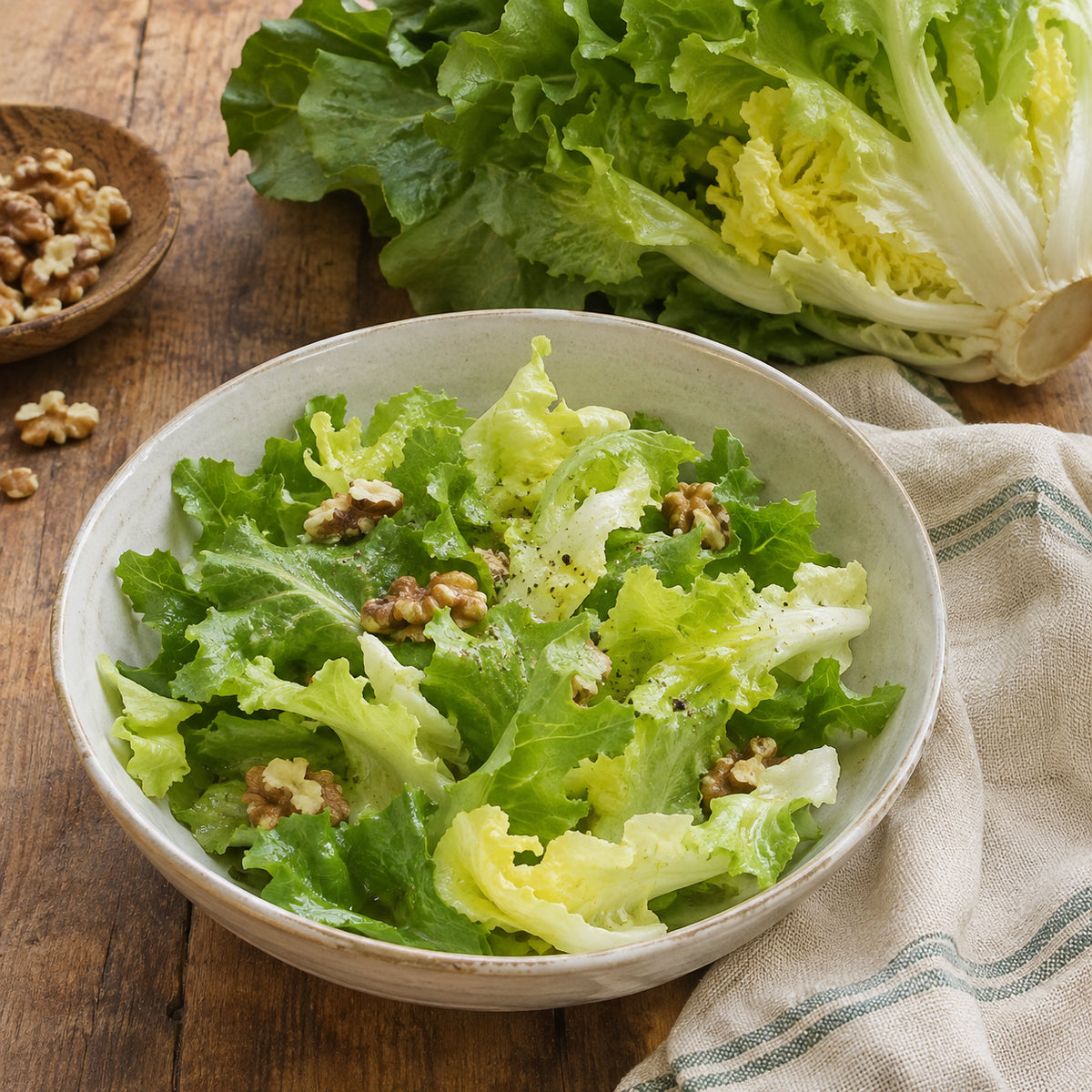
The pale heart is ideal for salads, with nuts and a tangy vinaigrette. The larger outer leaves are perfect for braised escarole or vegetable soup. Blanching to soften the heart is optional: bring the outer leaves together to keep light from reaching it, only when the foliage is dry, and check regularly for any signs of rot.
Harvesting your own seeds:
Keep healthy, representative plants and let them flower. Their branching stems will then bear pale blue flower heads, often open in the morning. The small seeds form in these heads as dry fruits called achenes. Harvest the browned, dry heads, let them finish drying under cover, then rub and sort them. Don't always choose the first plants to bolt prematurely: this trait could become more common over successive generations. Find our tips on saving your seeds.
Commitment to Quality:
At SemiSauvage, we offer reproducible seeds to grow and discover the diversity of plants. This packet contains at least 350 seeds, packed in France. The growing advice will guide you from sowing to cultivation; adapt it to your climate and garden conditions.
Sow Géante Maraîchère in summer to renew your leaf harvest and enjoy a chicory that works just as well in salads as cooked.