Bistorta officinalis
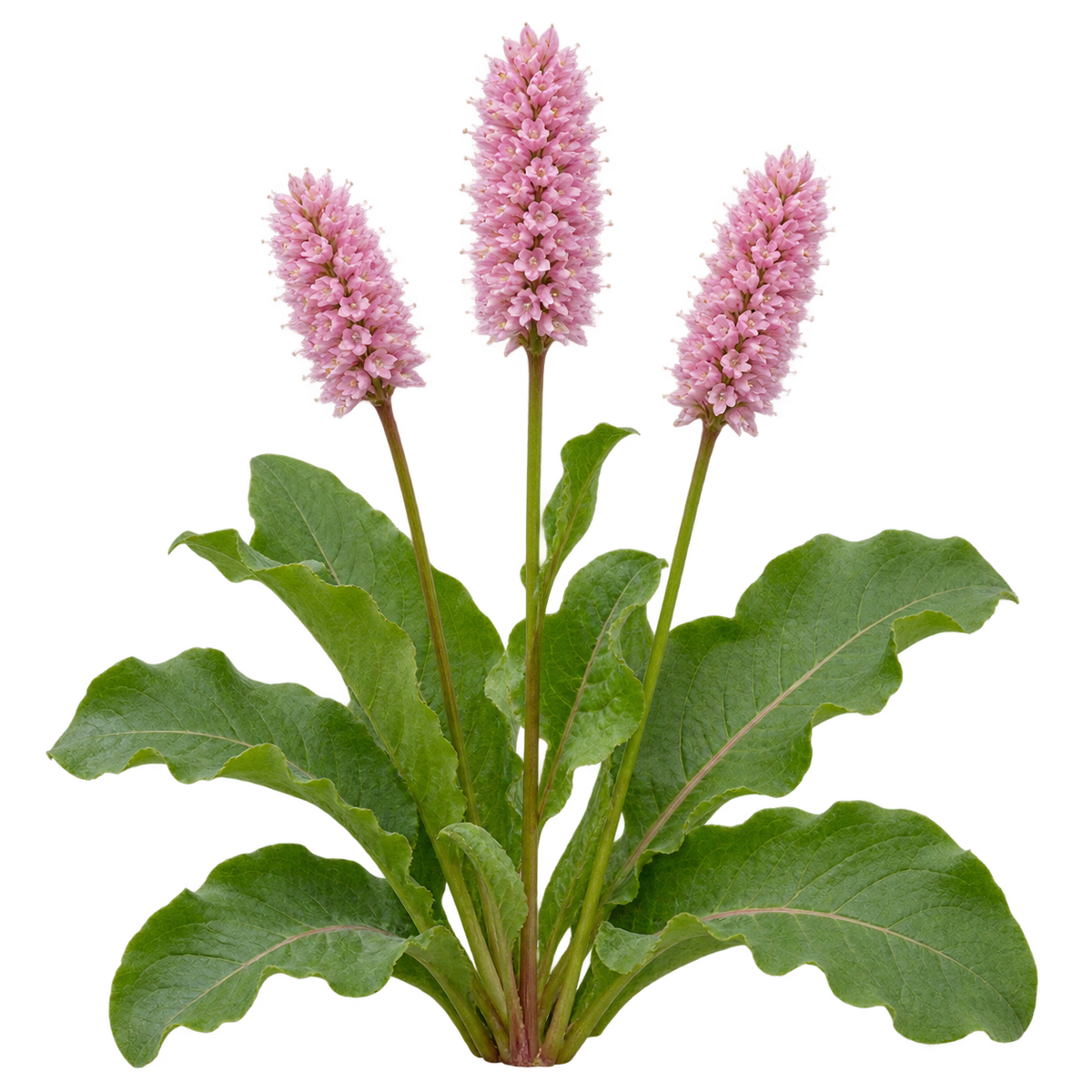
Bistort bears dense pink spikes above a clump of broad leaves. Its flexible stems add movement to moist borders and evoke the wet meadows where this perennial thrives. It gradually spreads by rhizomes and is valued as much for its foliage as for its flowers, in soil that does not dry out for extended periods.
Characteristics:
- Perennial with pink spikes composed of numerous small flowers.
- Broad leaves form a clump that spreads by rhizomes.
- Suited to moist to wet soil and naturalistic garden settings.
Sowing tips:
-
Timing: sow in autumn, in prepared soil or in containers left outdoors in suitable conditions.
-
Method: sow thinly and shallowly, then keep the soil evenly moist. Label the sowing so you can monitor it during the cold season and when growth resumes.
-
Planting out: transplant young plants once they are well developed, keeping their root balls intact, then water. Choose a sufficiently moist spot from the outset for the rest of the growing season.
Find out how to prepare in our guide to sowing methods.
Growing and care tips:
Bistort prefers moist to wet soil, in full sun where water remains available, or in light shade. Avoid scorching exposures and soil that dries out for long periods in summer. Water while it establishes, then keep an eye on it during dry spells. A light mulch helps retain moisture without covering the plant's crown. Let the clump spread, or contain it if it grows alongside less vigorous plants. Moist soil does not mean planting it underwater.
Flowering and harvesting:
Pink spikes appear from late spring through summer, with flowering duration varying according to the climate and growing conditions. Each spike bears numerous small flowers that open gradually. You can cut a few stems for a fresh arrangement, but leave some spikes in the garden too, to watch them develop and see which insects visit. After flowering, you can remove the faded stems, keeping any intended for seed.
Garden uses:
Plant bistort in a moist border, near a bank that is not submerged or in a naturalistic garden bed. Its upright spikes stand out against finer foliage, while its broad leaves create a dense base. Pair it with plants that share its need for moisture rather than species suited to dry ground. In a small bed, keep an eye on the space taken up by its rhizomes to maintain plant diversity.
Harvesting your own seeds:
Leave several flower spikes on healthy clumps and let the flowers develop until they set seed. The small dry fruits are three-angled achenes. Harvest when the spikes turn brown and the fruits are well formed, before they fall. Cut in dry weather, dry under cover, then gently thresh over a tray. Separate the fruits from the debris and note the species and year. Seeds are therefore harvested after the decorative pink appearance chosen for bouquets or observing the flowers. See our tips for storing harvested seeds.
Commitment to Quality:
At SemiSauvage, we offer open-pollinated seeds to cultivate diversity in the garden. This packet contains at least 50 seeds, packaged in France. The timings given are guidelines to adapt to your climate, soil, and seasonal conditions.
A perennial to add dimension to cool spots in the garden, given the time it needs to form a beautiful clump.