Pisum sativum 'Désirée'
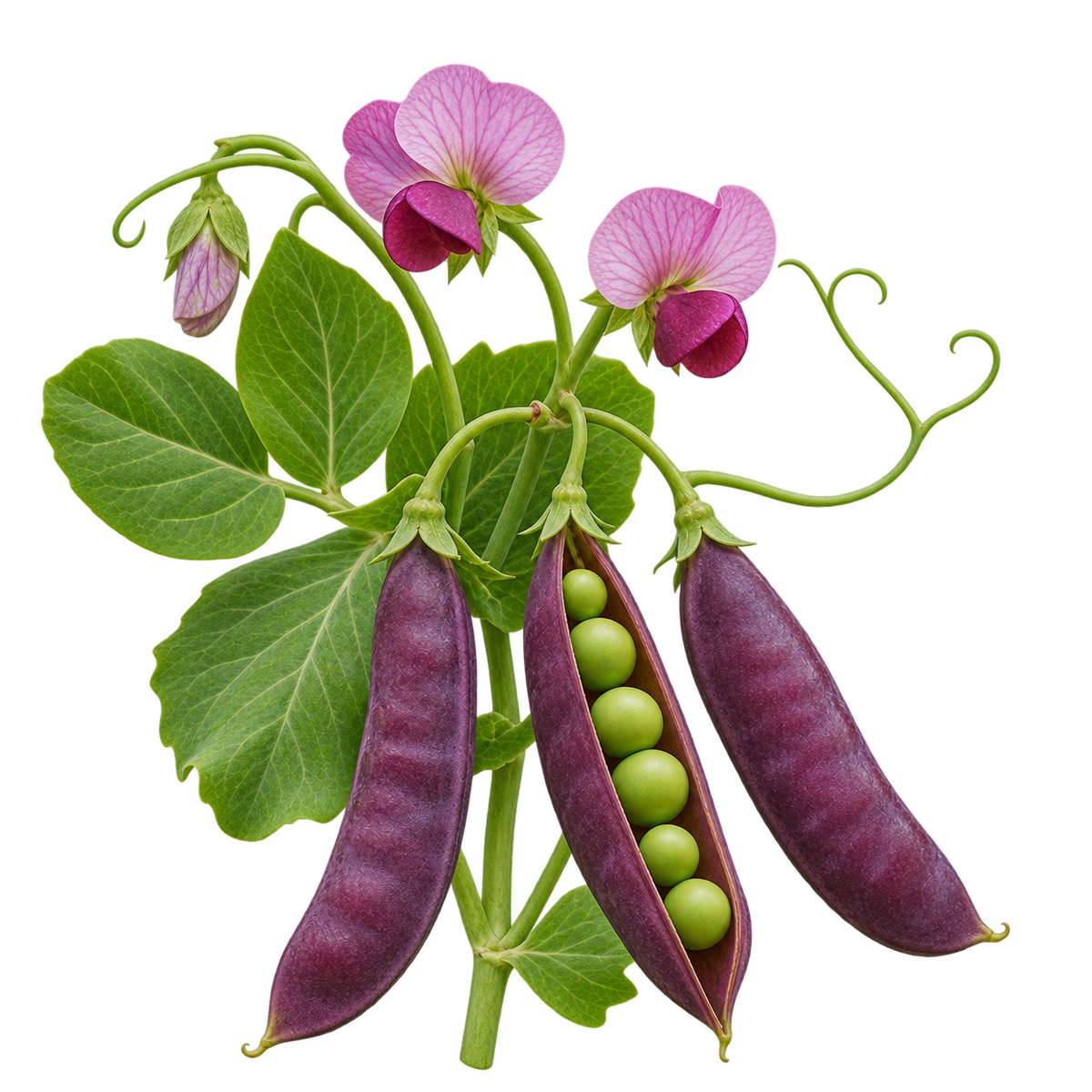
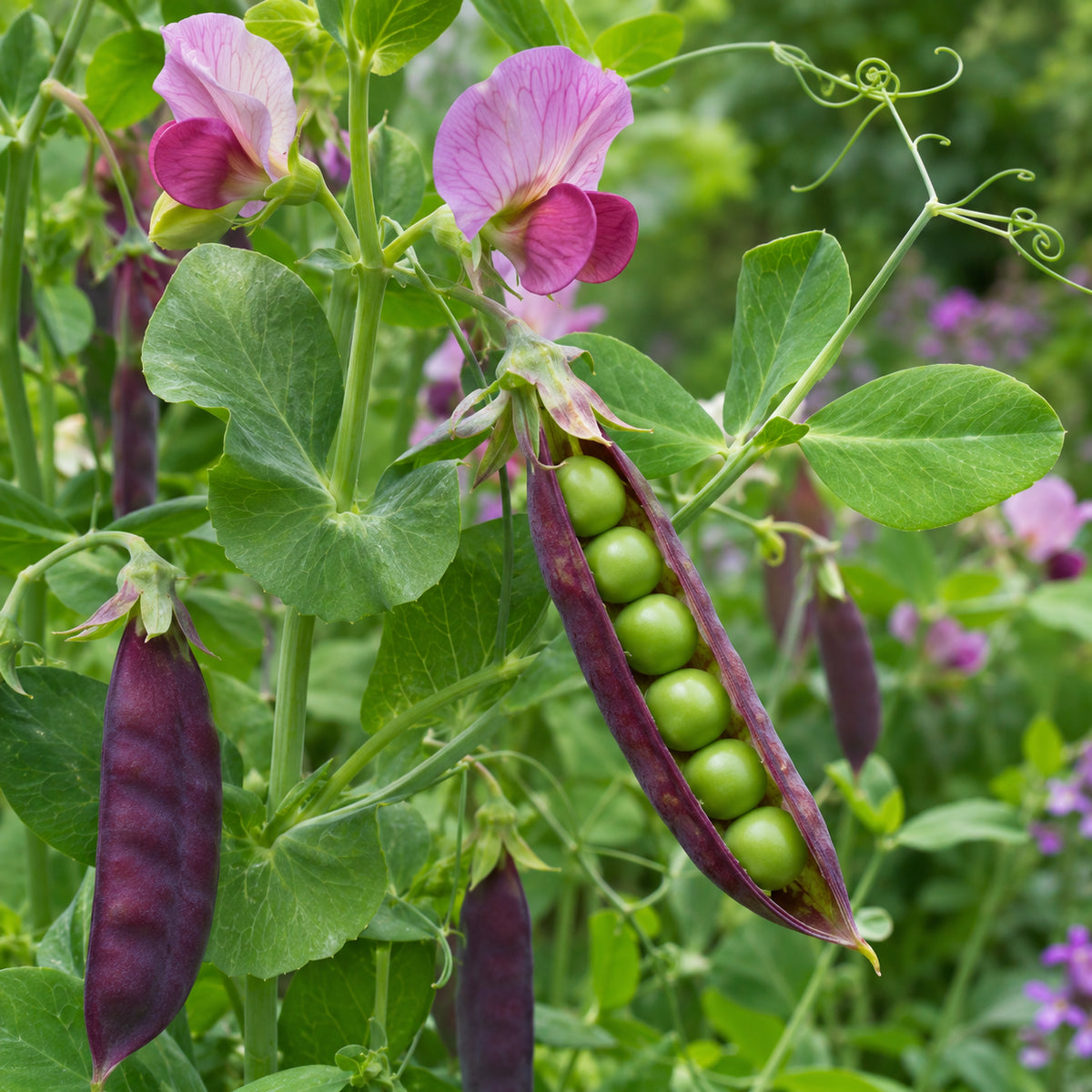
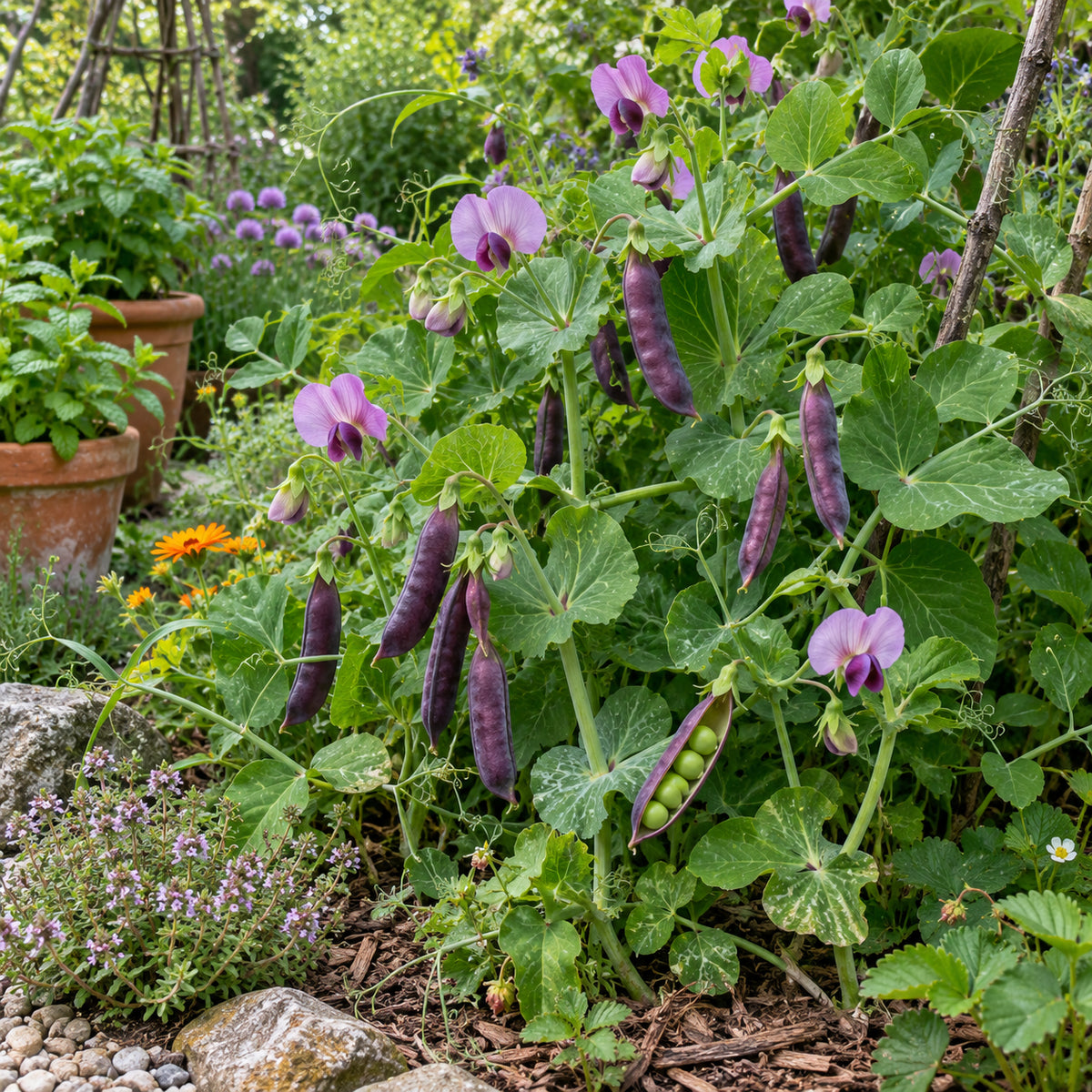
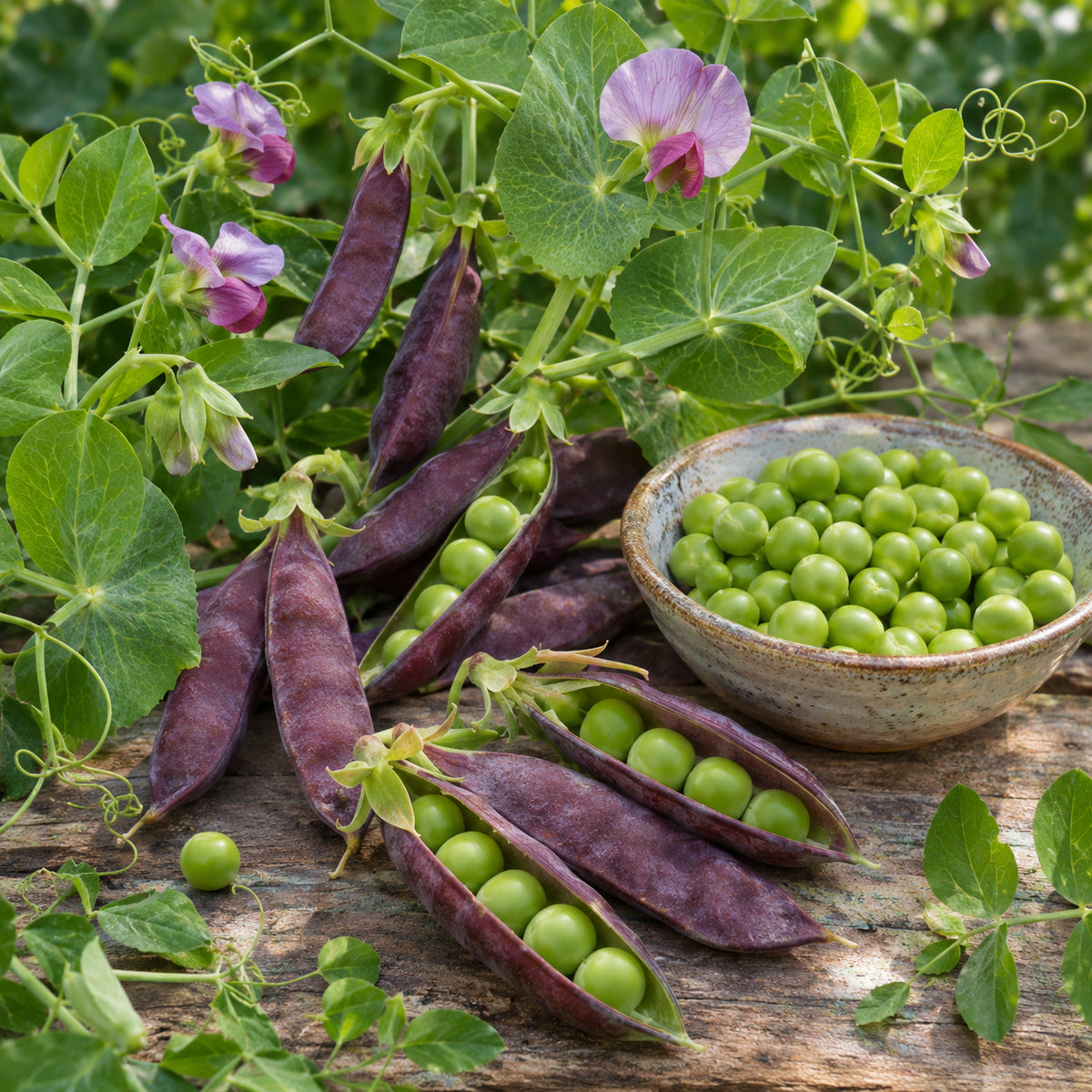
Désirée combines lilac-pink flowers with long purple pods containing small green peas. Their color makes them easy to spot at harvest, but this is a shelling pea: you pick the peas, unlike a snap pea, whose entire pod is eaten. Its dwarf growth habit is suited to growing with small supports, in spring when the soil stays cool.
Characteristics:
- Shelling peas: the fresh peas are the edible harvest.
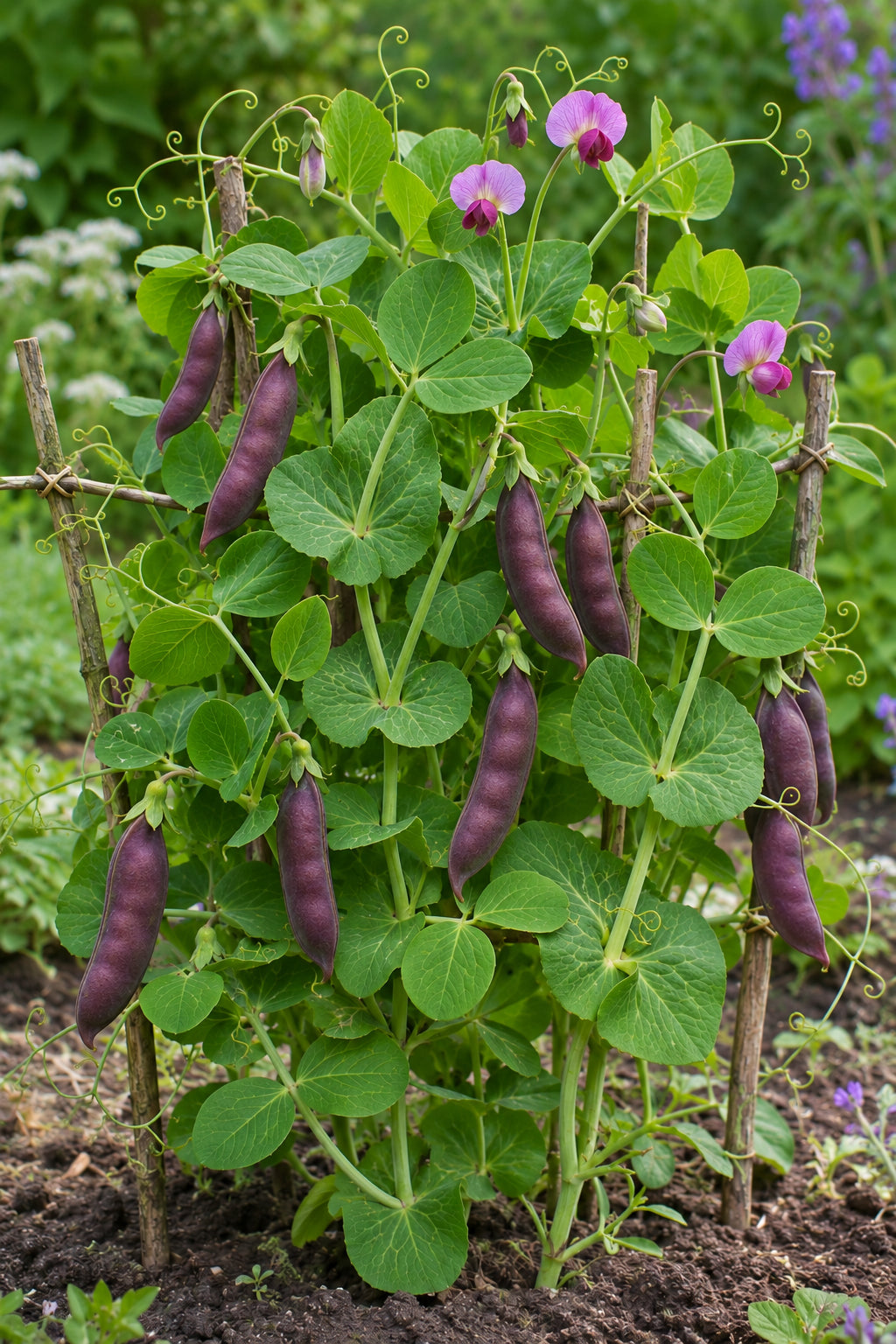
- Dwarf growth habit, with tendrils that cling to small supports.
- Lilac-pink flowers and purple pods; green peas.
Sowing tips:
-
Timing: sow from February to April, depending on your climate, avoiding frozen, waterlogged, or still-too-cold soil.
-
Depth: place the seeds about 3 cm deep. Cover them and water if the soil lacks moisture.
-
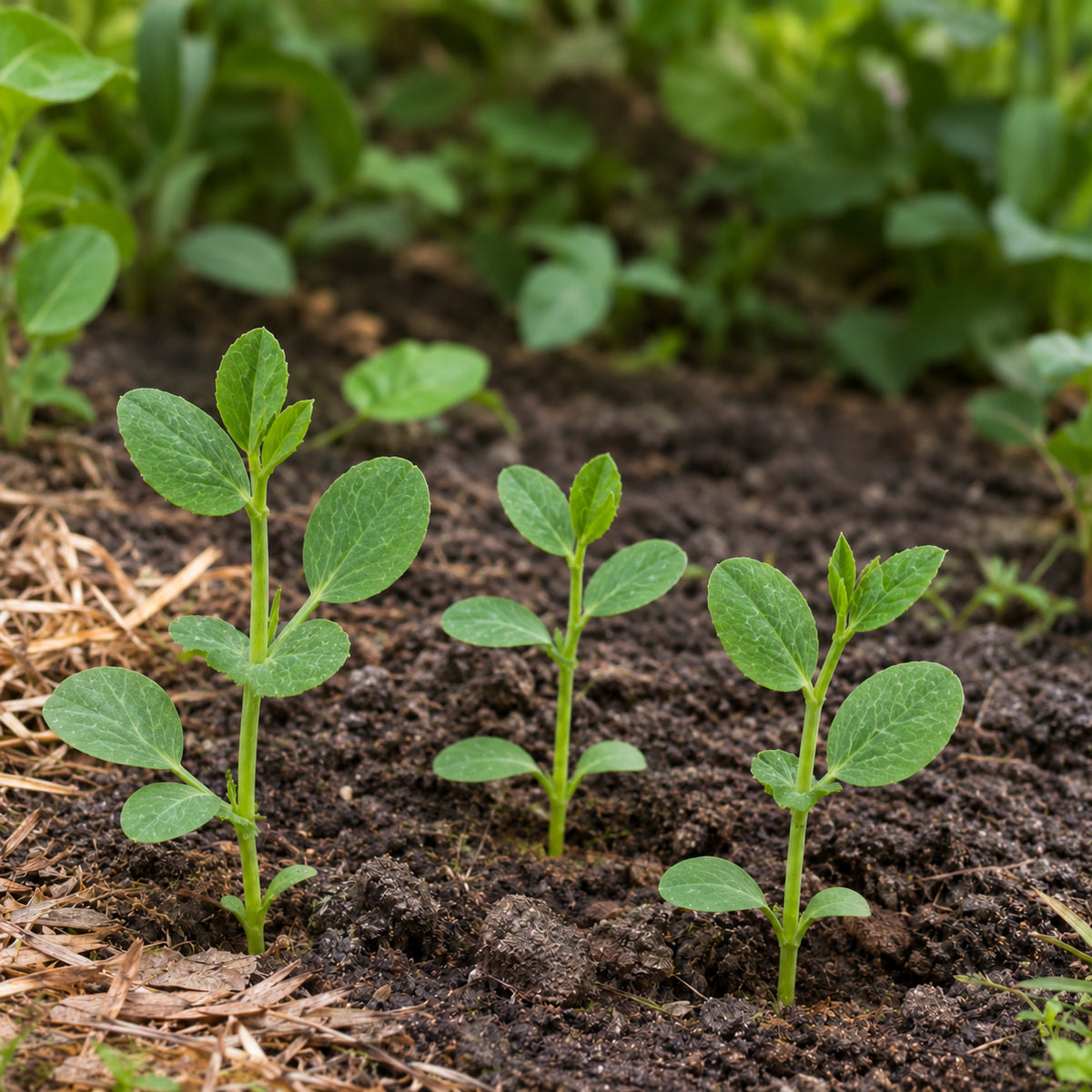
At emergence: watch out for slugs and birds, which may eat seeds and young shoots. Find preparation tips in our sowing guide.
Planting and growing tips:
Choose a sunny spot with cool, deep, well-drained soil. Set up small branched sticks or a light support from the start of growth, before the stems become tangled on the ground. The tendrils can attach themselves to them. Leave a path so you can reach the pods from both sides without trampling the roots.
Care tips:
Peas prefer cool conditions and do not tolerate hot, dry spells well. Check the moisture at flowering and then while the pods are filling. Water at the base if needed, without keeping the soil waterlogged. Mulch laid over soil that has already warmed up helps prevent it from drying out. Guide the first stems toward their supports rather than letting them droop.
Harvesting tips:
Harvest in spring or early summer, depending on when you sow and the climate. Wait until the pods are well filled, with formed but still tender peas. If you leave them too long, the peas will harden and become mealier. Support the stem as you pick, then shell the peas promptly. Don’t confuse this stage with harvesting seeds for sowing, which requires full maturity.
Uses and place in the garden:
Shelled peas can be prepared in a vegetable medley, soup, or as a side dish. A small fresh harvest can be cooked right after picking. In the vegetable garden, position the supports so they don’t shade a nearby low-growing crop; leave room to access them rather than crowding several vegetables into the same row.
Harvesting your own seeds:
Choose several healthy plants and leave a few pods to ripen until they turn brown and dry out. The seeds should be hard; peas that are still tender and intended for cooking are not ready to be kept as seed. Shell the dry pods, then continue drying the seeds in a well-ventilated place before storage. Peas are predominantly self-pollinating, but keep varieties clearly labeled and separated to limit mixing and cross-pollination. Our seed storage tips will help you make the most of this harvest.
Commitment to Quality:
At SemiSauvage, we offer open-pollinated seeds to cultivate diversity in the garden. This packet contains at least 40 seeds, packaged in France. The recommended growing periods are guidelines to adapt to your climate, soil, and seasonal conditions.
Désirée gives shelling peas a decorative touch without losing their appeal on the plate.