Mentha spicata
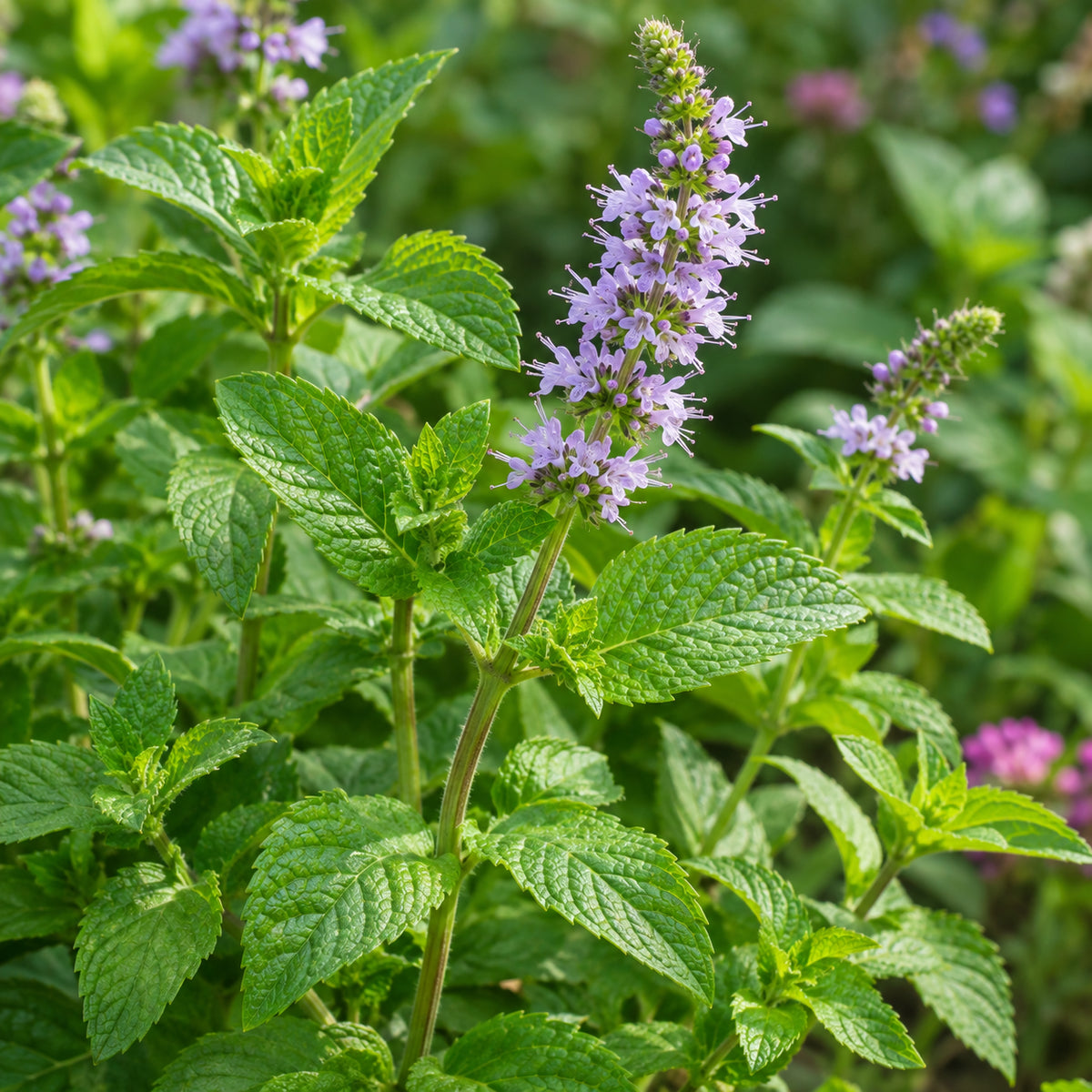
True spearmint has a mild fragrance, suited to mint tea, tabbouleh and salads. Its toothed leaves and spikes of small mauve flowers also make it a garden perennial. It differs from peppermint in that its fragrance is generally less intense. To enjoy tender leaves throughout the season, provide moist soil and harvest regularly from a well-established clump.
Characteristics:
- Aromatic perennial with opposite, toothed leaves.
- Spreads via underground stems: a clump can spread beyond its original spot.
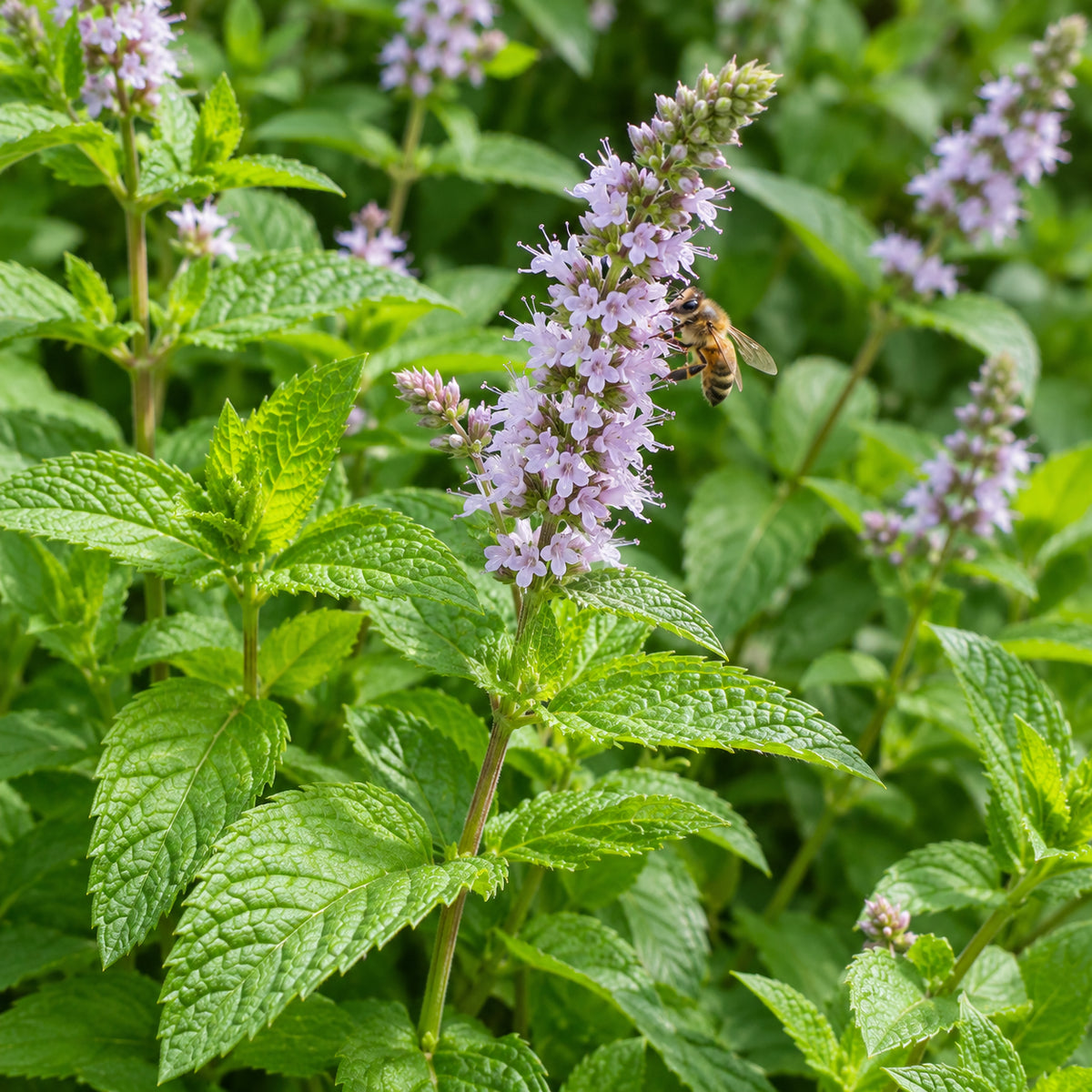
- Small mauve flowers in summer; you can leave some stems to flower.
Sowing tips:
-
Timing: sow in spring under cover, in fine, pre-moistened potting mix.
-
Method: scatter the seeds on the surface and press them down lightly without covering them. Water gently so they don’t get displaced.
-
Conditions: place the seedlings in a bright spot, at around 20 °C. Keep the surface moist without waterlogging it; air out any covers used to prevent drying out.
-
Transplanting: when the seedlings have several leaves, plant them individually. Our seed-starting in pots guide will help you with this step.
Planting tips:
Plant mint in full sun or partial shade, in moist soil that drains excess water. In a container, choose a fairly wide pot with drainage holes, and keep an eye on watering: a small volume of soil dries out faster. Place it somewhere easy to reach for harvesting. Also watch for stems that spread over the edge and can root when they touch the ground.
Care tips:
Regularly pick the shoot tips to encourage fresh foliage. In hot weather, check the soil moisture before the clump wilts. When a plant fills its pot and becomes very crowded, divide it to get vigorous sections started in fresh potting mix. Don’t mistake seasonal dieback of the foliage for the permanent loss of the rootstock.
Harvesting and use tips:
Cut off the leafy tips rather than stripping an entire stem. Finely chop fresh leaves into tabbouleh, salads and sauces, or steep them in a drink. Harvest a little at a time to enjoy their fragrance. If you want to keep some dried, dry the leaves quickly in the shade with good airflow, then store them in a clean, dry container.
In the garden and for pollinators:
Mint can be grown alongside other herbs in its own container: it needs more moisture than rock-garden thyme. Let a few stems flower away from the ones intended for picking; their flowers provide a food source for pollinating insects. Even so, keep an eye on the clump’s growth.
Collecting your own seeds:
Let a few flower spikes finish blooming. Very small dry fruits, called nutlets, form after flowering. Cut the browned flower heads in dry weather, leave them to dry on paper, then gently rub them to collect the tiny seeds. Remove any debris before storing them. Mints can cross-pollinate: seeds collected in the garden do not guarantee an identical next generation, especially if several types of mint are flowering nearby. See our guide to storing harvested seeds.
Commitment to Quality:
At SemiSauvage, we offer open-pollinated seeds to cultivate diversity in the garden. This packet contains at least 1,000 seeds, packaged in France. The timings given are guidelines to adapt to your climate, soil, and seasonal conditions.
Grow spearmint near your picking areas, where it will have enough moisture to produce fresh young leaves.