Convolvulus tricolor
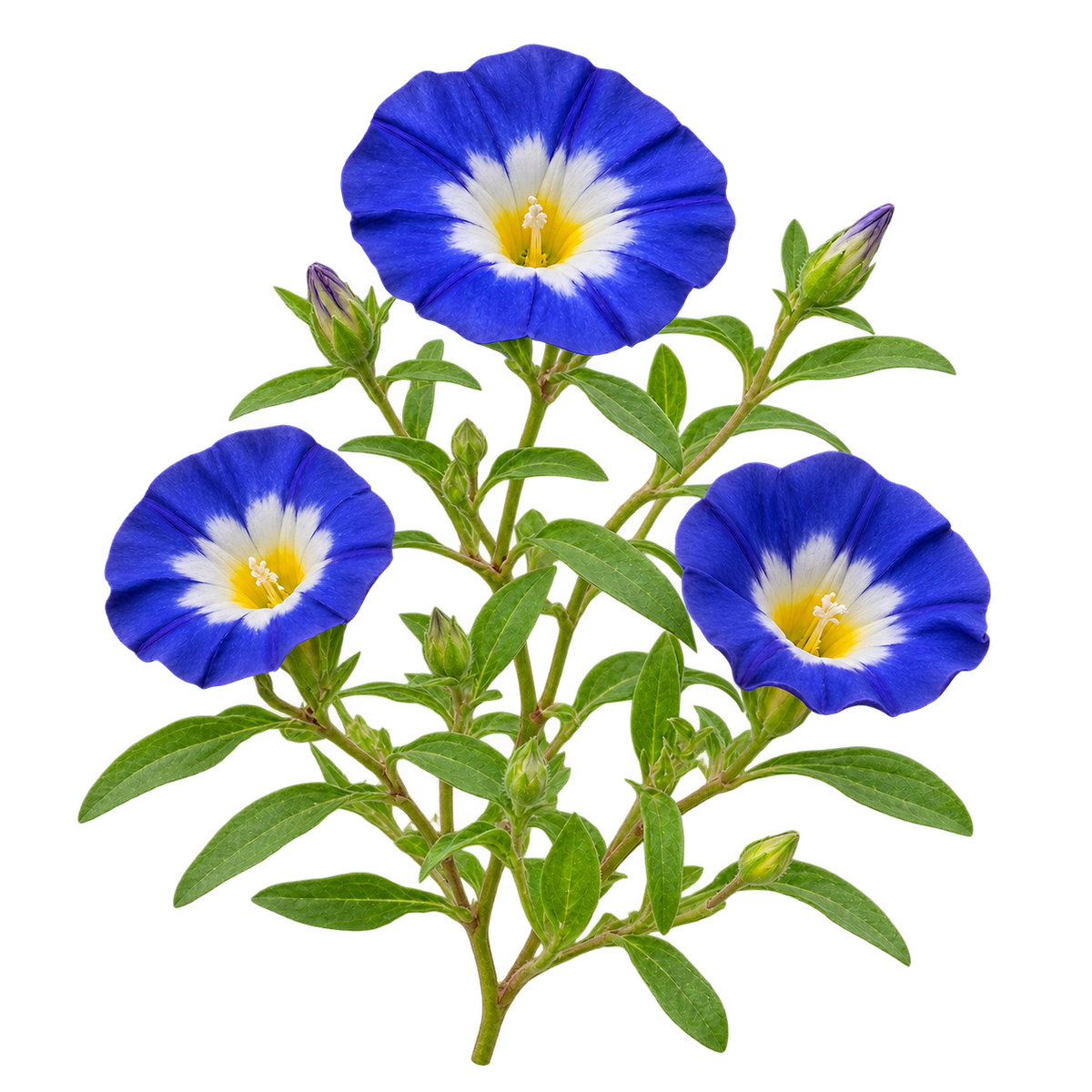
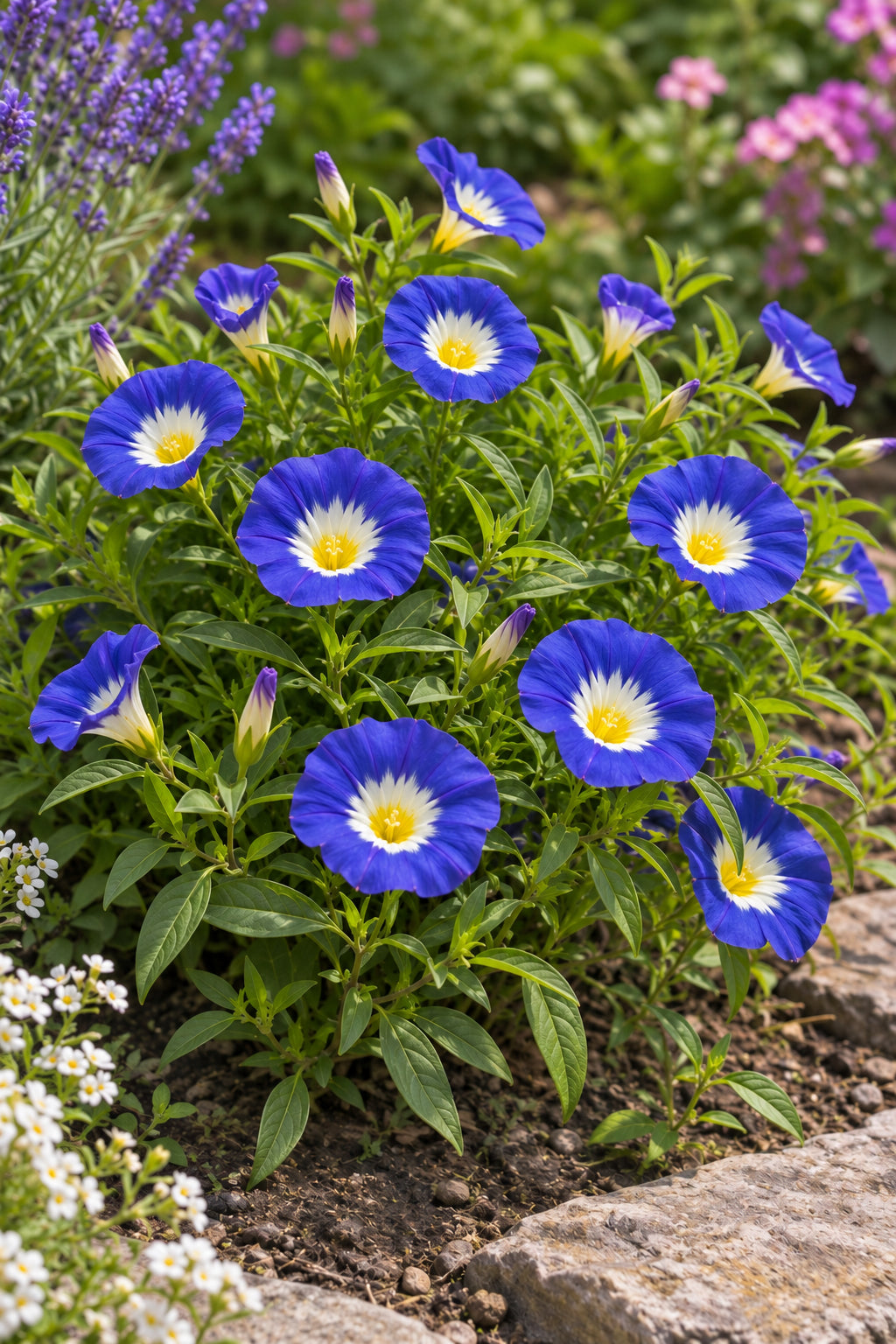
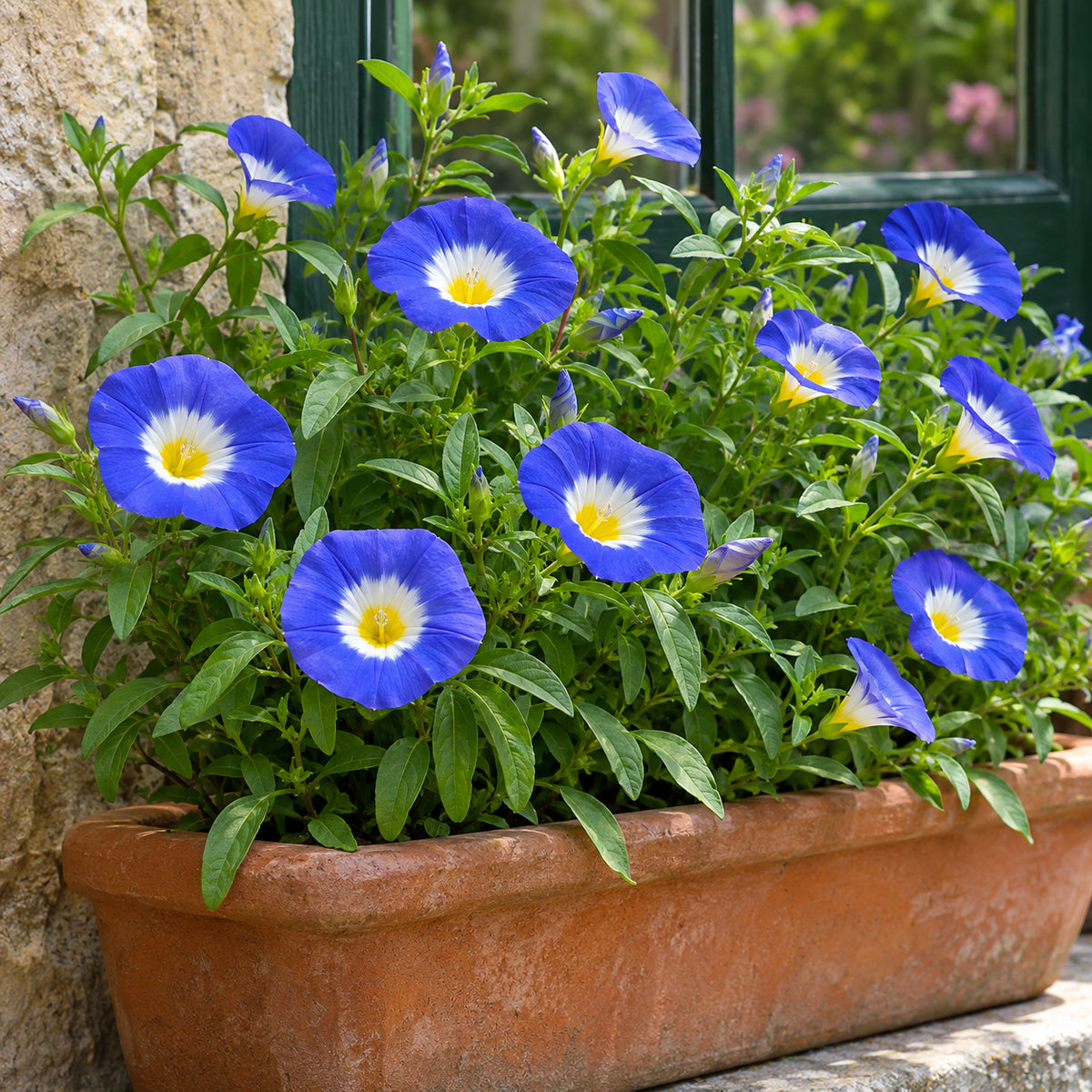
The common morning glory lives up to its name: its blooms open in the light, bringing color to sunny borders. The flower’s pattern is especially distinct, with a yellow center, a white ring, and a blue edge. Unlike climbing bindweeds it may bring to mind, Convolvulus tricolor grows as a low, branching plant. This makes it suitable for containers and the front of flower beds, without needing a trellis.
Characteristics:
- Low-growing, branching, non-climbing annual.
- Funnel-shaped flowers with a tricolor pattern: blue, white, and yellow.
- Each flower is short-lived; new blooms appear throughout the flowering period.
- For borders, window boxes, and containers in sunny spots.
Sowing tips:
-
Under cover: sow in small pots from March to April, adjusting the timing so the seedlings can be moved outdoors without risk of frost.
-
Growing medium: choose a fine, well-draining potting mix. Keep it moderately moist, without letting water stagnate at the bottom of the container.
-
Direct sowing: You can sow outdoors after the last frost, in prepared soil. Our guide to sowing methods can help you choose between starting seeds in pots and sowing them directly in the ground.
Planting tips:
Acclimate young plants to the outdoors before planting them in their permanent location. Choose a sunny spot and soil that drains excess water. In very hot climates, protection from the intense afternoon sun may be helpful. In containers, leave enough room for the branches to spread: several plants packed too closely compete for water and eventually obscure their own flowers.
Care tips:
Water at the base while it establishes, then according to how dry the soil is. In containers, check moisture more regularly, especially in hot, windy weather. Avoid letting the potting mix become completely dry, followed by leaving it sitting in a permanently full saucer. Remove spent flowers if you want to keep the container tidy, leaving only a few seed pods to mature for seed collection.
Flowering and uses:
Flowering develops in summer, depending on the sowing date. A bloom that closes at the end of the day does not necessarily indicate a lack of water: also check the leaves and soil. Plant morning glory where its low-growing flowers remain visible, near a patio or along a path. It is better suited to a lively container arrangement than to a bouquet of long stems.
Garden pairings:
Pair it with plants that won’t cover it, and keep taller species at the back of the flower bed. The flowers may attract pollinating insects. Contrasting foliage enriches the arrangement without crowding too many plants into a small space.
Harvesting your own seeds:
After flowering, look for the small capsules, the dry fruits that contain the seeds. Let some ripen on a few healthy, labeled plants. Harvest the capsules when they turn brown and dry, before they scatter their contents. Finish drying them in a paper bag, open the capsules, then sort the seeds. Label the harvest, and do not promise exactly the same color in every generation. Our advice explains how to store seeds in a cool, dry place.
Commitment to Quality:
At SemiSauvage, we offer reproducible seeds to cultivate diversity in the garden. This packet contains at least 100 seeds, packaged in France. The periods indicated are guidelines to adapt to your climate, soil, and the conditions of the season.
The morning glory creates a flower-filled foreground, where its tricolored blooms unfold in the light.