Crataegus laevigata
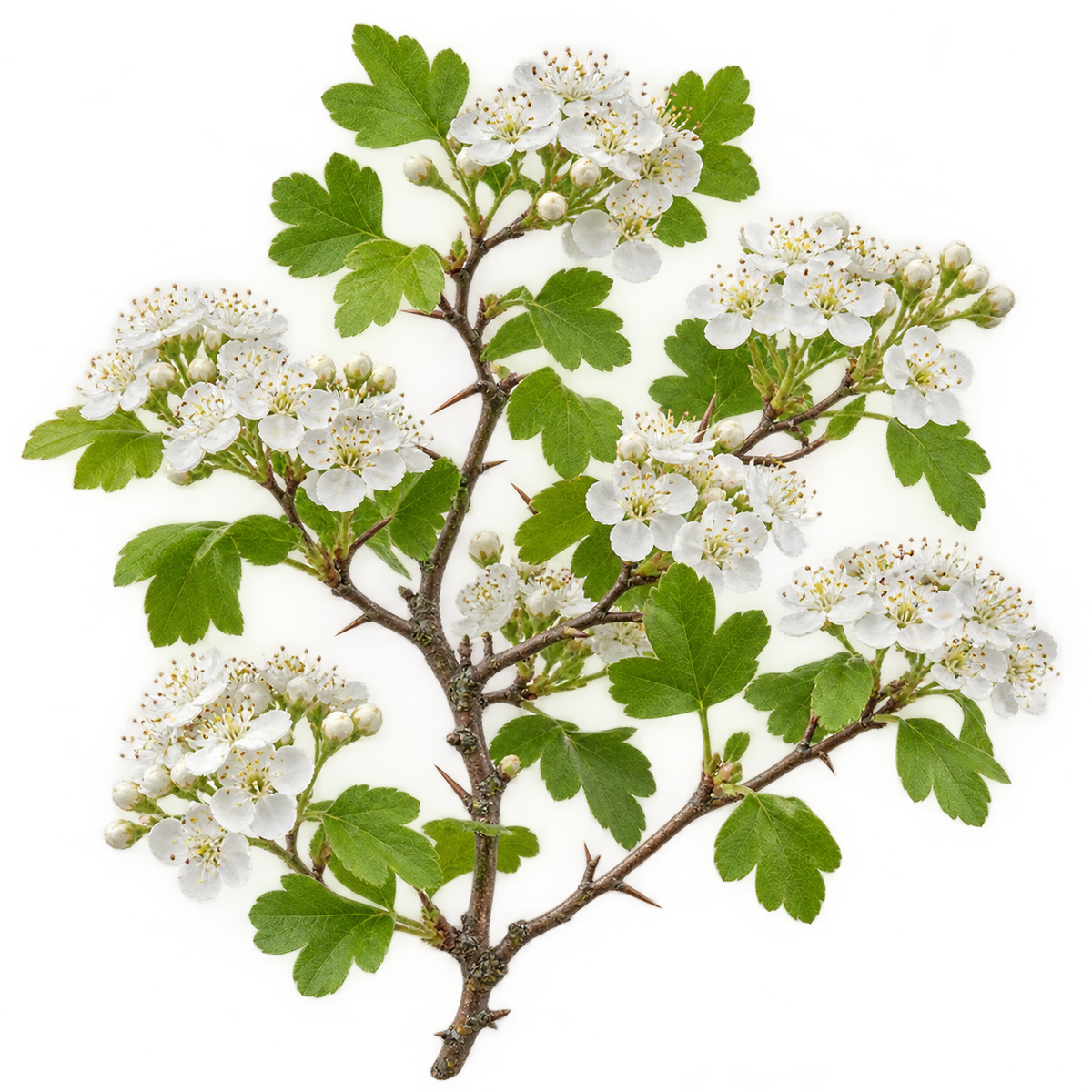
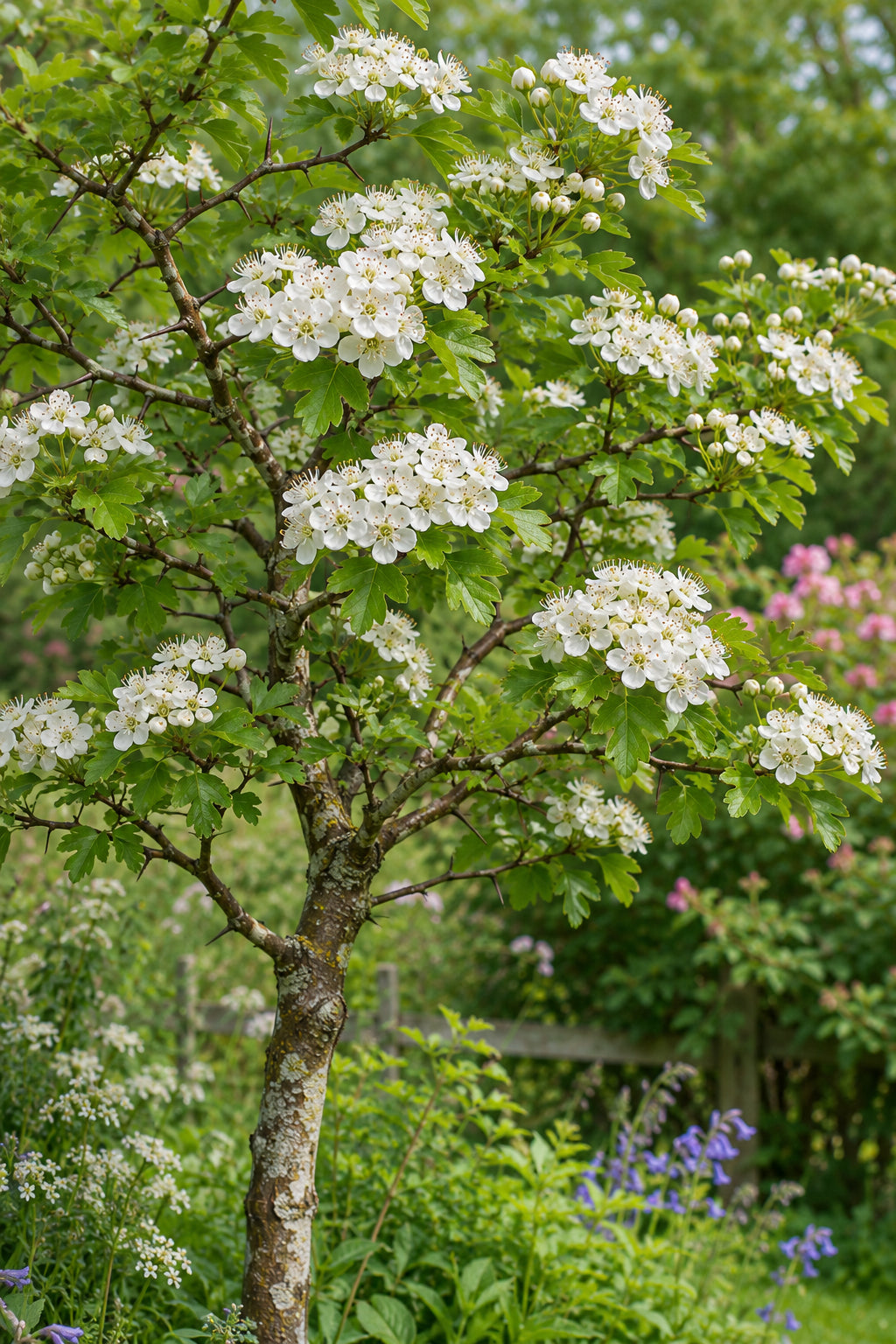
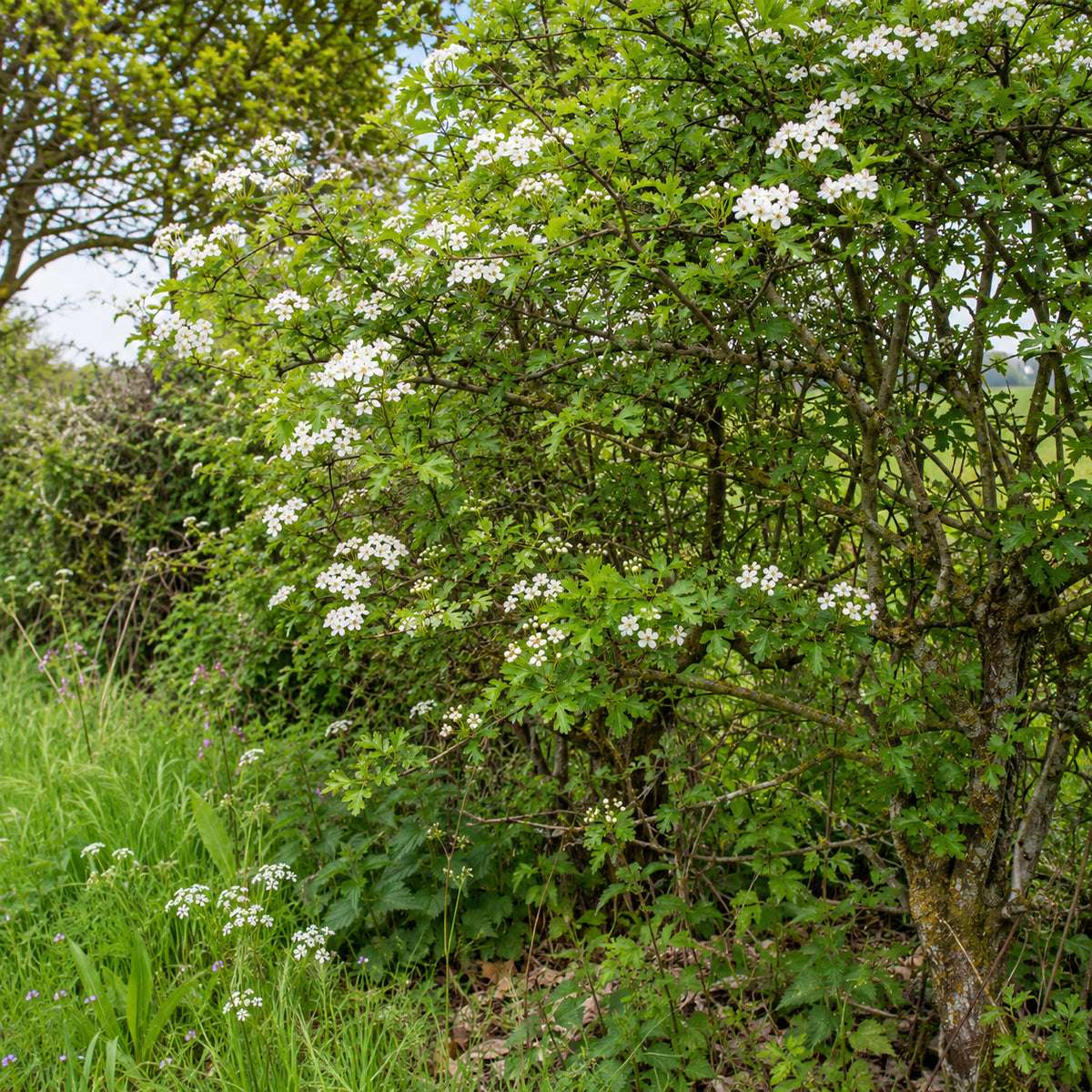
L’aubépine à deux styles associe fleurs blanches printanières, fruits rouges à l’automne et ramure épineuse. Son nom désigne un détail de la fleur : on y distingue généralement deux styles, prolongements de l’organe femelle, auxquels correspondent le plus souvent deux noyaux dans le fruit. Cette espèce forme une haie champêtre favorable aux oiseaux et peut aussi être conduite en bonsaï d’extérieur. Le semis demande du temps : la dormance des graines impose une préparation avant la levée.
Features:
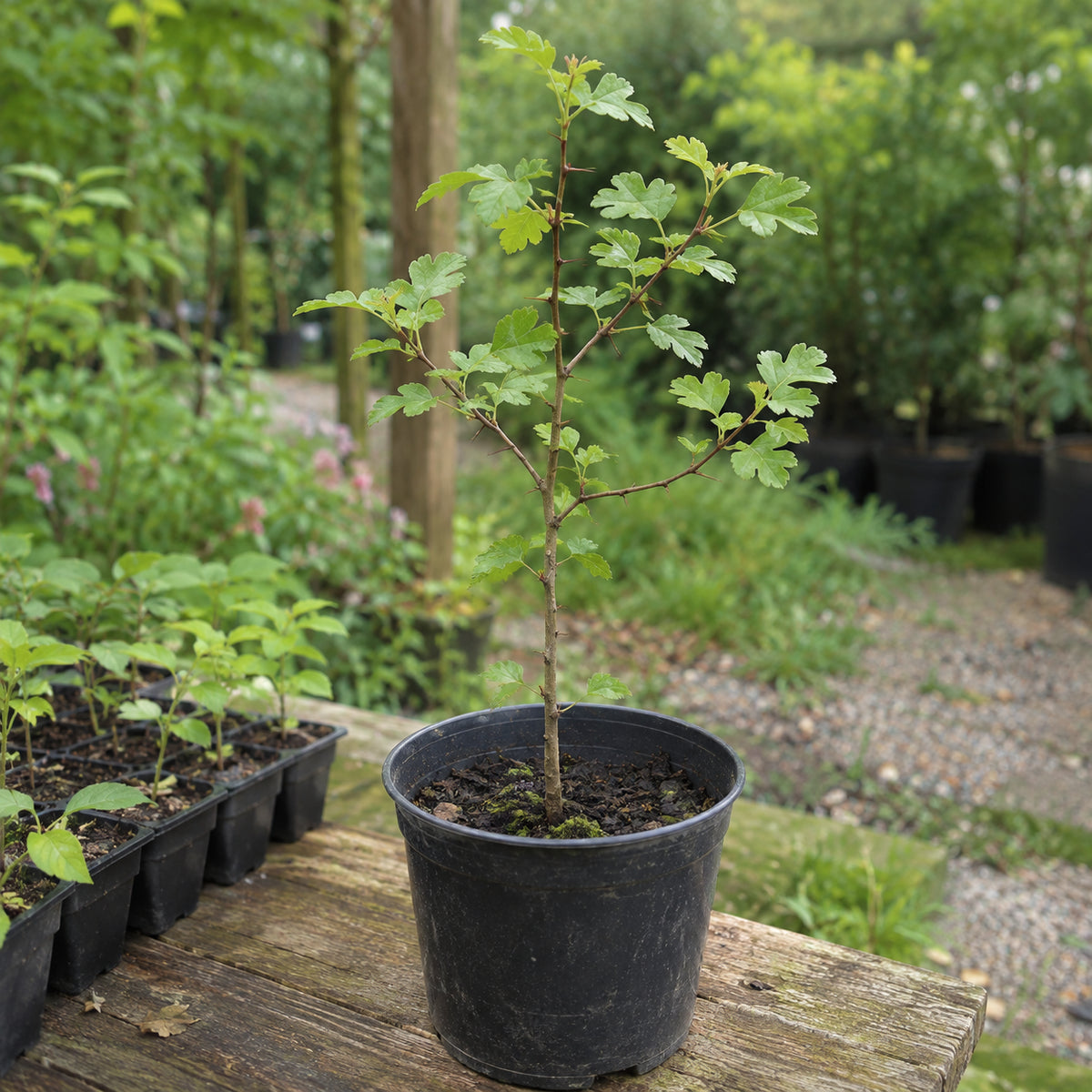
- Deciduous shrub or small tree with thorny branches and lobed leaves.
- Springtime white flowers, followed by small red fruits enjoyed by birds.
- Uses: country hedges, woodland edges, natural gardens, or outdoor bonsai.
- Open-pollinated seeds; packet of at least 40 seeds.
Sowing tips:
-
Preparation: Prepare a warm, moist stratification phase, followed by a cold one: the seeds have deep dormancy.
-
Warm phase: The warm phase can last around 16 to 20 weeks, depending on the method and conditions; keep the mix moist without waterlogging it.
-
Cold phase: Continue with a cold phase and monitor the seeds. Additional cycles may be needed: don’t discard a sowing that hasn’t germinated too soon.
Supporting germination:
Label your containers with the species and preparation dates. Check the moisture regularly during each phase. As soon as the seedlings emerge, give them light and protect their roots when transplanting. Our guide to sowing methods covers general techniques; it complements the specific stratification process for hawthorn.
Planting and care advice:
Choose a sunny to partially shaded spot with well-drained soil. Water young plants regularly while they establish. When planting, consider the future growth of the branches and their thorns: leave enough distance from paths. Wear gloves when handling and pruning.
Living hedge and bonsai:
In a diverse hedge, the dense, thorny branches provide shelter for small wildlife, while the fruits extend the plant’s appeal to birds. As a bonsai, its branching develops gradually through pruning. Keep it outdoors and monitor the water available in its small volume of soil, especially while it is growing.
Harvesting your own seeds:
Pick a few ripe red fruits in autumn and leave some of the crop for the birds. Remove the pulp, then rinse the stones: each one protects a seed, and they should not be confused with naked seeds. Then begin the warm, followed by cold, moist preparation described in the sowing advice. Fruit ripening does not end dormancy: germination may still be slow even if the fruit is harvested at the right stage. Read our advice on storing your seeds.
Symbolism and traditions:
In some British traditions, hawthorn flowers are associated with May Day festivities and were used in the wreaths and garlands of these spring celebrations. This symbolism applies to hawthorn in general.
Commitment to Quality:
At SemiSauvage, we offer seeds that grow true to type, so you can grow and discover the diversity of plants. This packet contains at least 40 seeds, packaged in France. Our advice guides you from sowing through cultivation; adapt it to your climate and garden conditions.
Grown as a hedge or trained as an outdoor bonsai, this hawthorn offers successive interest from its flowers, fruits, and bare branches.