Ribes nigrum
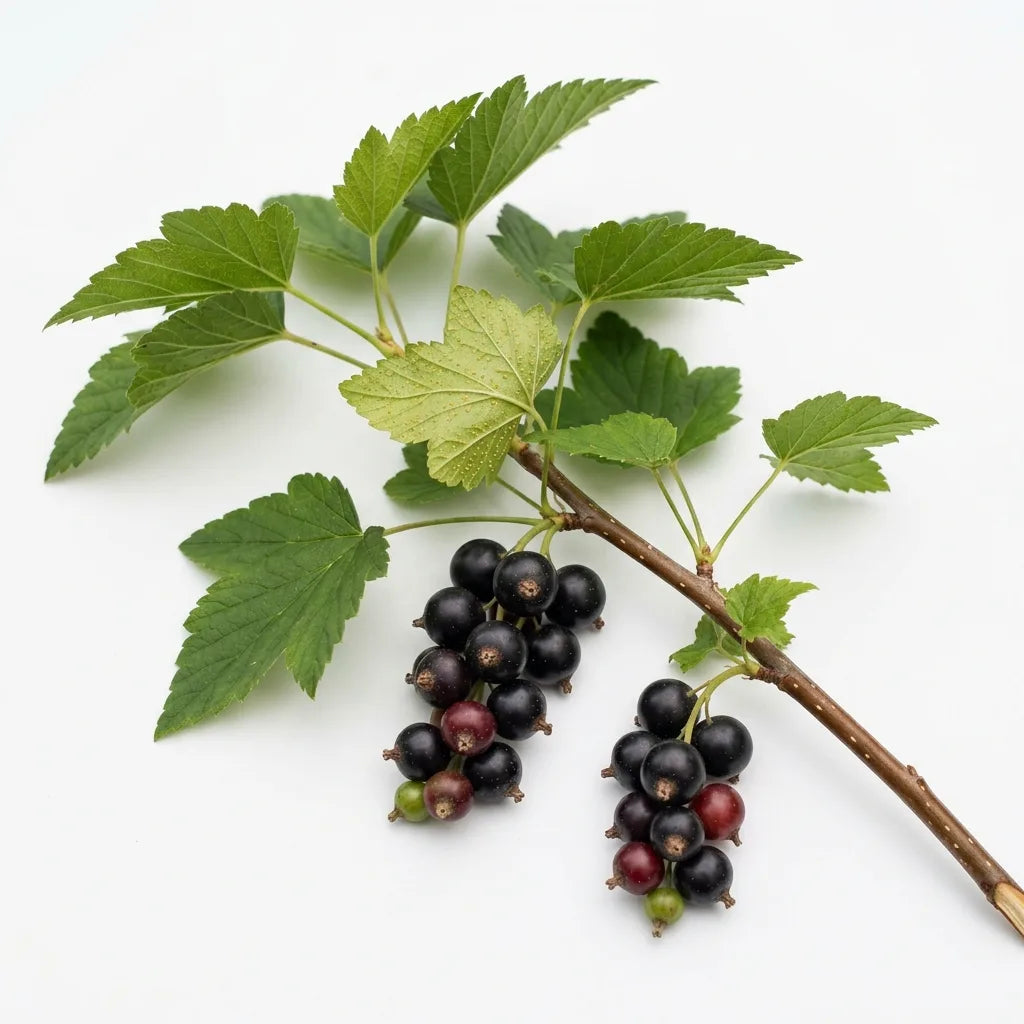
Giant Boskoop Blackcurrant, blackcurrant bush: selected in the Netherlands in the nursery town of Boskoop, this variety produces longer clusters and larger berries than the common blackcurrant. Its fragrance, however, remains incomparable — it is the one that made Burgundy’s blackcurrant creams and jellies famous.
Characteristics:
-
Large berries: larger than average, with tender skin, borne in long clusters.
-
Early harvest: from the beginning of July.
-
Highly aromatic foliage: when crushed, its leaves release the characteristic scent of blackcurrant.
-
Bushy shrub: it can be grown in the ground or in a container on a balcony.
Sowing advice:
-
Exposure: sunny but not scorching, or partial shade in hot regions. Blackcurrants are plants of cool climates; heat waves cause them to suffer.
-
Soil: cool, deep, rich in humus and well-drained, preferably neutral to slightly acidic. Its shallow roots are as susceptible to drying out as they are to stagnant water — mulching is highly beneficial.
-
Method: 6 to 12 weeks of cold stratification are necessary to break dormancy. Then sow in spring in pots, covering lightly. Germination is slow and staggered. See how to sow your seeds.
Planting advice:
- Transplant with 1.50 metres of spacing. In containers, choose a wide, deep pot and mulch the surface.
- Good to know: blackcurrants are partially self-fertile, but having two plants significantly improves fruit set and berry size.
Care advice:
- Keep the soil cool in summer, without excess moisture. Applying compost around the base each autumn is enough to maintain it.
-
Pruning: unlike redcurrants, blackcurrants fruit mainly on one-year-old wood. Prune more severely: each winter, remove one third of the oldest branches at ground level to encourage new shoots.
- Without this pruning, production declines sharply after a few years — this is the most common mistake with blackcurrant bushes.
Harvesting advice:
- Harvest the entire cluster when all the berries are black and slightly soft. Picked too early, they remain astringent.
- The tender-skinned berries of this variety bruise easily: handle them gently and process them quickly.
Beneficial combinations:
Benefits for biodiversity:
- Its early flowering, from April onwards, provides food for bees and bumblebees at a time when resources are still scarce.
- Its black berries are highly sought after by blackbirds and warblers.
Uses:
- For jellies, jam, syrup, coulis and sorbet. The berries freeze very well and retain all their fragrance.
- Its leaves can be dried for herbal tea, a traditional countryside use.
Harvesting your own seeds:
Crush fully ripe berries in a little water, rinse to separate the seeds from the pulp, then dry them flat before winter stratification. Blackcurrants are also very easy to propagate from hardwood cuttings in winter. See how to store your seeds.
Commitment to Quality: at SemiSauvage - Permaculture, we grow and select our seeds with respect for all living things as our guiding principle. Based near the Auvergne Volcanoes, we choose reproducible, non-hybrid varieties, tested for their germination rate, carefully sorted and packaged, without any chemical treatment. Our belief: to give gardeners back the ability to sow, year after year, seeds that truly belong to them.
Large berries from July onwards, and a fragrance nothing can replace.