Brugmansia suaveolens
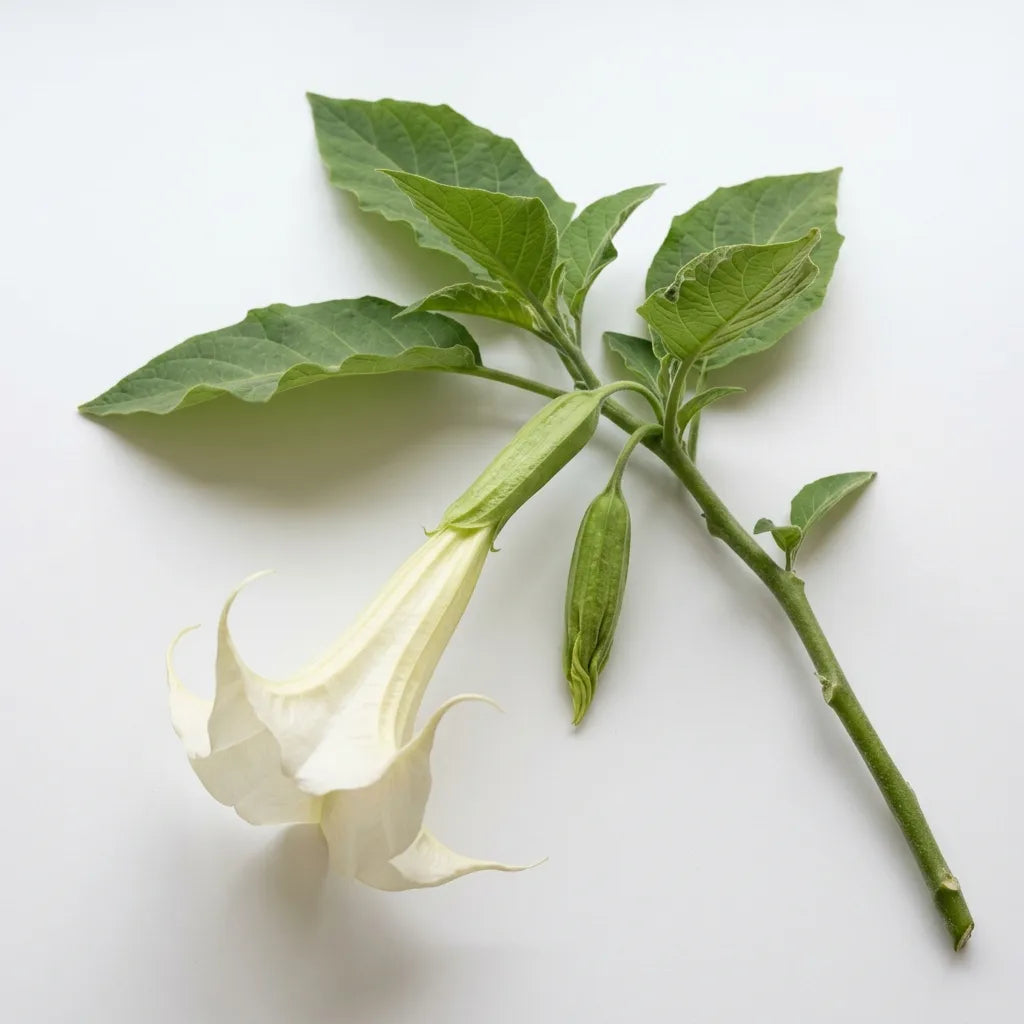
Angel’s trumpet, brugmansia, tree datura: its immense, drooping trumpet-shaped flowers release an intoxicating fragrance that intensifies as night falls, when it attracts nocturnal pollinators. A spectacular, fast-growing shrub, but one that must be planted with full awareness of its risks.
Characteristics:
-
Spectacular flowering: immense white trumpet-shaped flowers, drooping and highly fragrant, all summer until the first frosts.
-
Fast growth: vigorous shrub that gains considerable volume in a single season.
-
Nocturnal fragrance: its sweet scent is released mainly in the evening and at night.
Precautions — read carefully:
-
All parts of the plant are highly toxic if ingested — flowers, leaves, stems, and seeds. Ingestion, even in small quantities, can cause severe poisoning.
-
Do not install it in a garden frequented by young children, or within reach of pets. The large flowers are visually attractive to children.
- Wear gloves when pruning or handling it, and wash your hands afterward. Avoid breathing in its fragrance for long periods in enclosed spaces.
- Never use this plant for consumption or preparation, in any form whatsoever.
- Frost-tender plant: it does not survive frost and must be overwintered in a frost-free place in most regions.
Sowing advice:
-
Exposure: sunny to light partial shade, in a warm location sheltered from the wind.
-
Soil: rich, deep, moist, and well drained. This plant is very demanding in water and nutrients: adding compost genuinely benefits it, and the growing medium must never dry out completely in summer.
-
Method: no cold stratification — this South American species requires warmth. Soak the seeds for 24 hours in lukewarm water, then sow them 1 cm deep in a medium kept moist at 22-25 °C. Handle the seeds with gloves. See how to sow your seeds.
Planting advice:
- Grow it in the ground only in regions with a mild climate, or in a large pot brought into a greenhouse or conservatory for the winter, elsewhere in France.
- Choose a location away from passageways, play areas, and vegetable gardens.
Care advice:
- Water abundantly and regularly in summer, especially when grown in a pot: this plant is very thirsty.
- Prune at the end of winter to maintain a compact shape, wearing gloves and keeping away from children.
- Overwinter in a frost-free, cool, bright place, greatly reducing watering.
Benefits for biodiversity:
- In its native range, its white, highly fragrant nocturnal flowers are pollinated by moths and bats — a typical strategy of pale flowers with an evening fragrance.
- In our climates, it attracts hawk moths at dusk.
Uses:
- Strictly ornamental: as a standalone specimen in a pot on a terrace, or planted in the ground in a Mediterranean garden, away from passageways.
Harvesting your own seeds:
The fruits, which are rare in our climates, contain seeds that must be handled with gloves and stored in a clearly labeled container, out of children’s reach. See how to store your seeds.
Commitment to Quality: at SemiSauvage - Permaculture, we grow and select our seeds with respect for all living things as our guiding principle. Based near the Volcanoes of Auvergne, we choose reproducible, non-hybrid varieties, tested for their germination rate, carefully sorted and packaged, with no chemical treatment. Our belief: to give gardeners back the ability to resow, year after year, seeds that truly belong to them.
Sales reserved for informed amateur gardeners seeking quality and authenticity.