Cucurbita pepo “Koshare”
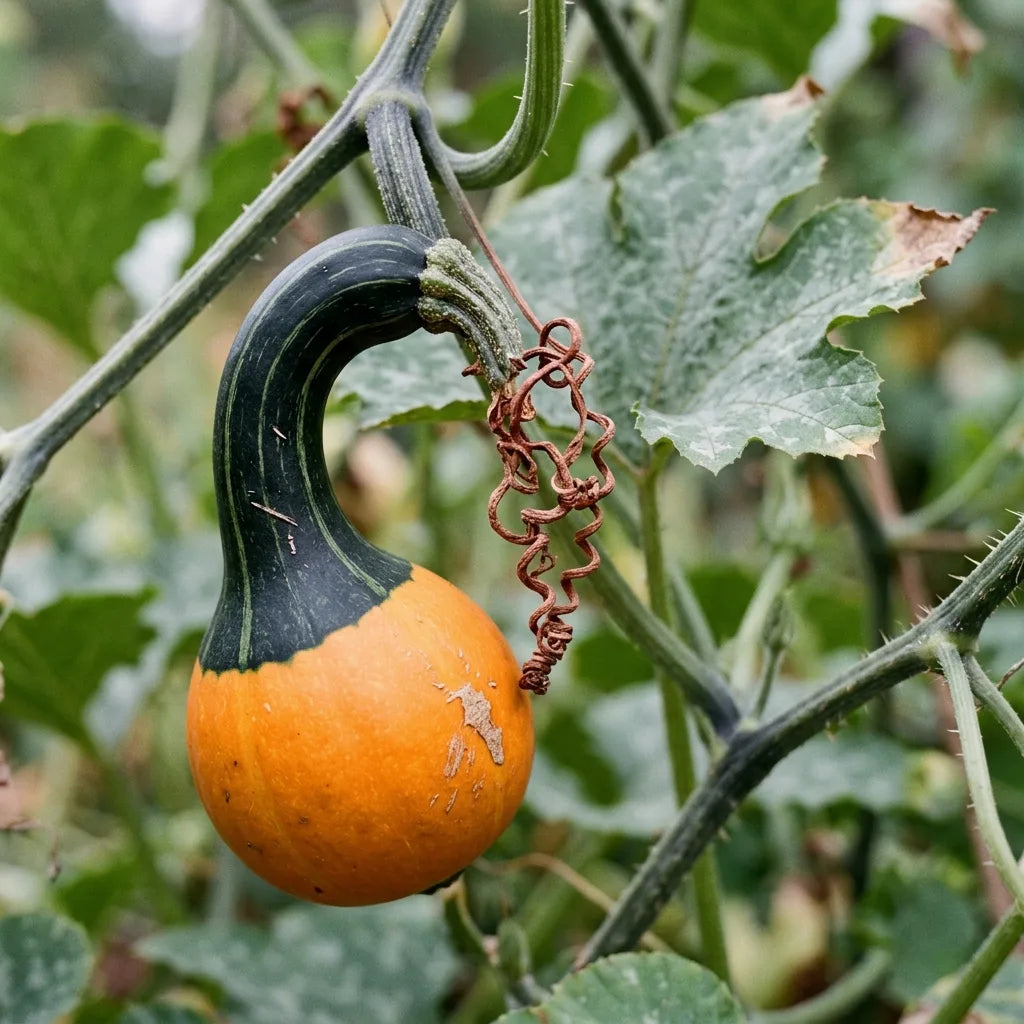
Koshare gourd, Koshare spoon squash, Koshare Spoon gourd: a small purely ornamental squash, each fruit bearing two sharply separated colors — a bright ORANGE bulbous base and a green neck so dark it appears black. Its small spoon- or curved-neck gourd shape makes it one of the most recognizable ornamental gourds, and its hard rind allows it to keep for months without changing.
Characteristics:
-
Distinctly bicolored: bright orange bulbous base, narrow, curved, very dark green neck that is almost black, often finely striped. The boundary between the two colors is sharp.
-
Small fruits: 8 to 12 cm, spoon-shaped or shaped like a small gourd, with a hard, smooth rind.
-
Very productive: a single vine can bear fifteen to twenty fruits.
-
Excellent storage life: when dried and kept in a dry place, it retains its color and shape for months, sometimes more than a year.
Important precaution — please read:
-
This ornamental gourd is not edible. Like all decorative squashes, it contains cucurbitacins, very bitter and toxic substances that cause nausea, vomiting, and severe digestive problems. Look at it, but do not cook it.
- The simple, absolute rule, which also applies to edible squashes: if it tastes bitter, spit it out and throw away the entire fruit. Bitterness is the warning sign of cucurbitacins.
- Keep the fruits out of the reach of young children, who may be attracted by their bright colors.
Sowing advice:
-
Exposure: full sun and warmth.
-
Soil: deep, loose, moist, and rich — a generous addition of well-rotted compost makes all the difference. However, it does not tolerate stagnant water around the crown.
-
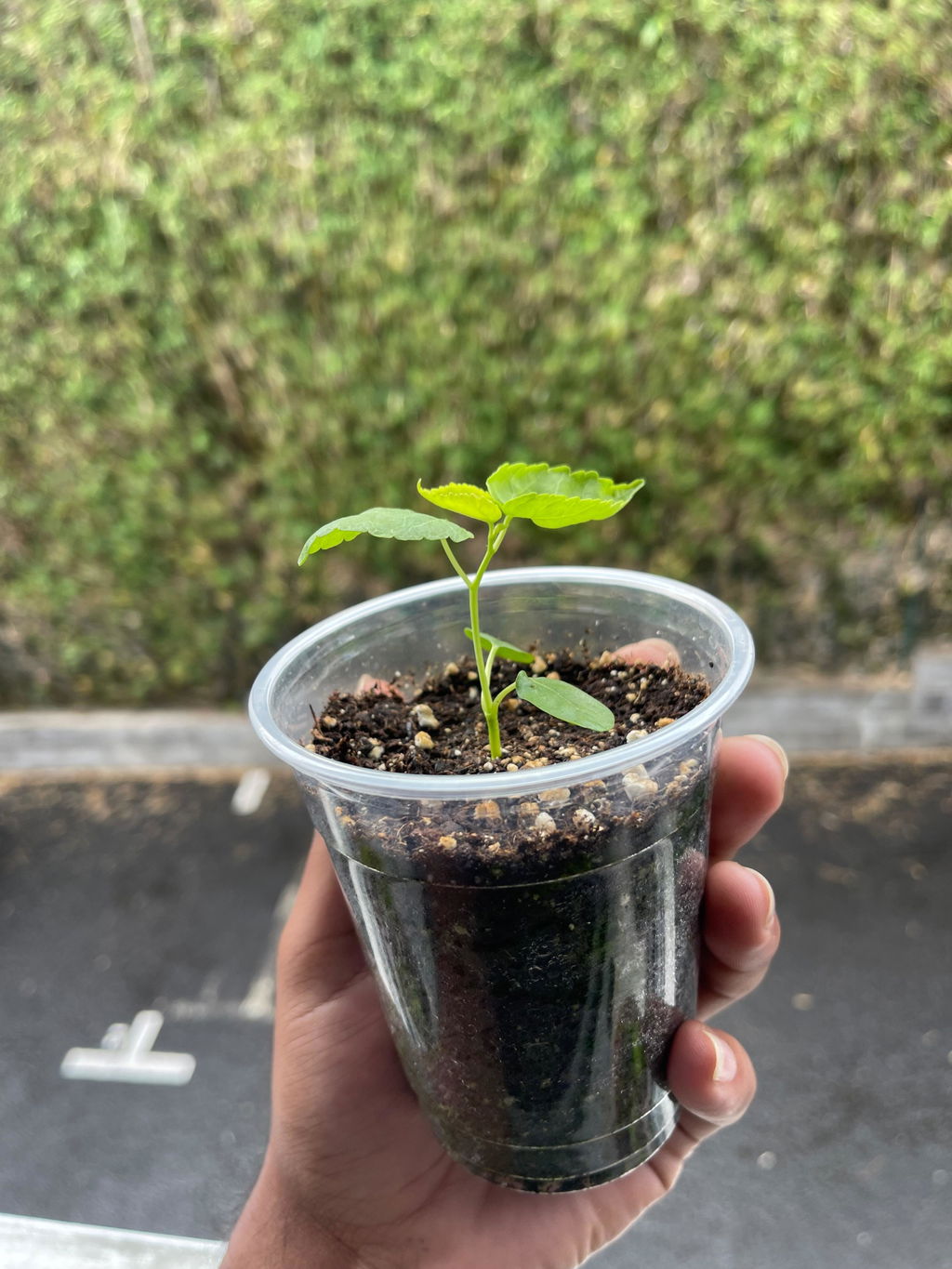
Method: sow in pots under cover from April onward at 20-25 °C, 2-3 cm deep, placing the seed on its edge to prevent it from rotting. Germination takes 5 to 10 days. Transplant after the last frosts. See how to sow your seeds.
Planting advice:
- Space plants 1 to 1.50 m apart: the stems spread a long way. Apply a thick mulch to retain moisture and keep the fruits clean.
-
It is best grown vertically: on a wire fence, arch, or hoops; its tendrils will cling on by themselves. The lightweight fruits then hang freely and develop a more even color, without a pale side where they touch the ground.
Care advice:
- Water regularly at the base, without wetting the foliage: powdery mildew quickly takes hold on cucurbits.
- There is no need to limit the number of fruits, unlike with large pumpkins: here, the more there are, the better.
Harvesting advice:
- Harvest before the first frosts, when the stem has become hard and corky and your fingernail no longer marks the rind. Cut with pruning shears, leaving 3 to 5 cm of stem: without it, the fruit rots from the top.
- Allow them to dry for about ten days in a dry, well-ventilated place, then store them in a dry place. A dry cloth is enough to remove dust; avoid varnishing them, as this prevents the rind from breathing.
Beneficial companion planting:
Benefits for biodiversity:
- Its large yellow-orange flowers, which open early in the morning, provide a very abundant source of pollen for bees and bumblebees in midsummer.
- Its spreading foliage covers the soil, protects it from drying out, and shelters beneficial microorganisms and small wildlife.
Uses:
-
For decorative use only: autumn arrangements and wreaths, bowls, garlands, festive tables, Halloween. It can also be used as ground cover or as an annual climber to quickly dress up a fence or arch.
Harvesting your own seeds:
Open a fully ripe, perfectly hard fruit and remove the seeds — flat, oval, cream-white, with a distinct margin — then rinse and dry them flat for several days. Caution: Cucurbita pepo cross-pollinate very easily with one another (zucchini, pattypan squash, spaghetti squash, and other ornamental gourds). Isolate your seed plant; otherwise, the offspring may produce bitter and unpredictable fruits. See how to save your seeds.
Our Commitment to Quality: at SemiSauvage - Permaculture, we grow and select our seeds with respect for all living things as our guiding principle. Based near the Auvergne Volcanoes, we choose open-pollinated, non-hybrid varieties, tested for their germination rate, carefully sorted and packaged, with no chemical treatment. Our belief: to give gardeners back the ability to resow, year after year, seeds that truly belong to them.
Two bold colors on a single small fruit: the ornamental gourd that makes the whole autumn table.